




Abitibi Metals Advances B26 Deposit Toward Tier-One Status with Resource Growth



Abitibi Metals grows B26 deposit 125% to 25.3Mt at 2.1% CuEq, targeting 30-50Mt potential. World-class team, funded 40km drill program, tier-one Quebec jurisdiction.
- Abitibi Metals announced a transformational resource update for its B26 deposit, growing from 11.5 million tons to 25.3 million tons defined across both resource categories(125% increase) while maintaining strong grades of 2.1% copper equivalent
- The company is executing an aggressive 40,000-meter drill program focused on expansion, with discovery costs of just 2.5 cents per pound copper equivalent, demonstrating capital efficiency
- New COO David Bernier, who built Foran's McIlvenna Bay deposit (recently acquired for $3.8 billion), joins a world-class team to advance the project toward a preliminary assessment
- The deposit remains open for expansion with strong potential to reach 30-50 million tons based on geological evidence, stepout drilling success, and comparisons to the nearby 60-million-ton Selbaie mine
- Abitibi is exercising its option to earn 80% of B26 five years ahead of schedule while initiating regional exploration and early-stage permitting work to position for strategic investment
Abitibi Metals Corp. (CSE:AMQ) is positioning itself as a leading Quebec junior mining company through the rapid development of its B26 copper-gold-zinc-silver deposit. With a newly announced resource update that more than doubles the project's scale, a world-class management team assembled over the past year, and an aggressive exploration strategy backed by a robust balance sheet, the company is working to build what CEO Jon Deluce describes as a "tier one deposit" capable of attracting major producer interest. This comprehensive discussion provides investors with critical insights into the company's technical achievements, strategic direction, and value creation roadmap for 2026.
Transformational Resource Update Demonstrates Scale Potential
The cornerstone of Abitibi's recent momentum is its updated mineral resource estimate for the B26 deposit, announced in early February 2026. The resource now stands at 13 million tons indicated at 2.1% copper equivalent and 12.3 million tons inferred at 2.2% copper equivalent, representing a 125% increase in total tonnage since the company optioned the project from SOQUEM, a Quebec government subsidiary, in 2023. This growth was achieved well ahead of the company's stated goal to reach 25-30 million tons by 2026.
Significantly, the resource calculation uses conservative commodity price assumptions: $2,500 gold, $30 silver, $4.50 copper, and $1.35 zinc. At current spot prices, Deluce notes the deposit would grade closer to 2.55% copper equivalent, demonstrating substantial operating leverage to metal price movements. The resource contains 775 million pounds of copper, 451,000 ounces of gold, 16 million ounces of silver, and 376 million pounds of zinc in the indicated category alone.
The growth in this update came primarily from the inferred category, addressing a key question from potential strategic partners: how large can this deposit become?
"One of the key questions that we had from some of the producers that have reviewed the project was how big can this get? And could this be a Selbaie size deposit? So our thesis has been this could very well be a 30 to 50 million ton deposit."
Capital Efficiency Sets Abitibi Apart
A critical differentiator for Abitibi is its capital discipline during the exploration phase. The company has achieved its resource growth at a discovery cost of 2.5 cents per pound copper equivalent, positioning it favourably among peers. Deluce emphasised this efficiency:
"I would put us up against any of our competitors to try to find somebody that's done it more cost-efficiently."
This cost performance becomes particularly relevant when considering the company's 40,000-meter drill program planned for 2026. The program will balance resource expansion with conversion of inferred resources to the indicated category, while also testing regional targets for the first time. The drill program is funded from the company's existing treasury, providing operational flexibility without immediate dilution concerns.
World-Class Team Assembled for Development Phase
Abitibi's management strategy centers on the principle that "the right asset in the wrong hands is worthless," as Deluce articulated. Over the past year, the company has systematically assembled a team with proven track records in both exploration success and mine development.
Louis Gariépy serves as VP of Exploration, bringing experience from successful takeovers in the Abitibi region and large-scale VMS mine development in Peru. Laurent Eustache joined with a background at IAMGold and as a fund manager. Most recently, in early 2026, David Bernier came aboard as COO, having previously served in the same role at Foran Mining where he built the McIlvenna Bay deposit from preliminary assessment through to commercial production.
The McIlvenna Bay comparison is particularly relevant. That high-grade VMS deposit was acquired, in a recent transaction valued at C$3.8 billion. The McIlvenna Bay resource stood at 44 million tons at just over 2% copper equivalent, with a richer zinc credit than B26. Abitibi's current resource represents 56% of that tonnage, providing investors with a valuation benchmark.
Bernier's expertise will prove crucial as Abitibi navigates the transition from pure exploration to development planning, including optimisation of mining scenarios, dilution management, and mine design trade-offs between throughput rates and grade selection.
Interview with President & CEO, Jon Deluce
Geological Understanding Drives Exploration Strategy
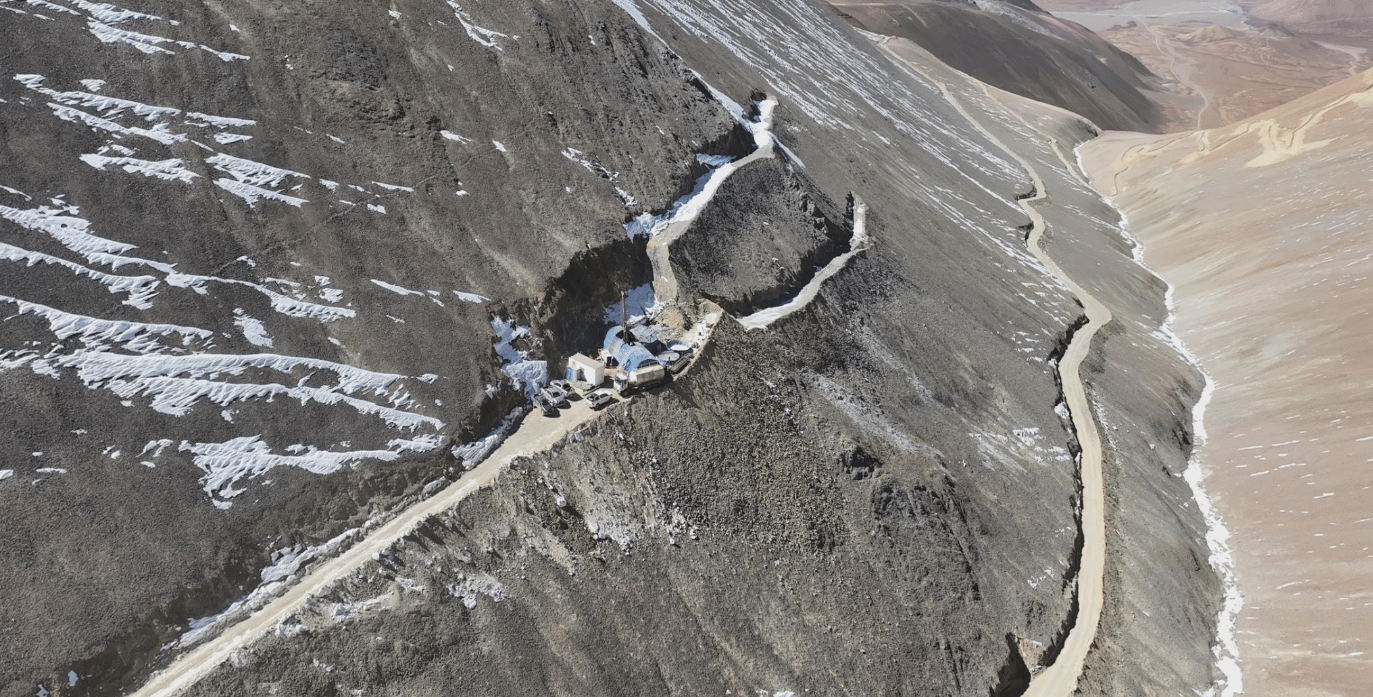
The B26 deposit presents as a classic volcanogenic massive sulfide (VMS) system with characteristics similar to other world-class deposits in the region. The resource currently comprises 80% copper-gold mineralisation and 20% zinc-silver, with the zinc-silver lens confined to the eastern portion of the deposit. However, recent deeper drilling has revealed the reappearance of zinc-silver mineralisation 500-600 meters away from known zones, suggesting the potential for parallel lenses as the system is traced westward.
The deposit remains completely open along strike and at depth, with consistent alteration zones encountered in all drilling to the west. While grades and widths vary from hole to hole, the persistence of the mineralising system provides confidence for continued expansion. Current drilling has reached 1,000 meters vertical depth, and the company is pursuing aggressive step-out holes to define the ultimate limits of mineralisation.
Downhole geophysics supports the expansion thesis, as does comparison to the historical Selbaie mine located 7 kilometers away. Selbaie produced 60 million tons at 2% copper equivalent over 20 years, with later zones reaching close to 3% grades. This analog provides both a geological model and a scale benchmark for B26's potential.
Near-Term Value Catalysts and Development Pathway
Abitibi has structured its 2026 program to deliver multiple value-creation milestones. The 40,000-meter drill program will include several strategic components:
- Resource improvement drilling targeting large gaps in the existing drill grid where management believes grades and tonnages are understated
- Western extension drilling to continue expanding the known mineralised envelope
- Depth extensions pursuing high-grade gold-rich zones identified at depth
- Regional exploration testing at least four targets between B26 and the Selbaie mine for the first time, with 5,000 meters allocated and downhole geophysics planned for each target
"If we're able to make a grassroots discovery, the market is going to say how much bigger could this be?" Deluce noted, highlighting the potential impact of successful regional exploration.
Beyond drilling, the company is initiating meaningful baseline environmental work and early-stage permitting activities. This development work addresses another key requirement from potential strategic partners who "don't just want to see us drilling, expanding, but there's a whole other bucket that comes along with how a project needs to be there to be successful."
The company also expects to complete the exercise of its option agreement with SOQUEM to earn its full 80% interest in B26 within the next month, five years ahead of the original schedule. Additionally, management is pursuing consolidation opportunities to add nearby projects that could expand the camp-scale potential.
Market Context Positions Company for Strategic Interest
Abitibi is advancing B26 during a period of heightened interest in copper-gold VMS deposits from major producers. The Foran-Maveney Bay transaction at $3.8 billion represents just one recent example of aggressive valuations for development-stage copper assets in favourable jurisdictions. Deluce characterised VMS deposits with strong copper-gold credits as "one of the most highly sought after deposits in the market," noting that producers value the optionality of multiple revenue streams.
The polymetallic nature of B26 provides natural hedging characteristics. Historical analysis of similar deposits suggests that zinc and copper revenues can cover operating costs during certain price environments, making precious metals production effectively free. This dynamic becomes particularly attractive during periods of precious metals price strength.
"Our view as management is we are getting into an $8 copper environment. Gold is going to continue to perform, but we don't want to set an expectation to the market that we need that, Our baseline is strong. The torque with commodity prices makes it even better."
The company's conservative resource assumptions ensure that B26's economics are not dependent on spot pricing, while the leverage to higher commodity prices enhances the project's strategic value to potential acquirers.
Technical Optimisation Advances Preliminary Assessment
Several technical work streams are advancing in parallel with exploration. The geological team is upgrading the deposit model to better characterise high-grade zones, particularly the gold-rich material encountered at depth. The question of whether to subdomain high-grade zones separately from the broader envelope has implications for both mine planning and resource growth potential.
Density measurements represent another area for improvement. The current resource uses a density factor of 2.8, which management believes understates the true tonnage of stringer systems and massive sulfides. Updated density data is expected to support adjustments in the next resource update, providing organic growth without additional drilling.
Internal scoping studies have informed drill targeting by identifying areas where additional tonnage or grade conversion would most improve project economics. While not at the preliminary assessment level, these studies have cut the resource from 18.5 million tons down to 11-12 million tons of mineable material, highlighting the importance of converting inferred resources and optimising the indicated category for mine planning purposes.
Capital Allocation Philosophy Prioritises Shareholder Returns
Abitibi's management team has adopted a clear framework for capital allocation decisions, prioritising expenditures that will drive market valuation over activities that may be technically prudent but less impactful on investor perception. Deluce articulated this approach:
"The market rewards you for growth and we want to make sure that we are balancing our cost of capital and where we're going to get the best return for shareholders."
This philosophy explains the heavy weighting toward expansion drilling rather than pure infill conversion work, particularly while the company's market capitalisation remains at $140 million compared to management's view of 30-50 million ton deposit potential. The goal is to demonstrate scale that could support a market capitalisation of $500 million or more, which requires continued resource growth rather than incremental indicated category conversion.
The strategy also incorporates feedback from producers reviewing the project, who have emphasised size potential as a key consideration for strategic investment. Balancing these external expectations with internal development requirements while maintaining capital efficiency represents management's central challenge for 2026.
The Investment Thesis for Abitibi Metals
- Exceptional Resource Growth at Industry-Leading Discovery Costs: 125% resource expansion to 25.3 million tons at 2.1% CuEq since 2023, achieved at 2.5 cents per pound discovery cost, demonstrating capital efficiency and exploration effectiveness
- Significant Scale Potential with Clear Expansion Pathway: Deposit completely open along strike and at depth, supported by downhole geophysics and step-out drilling success; management thesis of 30-50 million ton potential validated by nearby Selbaie mine analog (60 million tons produced)
- World-Class Management Team with Proven Track Records: Recent addition of David Bernier (COO who built Foran's $3.8B McIlvenna Bay deposit) complements exploration leadership with mine development expertise, de-risking pathway to production
- Strategic Timing in High-Demand Asset Class: Copper-gold VMS deposits in tier-one Quebec jurisdiction attracting premium valuations; B26 at 56% of McIlvenna Bay's resource scale provides valuation benchmark while trading at significant discount
- Multiple Near-Term Catalysts with Funded 40,000m Drill Program: Robust balance sheet supporting aggressive 2026 exploration including resource expansion, regional discovery potential, and early-stage permitting work positioning for strategic investment
- Conservative Resource Base with Commodity Price Leverage: Resource calculated at $2,500 gold and $4.50 copper; current spot prices increase grade to 2.55% CuEq, providing 20%+ operating leverage to metal prices without relying on elevated assumptions
- Option Exercise Five Years Ahead of Schedule: Completing 80% earn-in on B26 within one month, five years early, demonstrates project quality and management execution while eliminating option payment obligations
- Organic Growth Opportunities Beyond Drilling: Expected density factor upgrade from 2.8 (understated for massive sulfides) and geological model improvements will increase resource tonnage in future updates without additional drilling costs
- Regional Exploration Upside: First-ever 5,000m program testing four targets between B26 and Selbaie mine; grassroots discovery would significantly expand camp-scale potential and market perception of district opportunity
Macro Thematic Analysis
The convergence of copper supply deficits driven by electrification and energy transition, combined with gold's safe-haven demand in an era of geopolitical uncertainty and monetary expansion, has created exceptional conditions for polymetallic deposits. Volcanogenic massive sulfide systems in tier-one jurisdictions like Quebec represent increasingly rare assets capable of delivering both industrial and precious metals to producers seeking portfolio diversification. The recent $3.8 billion Foran transaction demonstrates that major miners will pay premium valuations for development-stage VMS deposits with strong copper-gold credits in favorable political environments. As Deluce notes:
"This is why the producers are looking for copper gold especially VMS's... with present commodity prices moving you have the hedge of being able to produce multiple commodities that sometimes some of them will end up being free at the end of the day."
This structural dynamic positions Abitibi's B26 deposit at the intersection of multiple demand drivers, with the optionality to capture value whether commodity strength comes from copper's industrial fundamentals or gold's monetary premium.
TL;DR
Abitibi Metals has grown its B26 deposit to 25.3 million tons at 2.1% copper equivalent (125% increase) at industry-leading discovery costs, with clear potential to reach 30-50 million tons based on successful expansion drilling and the nearby Selbaie analog. The recent addition of David Bernier, who built Foran's C$3.8 billion McIlvenna Bay deposit, complements a world-class team executing a funded 40,000-meter drill program targeting resource growth, regional discoveries, and early development work. Trading at a significant discount to recent VMS transactions while advancing through multiple catalysts in 2026, Abitibi offers leveraged exposure to copper-gold in a tier-one jurisdiction.
FAQs (AI Generated)
Management prioritises market value creation over technical advancement at current valuations. Expansion drilling drives market cap growth from $140M toward $500M+ potential, while infill conversion delivers less investor impact before reaching critical scale thresholds.
Located just 7km away, Selbaie produced 60 million tons at 2% copper equivalent over 20 years, with later zones reaching 3% grades. This provides both geological validation and scale benchmarking for B26's 30-50 million ton potential.
No specific timeline provided. The company is balancing resource expansion with indicated category development while initiating baseline environmental work. David Bernier's recent hiring as COO signals advancement toward formal economic studies in the near term.
This metric demonstrates exceptional capital efficiency compared to industry peers, indicating the company is finding and defining mineralisation cost-effectively. It suggests strong potential for continued economic resource growth as the drill program advances.
40,000-meter drill program results demonstrating continued expansion, first regional exploration testing four targets for grassroots discoveries, completion of 80% option exercise, density factor upgrades increasing tonnage, and advancing early-stage permitting and baseline environmental work.
Analyst's Notes





Subscribe to Our Channel




Stay Informed






















