




Market Volatility Seen as Opportunity as Global Liquidity Indicators Remain Intact



Mining volatility creates opportunities. Eldorado buys base metals, Goldsky consolidates Barsele, CANEX takes Great Basin. Liquidity positive, M&A accelerating.
- Market volatility viewed as opportunity: Recent pullback attributed to temporary liquidity withdrawal and seasonal factors including Chinese New Year, with global liquidity indicators remaining positive and trend lines intact
- Eldorado Gold's unexpected acquisition: Mid-tier gold producer acquiring Foran Mining's zinc-copper project in a zero-premium deal raises questions about strategic direction during a gold bull market
- Goldsky consolidates tier-one asset: Acquisition of full control of Barsele deposit from Agnico Eagle positions company as premier Scandinavian developer with significant re-rating potential
- CANEX secures control of Great Basin Resources: Successful hostile takeover achieving 51.93% ownership sets stage for transformation of 1.5-2 million ounce Arizona asset
- M&A environment improving: Stabilising valuations after volatile January rally creating more favorable conditions for share-exchange transactions and strategic consolidation
The precious metals and mining sector experienced notable volatility in early February 2026, following an extended rally that pushed many equities to elevated valuations. According to Olive Resource Capital executives Derek Macpherson (Executive Chairman) and Samuel Pelaez (President, CEO, and CIO), this pullback represents a normal correction to established trend lines rather than a fundamental breakdown in the bull market thesis. The discussion, focused on both macroeconomic factors and specific transaction activity, provides insight into how institutional investors are approaching the current market environment.
The volatility has created what some market participants view as a tactical buying opportunity, particularly in high-quality names that had become difficult to purchase during the January rally. This perspective is supported by the behavior of key global liquidity risk indicators, including option-adjusted spreads and high yield bond indices, which are not flagging systemic concerns.
Macroeconomic Factors and Seasonality
The recent market turbulence stems from multiple factors, with temporary liquidity withdrawal from the Treasury Department playing a notable role. The most leveraged segments of the market - including Bitcoin, the "Magnificent 7" technology stocks, and precious metals - experienced the most significant pressure. However, market observers note that the Treasury Department is expected to be a net liquidity provider throughout 2026, suggesting the tightening is transitory.
Seasonal patterns also contribute to current market dynamics. The Chinese New Year, occurring in mid-February, historically coincides with liquidity drawdowns as government offices close and desk participation declines. This seasonal effect typically creates volatility in the third and fourth weeks of February before conditions improve. Historically, March and April tend to be strong months for the commodities complex, particularly within the favourable Q1 and Q2 seasonal window.
Palaez noted that "historically within those periods we have some bouts of volatility," suggesting that the current turbulence aligns with established patterns rather than representing an anomaly. The potential for SpaceX to pursue a public offering at an elevated valuation may have accelerated some of the liquidity drawdown observed in early February.
Implications for M&A Activity
The stabilisation of valuations following the volatile January rally has created more favourable conditions for mergers and acquisitions, particularly transactions involving share exchanges. During periods when stock prices move 10% or more daily, reaching agreement on exchange ratios becomes extraordinarily difficult. The complexities of board meetings, legal term sheets, and due diligence processes - which require 48 to 72 hours minimum - mean that valuations can shift 20% or more during negotiations.
With prices now trading in more defined ranges rather than moving vertically, management teams can reference trend lines as discussion points even if they don't represent final offer prices. This development is particularly significant for transactions where shares serve as consideration, as management teams cannot accept material discounts to current trading prices without facing shareholder opposition or potential litigation.
Eldorado Gold's Foran Mining Acquisition
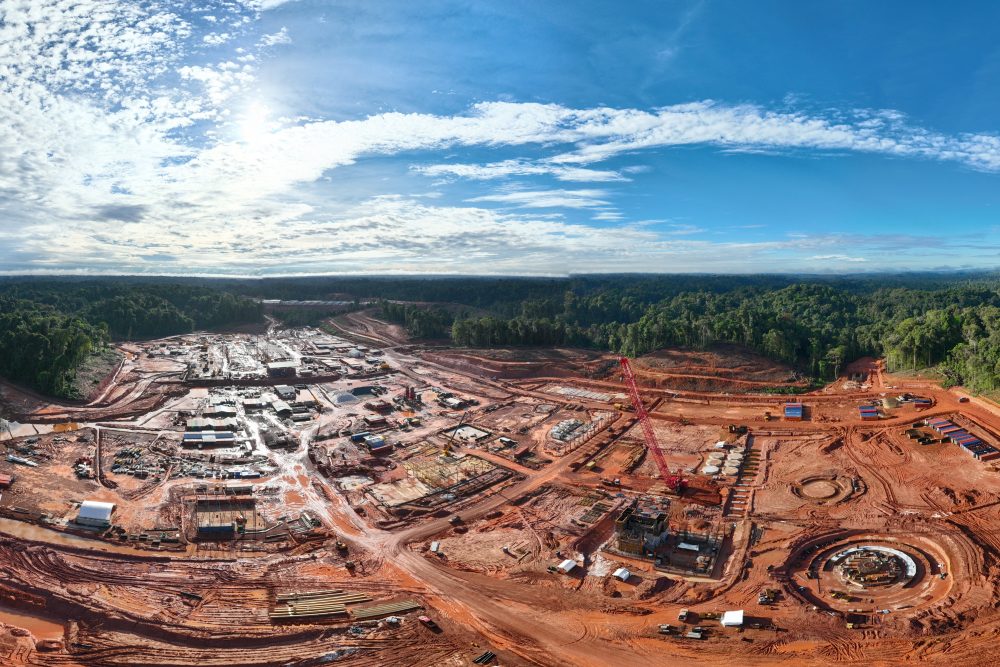
The most surprising transaction announced during the period was Eldorado Gold's acquisition of Foran Mining, a base metals developer with a zinc-copper project. Announced on 2nd Feburary, the deal was structured at zero premium to Foran's previous Friday closing price, though it represented a premium on a 20-day volume-weighted average basis.
The transaction raises strategic questions given Eldorado's focus on gold assets and the current strength in gold markets. Foran's primary asset contains significant zinc exposure in addition to copper, and zinc has historically exhibited short-lived bull markets with pricing largely influenced by major traders and Chinese demand. Market observers noted that Eldorado, whose main assets are located in Greece and Canada, had logical alternatives for expansion, particularly gold opportunities in Quebec that would provide feed for their Sigma-Lamaque mill.
As Macpherson observed, "if you look at the cash flow profile for Eldorado from that perspective you're going to get a big upswing" given that Foran's mine is permitted and expected to begin production later in 2026, coinciding with the ramp-up of Eldorado's Kışladağ asset. The transaction may reflect a view that copper and zinc represent the next commodities to experience meaningful price appreciation, or it could indicate relative value considerations where Eldorado's management perceived better value in base metals compared to gold development assets.
Goldsky's Barsele Consolidation
Goldsky Resources, formerly First Nordic Metals, completed a transformative transaction to acquire full control of the Barsele gold deposit in Sweden from Agnico Eagle. This acquisition represents the culmination of a multi-year strategic plan articulated when First Nordic originally entered the situation, subsequently evolving through a merger with Mawson Finland and a management restructuring.
The consolidated asset comprises nearly 2 million ounces drilled and defined by Agnico Eagle rather than a junior exploration company, suggesting strong geological confidence and professional technical work. Because Agnico has not marketed the asset as a junior company would, opportunities exist for resource expansion through reinterpretation of existing data and additional drilling. The project also offers exploration upside beyond the current resource.
The transaction catapults Goldsky from an exploration company to what market participants characterise as a tier-one developer in a premier jurisdiction. On a pro forma basis, including shares issued to Agnico, the company maintains a market capitalisation just under $1 billion.
The shareholder base supporting Goldsky - which notably includes some of the same institutional investors backing Foran Mining - resolves any concerns about access to capital for development.
CANEX and the Great Basin Gold Situation
CANEX Metals pursued a hostile takeover of Great Basin Resources, a company that had fallen into a cease trade order under previous management. Great Basin controls an asset in Arizona estimated at 1.5 to 2 million ounces of oxide, heap-leachable gold grading approximately one gram per ton. The jurisdiction benefits from established mining infrastructure and favorable permitting conditions.
CANEX successfully acquired 51.93% of Great Basin shares and announced on the morning of February 6th that it would force an annual general meeting to change the board of directors. Once new directors are installed, CANEX will proceed with cleaning up the company's regulatory and operational issues. As with most takeovers of distressed public companies, investors should anticipate negative headline surprises as the new management team conducts full due diligence and discovers previously undisclosed problems.
However, CANEX benefits from strong financial backing, including involvement from prominent mining investor Eric Sprott, providing capital to address issues as they arise. The investment thesis centers on acquiring a substantial gold resource at a fraction of its development value. With a current market capitalisation in the $50-60 million range (accounting for shares issued in the Great Basin acquisition), the asset represents significant value compared to similar deposits.
Market participants view this as a transformation story with multi-bagger potential over a 12-month horizon. The investment carries elevated risk given the binary nature of the hostile takeover and uncertainty about what issues new management will uncover, but the successful shareholder vote has de-risked the situation considerably.
Key Takeaways and Investment Implications
The current market environment presents a dual narrative: short-term volatility creating tactical opportunities alongside meaningful strategic developments through M&A activity. The pullback in precious metals and mining equities appears consistent with seasonal patterns and temporary liquidity dynamics rather than deteriorating fundamentals. Global liquidity indicators remain supportive, and historical seasonality suggests improving conditions in March and April.
The stabilisation of valuations after the volatile January rally has unlocked M&A activity that was impractical during periods of extreme price movement. While the Eldorado-Foran transaction raises questions about strategic direction, both the Goldsky and CANEX situations represent clear transformation stories with defined catalysts and supportive shareholder bases.
For investors, the environment favors selective accumulation in high-quality names that pulled back from January highs, alongside focused positions in companies with visible transformation potential. The emphasis on jurisdiction quality, asset scale, and access to capital emerges as a consistent theme across the discussed opportunities. As always, investors should conduct independent due diligence and recognise that these discussions represent investment ideas rather than specific recommendations.
TL;DR
Market volatility in early February is viewed as a normal correction driven by temporary liquidity factors and seasonal patterns, creating tactical buying opportunities in quality mining equities. Stabilising valuations have enabled M&A activity including Eldorado Gold's surprising base metals acquisition, Goldsky's transformative Barsele consolidation positioning it as a premier Scandinavian developer, and CANEX's successful hostile takeover of Great Basin Resources’ Arizona asset with multi-bagger potential. Global liquidity indicators remain positive with favorable seasonality expected in March-April.
FAQs (AI Generated)
Eldorado, a gold-focused producer, acquired a zinc-copper developer at zero premium during a strong gold bull market, moving into new jurisdictions and commodities rather than consolidating Quebec gold assets near existing operations.
New management will likely discover negative surprises during due diligence of the distressed Great Basin, though strong financial backing including Eric Sprott provides capital to address issues as they emerge.
Q1-Q2 historically offer the strongest seasonal performance for commodities, though Chinese New Year in mid-February typically creates temporary volatility before March-April strength. Current weakness aligns with historical patterns.
Option-adjusted spreads, high yield bond indices, and other global liquidity risk indicators show no systemic concerns. Treasury Department expected to provide net liquidity throughout 2026 after temporary withdrawal.
Stabilising valuations after volatile January rally make share-exchange transactions viable. When stocks move 10%+ daily, negotiating exchange ratios becomes impractical given 48-72 hour deal processes and board approval requirements.
Analyst's Notes





Subscribe to Our Channel


.jpg)


.jpg)
.jpg)
.jpg)
.jpg)


Stay Informed






















