ATHA Energy's Execution Advantage: Why Funding May Be the Key Differentiator in 2026


ATHA Energy's C$63M financing supports its largest-ever Angilak drill program, testing whether funding strength can accelerate uranium exploration success.
- ATHA Energy completed mobilisation to its Angilak Uranium Project in Nunavut in late April 2026 & commenced diamond drilling on May 01, 2026.
- The 2026 program is the largest in the project's history, targeting approximately 20,000 metres across 3 mineralised corridors using 3 drill rigs, running through September.
- A C$63 million financing closed in February 2026, positioning ATHA as one of the better-capitalised uranium exploration companies in its peer group.
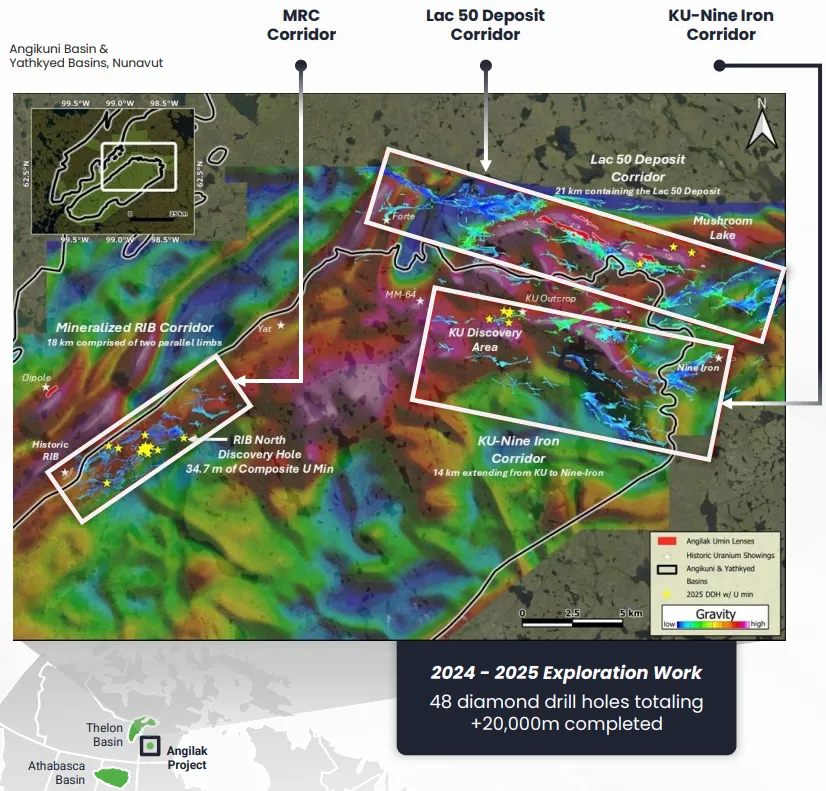
- The 2025 campaign produced 5 new regional discoveries across the Angikuni Basin, including a maiden hole at RIB North that returned 34.7 metres of composite uranium mineralisation at grades up to 8.16% uranium oxide over 0.5 metres.
- Drill results across the 3 mineralised corridors through the September 2026 field season close will indicate whether the C$63 million capital advantage has translated into exploration scale at Angilak.
What Has Happened
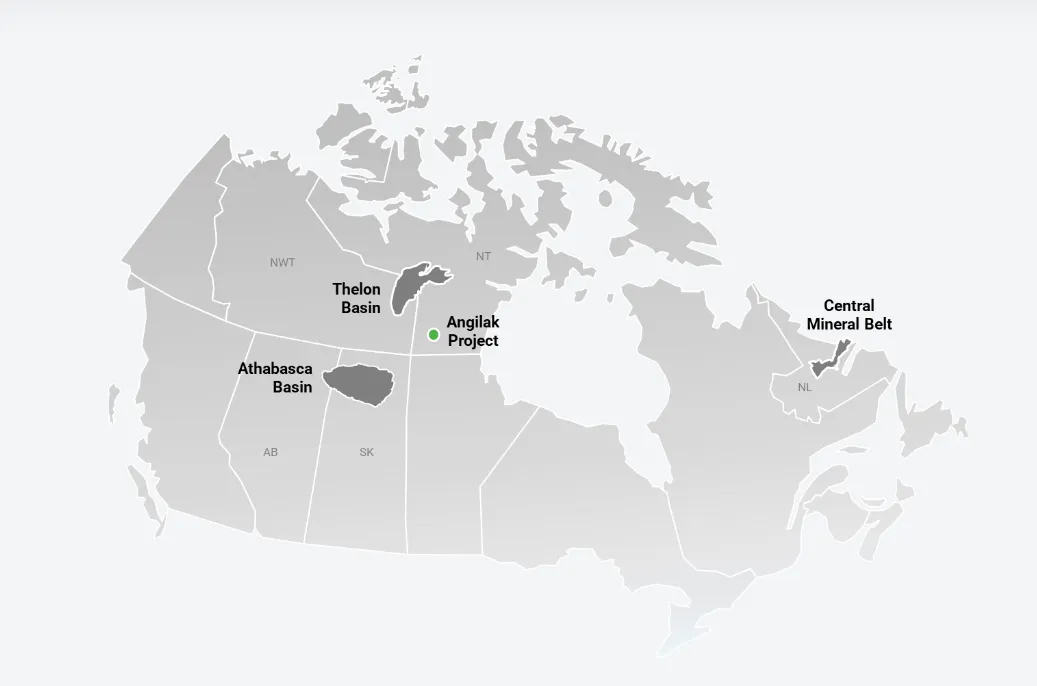
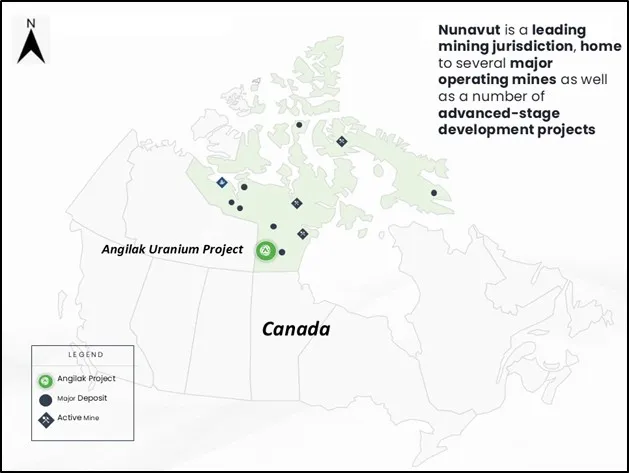
On May 05, 2026, ATHA Energy Corp. (TSX-V: SASK | FRA: X5U | OTCQB: SASKF) confirmed the completion of mobilisation to its 100%-owned Angilak Uranium Project in Nunavut, Canada, & the commencement of diamond drilling operations. The 2026 program is the largest the project has seen, comprising approximately 20,000 metres of drilling across 3 mineralised corridors, supported by a full-basin aerial magnetotelluric (MMT) geophysics campaign designed to acquire full basin coverage & generate a 3D Inversion model of the entire Angikuni Basin. The program is fully funded following a C$63 million financing that closed in February 2026.
The announcement follows 2 prior field campaigns that intersected uranium mineralisation in 100% of targets tested. At a time when junior uranium exploration companies are frequently constrained by capital availability, ATHA's balance sheet position gives the 2026 program a structural distinction that warrants investor attention.
From Discovery Risk to Scale: What Two Campaigns Established
The Angilak project entered ATHA's portfolio through the acquisition of Latitude Uranium. Since the 2024 field season, the company has systematically tested the Angikuni Basin using geophysics-led targeting, drilling 3D Inversion-derived targets at wide spacing to establish the presence of mineralisation rather than immediately delineating resources.
The 2024 program focused on the Lac 50 Deposit area, drilling 25 holes & expanding mineralisation in all directions. The 2025 program moved to regional targets outside the deposit area, resulting in 5 new regional discoveries, including the Mineralised RIB Corridor, where 4 new showings were identified. The RIB North discovery stands out: the maiden hole intersected 34.7 metres of composite uranium mineralisation, including 13 metres of continuous mineralisation at grades above 0.5% uranium oxide with intervals reaching 8.16% uranium oxide over 0.5 metres. Those grades are characteristic of Athabasca Basin-style uranium systems, the standard reference point for high-grade uranium discoveries in Canada.
Critically, every geophysical target tested across both campaigns returned uranium mineralisation, a 100% hit rate that is uncommon in greenfields uranium exploration at the basin scale.
Chief Executive Officer and Director of ATHA Energy, Troy Boisjoli, described what the 2026 program is designed to build on:
"The Company's flagship property, the Angilak Uranium Project, in Nunavut, was acquired in 2024. Subsequently, ATHA has completed two highly successful exploration campaigns utilising our systematic, derisking, exploration-at-scale approach, culminating in the identification of three mineralised corridors with tremendous blue-sky potential."
The transition from wide-space discovery drilling to continuity-focused drilling, which is the mandate of the 2026 program, represents a meaningful step in de-risking the project for resource definition.
The Scale Argument: Why Corridor Length Matters
Where Angilak diverges sharply from typical Athabasca discoveries is in spatial scale. Contiguous uranium mineralisation has been drilled over approximately 14 kilometres along the RIB corridor in 13 consecutive holes, all of which returned mineralised results. By comparison, major Athabasca deposits such as Arrow & Cigar Lake carry strike lengths typically under 1 kilometre.
Boisjoli put that distinction plainly:
"Arrow has a strike length currently of plus or minus 900 metres, same thing with Cigar Lake. You're under a kilometre in strike length. And we have mineralisation contiguously in the RIB area over 14 kilometres."
That spatial scale does not automatically translate to metal endowment, because grade, width, & continuity at depth all contribute to any eventual resource estimate. The Lac 50 Deposit Corridor alone spans 21 kilometres, with only approximately 24% of it drill-tested to date, per the company disclosure. The company controls 100% of the Angikuni Basin, giving it an unconstrained exploration canvas where competing operators are not a limiting factor for target access.
Capital Position as a Competitive Variable
The funding question is central to evaluating junior uranium explorers in the current market. A company can identify world-class geological targets but fail to realise value if it cannot sustain multi-season, multi-rig programs through to resource definition. ATHA's C$63 million financing, which closed in February 2026, includes a strategic investment from Queens Road Capital Investment, led by Warren Gilman, who has a track record in uranium through NexGen Energy.
That capital enables the program design changes visible in 2026: a move from 2 drill rigs to 3, a planned 20,000-metre drill program that more than doubles the combined metreage from the 2024 & 2025 campaigns, & a full-basin aerial MMT survey scheduled for late June, with 3D Inversion modelling targeted for completion by the Fourth Quarter of 2026. The point at which an exploration company crosses from the discovery stage to the resource definition stage is as dependent on funding continuity as it is on geological results. ATHA's multi-year balance sheet runway eliminates the near-term equity dilution risk that constrains many peer companies from executing continuous programs.
2026 Program Structure: 3 Corridors, 3 Objectives
The 2026 drilling campaign is organised around 3 target corridors, each with a distinct exploration rationale. The Mineralised RIB Corridor is the highest-profile target following the 2025 results, with the objective of both discovery expansion beyond the 14-kilometre mineralised trend & confirmation of continuity between the 4 showings already identified. The Lac 50 Deposit Corridor will test newly identified 3D Inversion targets along strike from the main deposit to expand the mineralisation footprint before delineation, as the deposit remains open & unconstrained per the company's technical report dated October 14, 2025.
The KU-Nine Iron Corridor builds on uranium mineralisation intersected in 2025 at the KU area & historic Nine Iron showings, with 2026 targets drawn from 3D Inversion models identifying the structural controls most likely to host economic concentrations.
Vice President Exploration of ATHA Energy, Cliff Revering, noted the significance of the systematic approach that underpins all 3 corridors:
"Results from 2024 and 2025 reflect a disciplined, systematic, and data-driven targeting approach, which has delivered meaningful value through the expansion of the Lac 50 Deposit and multiple new discoveries across the RIB and KU areas."
The aerial MMT survey planned for late June will extend full coverage across the entire Angikuni Basin. The 3D Inversion model derived from that data is intended to populate the next generation of drill targets beyond the current 3 corridors, establishing the scope of future programs.
Broader Sector Context
Supply-side constraints remain a structural feature: long lead times for new conventional uranium mines & ongoing geopolitical pressure on supply from Central Asian & African sources continue to support the investment case for Canadian uranium assets in stable jurisdictions.
ATHA's position controlling the entire Angikuni Basin places it in a land package with no peer competition for the same targets. The nearby Kiggavik deposit, located to the north in the Thelon Basin, carries a resource of 127 million pounds of uranium, providing a regional reference point for the metal endowment potential of the broader geological province.
What to Watch Next
The primary near-term catalyst is drill results from the 2026 program, which runs through September 2026. Assay results from RIB North follow-up holes will indicate whether the high-grade intervals from the 2025 maiden hole are representative of the broader corridor. Continuity results across the 14-kilometre RIB trend will determine whether the corridor supports the contiguous mineralisation profile required for resource definition drilling.
The aerial MMT survey beginning in late June & the 3D Inversion model targeted for the Fourth Quarter of 2026 will generate the next basin-wide target portfolio. The release of that dataset will serve as a forward-looking indicator for the scope & focus of the 2027 exploration program.
The results across all 3 corridors by the close of the September field season will be the clearest test of whether the C$63 million capital advantage has produced a materially larger & better-defined mineralised footprint than the 2 prior campaigns. That outcome, more than any single drill result, will indicate whether the funding differentiator has translated into exploration scale at Angilak.
FAQs (AI-Generated)
Analyst's Notes





Subscribe to Our Channel

.jpg)





Stay Informed