




Atlas Salt's Regulatory Clearance & Early Works Entry Redefine the Risk Profile at Great Atlantic


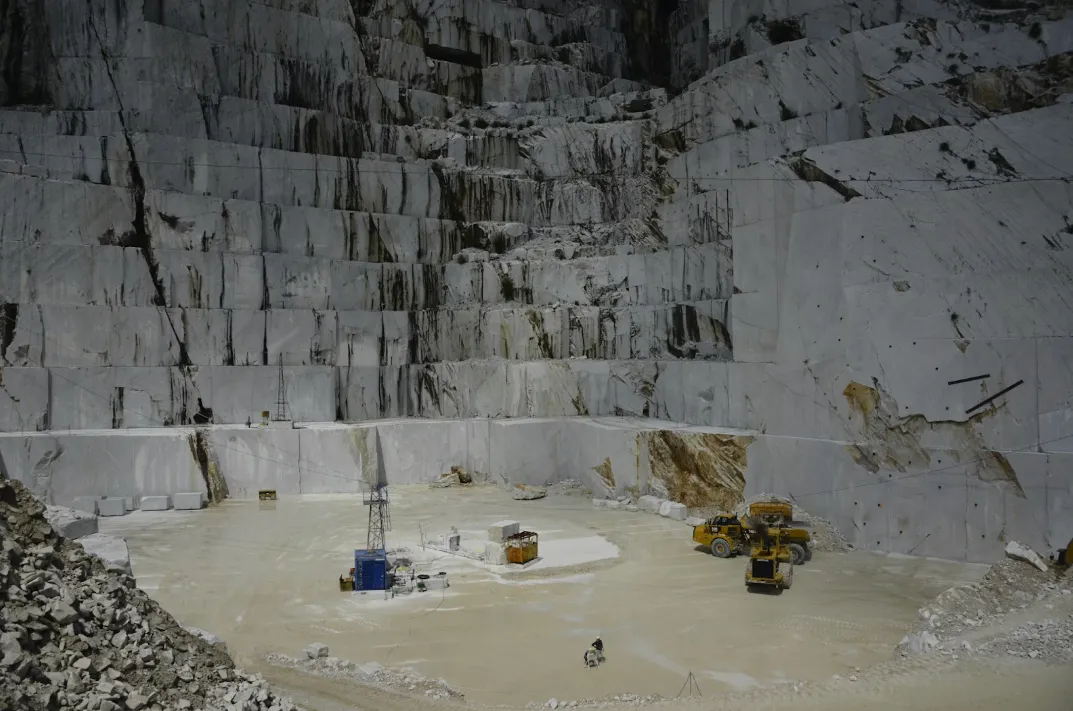
Atlas Salt retires regulatory, technical, and procurement risk at Great Atlantic as environmental assessment approval, a Benefits Agreement, and Early Works construction commence.
- Atlas Salt has satisfied all applicable Environmental Assessment (EA) conditions and received a formal Letter of Release, retiring the primary regulatory risk that discounts development-stage project valuations.
- A Benefits Agreement between Atlas Salt and the Province of Newfoundland and Labrador, approved at the Cabinet level, establishes a binding framework for employment, procurement, and community participation through construction and operations.
- Completion of the 2025 Feasibility Study (FS) and a $132 million equipment memorandum of understanding (MOU) with Sandvik Mining have removed key technical and procurement risks against the project’s $600 million total capital expenditure (capex).
- The approximately $100 million Early Works program is underway, with land clearing, site preparation, and box cut sequencing already in progress.
- Remaining risk exposure has shifted to financing package closure and construction execution, a conventional profile for a project that has cleared pre-construction requirements.
Why the Permitting-to-Construction Transition Matters for Investors
The move from permitting to physical construction is a valuation inflection point in a mining project's lifecycle. At this stage, regulatory risk gives way to financing, construction, and ramp-up risk. For Atlas Salt (TSXV:SALT) and its Great Atlantic Salt Project in western Newfoundland, the commencement of Early Works in February 2026 confirms that a substantial tier of pre-development risk has been retired across three dimensions: technical, regulatory, and social license.
Risks Resolved: Technical, Regulatory, and Social License
Atlas Salt completed its updated Feasibility Study (FS) in 2025, establishing deposit design, mining method, and capital cost parameters on the basis of independently verified reserve estimates. In February 2026, the company expanded its memorandum of understanding (MOU) with Sandvik Mining to cover $132 million in continuous miners, haulage equipment, and associated services. The MOU was executed ahead of full financing closure, with continuous miners and haulage equipment confirmed as the underground equipment covered under the agreement.
Atlas Salt confirmed in February 2026 the receipt of a formal Letter of Release from the provincial government. This document confirms that all applicable Environmental Assessment (EA) conditions have been satisfied, including approval of the Early Works Development Plan and associated Environmental Management Plans by the Government of Newfoundland and Labrador. With the Letter of Release issued, Atlas Salt has received formal government authorization to proceed with Early Works construction.
The Benefits Agreement between Atlas Salt and the Province of Newfoundland and Labrador is a binding framework for employment, procurement, training, and community participation throughout the construction and operations phases. The agreement was approved at the Cabinet level and covers the construction and operations phases of the project.
Ground Activity Confirms Construction Has Commenced
Active ground work indicates that the previously identified risks are being materially addressed. Atlas Salt confirmed in February 2026 that land clearing, tree cutting, grubbing, and site preparation had commenced, activities that are contingent on government approval of the Early Works Development Plan and satisfaction of all applicable EA conditions.
The early works program, valued at approximately $100 million against a total project capital expenditure (capex) of $600 million Canadian, covers surface preparation, establishing pads, road access, power lines, substations, transformers, and prep work on the box cut required before underground drift development can begin.
Chief Executive Officer of Atlas Salt, Nolan Peterson, confirmed that the Early Works package received formal government approval to commence, with construction activity now underway on site:
“We did put out on Friday just less than a week ago that we are starting construction at site. Now that's early works activities so we have an early works package that's about $100 million that's been approved to start construction by the government to allow us to do the work"
The box cut is the next sequential milestone in the construction pathway. Its completion is a prerequisite for underground mine access at the deposit's approximately 200-metre depth, and preparatory work is already underway.
Key Risks: Financing Closure and Construction Execution
The primary remaining risk is closing the project financing. Atlas Salt is working with Endeavor Financial to structure approximately 60% debt funding from infrastructure banks, sovereign wealth funds, and export credit agencies against $600 million in total capex.
Peterson addressed how the company views the remaining regulatory submissions outstanding under the EA framework:
“And just to be clear the permits that come out and required out of the environmental assessment are just procedural at this point. That's how we view them right, but all of this work is for building a mine right"
Construction execution risk, including contractor performance, ramp development, and underground equipment delivery timelines, is now active. These are conventional development-stage exposures that introduce schedule and cost variability.
Peterson outlined how securing project financing functions as the primary catalyst for the company's next phase of equity valuation:
“As you get through project financing and advance and de-risk the project, it follows that the project eventually gets to the second bump, and then that's where it finds its level in value.”
The distinction from 12 months ago is material. A year ago, the project carried technical, regulatory, social license, and procurement risk concurrently. Those four categories have been addressed. The remaining exposures are standard for a project that has cleared pre-construction requirements.
The Investment Thesis for Atlas Salt
- Atlas Salt has removed primary regulatory risk through the Letter of Release, which confirms all Environmental Assessment conditions are satisfied and authorizes construction to proceed.
- Technical and procurement risk are resolved following feasibility study completion and the Sandvik Mining memorandum of understanding covering $132 million of equipment and services.
- Social license risk is addressed through the Cabinet-approved Benefits Agreement, establishing a binding provincial framework for employment, procurement, and community participation.
- With early works underway, the project has transitioned into the construction phase, shifting the risk profile to financing closure and execution.
- Valuation is now driven by securing the approximately 60% debt financing package and delivering construction on schedule and on budget, with limited reliance on further equity.
Atlas Salt has addressed key technical, regulatory, social license, and procurement hurdles that frequently stall development-stage mining projects. The remaining exposures, financing package closure and construction execution, are conventional and form the basis for investor evaluation. The risk profile is distinct from previous stages, and the Early Works progress confirms that the regulatory clearances are facilitating active physical construction.
TL;DR
Atlas Salt has retired primary regulatory, technical, social license, and procurement risks at Great Atlantic. The formal Letter of Release authorizes Early Works construction, the Cabinet-level Benefits Agreement establishes a provincial framework for employment, procurement, training, and community participation, and the Sandvik Mining memorandum of understanding supports $132 million of equipment and services. The $100 million Early Works program is active on the ground. Remaining development-stage risks are focused on financing package closure, with the company targeting 60% from debt, and physical construction execution.
FAQs (AI-Generated)
Analyst's Notes





Subscribe to Our Channel

.jpg)


Stay Informed


