




Atomic Eagle Defines 2 Muntanga North Zones as Drilling Turns to Chisebuka's 2027 Resource



Atomic Eagle extended Muntanga North Target 5 to about 1,500 meters, defined a Target 6 zone, and now drills Chisebuka for a 2027 resource update.
- Follow-up drilling extended the Target 5 uranium zone at Muntanga North to about 1,500 meters (m) long and about 200 m wide.
- Drilling defined a new zone at Target 6 of about 800 m by about 200 m, averaging about 3 m thick and open at its interpreted limits.
- Intercepts at Target 6 included 5.2 m at 380 parts per million (ppm) equivalent uranium oxide from 38.8 m downhole.
- Total 2026 exploration drilling at Muntanga North and Namakande reached 216 holes for 21,829 m.
- Extensional and infill drilling at Chisebuka will be prioritized for the rest of the 2026 season, ahead of an updated mineral resource estimate (MRE) in 2027.
Company Overview
Atomic Eagle (ASX: AEU | OTCQX: AEUXF) is an ASX-listed uranium development company focused on uranium assets in Africa. Its flagship is the 100%-owned Muntanga Uranium Project in Zambia, which contains a JORC resource of 58.8 million pounds (lb) of uranium oxide at 309 parts per million (ppm). It also holds a 60% interest in the Madaouela Uranium Project in Niger, which hosts 116.5 million lb at 1,282 ppm reported as a foreign estimate under the ASX Listing Rules.
Muntanga North Targets 5 & 6
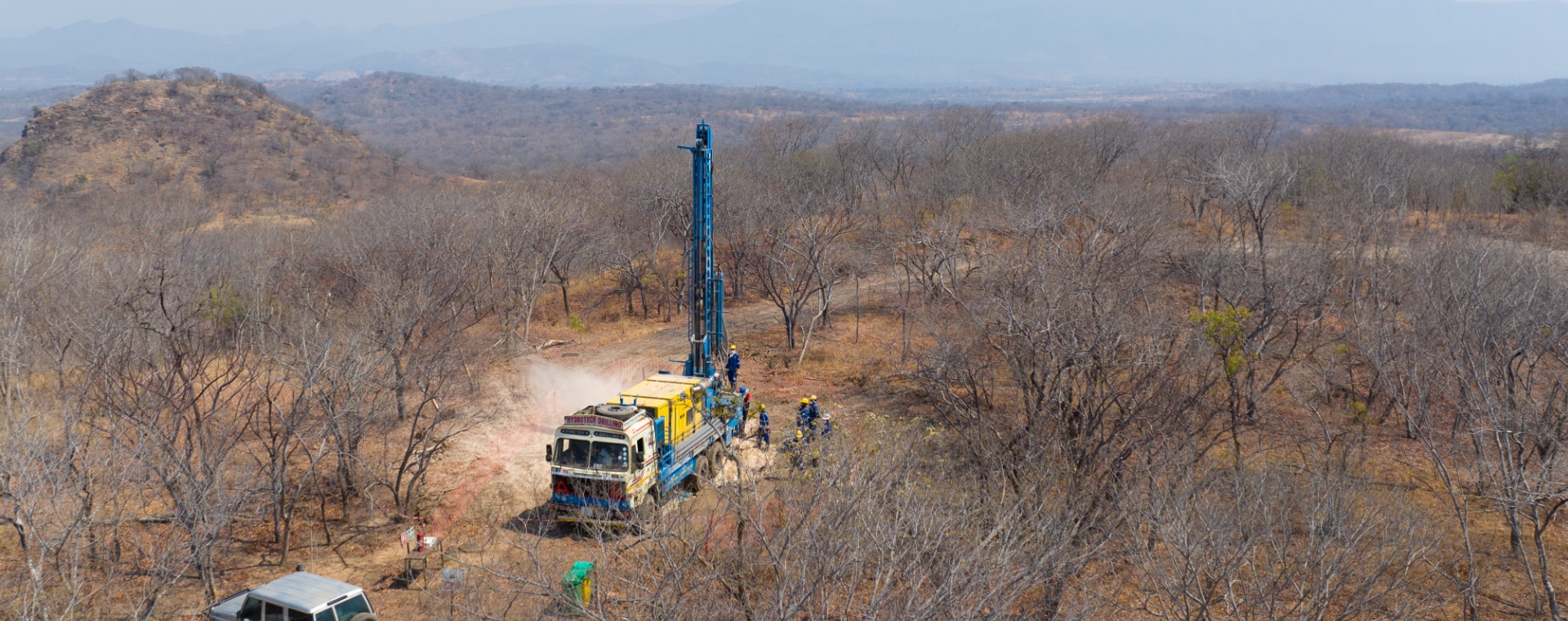
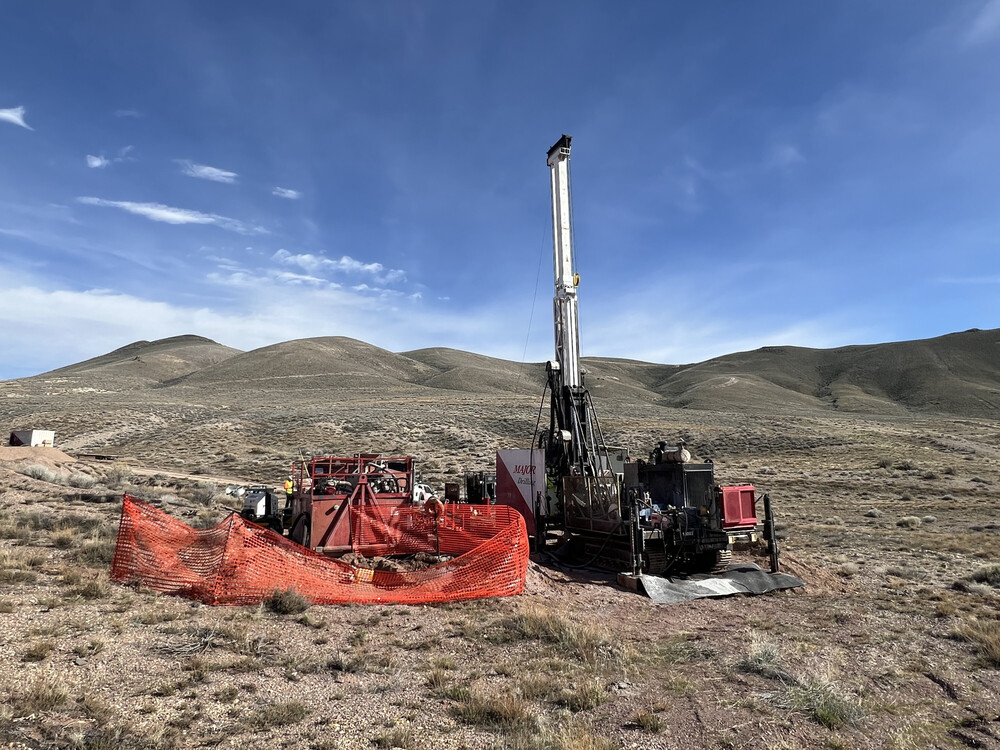
Follow-up drilling at Muntanga North extended the Target 5 zone and outlined a new zone at Target 6. Since the September 16, 2026 exploration update, 84 holes totaling 8,367 meters (m) have been completed at Targets 5, 6, 7, and 8. Total 2026 exploration drilling at Muntanga North and Namakande now stands at 216 holes for 21,829 m.
At Target 5, the shallow-dipping uranium zone now extends to about 1,500 m long and about 200 m wide. Mineralization broadly parallels bedding and has a lenticular, or lens-shaped, geometry that may reflect structural control. Drilling to the southeast intersected unmineralized mudstone, indicating that the mineralized horizon may be faulted and downthrown, or that the mudstone was not receptive to the mineralizing fluids. Intercepts at Target 5 included 5.7 m at 184 ppm equivalent uranium oxide from 93.1 m downhole.
At Target 6, drilling defined a coherent shallow-dipping zone about 800 m long and about 200 m wide, averaging about 3 m in thickness and remaining open at its interpreted limits. Intercepts there included 5.2 m at 380 ppm from 38.8 m downhole and 10.9 m at 250 ppm from 36.8 m. Other Target 6 holes returned 5.0 m at 261 ppm from 21.9 m and 4.3 m at 273 ppm from 45.4 m. Further technical assessment is required before deciding whether additional drilling at Target 6 is justified.
How the Grades Were Measured
All intercepts are reported as equivalent uranium oxide, a grade estimated from the radioactivity measured by a downhole gamma tool rather than from laboratory assays. Intercepts use a 100 ppm cut-off and a minimum width of 1 m. The tool was calibrated at the Grand Junction calibration pits by Mt Sopris before arriving on site and was run weekly in a lined test hole to test repeatability.
A project-wide conversion factor from radiometric readings to grade was developed by GoviEx after its 2021 to 2023 drilling campaigns, by comparing assays from 254 mineralized intervals with the matching probe data. Future reverse circulation (RC) and diamond holes will be used to verify the gamma tool against assay data.
Targets 1 to 4, 7 & 8
No significant uranium mineralization was intersected at Targets 1 to 4, 7, and 8. At these targets, the surface radiometric response is interpreted to reflect uranium decay products or radionuclides migrating along permeable bedding planes, fractures, and other structural pathways. The 2026 results also showed that the strongest surface radiometric response does not necessarily coincide with the best subsurface uranium accumulation, and these targets do not justify follow-up drilling at this stage.
Chief Executive Officer of Atomic Eagle, Phil Hoskins, links the anomalies to uranium that may lie beyond the holes drilled so far:
"At several targets, drilling at the center of coincident radiometric and soil anomalies intersected evidence of uranium mobility or mineralization indicating that additional mineralization may occur nearby along strike, down dip or beneath cover. These interpretations will be tested in future exploration campaigns."
The new geological, structural, radiometric, and geochemical information will be incorporated into the company's targeting model for new discoveries and resource expansion.
Chisebuka Drilling for the 2027 Resource Update
For the remainder of 2026, the drill program returns to Chisebuka for extensional and infill drilling to support an updated mineral resource estimate (MRE) in 2027. Twelve RC holes have been drilled to confirm grades estimated from downhole gamma logging, with laboratory assays pending, and 25 diamond holes are planned to provide samples for metallurgical testing and laboratory assays. Further drilling is planned to infill known mineralization and test selected priority extensions.
Hoskins connects the Chisebuka program to the next round of development studies:
"Over the past 12 months, the Company has added Chisebuka and Muntanga East to the resource base with Chisebuka's mineralized footprint continuing to grow. We are now prioritizing additional extensional and infill drilling at Chisebuka so that the expanded resource can be incorporated into updated development studies."
Where drilling density and geological continuity support it, the program is also intended to convert mineralization to the indicated category for use in those updated development studies.
Next Steps
- Infill and extensional drilling at Chisebuka through the rest of the 2026 drilling season.
- An updated MRE in 2027, including conversion of appropriate mineralization to the indicated category.
- Assessment of the Target 5 and Target 6 results against potential scale, grade continuity, and additional drilling requirements before any decision on further resource-definition work.
- Reinterpretation of the Muntanga North and Namakande datasets to improve the ranking of future drill targets, and evaluation of opportunities to expand the project landholding.
FAQs (AI-Generated)
Analyst's Notes





Subscribe to Our Channel

Stay Informed


