




Bandeira's 2 Neighboring Mines De-Risk Lithium Ionic Ahead of a Re-Rate


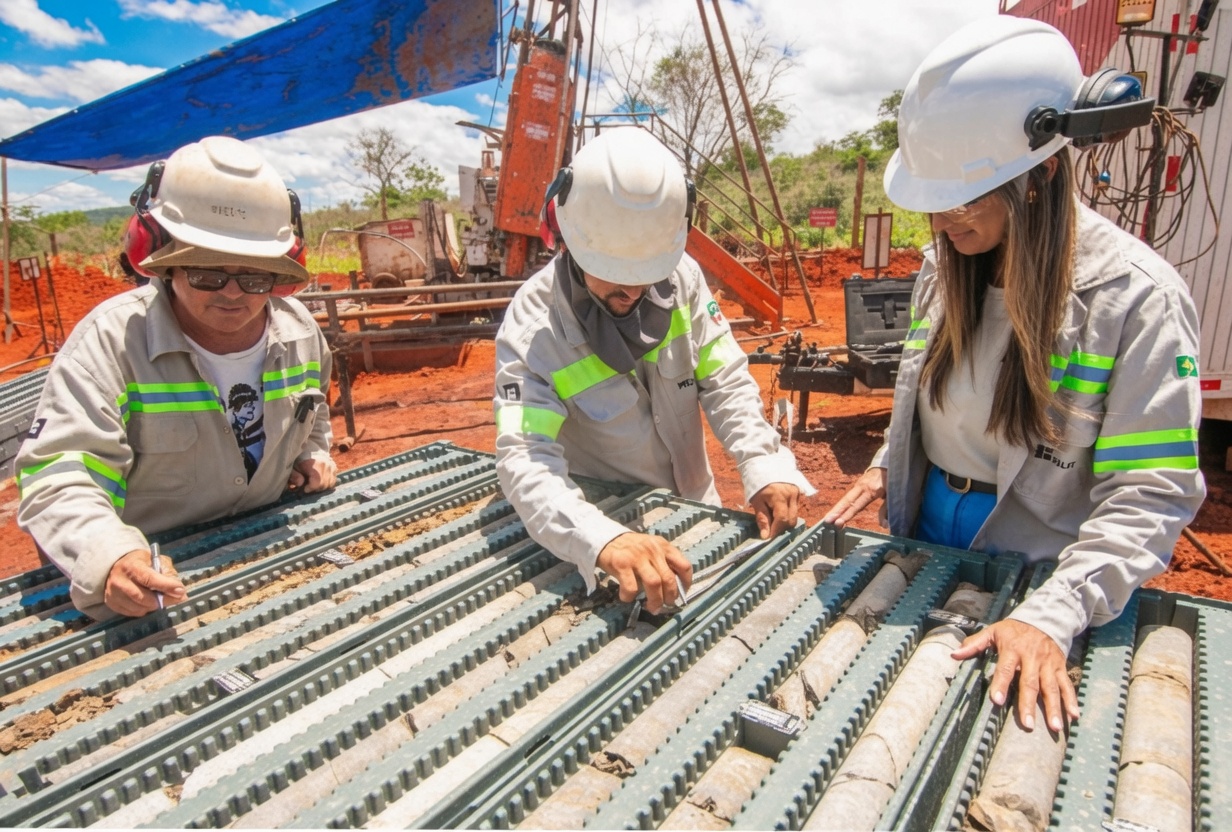
Bandeira's neighboring lithium mines de-risk costs and grades, pointing to a valuation re-rate for Lithium Ionic in Brazil's Lithium Valley.
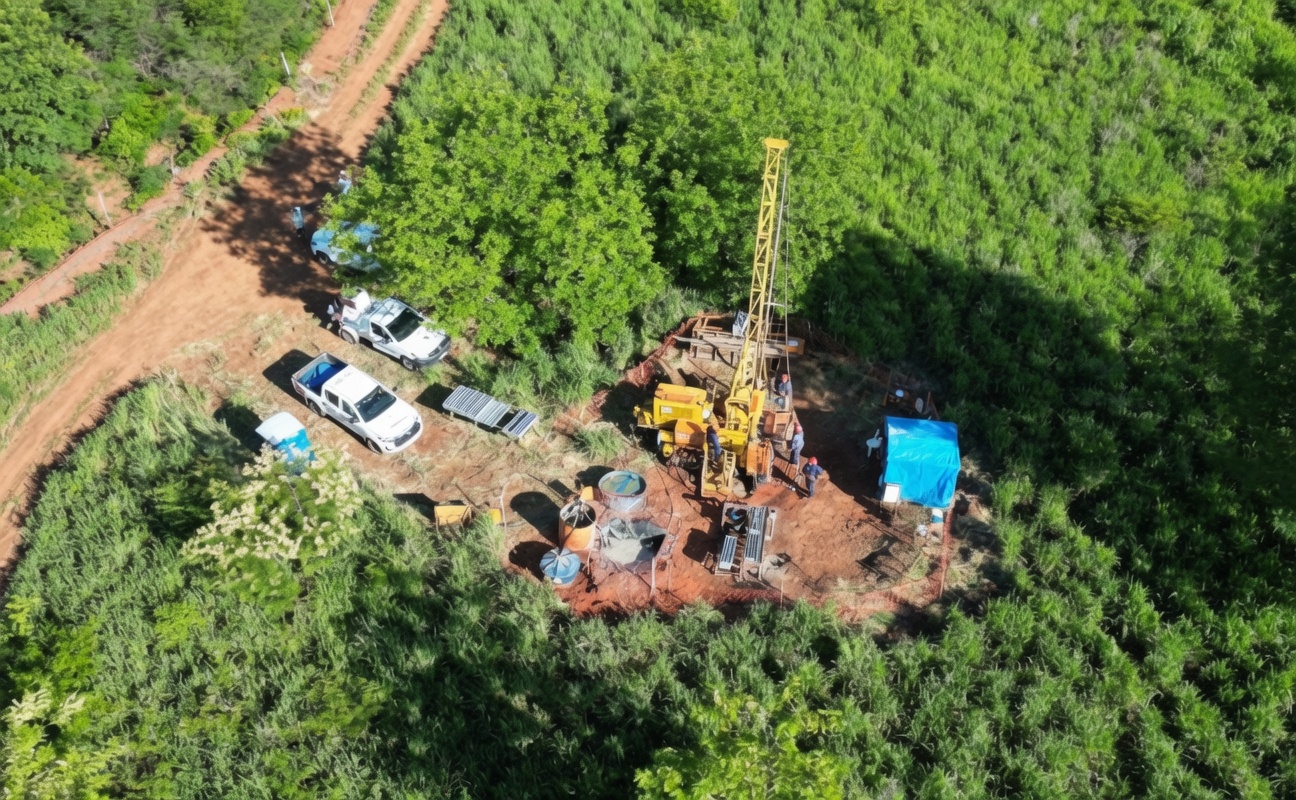
- Bandeira sits less than 500 meters from CBL's Cachoeira mine (producing since 1991), and roughly 4 kilometers from Sigma Lithium's Grota do Cirilo mine (producing since 2023).
- The September 2025 feasibility study puts Bandeira's operating cost at US$378 per ton of concentrate, below the 50th percentile of the global spodumene cost curve, a rare position for an underground mine.
- Lithium Ionic trades at approximately a 0.1 times price-to-net-asset-value (P/NAV) multiple, versus 0.8 to 1.0 times for producing peers.
- Institutional investors hold approximately 30% of Lithium Ionic's shares, management and insiders hold approximately 20%, and the remainder sits with retail and other shareholders.
- A construction decision is targeted once state-level permitting approval for Bandeira, submitted in November 2023, clears.
What Has Happened
Lithium Ionic Corp.'s (TSXV: LTH | OTC: LTHCF | FSE: H3N) Bandeira project sits next to 2 operating lithium mines. They function less as competition and more as a live pilot plant for the company's own build, ahead of a construction decision. That context sits alongside the September 2025 feasibility study. It reduced Bandeira's initial capital estimate by approximately 28% from the 2024 study, and it raised the post-tax internal rate of return (IRR) from 40% to 61%. Institutional investors hold approximately 30% of Lithium Ionic's shares, management and insiders hold approximately 20%, and the remainder sits with retail and other shareholders.
The comparison that matters most is Sigma Lithium Corp., Bandeira's neighbor and closest public comparable. Lithium Ionic shares the same geology, the same processing method, and the same jurisdiction. Yet it trades at a markedly lower price-to-net-asset-value (P/NAV) multiple than Sigma, its production-stage peer. That gap comes down to 2 things. The neighboring mines de-risk Bandeira's geology and costs ahead of construction. And the resulting spread between asset value and market value is itself the re-rating opportunity for investors.
That framing shifts the lens from individual milestones, such as permitting or offtake terms, toward the district-level evidence base and the valuation mechanics behind it.
Bandeira's 2 Neighbors as a Live Pilot Plant
Bandeira sits within Brazil's Lithium Valley in Minas Gerais. CBL's Cachoeira mine, in production since 1991, flanks it on one side, less than 500 meters away. Sigma Lithium's Grota do Cirilo project, in production since April 2023, flanks it on the other, roughly 4 kilometers away. Both use dense media separation (DMS) processing, the same processing method proposed for Bandeira, and both operate in the same regional geological setting. The similarities don’t end at processing for Cachoeira and Bandeira; Cachoeira uses sublevel stoping as its underground mining method, the same mining method that is proposed for Bandeira.
Chief Executive Officer and Director of Lithium Ionic, Blake Hylands, on the value of operating next to established producers:
"We get real-time costs, real-time data. Having a more recent project like Sigma helps us be confident in our capex numbers and our operation numbers, and it also builds expertise in the region."
The proximity carries metallurgical read-through too. CBL has converted material from the region to lithium hydroxide and lithium carbonate on a small scale for more than 3 decades. That track record gives a working sense of how Bandeira's own concentrate is likely to behave once it reaches an offtake partner's conversion facility, and it narrows one of the risk categories, metallurgical performance downstream of the mine gate, that otherwise stays unproven until a new project builds its own production history.
Below the Cost Curve Despite an Underground Mine
Underground mines typically carry a cost penalty against open-pit operations. That penalty is exactly what makes Bandeira's position on the global cost curve notable. The September 2025 feasibility study puts Bandeira's total operating cost at US$378 per ton of concentrate produced, on a 5.2% spodumene concentrate (SC5.2%) basis, including capitalized underground development. That places the project below the 50th percentile of the global SC cost curve compiled from 2024 producer data.
The same curve tells the competitive story. Bandeira's projected life-of-mine cash cost of US$3,949 per ton of lithium carbonate equivalent (LCE) sits between CBL's Cachoeira mine at US$4,418 per ton, and Sigma's Grota do Cirilo at US$3,769 per ton. An underground project lands inside the cost range of its open-pit and shallower-underground neighbors, not above it.
No single factor explains the position; a combination does. Existing infrastructure, including hydroelectric power, paved roads, and port access, is already in place. A workforce with regional DMS experience is already trained. And the process skips chemical flotation entirely in favor of gravity separation, which lowers both capital and operating costs relative to a chemical processing circuit.
The Valuation Gap
The feasibility economics set up the valuation gap between Bandeira and its regional peers. At the study's base-case price of US$2,212 per ton of SC6, Bandeira shows a post-tax net present value at an 8% discount rate (NPV8%) of US$1.45 billion and a post-tax IRR of 61%.
Hylands, on the valuation multiple:
"I think today we're trading at about a 0.1 P to NAV multiple, and our peer group anywhere from 0.8 to 1.0 in a production scenario."
That range implies a multiple re-rating as Bandeira converts from a feasibility-stage asset into a construction and then production story.
Broader Context: A District Still Finding Its Price
The valuation gap sits against a lithium market that has swung twice. SC prices peaked near US$8,000 per ton, a level Hylands called out as being on the high side, then fell as low as roughly US$600 per ton. More recently, prices have recovered to roughly US$2,500 per ton (SC6).
That recovery matters directly to Bandeira's economics. The feasibility study's base case already assumes a conservative near-term price of US$1,392 per ton for 2026 through 2028, below the market's actual trajectory. The project's headline returns do not depend on prices climbing further from current levels. At the January 23, 2026, spot price of US$2,515 per ton, the same study's post-tax NPV8% rises to US$1.8 billion and IRR to 102%. Payback shortens to 1.1 years from 26 months at the base case.
Demand is also broadening beyond the electric vehicle (EV) sector. Artificial intelligence-linked battery storage and robotics now add sources of lithium demand growth that did not exist several years ago. Conversion capacity in China continues to grow alongside them. Lithium Valley's 2 existing producers give Bandeira, and any project that follows it into production, a jurisdiction-level track record to point to as that demand plays out.
What to Watch Next
The near-term path runs through Brazil's Free, Prior and Informed Consent (FPIC) federal review, targeted for resolution within weeks. A state-level Conselho de Política Ambiental (COPAM) vote follows, targeted for August or September 2026. A construction decision for Bandeira is targeted once that state-level approval clears. The next test is whether the cost and recovery benchmarks drawn from CBL and Sigma hold as Bandeira's own detailed engineering converts into final construction pricing.
The multiple is the mechanism to watch. Lithium Ionic trades at roughly 0.1 times P/NAV against a 0.8 to 1.0 times range for producing peers, and every step, whether permitting, financing, or construction, that turns the feasibility study's asset value into a producer's valuation closes that gap directly.
FAQs (AI-Generated)
Analyst's Notes





Subscribe to Our Channel



.png)
.png)



Stay Informed


