




Billion Project NPVs to Production: Critical Mineral Developers Delivering in 2026



Critical minerals developers are delivering key milestones in 2026 across rutile, rare earths, nickel, cesium, and PGEs, as Western supply chain urgency drives government support and investor attention.
- Critical minerals have moved from a niche policy concern to an urgent industrial and investment priority, driven by the convergence of electrification demand, defence technology requirements, and the structural concentration of supply in geopolitically sensitive jurisdictions.
- Across natural rutile, heavy rare earths, nickel sulphide, cesium, and platinum group elements, development-stage companies are delivering concrete technical milestones in 2026, shifting the investment narrative from forward-looking potential to demonstrated progress.
- Western governments are actively deploying financial support mechanisms including refundable tax credits, sovereign critical minerals funds, and bilateral co-investment frameworks that materially reduce financing risk for qualifying projects in allied jurisdictions.
- The transition from exploration to bankable project economics is underway across multiple critical minerals simultaneously, a convergence that historically precedes valuation re-rating as institutional capital begins pricing in execution probability rather than development uncertainty.
- The second half of 2026 is set to deliver a concentrated sequence of milestones including feasibility studies, resource calculations, first-production achievements, and investment decisions that will provide investors with defined economic frameworks for assets that currently trade without formal valuations.
For much of the past decade, critical minerals occupied a niche corner of the resource investment landscape, discussed primarily by policy analysts and supply chain specialists rather than mainstream capital markets participants. That dynamic has shifted materially. The convergence of electrification demand, defence technology requirements, and geopolitical realignment around Chinese supply dominance has elevated critical minerals from a thematic consideration to an urgent industrial priority for Western governments and the private sector alike.
What makes 2026 particularly significant is that the investment case is no longer purely forward-looking. Across rutile, rare earths, nickel, cesium, and platinum group elements, companies are delivering concrete technical milestones, resource upgrades, feasibility studies towards first production.
Natural Rutile: The Titanium Supply Gap
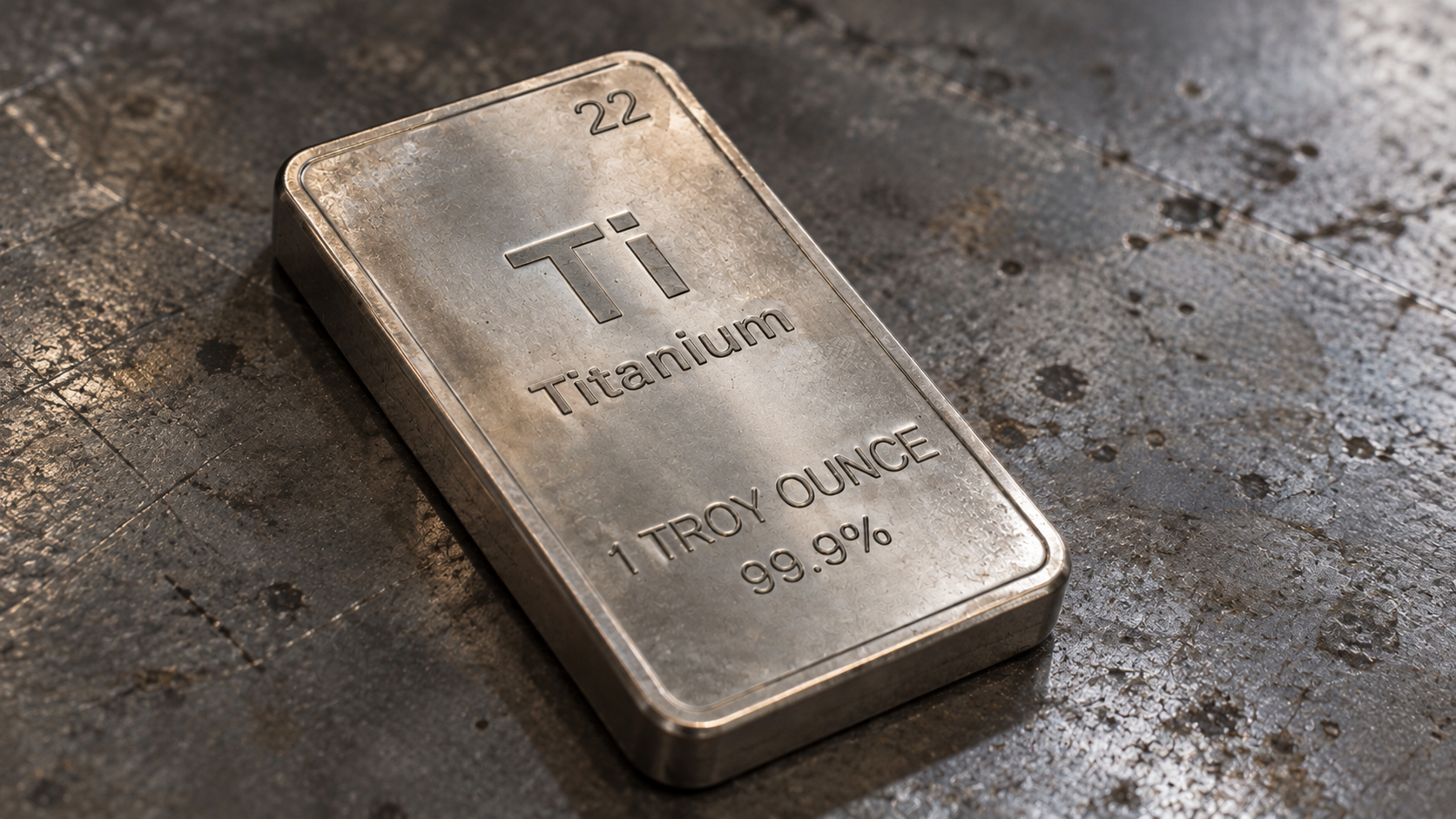
Among critical minerals, natural rutile may represent the most underappreciated structural deficit currently developing. Rutile, the highest-grade natural titanium feedstock, is essential to titanium metal production for aerospace, defence, and medical applications. Demand from the titanium metals industry is forecast to grow at 3% annually, while global supply is projected to decline by 7% per year over the next decade, according to leading titanium consultants TZ Minerals International. The gap between those two trajectories has significant implications for downstream industries that have historically relied on a small number of producing regions.
Sovereign Metals' Kasiya Rutile-Graphite Project in Malawi is positioned directly at the centre of that supply gap. In March 2026, the company announced a material upgrade to its Mineral Resource Estimate, increasing total rutile resources to 20.3 million tonnes. Critically, Measured and Indicated contained rutile grew 32% to 16.1 million tonnes, a classification threshold that unlocks the resource confidence required for bankable project financing and formal offtake discussions.
Managing Director and CEO Frank Eagar described the significance of the upgrade directly:
"The rigour of the updated resource estimation gives our strategic and commercial partners and us high confidence in the resource base underpinning our potential mine schedule. Kasiya remains unmatched globally as a source of natural rutile, and this MRE update reinforces its potential as a long-life, low-cost supplier to critical global supply chains."
The resource upgrade serves as the foundation for the forthcoming Definitive Feasibility Study for Kasiya, which is advancing across mining, processing, infrastructure, and environmental workstreams simultaneously. Natural rutile commands a premium over synthetic alternatives due to its superior grade of 95% or higher titanium dioxide content, lower processing costs, and reduced environmental footprint. With no meaningful domestic production in the largest consuming nations, Kasiya's scale positions it as the single most strategically important natural rutile source outside of current producing regions.
Nickel: Kabanga and Crawford Signal a Market Turning Point
The nickel market has spent three years under pressure from Indonesian supply expansion but the dynamic is now showing signs of structural change. Physical market indicators including ore, nickel pig iron, and stainless steel prices have risen materially in early 2026, with nickel itself up approximately 30% year-to-date.
Canada Nickel CEO Mark Selby explained these changes reflect fiscal incentives within Indonesia. Nickel represents a significant component of the country’s export revenue, and higher price environments directly benefit government finances. As Selby noted:
“This is a sustained fundamental shift in the nickel market. If governments have a chance to make more money, they usually try and take that chance to make more money.”
Canada Nickel's Crawford nickel sulphide project is backed by a $100 million strategic investment from Samsung SDI for a 10% project stake is targeting a construction decision by year-end. The dual federal and provincial endorsements Canada Nickel has secured are uncommon in the Canadian mining landscape and have broadened the company's access to international sovereign financing partners.
Interview with Mark Selby, CEO of Canada Nickel
Lifezone Metals' Kabanga Nickel Project in Tanzania represents one of the most technically advanced high-grade nickel sulphide developments globally. In 2025, the company completed a Feasibility Study declaring the project's first Mineral Reserves: 52.2 million tonnes at 1.98% nickel, 0.27% copper, and 0.15% cobalt. The study outlines an 18-year mine life with an after-tax net present value of $1.58 billion at an 8% discount rate and an after-tax IRR of 23.3%.
In a news release, CEO Chris Showalter noted the company's positioning at year-end:
"Kabanga remains the cornerstone of our long-term growth strategy. Its high-grade resource and competitive cost profile, coupled with future integration with our exciting Hydromet Technology, position us to deliver meaningful, sustainable value as global demand for cleaner battery metals accelerates."
The company also consolidated its ownership position by acquiring BHP's 17% equity interest in Kabanga Nickel Limited, bringing Lifezone's attributable share to 84%, with the Government of Tanzania retaining a 16% free-carried interest. A Final Investment Decision is targeted for late 2026.
Cesium & PGEs: Early-Stage Optionality With Near-Term Catalysts
Beyond the more established critical minerals, 2026 is shaping up as a defining year for two niche but strategically relevant commodities: cesium and platinum group elements.
Grid Metals Corp holds one of only six cesium deposits ever discovered globally. Located in Manitoba, Canada, he company is targeting a resource calculation by the third quarter of 2026, followed by permitting in 2027 and production within 18 to 24 months using shallow open-pit mining and XRT optical sorting technology that eliminates the need for conventional milling or tailings infrastructure.
The cesium market is small, at approximately $400 million annually, but is dominated 85% by Chinese producers, leaving Western supply chains structurally exposed. CEO Robin Dunbar described the fundamental supply constraint with directness as there's not a lot of suppliers, not a lot of buyers.
Dunbar framed cesium as a catalyst for the company's broader strategy:
"It looks like we spent a lot of time looking at the market. Is this market real? Is what we're doing relevant? Are we going to be able to sell the product? Is there demand for the product? Cesium is rarer in demand than most and there's far fewer hurdles to getting into production."
Interview with Robin Dunbar, CEO of Grid Metals
Emerging applications in perovskite solar technology, which increases photovoltaic efficiency by approximately 25%, and military atomic clock applications add demand optionality to a market that is already supply-constrained at current volumes.
ValOre Metals is advancing its 2.2 million ounce Pedra Branca platinum group element project in Brazil toward a Preliminary Economic Assessment targeted for year-end 2026. The company is developing a bioleaching process in partnership with the University of Cape Town, with Phase 1 trials delivering metal recoveries consistently in high percentage (above 70%) range. CEO Nick Smart captured the broader significance concisely:
"The world is increasingly realising that we can't leave stranded deposits around the world or high-value waste materials."
ValOre holds exclusive global rights to the resulting intellectual property, which would represent the first application of bioleaching to a PGE deposit if validated at commercial scale. Operation would target production of approximately 10,000 to 15,000 ounces of platinum and palladium per year.
Interview with Nick Smart, Director & CEO of ValOre Metals
Heavy Rare Earths: US Domestic Production Becomes Reality
The rare earth supply chain has long been identified as a critical vulnerability for Western defence and clean energy industries. Chinese export controls on dysprosium and terbium, two heavy rare earth elements essential to high-performance permanent magnets used in electric vehicles, drones, robotics, and precision guidance systems, have sharpened that concern into an operational procurement challenge for manufacturers and defence contractors alike.
Against that backdrop, Energy Fuels' successfully produced its first kilogram of terbium oxide at 99.9% purity at its White Mesa Mill in Utah, using monazite ore sourced entirely from the United States. This follows the company's production of 30 kilograms of pure dysprosium oxide marking what the company believes to be the first time in many decades that a U.S. company has produced high-purity heavy rare earth oxides from a primary mineral feedstock at volumes sufficient for downstream metal and alloy validation.
CEO Mark Chalmers framed the achievement in terms of its broader industrial significance:
"This success proves we can process and produce high purity 'heavy' rare earth oxides economically and at scale in the U.S. North America will soon have a reliable and secure U.S. commercial source of these vital critical materials ensuring availability for high-performance magnet and defense technologies."
Energy Fuels' commercial circuit is expected to be operational as early as 2027, targeting up to approximately 35 tonnes of dysprosium and 12 tonnes of terbium per year. A Phase 2 circuit, planned for as early as 2029, would expand capacity further. The company is also advancing feedstock security through projects in Australia, Madagascar, and Brazil, providing diversification across allied jurisdictions.
What to Watch in the Remainder of 2026
The second half of 2026 is set to deliver a concentrated sequence of catalysts across the critical minerals development pipeline.
- Sovereign Metals' DFS publication will translate the upgraded Kasiya resource into bankable project economics for the first time.
- Energy Fuels' planned transition from pilot to commercial rare earth oxide production will test whether demonstrated lab and mill-scale capability can be replicated at volumes meaningful to downstream manufacturers.
- Lifezone Metals' Final Investment Decision process at Kabanga will be a significant signal for institutional capital currently evaluating whether high-grade nickel sulphide developments in Africa can attract project financing in the current environment.
- Grid Metals' cesium resource calculation and ValOre's PEA publication will each provide quantified economic frameworks for two assets for the first time that currently trade without formal resource or project valuations.
The common thread across all of these milestones is de-risking. Each represents a transition from exploration or early development toward defined, financeable project economics. For investors, that transition is historically when risk-adjusted returns on resource sector exposure begin to compress from wide to narrow, as uncertainty resolves and institutional capital begins to price in execution probability.
The Investment Thesis for Critical Minerals
- Supply concentration is a structural, not cyclical, risk. Chinese dominance across key critical minerals reflects decades of capital allocation and processing infrastructure development, and Western governments and major manufacturers are now funding supply diversification that markets alone have not produced, creating a durable tailwind for development-stage projects in stable, allied jurisdictions.
- Government co-investment mechanisms are actively reducing financing risk. Refundable tax credits, sovereign critical minerals funds, and bilateral co-investment arrangements across multiple Western nations are now available to qualifying projects, reducing dilution risk and lowering the cost of capital for developers with government endorsements.
- Feasibility-stage assets carry re-rating potential as milestones are achieved. Projects advancing through bankable technical studies in commodities with structurally positive demand outlooks have historically re-rated toward net asset value multiples consistent with producing or near-producing peers as financing milestones are reached and uncertainty resolves.
- First-production milestones in rare earths and niche critical minerals carry outsized signalling value. Demonstrating domestic processing capability in a strategic commodity validates a market opportunity that has previously been theoretical due to infrastructure constraints, and opens the door to downstream manufacturer validation and offtake discussions.
- Low-capital-intensity development pathways deserve a valuation premium. Production models that eliminate conventional milling, tailings infrastructure, or full mine-build capital requirements offer faster paths to first revenue and materially lower execution risk than traditional large-scale mine developments, and investors should weight capital intensity alongside resource size in their assessment.
- Portfolio construction should reflect commodity-specific risk profiles. Large-scale nickel sulphide and titanium mineral developments offer long-life exposure to battery metals and defence supply chains with corresponding capital and timeline requirements, while niche critical minerals offer higher upside-to-market-cap ratios at earlier stages with greater technical uncertainty; a balanced allocation across development stages and commodity types is appropriate for investors seeking exposure to the structural theme.
- Monitor 2026 milestone delivery closely. The value of development-stage critical minerals investments is closely tied to execution on stated timelines, and investors should track feasibility study publications, commercial circuit commissioning schedules, final investment decisions, resource calculations, and preliminary economic assessment results as each milestone materially changes the risk profile and near-term valuation case.
TL;DR
Critical minerals are no longer a thematic investment story, it is becoming a delivery story. In 2026, developers across natural rutile, heavy rare earths, high-grade nickel, cesium, and platinum group elements are translating years of exploration and engineering work into bankable resource estimates, feasibility studies, and in some cases first production. Western governments are providing financial support mechanisms that reduce traditional financing barriers, while structural supply deficits and Chinese export controls sustain the demand rationale. The second half of 2026 will deliver a concentrated sequence of milestones that will, for the first time, provide investors with formal economic frameworks for several of the most strategically relevant assets currently in development. For investors with appropriate time horizons, this represents a defined entry window ahead of institutional re-rating.
Frequently Asked Questions (FAQs) AI-Generated
Critical minerals occupy an unusual position in the resource investment landscape because demand is driven not only by industrial consumption but by national security and supply chain policy imperatives. Western governments are actively co-investing in their development, which introduces a financing dynamic not typically present in conventional base or precious metals projects. This government involvement can materially reduce project financing risk and dilution for equity investors, while structural supply deficits in several key commodities provide a demand rationale that extends across multiple economic cycles.
A concentrated sequence of technical and financing milestones is expected to resolve across multiple commodities simultaneously during 2026. Feasibility studies, resource upgrades meeting bankable classification thresholds, first commercial production achievements, and final investment decisions are all either underway or targeted for delivery this year. Each of these milestones reduces the uncertainty premium embedded in development-stage valuations and historically precedes a re-rating of assets toward net asset value multiples more consistent with near-production peers.
Chinese control over critical mineral processing including heavy rare earths, cesium, and graphite reflects decades of deliberate capital deployment into extraction, processing, and downstream manufacturing infrastructure. It cannot be replicated quickly by Western competitors. The more immediate constraint is not mining capacity but processing infrastructure, which requires sustained capital investment and regulatory approval timelines that span years rather than months. This is precisely why first-production milestones from Western processors carry investment significance beyond their immediate commercial scale.
Development-stage critical minerals investments carry the standard risks of junior and mid-tier mining equities: timeline delays, capital cost overruns, permitting setbacks, commodity price volatility, and financing execution risk. Additional risks specific to critical minerals include the relatively small and concentrated buyer bases in some commodity markets, the technical complexity of novel processing routes, and the potential for policy changes to alter government support frameworks. Investors should assess not only the quality of the underlying resource but the capital intensity of the proposed production pathway, the depth of the management team's relevant experience, and the realism of stated timelines relative to regulatory and financing requirements.
Different critical minerals carry materially different risk and return profiles at the current stage of development. Large-scale projects in nickel and titanium minerals offer long mine lives and substantial resource bases, but require significant upfront capital and carry longer timelines to production. Niche commodities such as cesium and platinum group elements offer higher upside relative to current market capitalisation in several cases, but operate in smaller, less liquid markets with fewer comparable transactions to anchor valuation. A considered allocation would reflect both the investor's time horizon and their tolerance for technical and liquidity risk, with diversification across commodity types and development stages providing the most balanced exposure to the structural critical minerals theme.
Analyst's Notes





Subscribe to Our Channel












.jpg)
.jpg)

Stay Informed


