




Indonesia's 2026 Policy Tightening Has Repriced the Nickel Cost Map


Indonesia's 2026 nickel policy tightening raised HPAL costs through ore shortages, acid dependency, and falling grades, reshaping the global nickel cost curve.
- The Indonesian government's 2026 RKAB (nickel ore mining quota mechanism) allocation of 270 wet metric tonnes fell short of the expected demand of 345 wet metric tonnes and the 2025 allocation of 375 wet metric tonnes, tightening feedstock supply for the High Pressure Acid Leach (HPAL) processing sector.
- The closure of the Strait of Hormuz and a Chinese sulphuric acid export ban drove high acid prices and the risk of market shortages, raising input costs for Indonesian HPAL producers who cannot source the reagent domestically at scale.
- Indonesian ore grades falling below 1.5% increase acid consumption per unit of nickel recovered, due to a fixed chemical relationship in the HPAL process, compounding reagent cost pressure that operational efficiency cannot resolve.
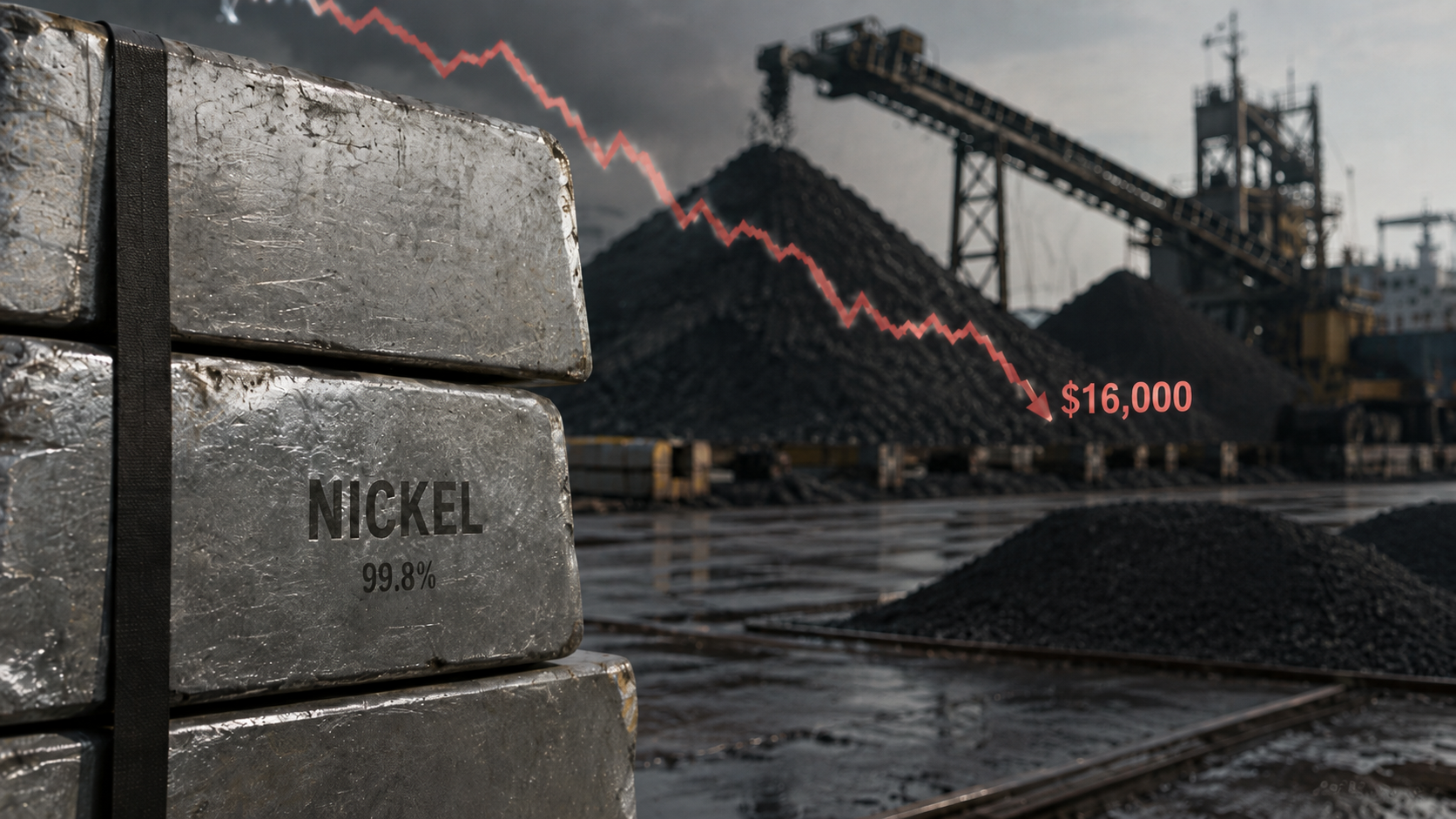
- The London Metal Exchange (LME) nickel price rallied 37% from late December 2025 to April 2026, and the International Nickel Study Group (INSG) revised its 2026 balance from a 283,000-tonne surplus to a 32,000-tonne deficit, reflecting market pricing of supply tightening as durable rather than temporary.
- Sulphide-process assets with high native sulfur content generate leaching acid internally, insulating them from reagent import costs that have raised the Indonesian cost floor; Kabanga, the project advanced by Lifezone Metals, contains approximately 30% sulfur in the ore.
The Indonesian government approved the 2026 RKAB (nickel ore mining quota mechanism) allocation at 270 wet metric tonnes, down from 375 wet metric tonnes in 2025 and short of the expected demand of 345 wet metric tonnes. That decision came alongside a revision to the HPM (benchmark pricing mechanism), increases to tiered royalty rates, and a simultaneous disruption to sulphuric acid supply driven by the Strait of Hormuz closure and a Chinese acid export ban. Together, these developments amount to not a temporary squeeze on margins but a reconfiguration of the structural cost floor for High Pressure Acid Leach (HPAL) production, the dominant processing pathway for Indonesian laterite ore.
The London Metal Exchange (LME) nickel price rallied 37% from its late December 2025 low to April 2026, driven directly by Indonesian policy and cost pressures that emerged in the first quarter of 2026. The International Nickel Study Group (INSG) projected a 2026 deficit of 32,000 tonnes, reversing the 2025 surplus of 283,000 tonnes. These market signals point not to a cyclical disruption but to a repricing of where Indonesian supply can viably operate on the global cost curve.
The cost structure of Indonesian HPAL operations contains two interdependent vulnerabilities: reliance on imported sulphuric acid as a process reagent, and progressive decline in domestic ore grades. The first quarter of 2026 tightened both simultaneously, creating the conditions for examining which process architectures are structurally insulated from those pressures and which are not.
Indonesia's Nickel Supply Architecture
Indonesian nickel ore production operates under the RKAB quota mechanism, which governs annual mining volumes through government-approved allocations. The HPAL process, in which ore is dissolved under high pressure with sulphuric acid to extract nickel and cobalt, is the dominant refining pathway for Indonesian laterite ore, and its throughput is directly constrained by the volumes authorised by the RKAB system. Reducing the quota validity from 3 years to 1 year increases the frequency of that constraint, removing the multi-year planning visibility that drives investment decisions across the sector.
Indonesian nickel ore grades are falling below 1.5% in most producing areas, accompanied by stricter environmental enforcement. For HPAL operations, lower ore grade means more acid is consumed per unit of nickel recovered, because reagent consumption scales inversely with ore quality through the chemistry of the HPAL process. Grade decline is therefore not a peripheral operational concern but a primary driver of unit cost, intensifying precisely as other input costs are rising.
RKAB Reform, HPM Pricing & the Acid Supply Shock
Three developments repriced Indonesian HPAL economics in the first quarter of 2026, each operating through a distinct mechanism. The RKAB quota reduction fell short of expected demand, constraining feedstock availability and reducing producers' operational flexibility to manage per-unit costs.
The HPM revision raised base prices across all nickel ore grades and extended the mechanism to byproducts, including cobalt. Combined with tiered royalty increases and the prospect of an export tax, the cumulative effect is a government-administered compression of margins across the revenue, cost recovery, and volume layers.
The sulphuric acid supply disruption introduced a qualitatively different form of cost pressure. The closure of the Strait of Hormuz and a concurrent Chinese acid export ban drove up acid prices and heightened the risk of market shortages for a reagent that HPAL producers must import and cannot substitute within their process architecture. All three mechanisms converge on the same structural exposure, a processing model dependent on imported acid and quota-administered feedstock, despite operating through different cost channels.
Grade Decline, Acid Dependency & Structural Cost Floors
The structural vulnerabilities exposed in the first quarter of 2026 are not contingent on the continuation of any single policy or geopolitical condition. Indonesian ore grades below 1.5% are a geological reality that cannot be reversed through quota normalisation or regulatory adjustments.
The acid supply dependency compounds the grade problem through a mechanism that policy cannot address. Even if the RKAB quota returned to prior levels, HPAL operators would still require imported sulphuric acid to process ore at those volumes. The absence of domestic acid supply at the scale required by HPAL production means the structural exposure identified by the Strait of Hormuz disruption and the Chinese export ban is a baseline condition, not an anomaly created by a specific geopolitical event.
Together with the fiscal measures already imposed through tiered royalties and the potential export tax, these structural conditions set a cost floor for Indonesian HPAL production that cannot be lowered through operational discipline or increased throughput. The cost floor is now higher than it was twelve months ago, and the mechanisms behind that increase are geological, chemical, and regulatory in nature rather than temporary.
Kabanga's Sulphide Process Architecture & Cost Curve Position
The structural contrast with Indonesian HPAL operations emerges at the process chemistry level. Lifezone Metals (NYSE: LZM) is advancing the Kabanga nickel project in Tanzania using its proprietary HydroMet technology, a hydrometallurgical process designed to deliver lower energy consumption, lower emissions, and lower-cost metal production relative to conventional smelting. The 2025 Feasibility Study (effective 18 July 2025) establishes the project's technical and economic viability on this basis.
Chief Financial Officer of Lifezone Metals, Ingo Hofmaier, locates the acid cost distinction in the chemistry of the ore body itself:
"The reagent on the Indonesian side, you need to add sulphuric acid to it. For later-stage deposits, you need to buy the sulphuric acid, because the sulphuric acid is leached out. The Indonesian operations currently have high sulfur prices and suffer from that. In our case, 30% of our rock is sulfur, so we don't have to add and therefore transport the sulfur to where the pressure oxidation is located."
Approximately 30% sulfur content in Kabanga ore means the leaching process generates its own acid rather than requiring it to be imported and transported to the site. That characteristic is fixed in the ore body's geology and is unaffected by movements in global acid markets or supply chain disruptions.
Hofmaier quantifies the project's position against the cost curve segment now under most pressure:
"Our all-in sustaining costs are $3.36 per pound net of byproduct credits, well below current and relatively low nickel prices. Many in the industry now believe there is not much more to come on the downside, for the simple reason that it is really eating into the middle block of the cost curve where the Indonesian operations sit."
LME Recovery, Deficit Projections & Cost Curve Implications
The INSG's projection of a 32,000-tonne deficit for 2026, reversing a 283,000-tonne surplus recorded in 2025, reflects a market assessment that the supply tightening introduced in the first quarter carries duration. The scale of the shift from surplus to deficit in a single year is itself evidence that the market prices these conditions as structural rather than temporary.
Higher broad energy prices and inflation driven by the ongoing Middle East conflict continue to sustain the input cost environment for HPAL producers beyond the specific events of the first quarter. The cost floor for Indonesian HPAL production rests on geological grade decline, acid import dependency, and a regulatory framework that has simultaneously tightened quotas, pricing, and fiscal conditions. Each of these persists independently of any single geopolitical or policy resolution. Grade decline is already restricting the pipeline of viable western-oriented nickel smelter projects, as Hofmaier describes:
"There are western-oriented nickel smelters, and they are suffering. New projects are not coming on because they have a lower grade, so they are not as well advanced and therefore not profitable."
The repricing of the Indonesian cost curve raises a structural question for the global nickel supply chain: whether processing architectures built around laterite ore and imported acid can adapt to the cost environment that the first quarter of 2026 has established, or whether the projected 2026 supply deficit will require capital to flow toward process alternatives with different input structures. For sulphide-process assets with inherent acid self-sufficiency, the competitive position on the cost curve has improved not through any operational change on their part but because the floor beneath Indonesian counterparts has risen. That dynamic originates in policy, geology, and geopolitics, and is not easily reversed by market pricing alone.
FAQs (AI-Generated)
Analyst's Notes





Subscribe to Our Channel





Stay Informed


