




Platinum Developer Dates a Gold Acquisition Review Ahead of 2026 Study


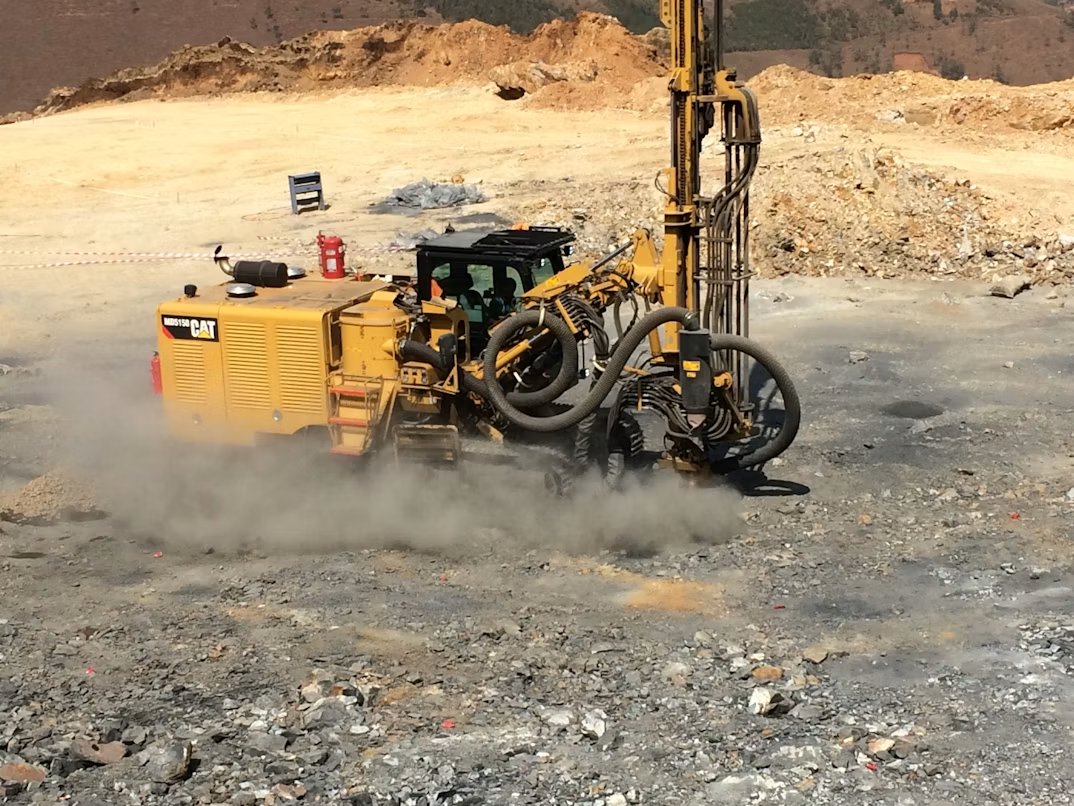
Platinum group element developers run acquisition programs alongside study programs. What happens when an acquisition milestone has a date but no deal in place?
- Around 90% of the world's platinum group element (PGE) reserves are located in South Africa.
- Multi-year deficits in platinum and palladium have cut above-ground stocks by 42%.
- A Brazilian producer moved from one asset to two through an acquisition, then grew resources across both mines.
- A company without production revenue funds a study program and an acquisition program from the same external capital.
- The developer at Pedra Branca dated an acquisition evaluation to the first quarter of 2026.
Introduction
A development-stage precious metals company holds one asset, has no production revenue, and has a schedule of technical milestones that will cost money to meet. Publishing a second schedule next to it, one that commits to evaluating and buying an advanced asset elsewhere, doubles the number of things that must be paid for before either produces a return. Both draw on the same equity market.
Less examined is what happens to the second schedule once the first one moves. Study milestones have engineering contracts and testwork behind them, so they generate progress that can be reported. An acquisition milestone generates no reportable event until a transaction closes, so it can pass its date without producing anything an investor can measure against.
This has become a recognizable pattern among platinum group element developers, and Brazil is where several of them are working it out.
Platinum Group Element Supply & the Development Pipeline
The supply of platinum group elements (PGEs) is so concentrated that very few assets can alter it. Roughly 90% of the world's PGE reserves are located in South Africa, and several major platinum operations have closed or been suspended since 2016. Only two major greenfield PGE mines have near-term production. Among the small group of undeveloped projects outside the producing districts, the Stillwater West Project in Montana rests on a 2023 resource estimate, the Luanga Project in Pará State, Brazil, on a 2025 preliminary economic assessment (PEA), the Waterberg Project in South Africa on a 2024 definitive feasibility study, and the Marathon Project in Ontario on a 2025 feasibility study. Those figures are disclosed by their respective issuers on project-specific methodologies and may not be directly comparable.
The demand side has not waited for the pipeline. Consecutive annual deficits have cut above-ground stocks by 42%, which leaves less than 5 months of coverage, and the annual shortfall is 500,000 to 700,000 ounces. Automotive use accounts for approximately 40% of total platinum demand and approximately 80% of all palladium and rhodium demand, and each hybrid vehicle uses 10% to 20% more platinum group elements than an internal combustion engine (ICE) vehicle. Global new vehicle sales in 2025 are split 55% ICE, 25% electric, and 20% hybrid, the fastest-growing of the three. Jewelry consumes approximately 70 million ounces of gold a year against approximately 2 million ounces of platinum, so switching 1% of gold jewelry demand to platinum would double the annual platinum deficit of around 700,000 ounces.
Prices have moved with the shortfall. Records were set across all three metals: an all-time high of US$2,700 per ounce for platinum, closing near US$2,000 per ounce; a move through US$2,000 per ounce for palladium, closing near US$1,700 per ounce; and, after a further 5 daily records, a pass through US$5,000 per ounce for gold, closing near US$4,600 per ounce. Physical platinum bar and coin demand in China grew from nearly zero in 2019 to over 400,000 ounces in 2025, which adds a source of demand independent of the vehicle fleet.
Acquisition Programs Run Alongside Study Programs
Buying an advanced asset and developing it alongside existing work follows a clear sequence in Brazil, and the companies that have completed this process describe the same order of operations. Serabi Gold moved from a single-asset producer to a two-asset producer through an acquisition. Management says the sequence that followed was resource growth across both mines to maximize production and expand the plant, and only then, a search for a third and fourth deposit in the same ground, where greenfield exploration would begin. Serabi Gold says it has nearly doubled production from a base of 25,000 to 30,000 ounces and is aiming to reach 50,000 ounces this year and 60,000 the year after, while acknowledging it may not quite get there.
The parallel version, in which exploration continues at scale through construction, is also being worked on. Cabral Gold expanded its workforce from about 75 people, focused mainly on exploration, to well over 400, focused on construction while building its first mine. Management says it was operating 6 drill rigs as of July 2026. Almost all of the people, suppliers, and equipment for that build are Brazilian, and most of the construction workforce comes from the state around the mine.
The labor market that permits both approaches is unusually deep for a country at this stage. Cabral Gold says over 7,000 companies are involved in Brazilian mining, a lot of them suppliers, and Serabi Gold says the industry employs about 2.2 to 2.3 million people, directly and indirectly, that it generated US$60 billion in revenues in 2025, and that mineral products account for 55% of Brazilian exports. Brazil ranks among the world's top 10 gold producers, producing around $3.8 billion annually and growing to over $6 billion by 2030, and now graduates more mining engineers than the USA and Canada combined.
Funding Two Programs Before First Revenue
Neither program pays for itself while it is underway, so the question becomes how long the money has to last, and that interval is set by conditions outside the company's control. Equipment delivery is one. Serabi Gold says lead time for equipment is one of its biggest challenges, as much of it is imported or sourced from other parts of Brazil, and that a loader can mean a wait of 7 months, which forces planning well in advance.
Labor is the second. An underground operation is harder to staff locally than an open pit, and Serabi Gold says it brought in and nationalized about 100 workers, of whom roughly 70 remain, and trained a large part of its workforce from scratch. Each of those constraints lengthens the period between spending money and having something to show for it.
Administrative capacity is the third, and it bears on the schedule rather than the budget. Serabi Gold says public sector bodies in northern Brazil are under such demand that their offices are often unstaffed or unable to process applications at all. A second program shortens none of these intervals; it adds a second set of them to fund concurrently, out of equity raised while both programs are still incomplete.
Pedra Branca & a Published Acquisition Milestone
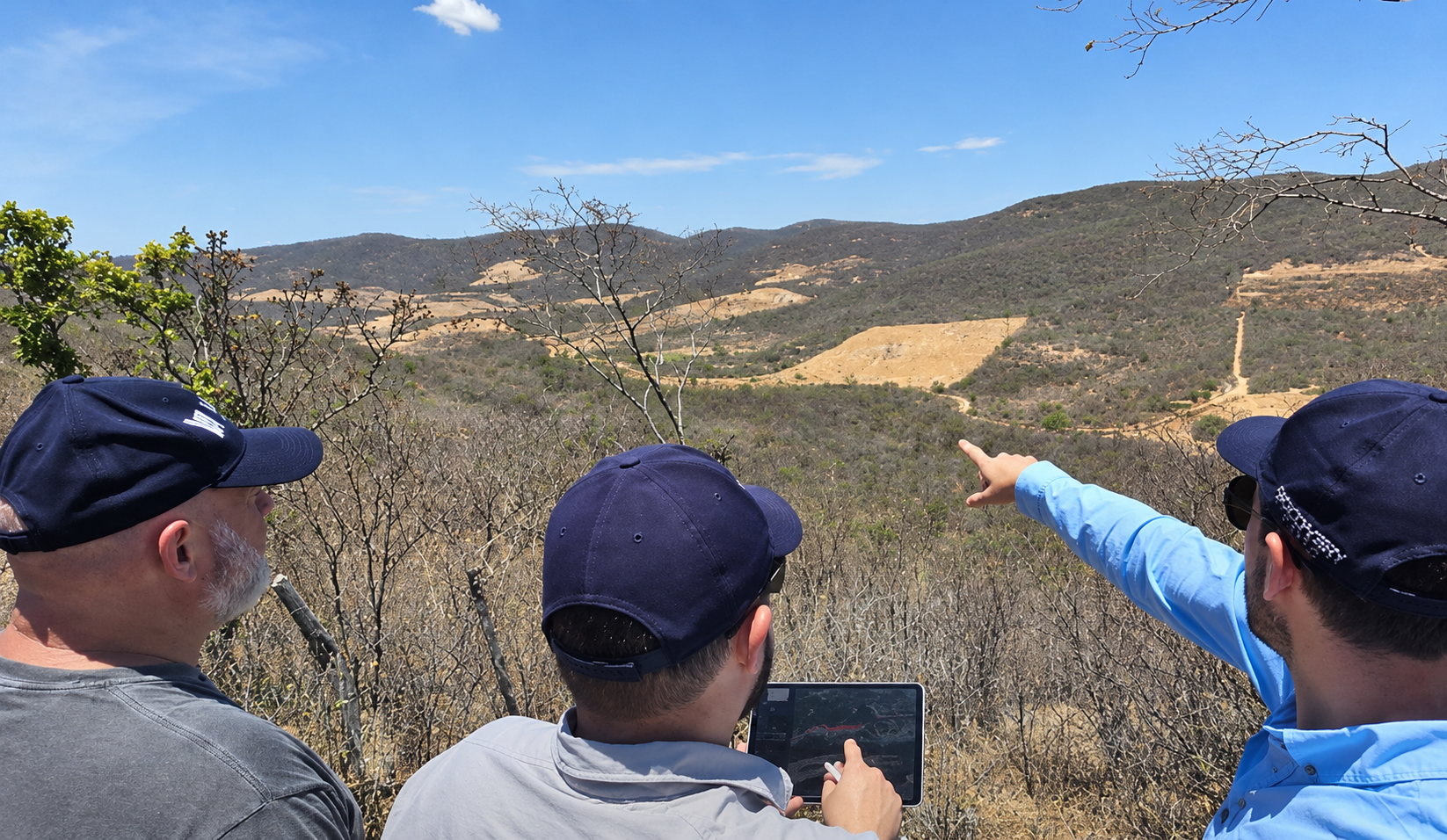
Publishing a timeline makes a two-program commitment legible, because it puts both sets of milestones on one line and dates them. ValOre Metals (TSX-V: VO | OTCQB: KVLQF | FSE: KEQ0) appointed an engineering company for its economic study in the fourth quarter of 2025 and began metallurgical testwork at Pedra Branca to demonstrate favorable economics. The company has dated a targeted mergers and acquisitions (M&A) evaluation, focused on potential for near-term production, to the first quarter of 2026, resource updates, including recently drilled targets, to the third quarter of 2026, publication of the PEA to the fourth quarter of 2026, and licensing and an environmental impact assessment (EIA) to the first quarter of 2027. The acquisition it seeks is defined as an advanced-stage, district-scale gold project in northeastern Brazil with significant prior investment, to be financed through international capital markets via its TSX Venture Exchange and Bovespa listings and through ownership interests held by strategic equity partners. The company held under $0.8 million in cash as of August 1, 2026.
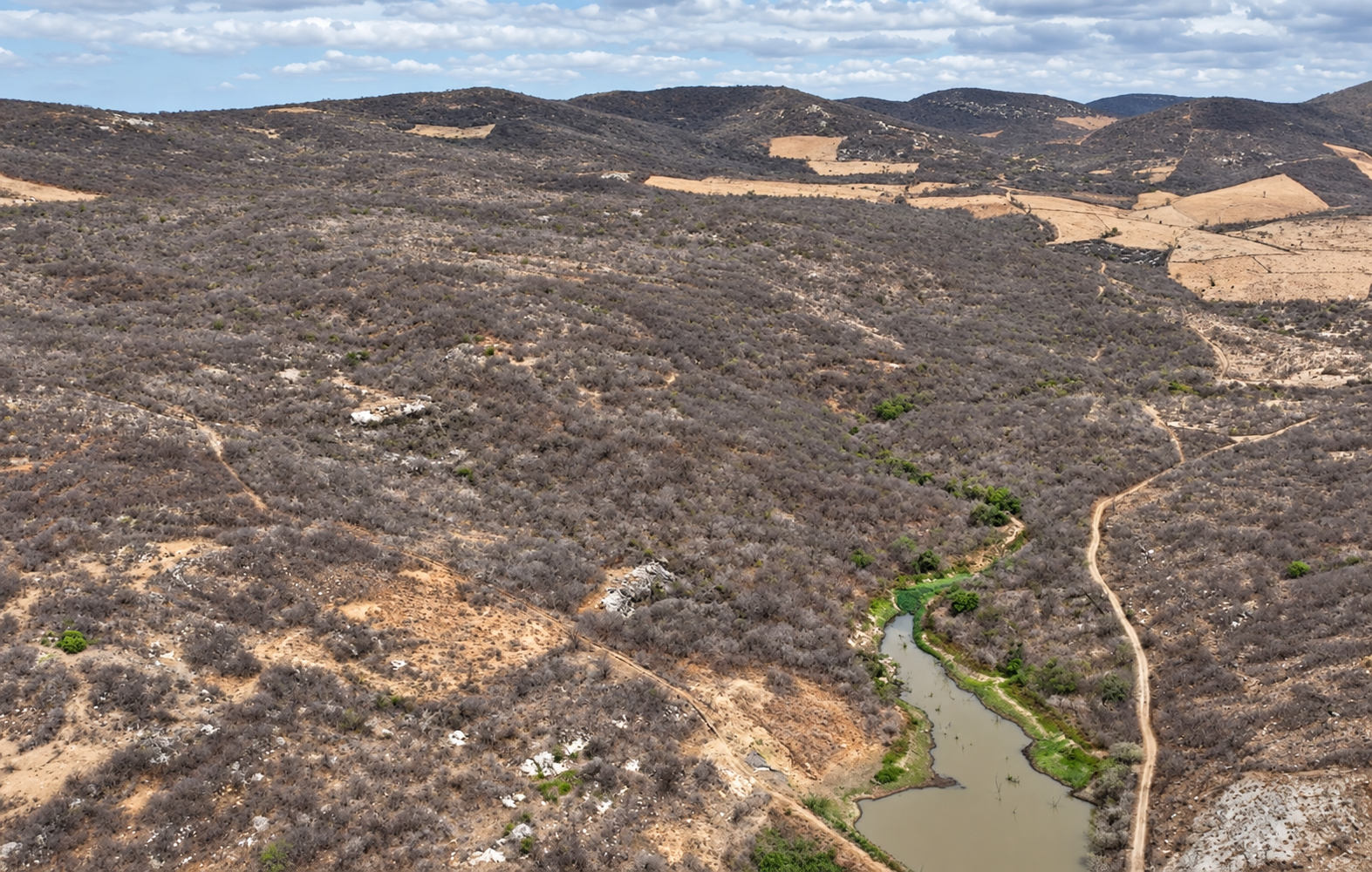
What the study program works on is a resource across three separate vintages that do not resolve to a single number. The 2022 estimate reported 2,198 thousand ounces (koz) of two platinum group elements plus gold in 63.3 million metric tons (Mt) grading 1.08 grams per metric ton (g/t), held in 7 near-surface zones supported by more than 40,000 meters (m) of drilling, and it has an effective date of March 8, 2022. Targeted drilling increased the inferred resource from 1.1 million ounces to 2.2 million ounces, with 23,534 m drilled by ValOre and US$10 million invested between 2020 and 2024, on top of 30,000 m and US$30 million from historic operators. Five further exploration zones drilled in 2023, totaling more than 6,000 m, plus a new discovery at the Salvador target, fall entirely outside that estimate, and the third-quarter 2026 resource update is the milestone that would bring them in. The property covers 51,096 hectares (ha) in Ceará State, 4 hours by paved highway from the deep water port and international airport in Fortaleza.
Vice President of Exploration of ValOre Metals, Thiago Diniz, names the second program the company was pursuing alongside the study work in July:
"In parallel, we are actively pursuing M&A acquisitions in the gold space in Brazil with a clear goal of becoming an integrated precious metals producer in the near term."
As of August 1, 2026, the company was still describing its acquisition and partnership strategy as actively pursued, and no completed or announced gold acquisition accompanies that description. The study milestones have artifacts to point at: an appointed engineering firm, testwork underway, and a resource update scoped and scheduled. The acquisition milestone has only its date and the definition of what it is looking for, which is the asymmetry a second program of this kind creates.
Permitting Practice & Agency Capacity in Brazil
Brazil's front-end mechanics move fast enough that exploration schedules hold, so the binding constraint shifts downstream. ValOre Metals says the regulatory framework is straightforward and predictable, that a claim is staked digitally through an online filing, and that a claim grants 3 years to explore and advance targets, extendable by a further 3, after which permitting becomes the question. Cabral Gold says a drill permit in Brazil generally takes months and frequently weeks, against the 2 to 3 years its management reports hearing from counterparts in Peru for permission to drill a few holes.
Construction licensing is a different matter and is handled by state governments, not the federal government. Serabi Gold says problems get solved at the state level and that federal bodies largely rubber-stamp what the states decide. Cabral Gold says Pará, second in Brazil by mining revenue, has enough operations coming online to stretch the agencies' ability to respond in a timely fashion, and Serabi Gold says companies there have worked under temporary licenses that had to be extended because the agencies could not process the underlying applications.
Chief Executive Officer of Serabi Gold, Mike Hodgson, measures the interval between filing an application and running a mine:
"We've opened up two mines in literally six months and putting out an application. Where else in the world can you do that?"
Serabi Gold attributes that speed to a gap in a process it describes as otherwise cumbersome, and to temporary licenses granted in place of a faster, permanent route. Ceará, the state hosting Pedra Branca, is not a traditional mining state in the way Pará is, and ValOre Metals says exploration and drilling permits there are not a significant issue. Technical capacity within the country is not the bottleneck either: ValOre Metals says listed companies operating in Brazil have no difficulty getting technical reports completed with specialists available locally.
Industry Outlook for Undeveloped Platinum Group Element Projects
A project of this kind holds two metals whose forecasts diverge, so the pipeline it belongs to does not face a single outlook. Platinum is forecast to be in deficit every year from 2023 through 2029, having been in surplus in 2022. Palladium is forecast in deficit through 2026 and then in surplus across 2027, 2028, and 2029. A project holding both is therefore being studied against one metal with a lengthening shortfall and another whose shortfall is forecast to close.
Behind that pipeline is a far larger volume of ground that has never been assessed to modern standards.
Diniz sizes the mapped share of the country against three larger mining jurisdictions:
"There's other well-established jurisdictions around the globe with a similar scale, with a lot more developed mining sector, such as Canada or Australia or US, but unlike those countries, there's only 30% of the Brazilian territory that's mapped to a high resolution standard."
ValOre Metals also points to deposits inside established districts that are completely undeveloped and already well known, needing an operator to take them on, and describes them as candidates to leave the hands of majors and move faster with juniors. Should that transfer continue, more undeveloped platinum group element ground ends up held by companies without production revenue, the group least able to fund a study program and an acquisition program at once. The funding constraint, therefore, does not resolve at the level of any single company. It settles at the level of the pipeline and on whether equity markets will pay for two programs at once in a sector where only two greenfield mines have near-term production.
FAQs (AI-Generated)
Analyst's Notes





Subscribe to Our Channel

.png)




.png)

Stay Informed


