




Cabral Gold Finds Mineralisation in the Gap Between 2 Known Deposits, Raising Questions About District-Scale Continuity at Cuiú Cuiú


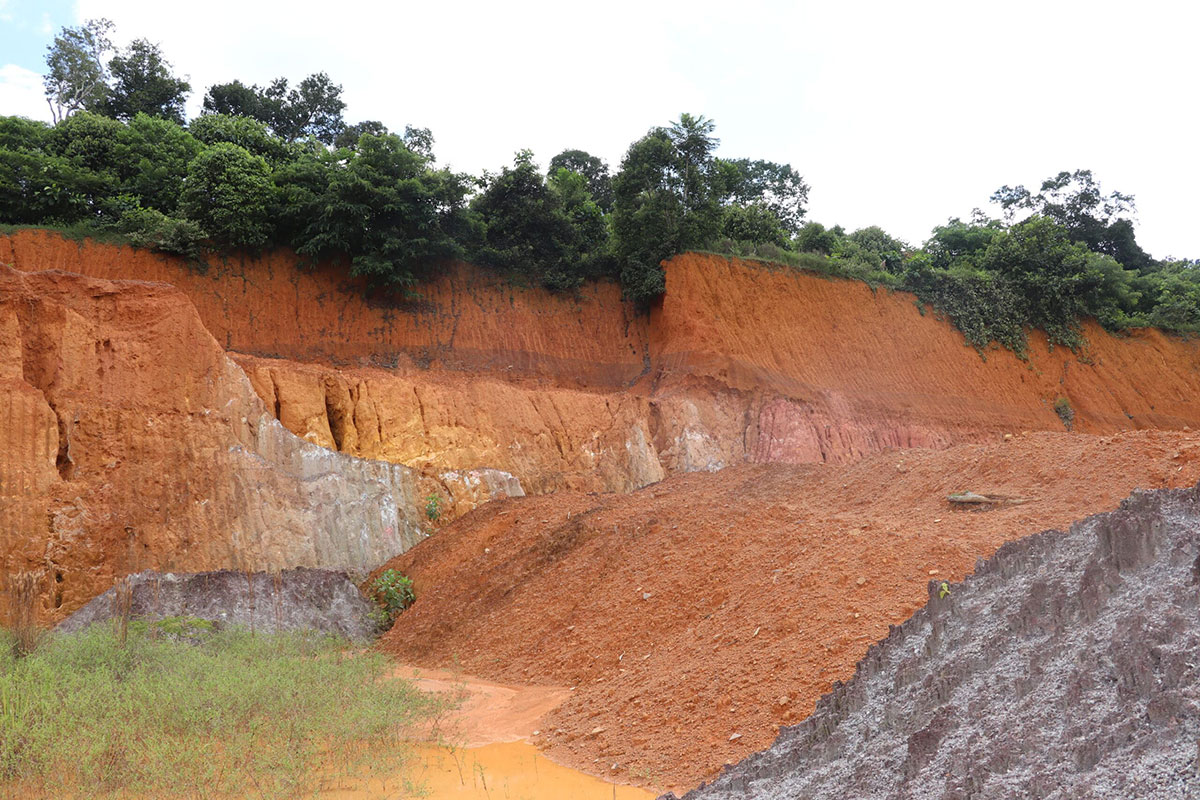
Cabral Gold's latest drilling at the Mutum target has returned gold in hard rock between 2 known deposits, raising the possibility that Cuiú Cuiú hosts a connected mineralized system larger than previously understood.
- Cabral Gold's reconnaissance drilling at the Mutum target returned gold-bearing mineralisation in harder, unweathered rock sitting in the gap between the PDM and Central gold deposits, prompting management to suggest the zone may represent a possible extension of both deposits.
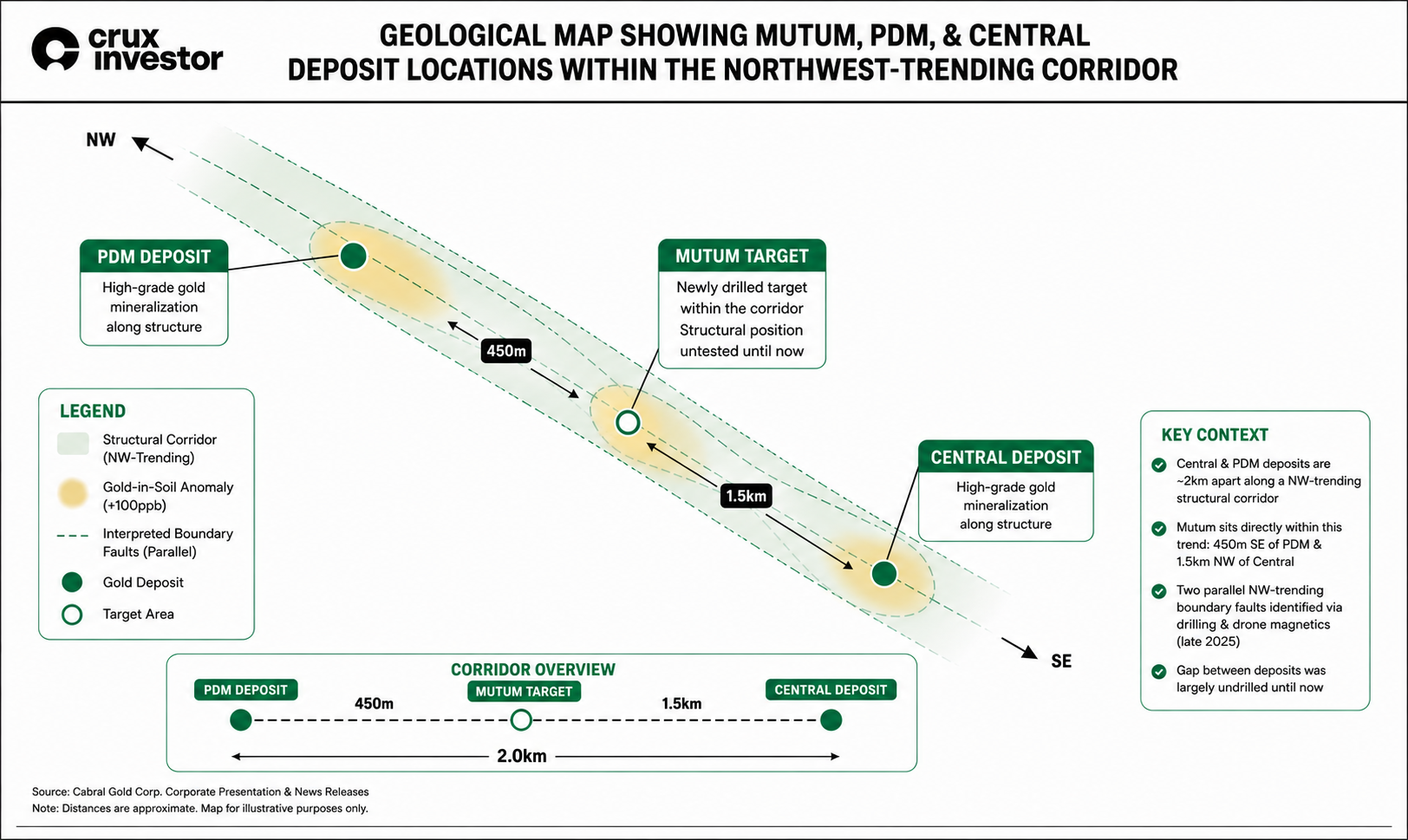
- Mutum sits within the same northwest-trending structural corridor as PDM and Central, a 2-kilometre trend defined by a gold-in-soil anomaly and a low magnetic signature consistent with widespread alteration in the underlying rocks.
- The PDM gold-in-oxide blanket has expanded from a previously known 26 hectares to over 40 hectares based on the new drilling, representing additional near-surface oxide material not included in the July 2025 pre-feasibility study (PFS).
- Not every hole in the Mutum program returned strong results, which is typical of early-stage reconnaissance work, and the zone remains open and incompletely defined pending follow-up drilling.
- With construction at MG now 70% complete and first gold pour targeting the fourth quarter of 2026, Stage 1 revenue is designed to self-fund district-wide exploration across more than 50 drill targets, removing the need to raise additional capital through share issuances.
Opening Briefing
Cabral Gold (TSXV: CBR | OTCQB: CBGZF) released reconnaissance drill results from the Mutum target at its Cuiú Cuiú Gold District in Brazil's Tapajós Region. The most significant result returned gold-bearing mineralisation in harder, unweathered rock positioned between 2 of the district's known gold deposits: PDM and Central. The company framed the result as evidence of a previously unrecognised mineralised zone that may represent a possible extension of those deposits.
Taken alongside a separate finding that the PDM gold-in-oxide blanket is meaningfully larger than previously mapped, the release raises a structurally different question about Cuiú Cuiú than the one investors have been tracking: not just whether Cabral can build a mine at MG, but whether the deposits at this district are isolated pods or nodes within a larger connected system. That distinction carries meaningful implications for how investors should think about the long-term scale of the project.
A Corridor That Was Always There, But Mostly Untested
The setup at Cuiú Cuiú is worth understanding before evaluating the Mutum result. The Central and PDM gold deposits sit approximately 2 kilometres apart along a northwest-trending structural corridor. That corridor is defined by a gold-in-soil anomaly and a coincident low magnetic signature, which Cabral attributes to extensive alteration in the underlying rocks. Mutum sits directly within that trend, 450 metres southeast of PDM and 1.5 kilometres northwest of Central.
Reconnaissance drilling and a drone magnetic survey during late 2025 had already identified 2 northwest-trending parallel boundary faults that appear to control the positioning of both Central and PDM. Until recently, the gap between the deposits was largely undrilled. That is the context the most recent drilling was designed to test, and the reason the Mutum results carry weight beyond what any single intercept might suggest on its own.
President and Chief Executive Officer of Cabral Gold, Alan Carter, described the setting:
"The Mutum target is located within the highly prospective NW trending Central-PDM corridor, a 2km-long trend which is characterised by a strong +100ppb gold-in-soil anomaly and a pronounced magnetic low likely reflecting extensive hydrothermal alteration in the underlying intrusive host rocks."
Carter is not describing Mutum as a peripheral anomaly. He is placing it within the same structural architecture that produced 2 known deposits. Whether that architecture is continuous between them is the question the drilling is now beginning to address, and the answer will carry consequences for how the district is ultimately valued.
What the Drilling Actually Tells Us
The most notable result from the Mutum program is significant for what it was hosted in, not just what grade it returned. The gold-in-oxide blanket material that Cabral is building its Phase 1 heap leach mine on at MG sits close to the surface and consists of soft, weathered rock. The mineralization returned at Mutum was found deeper, in harder unweathered rock, which is the same type of material that hosts the main gold resources at PDM and Central.
Finding that material in the corridor between the 2 deposits is the basis for management's assertion that the zone may represent a possible extension of those deposits. Cabral's release noted that the key intercept is believed to be related to the northernmost boundary fault between PDM and Central, and may connect with the mineralized zone at Central North, which appears to be controlled by the same geological structure and is located 800 metres to the southeast. That reading, if supported by additional drilling, would imply a mineralized fault running through the full 2-kilometre corridor rather than discrete, disconnected accumulations at either end.
Not every hole in the program returned equally encouraging results, with some returning lower-grade material and others returning no significant mineralization at all. That is not unusual for early-stage reconnaissance drilling, where the goal is to identify where gold is present rather than to confirm a fully defined body. The variability is consistent with a zone that is real but not yet fully understood, and it reinforces the need for follow-up work before drawing firm conclusions about scale or continuity.
The Oxide Blanket Finding Carries Near-Term Implications
Separate from the deeper hard rock story, the Mutum drilling has produced a practically significant finding for the Phase 1 mine plan. Several holes intersected low-grade gold in near-surface oxide material, suggesting the PDM gold-in-oxide blanket is considerably larger than previously understood, now covering over 40 hectares compared to the previously known extent of 26 hectares.
Critically, the PDM oxide blanket was not included in the Phase 1 PFS completed in July 2025, meaning this material sits outside the current mine plan and outside the resource base on which the financial model was built. Its existence as additional near-surface gold inventory adjacent to an already-permitted operation introduces a potential upside that was not visible to investors when the PFS was published.
Whether this expanded blanket gets incorporated into a future study, and on what timeline, remains an open question. What is clear is that the PDM oxide footprint is now materially larger than the financial model assumed, and that gap between what was modelled and what exists in the ground is something investors will need to watch as Cabral moves toward production.
From Production Story to District Story
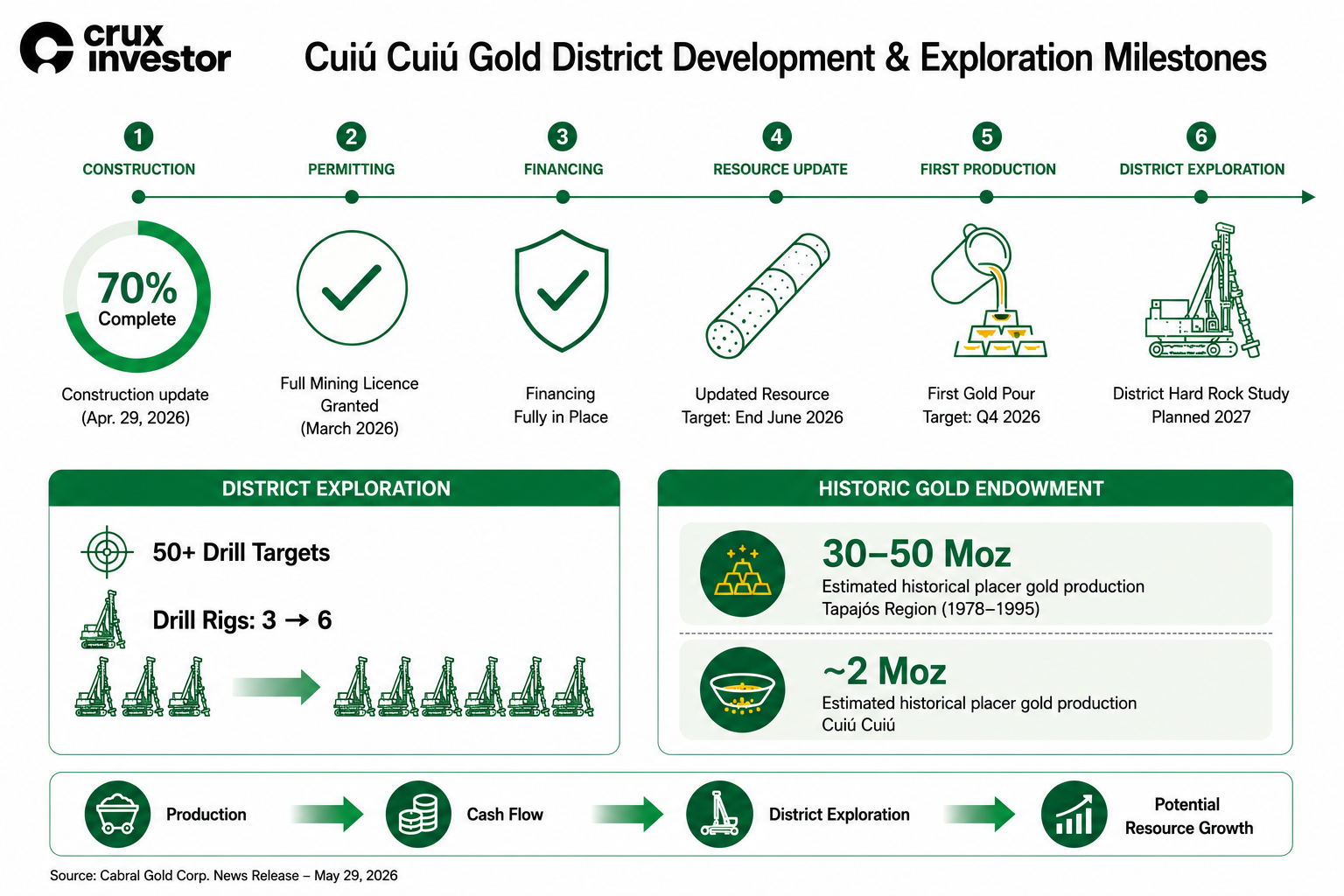
The production case at MG remains the dominant near-term investment anchor. Construction is 70% complete as of Apr 29, 2026, the Full Mining License was granted in March 2026, financing is fully in place, and first gold pour is targeting the fourth quarter of 2026. An updated resource count incorporating the completed infill drilling program was targeting completion by end of June 2026.
The Mutum development does not displace that narrative. What it does is introduce a second frame operating in parallel: the possibility that Cuiú Cuiú's known deposits are the most drilled portions of a larger connected mineralized system. For the Tapajós Region, that framing is not implausible on historical grounds, given that the region produced an estimated 30 to 50 million ounces of placer gold between 1978 and 1995, the largest gold rush in Brazil's history, and Cuiú Cuiú itself produced an estimated 2 million ounces of placer gold historically.
Cabral holds more than 50 drill targets across the district and is increasing its active rig count from 3 to 6, with a larger hard rock gold study planned for 2027 and funded by revenue from the MG operation. That sequencing, production funding exploration, is a reasonable model if the mine performs to plan. The Mutum results give the exploration pipeline a structural rationale it previously lacked, and the next 12 months will determine whether that rationale translates into a materially larger resource picture.
What to Watch Next
The immediate milestone remains the updated MG resource count, expected by end of June 2026, which will reclassify ounces into higher-confidence categories based on the completed infill drilling program. That update carries direct implications for the project's financial model and lender confidence ahead of start-up. Investors should treat this as the most structurally important number Cabral will publish before first gold pour.
On the district exploration front, Cabral has indicated that additional drilling at Mutum is planned. Investors should watch for whether follow-up work is designed to test the continuity of the gold-bearing zone along the fault structure toward Central North, or whether the program shifts focus to the expanded PDM oxide blanket.
An updated resource count or a study incorporating the expanded PDM oxide footprint would be the trigger for elevating the district story from geological observation to investable thesis. Until then, the Mutum corridor has become considerably more interesting, and the next round of results will determine whether the case for continuity between PDM and Central holds up under further testing.
FAQs (AI-Generated)
Analyst's Notes





Subscribe to Our Channel








Stay Informed






















