




Cabral Gold Wins Operating Licence, Targets September 2026 Gold Pour


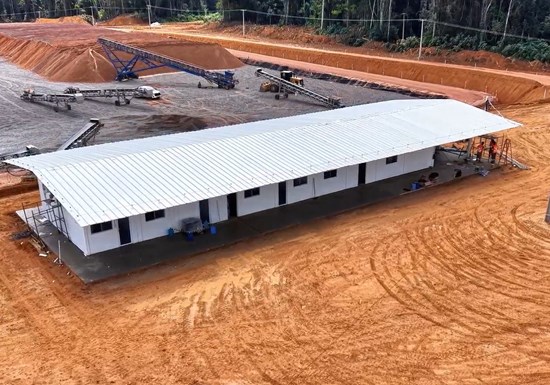
Cabral Gold secures its Operating Licence at Cuiú Cuiú, with first gold now targeted six weeks early in September 2026 as commissioning advances.
- Cabral Gold has secured its Operating Licence and a military cyanide-transport permit, clearing the final regulatory requirements for gold leaching at Cuiú Cuiú.
- First gold production has been moved forward to September 2026, roughly six weeks ahead of the schedule set out in the 2025 Pre-Feasibility Study.
- Early grades at the first mined deposit are tracking near 1.5 g/t gold, about double the project's 0.7 g/t life-of-mine average.
- Management believes roughly three-quarters of the district's known gold sits in unweathered hard-rock material and plans a global resource update by year-end.
- The project recorded its first Lost Time Incident during the update period, with a Lost Time Injury Rate of 0.34 across 592,380 hours worked.
Cabral Gold Inc. (TSXV: CBR) has cleared the last major regulatory hurdle standing between it and gold production at its Cuiú Cuiú district in Pará State, Brazil. With gold trading near US$4,300 an ounce, the company's move from construction into commissioning at its Phase 1 heap leach operation is a timely one, and management now expects to be pouring gold six weeks ahead of the schedule set out in last year's Pre-Feasibility Study.
Regulatory Clearance Secured
Cabral received its Operating Licence (LO) from the Pará State environmental authority, SEMAS/PA, alongside final approval from Brazilian military authorities to purchase and transport the roughly 20 tonnes of sodium cyanide required for leaching. President and CEO Alan Carter described the milestone in context:
"It allows us to operate. We previously had the license to construct, but you can't get your operating license until you're well advanced with the construction. It's another big ste, it's another brick in the wall."
The current LO is tied to a trial mining licence, which caps material mined and stacked at 500,000 tonnes, below the 1 million tonnes contemplated in the Pre-Feasibility Study. Cabral already holds the Preliminary Licence (LP) for the larger, full mining licence, a process Carter said took eight years to complete, and expects to receive the corresponding LO "within the next couple of months," which would remove the tonnage cap.
Commissioning Progress
Construction of the wet processing circuit is more than 90% complete. The adsorption-desorption-recovery (ADR) plant, built in Perth, Australia and shipped to site, has completed mechanical assembly, with electrical installation over 90% finished. The dry circuit covering ore handling, sizing, agglomeration, cement addition and stacking is already commissioned. Mining, processing and stacking of ore on the first heap leach pad is under way, with irrigation expected to begin within days.
Heap leach pad #2 is due for completion by the end of August, and the final construction step on pads 3 and 4 - laying crushed rock over the subsurface solution collection systems - is scheduled for September and October. Expenditure and schedule remain in line with the Pre-Feasibility Study.
Early Production Ramp-Up
First gold production is now targeted for September 2026, roughly six weeks ahead of schedule, with commissioning expected to finish in late September and ramp-up to full production planned through the fourth quarter. Commercial production, generally defined as 60-70% of design throughput, is expected to be confirmed via a news release sometime in the fourth quarter, though Carter said the company will not issue formal production guidance for 2026 given the number of ramp-up variables, with guidance more likely for 2027.
Grade in the early mine life is running ahead of plan. The life-of-mine average at Cuiú Cuiú is around 0.7 g/t gold, but infill drilling at the first deposit mined points to average grades of roughly 1.5 g/t over the initial 12 to 18 months, reflecting higher-grade oxide material near surface. Carter said the initial operation should generate life-of-mine costs of around US$1,200 an ounce, implying a substantial margin at current gold prices.
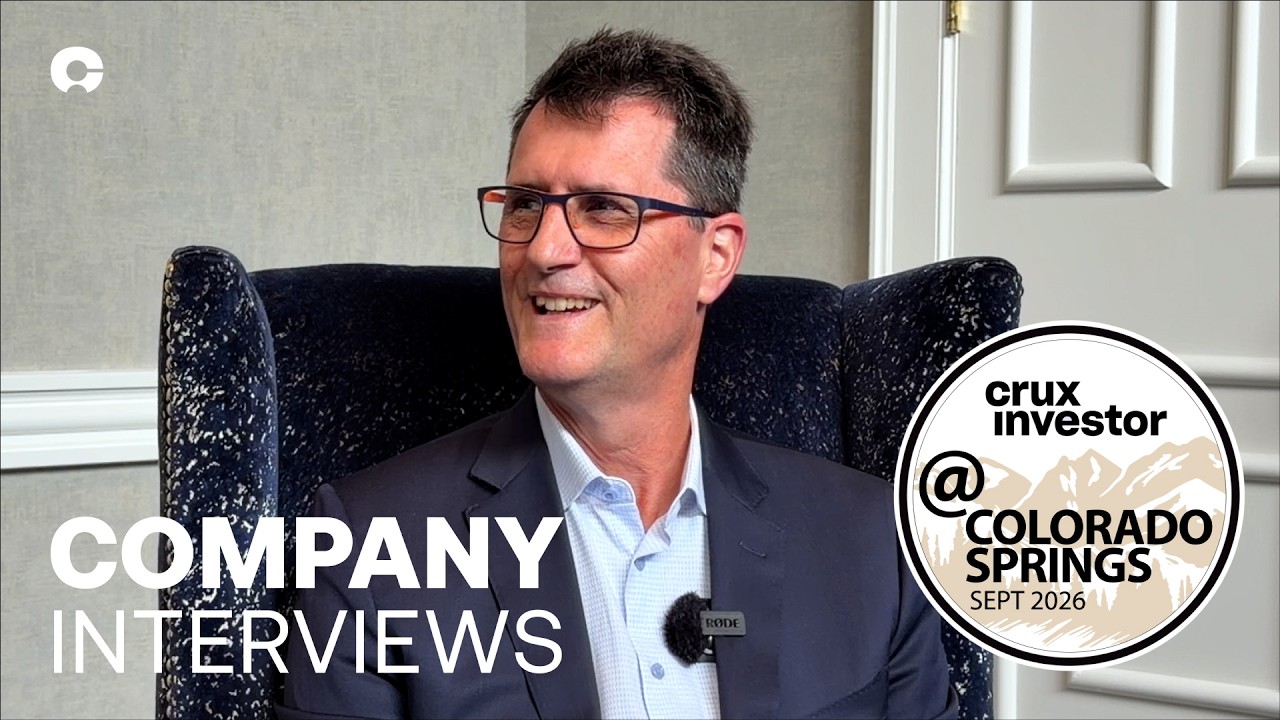
Interview with Alan Carter, President & CEO of Cabral Gold
Workforce Safety Record
The project recorded its first Lost Time Incident during the past month, a non-critical left-knee injury sustained by a worker while using a chainsaw; the individual was evacuated to Itaituba for treatment and remains off work during recovery. Across a combined 592,380 hours worked in 2026 - 217,047 by the Owners' Team and 375,333 by contractors - the project's Lost Time Injury Rate stands at 0.34 per 200,000 hours. A total of 312 people are currently on site across the construction project, all Brazilian nationals, with roughly two-thirds from Pará State itself.
District-Scale Growth: The Stage 2 Opportunity
Beyond the near-term oxide operation, Carter framed Cuiú Cuiú as a two-stage opportunity. Stage 1, now entering production, mines the shallow oxide caps sitting above six known gold deposits, five of which are confirmed to have weathered oxide material. Around 50 peripheral targets remain untested across the wider district. Stage 2 is the larger prize: the unweathered hard-rock material beneath those oxide caps, which Carter said accounts for roughly three-quarters of the gold in Cuiú Cuiú's current resource base, supported by high-grade intercepts including 9.5 metres at 87.4 g/t gold drilled in March, plus 11 metres at 33 g/t and 12 metres at 27.7 g/t.
Management plans to update the district's global resource estimate by the end of the year and, depending on the result, launch a preliminary economic assessment on the Stage 2 hard-rock operation, potentially in the first half of next year. Infill drilling is also planned later this year on a second deposit, referred to as Mashishi, roughly 500 metres north of the first.
Investment Thesis for Cabral Gold
- First gold is now targeted for September 2026, six weeks ahead of the original Pre-Feasibility Study schedule, with commercial production (60-70% of design throughput) targeted for confirmation in Q4 2026.
- Cabral holds both its Operating Licence and cyanide transport permit, clearing the outstanding regulatory requirements for leaching and gold recovery under the current trial mining licence.
- Early-life grades of approximately 1.5 g/t gold - roughly double the 0.7 g/t life-of-mine average - point to stronger-than-modelled cash generation in the first 12-18 months of production.
- Management expects the Phase 1 operation to generate at least US$50 million in annual cash flow at current gold prices, funding a 39-month gold loan (signed November 2025) and an aggressive six-rig exploration programme without further equity dilution.
- Stage 2 optionality is substantial: roughly three-quarters of the district's known gold sits in unweathered hard-rock material below the oxide caps, with a global resource update due by year-end and a possible preliminary economic assessment in H1 2027.
- Watch for the upgrade from trial mining licence (500,000-tonne cap) to full mining licence, expected within a couple of months, which would remove the current tonnage ceiling.
- Key risks include wet-circuit commissioning execution, ramp-up variability that has kept management from issuing 2026 production guidance, and the broader permitting and infrastructure risks typical of first-time mine builders in Brazil.
Macro Thematic Analysis
Cabral's push into production arrives against a gold price near US$4,300 an ounce, a backdrop that sharpens the appeal of near-term, self-funded producers over exploration-stage juniors still reliant on the equity market. Carter was candid about the financing model he is trying to avoid:
"We wanted to get off what I've termed the hamster wheel. The hamster wheel being you raise money, you dilute the structure, you drill, you come back a year later or nine months later and you go to the market with no control over what your share price is and your cost of capital. You do the same again and again and you keep diluting."
By funding Stage 1 construction through a gold loan rather than repeated equity raises, and using the resulting cash flow to underwrite exploration on the broader district, Cabral is positioning itself against a sector pattern that has historically eroded shareholder value in junior gold names. Brazil's Pará State, host to some of the country's most active gold districts, adds a jurisdictional dimension: infrastructure, labour and regulatory pathways are established, but permitting timelines - illustrated by the eight years it took Cabral to secure its full mining licence's Preliminary Licence - remain a real constraint on how quickly district-scale exploration success can be converted into production. For investors, the combination of near-term cash flow and a large, underexplored land package is a structure increasingly sought after in a gold market where new low-cost ounces remain scarce.
TL;DR:
Cabral Gold has received its Operating Licence and cyanide permit for the Cuiú Cuiú heap leach project in Brazil, clearing the final regulatory steps needed to produce gold. Construction is over 90% complete, with first gold now targeted for September 2026, six weeks ahead of schedule, and commercial production expected to be confirmed in Q4 2026. Early grades are running above the life-of-mine average, and management is targeting a district-scale hard-rock resource update by year-end, with a preliminary economic assessment possible in H1 2027.
FAQ (AI-generated)
Analyst's Notes





Subscribe to Our Channel



Stay Informed






















