Q-Gold Fast-Tracks Quartz Mountain Gold Project Directly to Detailed Engineering


Q-Gold (TSXV:QGR) CEO Peter Tagliamonte outlines an oxide-first heap leach plan for Oregon's Quartz Mountain, backed by a US$1.71B after-tax NPV PEA.
- The Quartz Mountain PEA outlines an after-tax NPV(5%) of US$1.71 billion and a 55.2% IRR on US$290 million of initial capex.
- A 0.65:1 life-of-mine strip ratio supports estimated AISC of US$1,216 per ounce.
- Q-Gold plans to start with an oxide heap leach, skip a phase-one feasibility study and target production within two to three years.
- CEO Peter Tagliamonte has built and sold several gold mining companies, and his technical team has worked together since the 1990s.
- Financing the build, Oregon permitting and a not-yet-confirmed FAST-41 designation are the main risks and watch-items.
Gold developers that can reach production without raising billions are scarce in today's market. Large producers are concentrating capital on tier-one operations, and smaller deposits that once sat idle in big-company portfolios are changing hands. Q-Gold Resources Ltd. (TSXV:QGR, OTCQB:QGLDF, Frankfurt:QX9G) is one such case. The company acquired the Quartz Mountain Gold Project in eastern Oregon from Alamos Gold and is now pursuing a staged build that starts with a low-cost oxide heap leach operation.
Chairman and CEO Peter Tagliamonte, a third-generation mining engineer, spoke with Crux Investor at a conference in Colorado Springs about the project's economics, the development plan and the permitting environment in Oregon.
A Track Record in Building Mines
Tagliamonte describes himself as a mine builder rather than an explorer. His career has centred on taking junior companies from exploration through engineering studies and construction to operation.
At Jacobina in Brazil, his team completed the exploration and engineering work, built the mine and brought it into production. The company was then acquired by Yamana Gold. He went on to lead Sulliden Gold with a Peruvian asset now operating under Pan American Silver. In Nicaragua, his team built and operated three mines that became part of the foundation of B2Gold.
He said the technical team at Q-Gold, including metallurgists, mining engineers and geologists, has worked with him since the 1990s. That continuity matters for a company now moving from study to engineering.
Quartz Mountain
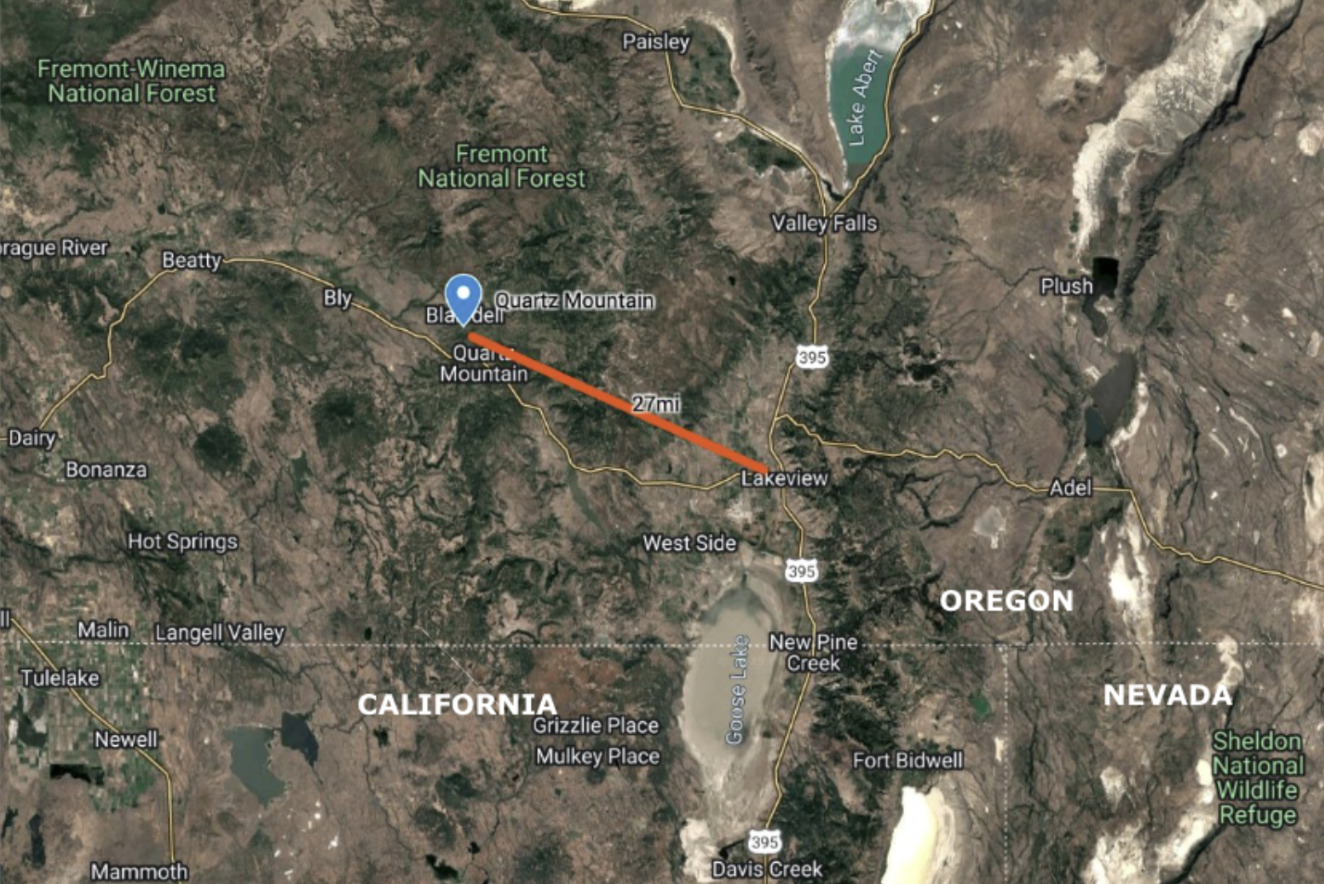
Quartz Mountain was discovered and drilled extensively from the 1980s onwards. Successive owners focused on exploration, and the project never progressed to a mining study. Alamos held it for more than a decade.
Tagliamonte said his own due diligence on grade and strip ratio suggested the deposit was economic. For a producer of Alamos's size, however, a mine of this scale would not materially change its production profile. The asset effectively became an orphan in its portfolio. Alamos is now a 10% shareholder in Q-Gold. According to Tagliamonte, the deal also carries annual anniversary payments of roughly C$4 million, a couple of which have already been made.
The current mineral resource stands at 2.01 million ounces Indicated and 494,000 ounces Inferred, together around 2.5 million ounces.
Interview with Peter Wilson Tagliamonte, CEO of Q-Gold Resources
PEA Economics
Quartz Mountain's maiden Preliminary Economic Assessment (PEA) was published in April 2026. It was prepared by Kappes, Cassiday & Associates of Reno, Nevada, and was the first mining study ever completed on the project. The base case uses a 24-month trailing average gold price of US$3,265 per ounce.
At that price, the study outlines an after-tax net present value (NPV) at a 5% discount rate of US$1.71 billion and an after-tax internal rate of return (IRR) of 55.2%. Initial capital expenditure is estimated at US$290 million, with an after-tax payback of 1.8 years. Life-of-mine production is around 1.9 million ounces over 14 years, averaging 135,400 ounces annually. Cash costs are estimated at US$1,010 per ounce and all-in sustaining costs (AISC) at US$1,216 per ounce.
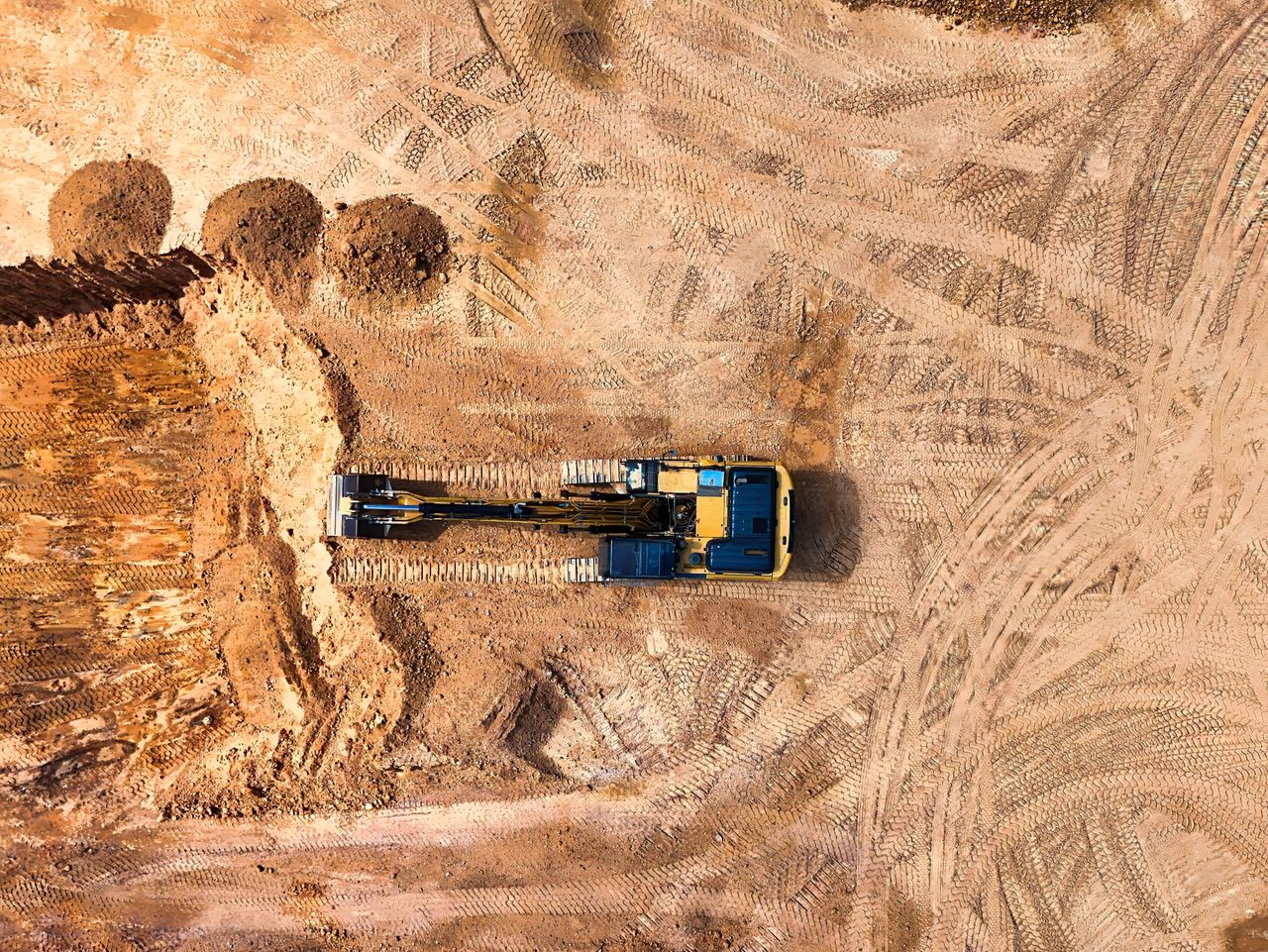
The strip ratio is a key driver. Quartz Mountain sits beneath low rolling hills east of the Cascade Mountains. Tagliamonte said the early years carry a near-zero strip ratio, and the life-of-mine figure is 0.65:1. Many open-pit gold operations run at three to five tonnes of waste per tonne of ore, and some are higher still.
Staged Build Starting With Oxide
The deposit has an oxide cap that Tagliamonte said holds about 45% of the ounces. Below it lies sulphide hard rock that will require grinding and flotation. The plan is to mine the oxide first through a heap leach operation lasting four to five years. Cash flow from that phase is intended to fund the mill needed for the sulphide phase, which would run for roughly nine further years.
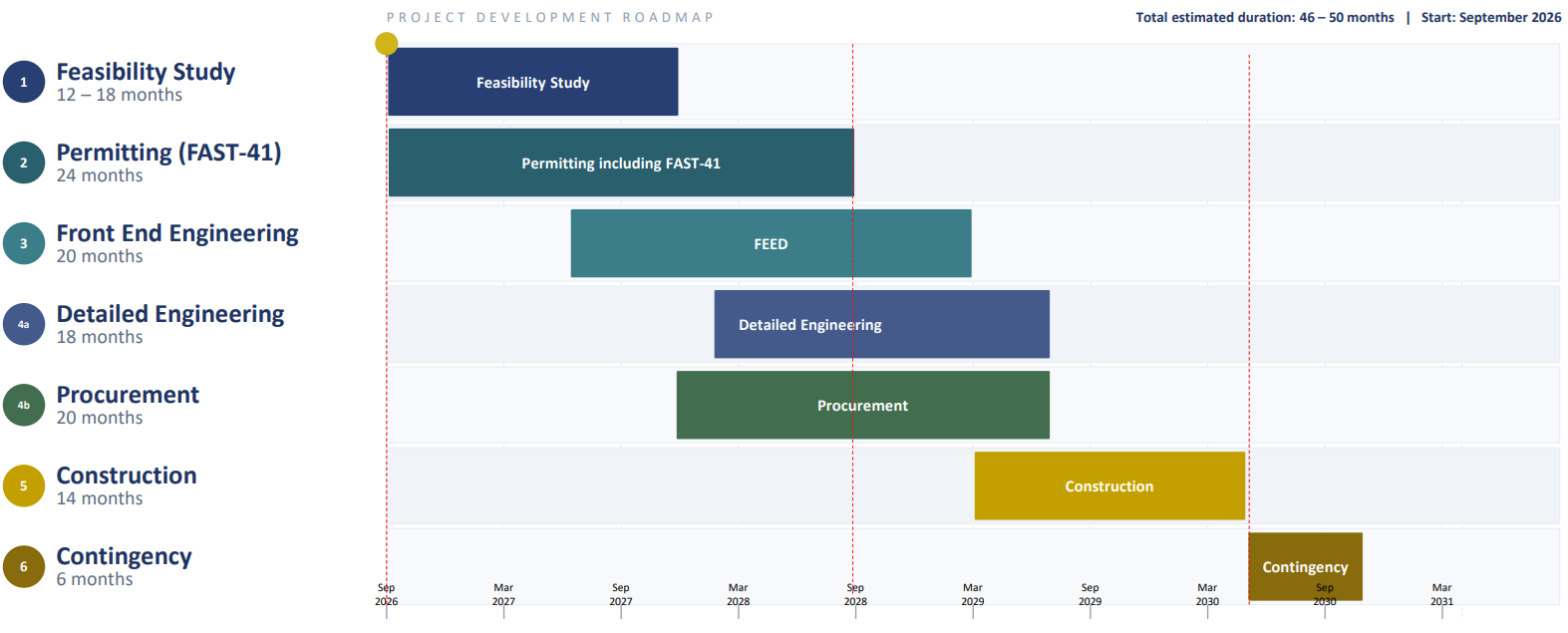
The approach changes the usual study sequence. The oxide material is simple to process and has decades of metallurgical test work behind it. Q-Gold therefore intends to skip a separate feasibility study for phase one and move directly into basic and detailed engineering. The sulphide phase will go through a full feasibility study.
Speed is a deliberate priority. Tagliamonte is looking at track-mounted Sandvik crushers that can be bought off the shelf and delivered within a year. He also plans to use standard designs for the adsorption-desorption-recovery (ADR) plant, along with readily available conveyors and stacking equipment.
"The thinking on the first phase is to get the mine into production quickly and to use as much as we can [of] basic engineering and sourcing equipment that is readily available and getting the mine started."
He sees a pathway to put the oxide heap leach into production within two to three years. Long-lead items for the sulphide phase, such as ball mills and crushing plants, would be engineered and sourced separately.
Permitting & Exploration Upside
Oregon has a reputation as a difficult permitting jurisdiction. Tagliamonte said Q-Gold's experience so far has been positive. The company has met with the Oregon Department of Geology and Mineral Industries (DOGAMI) and reports good engagement with the US Forest Service. Its environmental and permitting manager is a retired 30-year Forest Service veteran who handled exploration permitting for Quartz Mountain earlier in her career.
Q-Gold has also held several meetings about the federal FAST-41 programme, which coordinates and accelerates permitting for priority infrastructure and mining projects. Tagliamonte expects Quartz Mountain to be included within a short period. The project has not yet been confirmed as a FAST-41 project.
On exploration, the US Forest Service approved Q-Gold's Angel's Camp programme in April 2026. Work began this summer under Chief Operating Officer Dr. Andreas Rompel, and Tagliamonte said a number of targets have been identified.
Q-Gold also holds the Mine Centre Gold Project in Ontario. A summer 2026 surface programme there returned select grab samples of up to 600 g/t gold. Channel sample assays are still pending ahead of a planned drill campaign. Grab samples are selective and may not represent overall mineralisation.
Investment Thesis for Q-Gold
- The PEA's after-tax NPV(5%) of US$1.71 billion rises to US$3.20 billion at the US$4,800/oz spot sensitivity case, against US$290 million of initial capex.
- A 1.8-year after-tax payback and AISC of US$1,216 per ounce support the plan for heap leach cash flow to fund the sulphide expansion, which could limit dilution from a single large financing.
- Tagliamonte's previous companies were acquired by Yamana Gold and B2Gold after reaching production, and his core technical team has stayed with him since the 1990s.
- Key risks include funding the US$290 million initial build, Oregon permitting timelines and the execution risk of moving to detailed engineering without a phase-one feasibility study.
- Investors should monitor progress on detailed engineering, any formal FAST-41 designation and results from the Angel's Camp exploration programme.
Macro Thematic Analysis
Gold's price strength has widened the margin on projects designed at more conservative prices. Quartz Mountain's base case uses a trailing average well below spot prices at the time of the PEA's release. That gives the study a buffer if prices soften and meaningful upside if they hold.
At the same time, many mid-tier and senior producers are rationalising portfolios around larger, longer-life assets. Deposits capable of 130,000 to 170,000 ounces a year can fall below their threshold. That has created an opportunity for development-focused juniors to acquire advanced projects with large historical data sets at modest entry costs.
Jurisdiction is the third factor. US federal policy has shifted towards supporting domestic mineral production, and programmes such as FAST-41 are designed to shorten review timelines. Tagliamonte acknowledged Oregon's historical reputation but said the operating environment has changed.
"I know Oregon has had comments that it's been a very difficult permitting jurisdiction, but our experience to date has been fantastic and I think it's part of a shift in attitudes. Countries want to have their own natural resources and develop those projects."
For investors, the combination of a US address, low strip ratio and modest initial capital places Quartz Mountain among a small group of North American gold projects that could move towards production on a relatively short timeline. Execution and financing will determine whether that potential is realised.
TL;DR:
Q-Gold Resources bought the Quartz Mountain gold project in Oregon from Alamos Gold, which now owns 10% of Q-Gold. Its April 2026 PEA shows an after-tax NPV(5%) of US$1.71 billion and a 55.2% IRR on US$290 million of initial capex, using a US$3,265/oz gold price. The project would produce about 135,400 oz a year over 14 years at an AISC of US$1,216/oz. CEO Peter Tagliamonte, a mine builder whose past companies were bought by Yamana and B2Gold, plans to start with an oxide heap leach. That phase would skip feasibility, go straight to detailed engineering and could produce within two to three years. Cash flow from it would fund the sulphide mill. Funding the build, permitting progress and FAST-41 status are the key watch-items.
FAQ (AI-generated)
Analyst's Notes





Subscribe to Our Channel




Stay Informed