




i-80 Gold Declares First Granite Creek Reserve, Lone Tree Refurbishment Anchors Phased Production Growth


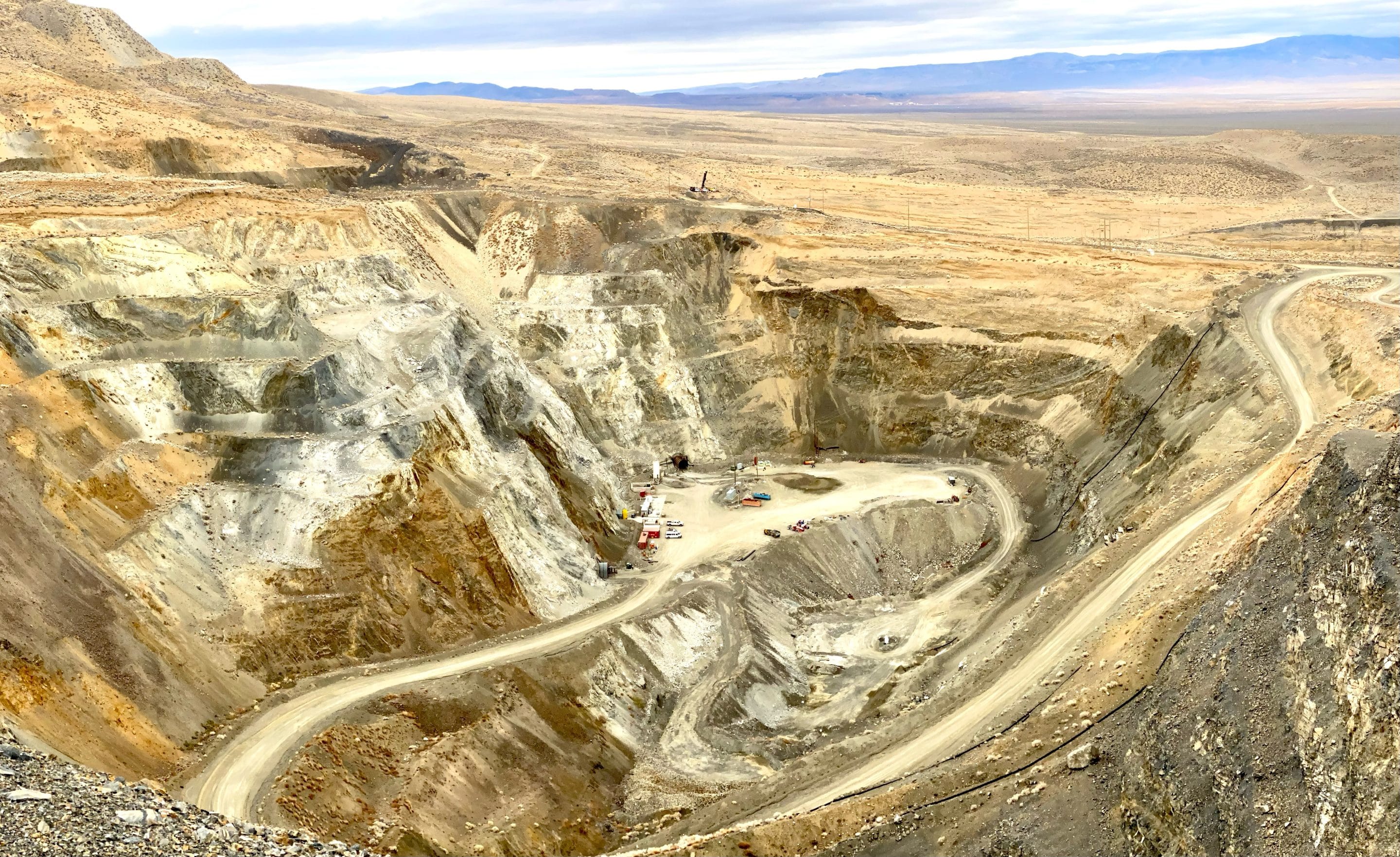
i-80 Gold COO Paul Chawrun on Granite Creek reserves, Lone Tree autoclave timing and Mineral Point's path to a 600,000 oz Nevada mid-tier gold producer.
- i-80 Gold's Granite Creek Underground feasibility study declared an initial reserve of 557,000 oz at 7.87 g/t, supporting average output of about 75,100 oz per year from 2028 to 2032 at AISC of $1,915/oz.
- The Lone Tree autoclave refurbishment remains on schedule and within contingency, with the filtration plant targeted for October 2027 and first gold pour in the fourth quarter of 2027.
- Archimedes is due to deliver first gold in the fourth quarter of 2026, and its oxide ore can be leached at good recoveries at both low and high grades.
- Mineral Point's pre-feasibility study, expected around mid-2027, is targeting a reserve of roughly 5 million oz, with production planned for around 2031.
- Management aims to fund the roughly $1 billion Mineral Point build without new equity, supporting a path to 500,000 to 600,000 oz per year by 2032.
Nevada remains one of the few jurisdictions where a gold company can build a multi-mine production base around its own processing plant. With gold trading well above the price assumptions used in most technical studies, the investor question has shifted from whether such projects work to whether management can deliver them. i-80 Gold Corp. (TSX:IAU)(NYSE American:IAUX) is testing that proposition across five gold projects and one processing facility in northern Nevada.
Chief Operating Officer Paul Chawrun said that over the past 12 months i-80 has completed its recapitalisation, published a feasibility study and initial mineral reserves for Granite Creek Underground, advanced the refurbishment of the Lone Tree autoclave plant, and stepped up drilling at its Ruby Hill property. The stated goal is to grow from under 50,000 oz of annual gold output today to a target of 600,000 oz or more by the early 2030s.
From Financing to Execution
The first half of the past year was dominated by funding. i-80 assembled more than $1 billion through equity, a royalty, convertible notes and a gold prepay facility, and reported cash of $464.6 million at 30 June 2026. Since then, the company has added technical staff in Reno, at its sites and in Toronto, and has begun operational readiness work for Lone Tree. Chawrun said the market's view of the company had shifted as each milestone was met.
"About a year ago, the story was perceived as complex. We never felt that internally. And now one year later, we've ticked all the boxes. We've been moving forward with Lone Tree as advertised on schedule."
He acknowledged some pressure on labour costs at Lone Tree but said spending remains within contingency. The Cove feasibility study is expected within weeks, although Cove can now be deferred because Granite Creek and Archimedes together provide enough feed for Lone Tree.

Granite Creek Underground
Granite Creek Underground Reserves
The September 2026 feasibility study converted part of Granite Creek's resource into an initial proven and probable reserve of 557,000 oz at 7.87 g/t gold. That supports a mine life of roughly 8.5 years and average production of 75,100 oz per year between 2028 and 2032. All-in sustaining costs (AISC) over that period are estimated at $1,915/oz, excluding a $49 million allocation of Lone Tree refurbishment capital. The base case uses a $2,750/oz gold price and returns an after-tax net present value (NPV, at a 5% discount rate) of $118 million. This is a conservative pricing convention i-80 applies across its project valuations.
The main change from the 2025 preliminary economic assessment (PEA) is grade, as the PEA's highest-grade areas sit further out in the deposit than current mining. Mining now reconciles to the model. Two factors are not reflected in the study's costs. Screening the ore removes around 20% of waste because the gold is concentrated in the fines, lifting a roughly 8 g/t run-of-mine grade to about 10 g/t. Dewatering is now being executed to plan, and as ground conditions improve throughput is designed to rise towards roughly 1,000 tonnes per day.
i-80 has historically converted inferred ounces to higher categories at around a one-to-one ratio or better. The deposit is open at depth, along strike and down plunge, with parallel fault structures also intersected. Chawrun expects drilling to keep Granite Creek at a rolling mine life of around eight years.
Interview with Paul Chawrun, COO of i-80 Gold Corp.
Lone Tree: Owning the Processing Step
i-80's sulphide ore currently goes to a third-party processor. Chawrun estimated that toll processing costs the company in the range of $1,300 to $1,500 per ounce. The company's presentation puts the payability factor under these arrangements at 55% to 60%, against an expected 87% average recovery once ore is processed through i-80's own autoclave.
That gap is why the Lone Tree refurbishment sits at the centre of the investment case, and why processing capacity in Nevada is increasingly treated as a strategic asset. The engineering study confirmed nameplate capacity of around 827,800 tonnes per year at a total cost estimate of approximately $430 million. The filtration plant is the critical path and is targeted for completion in October 2027. At that point the plant can begin processing oxide ore. The company targets a first gold pour in the fourth quarter of 2027, with the autoclave handling sulphide ore from 2028.
Archimedes and Oxide Flexibility
At the Ruby Hill property, development of the Archimedes underground mine is advancing, with first gold mined targeted for the fourth quarter of 2026. Archimedes oxide ore can be heap leached at good recoveries across both grade bands. Low-grade material runs at around 2 g/t and high-grade at 7-9 g/t.
This creates an option over the next 12 to 24 months. i-80 can keep leaching high-grade oxide at Ruby, or truck it to Lone Tree for processing that bypasses the autoclave. Either route allows the company to build a sulphide stockpile through 2027 ahead of autoclave start-up.
Mineral Point: The Step Change
Mineral Point, the open pit oxide project at Ruby Hill, is where i-80's scale is decided. Its PEA was based on roughly 3 million oz of measured and indicated gold and 2 million oz inferred, plus about 100 million oz of indicated silver and a similar inferred amount. Chawrun said silver adds roughly 15% to 20% to margin.
The PEA outlined average output of around 280,000 gold-equivalent oz per year. Chawrun put AISC in a range of $1,200 to $1,400/oz to reflect operating cost changes since the study. Grade is around 0.5 g/t gold equivalent, low globally but good for Nevada. Oxidation extends to the base of the mineralisation, removing the transition zone that complicates many open pits.
An infill and expansion drill campaign of around 155,000 metres is due for completion in late first quarter or early second quarter 2027. A pre-feasibility study is expected around mid-2027 or slightly later, and Chawrun expects it to support a reserve of roughly 5 million oz. Permitting is due to begin late in 2026, with approval targeted for the end of 2028 on an aggressive schedule, or possibly 2029. Production would follow around 2031.
Chawrun was direct on how i-80 intends to fund the build.
"So we won't need to sell the byproduct credits, but the project capital is roughly a billion to put together as we outlined in the PEA. We should be able to finance this without further equity, that's the plan. We have a number of ways that we can do that which are relatively early stages, but we have a number of avenues."
Chawrun said the company is evaluating whether to move Mineral Point into the second phase of the plan. Phase one cash flow, together with debt, other facilities or equipment leasing, would then fund construction.
The Investment Thesis for i-80 Gold
- Granite Creek Underground now carries an initial reserve of 557,000 oz at 7.87 g/t, giving the company its first reserve-backed production base.
- The Lone Tree refurbishment should lift recoveries on refractory ore from a 55% to 60% payability factor to around 87%, removing third-party toll processing costs.
- Investors should monitor progress towards October 2027 filtration plant completion, the critical-path milestone for first oxide processing.
- Mineral Point's pre-feasibility study, expected around mid-2027, is the key re-rating catalyst, with management targeting a reserve of roughly 5 million oz.
- Management's plan to fund the roughly $1 billion Mineral Point build without new equity depends on phase one cash flow and gold prices, which makes execution at Granite Creek and Archimedes critical.
- Key risks include dewatering and ground conditions at Granite Creek, labour cost pressure at Lone Tree, and the aggressive permitting timeline at Mineral Point.
Macro Thematic Analysis
The gold sector's balance of risk has changed. At current prices, most development projects in stable jurisdictions screen as economic on paper. What separates companies is execution capability, processing access and the ability to fund growth without diluting existing shareholders.
Nevada illustrates this clearly. It hosts world-class deposits and a pro-mining permitting framework, but processing capacity for refractory ore is concentrated in a small number of facilities. Mid-sized producers without their own autoclave or roaster pay heavily for access, both through toll charges and lower payability. i-80's strategy is built around removing that constraint. Owning an autoclave allows the company to keep a larger share of the gold it mines, schedule its own throughput and decide how to blend oxide and sulphide feed.
The second theme is the scarcity of new mid-tier producers. Large gold miners have been consolidating, and the pool of independent companies capable of producing several hundred thousand ounces a year in a tier-one jurisdiction is small. A company that can show a credible, funded route into that bracket tends to attract a different class of institutional shareholder. Chawrun framed the end-state in those terms.
"This company already looks significantly different from a year. It'll just continue to grow and evolve, and we have a very clear path to be able to get to mid-tier status."
TL;DR
i-80 Gold (TSX:IAU) has moved from financing to execution in Nevada, according to COO Paul Chawrun. Granite Creek Underground now has an initial reserve of 557,000 oz at 7.87 g/t, supporting about 75,100 oz per year from 2028 to 2032 at AISC of $1,915/oz. The Lone Tree autoclave refurbishment is on schedule, with filtration plant completion targeted for October 2027 and first gold pour in the fourth quarter of 2027, ending reliance on costly third-party toll processing. Archimedes is due to produce first gold in the fourth quarter of 2026. Mineral Point, targeting a roughly 5 million oz reserve in a mid-2027 pre-feasibility study, underpins growth to 500,000 to 600,000 oz per year in the early 2030s, which management aims to fund without new equity.
FAQs (AI-Generated)
Analyst's Notes





Subscribe to Our Channel



Stay Informed






















