




Cobra Resources: Betting Big on Rare Earths & Copper



obra Resources (LSE: COBR) is advancing two South Australian critical minerals projects with £4.5M in fresh capital and a catalyst-heavy 2026 ahead.
- Cobra Resources is a South Australian critical minerals developer targeting dysprosium, terbium, and copper across two flagship projects with a market capitalisation of £41.55 million.
- The company closed a £4.5 million fundraise in April 2026 at 4.0 pence per share, with proceeds split between accelerating drilling at the Manna Hill Copper Project and advancing the Boland Rare Earth Project through pre-feasibility.
- Boland is positioned to become the first rare earth in-situ recovery (ISR) project outside Asia, using a confined aquifer geology that delivers low extraction costs without the environmental risks of Chinese operations.
- Blue Rose, Cobra's flagship copper target within Manna Hill, has returned 48 metres at 2.2% copper and 0.78 grams per tonne gold from just 11 metres depth in historical drilling.
- A mineral resource estimate (MRE), scoping study, and field pilot study at Boland are all targeted for delivery within 2026, making this one of the most catalyst-dense years in the company's history.
Why These Metals Matter Right Now
To understand why Cobra Resources (LSE: COBR) exists, it helps to understand what is happening in the metals market. The world is in the middle of a major shift away from fossil fuels toward clean energy. Electric vehicles (EVs), wind turbines, and power grids all need specific metals to function, and two of the most important - copper and rare earth elements - are in increasingly short supply outside of China.
Copper is the metal that carries electricity. It is inside every EV, every solar panel installation, and every power line. The International Copper Study Group (ICSG), an intergovernmental body that tracks global copper supply and demand, projected in October 2025 that the global copper market will flip from a surplus of approximately 178,000 tonnes in 2025 to a deficit of 150,000 tonnes in 2026. In simple terms, that means the world will start consuming more copper than it produces. Looking further ahead, research firm Wood Mackenzie says the world will need 7.8 million tonnes of new copper supply by 2035 just to keep up with demand - a gap that current mine approvals are nowhere near filling, with new project approvals averaging below 300,000 tonnes per year for three consecutive years, against a required 600,000 to 700,000 tonnes annually.
Rare earth elements are a different but equally important story. Dysprosium and terbium, the two metals Cobra is targeting at its Boland project, are essential ingredients in the permanent magnets that power EV motors and wind turbines. Unlike copper, these metals are almost entirely controlled by China, which dominates both mining and processing. Western governments have been trying for years to develop alternative sources, but the economics have been difficult. That is the gap Cobra is attempting to fill.
What Is In-Situ Recovery & Why Does It Matter?
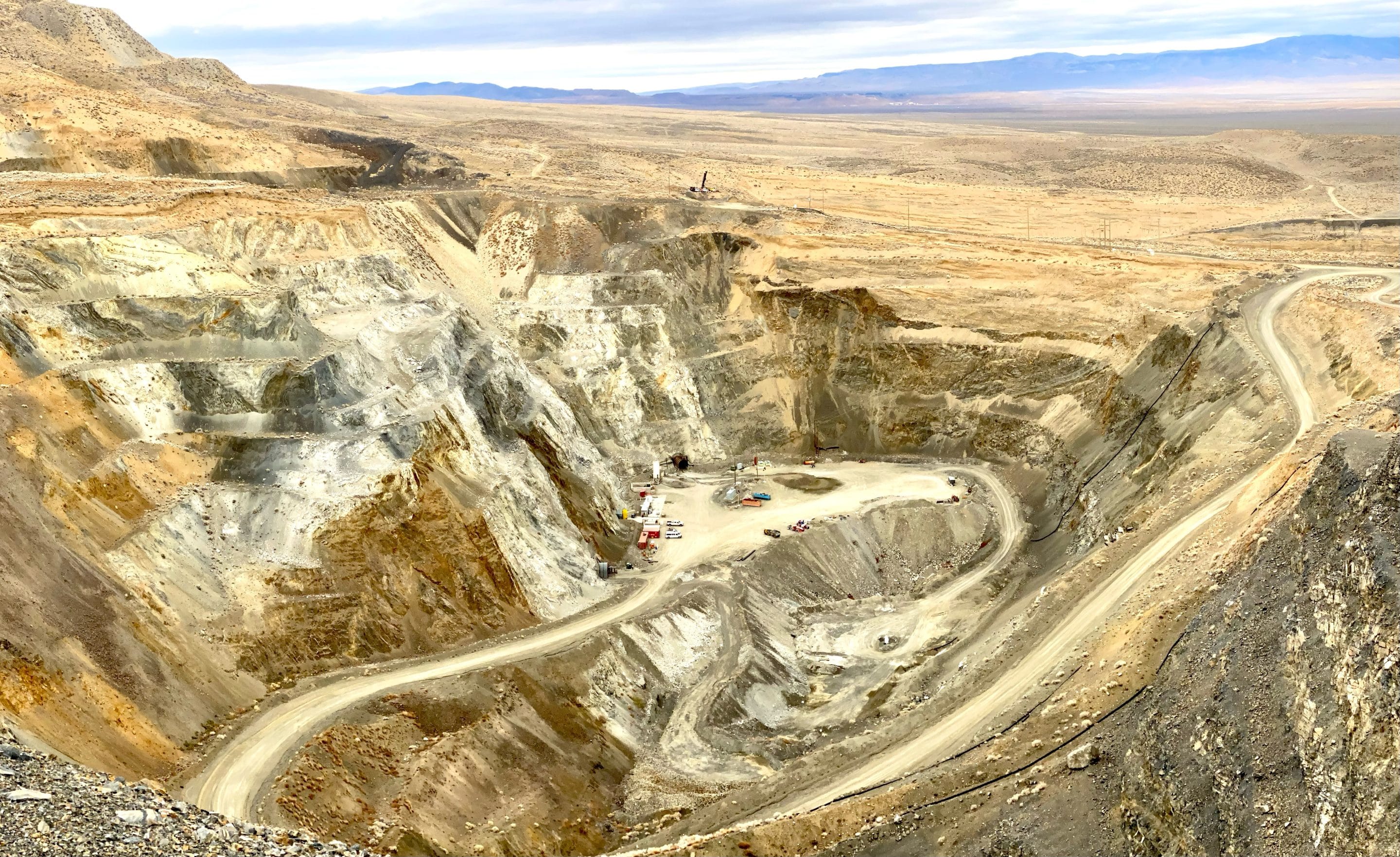
Most people picture mining as a process involving large open pits, heavy machinery, and significant disturbance to the landscape. In-situ recovery (ISR) is fundamentally different. Instead of digging the rock out of the ground, ISR pumps a weak chemical solution into the underground ore deposit through drilled wells. That solution dissolves the target metals, and the metal-rich liquid is then pumped back to the surface and processed. The result is a much smaller surface footprint, lower costs, and significantly less environmental disruption.
ISR is already widely used in the uranium mining industry, including in South Australia, which gives the local regulator direct experience with the method. It is also used in southern China to extract rare earth elements, but with a significant problem: the Chinese deposits sit in unconfined ground, meaning the chemical solution can leak into nearby water sources. Cobra's Boland project sits in what geologists call a confined aquifer, where a natural layer of clay above the ore deposit acts as a physical seal, preventing any leakage into surface water. The company argues this makes Boland both cheaper and cleaner than the Chinese operations it would compete with.
The early laboratory results support that argument. Tests have shown the Boland ore releases its rare earth metals efficiently, achieving heavy rare earth oxide (HREO) recoveries of 66% within just 17 days, with acid consumption of only 3.88 kilograms per tonne of ore processed. The product recovered from those tests showed 62.4% total rare earth oxide (TREO) content - a measure of product quality - and very low levels of unwanted elements, with uranium at just 34 parts per million. Cobra has also shown it can selectively remove cerium, a lower-value rare earth, from the product, which increases the proportion of the more valuable heavy rare earths from approximately 32% to over 48%, improving the product's estimated value by around 50%.
The Copper Project: Early Promise, More to Come
While Boland is the rare earth story, the Manna Hill Copper Project is where Cobra has its copper exposure. The project is located in a geological region of South Australia called the Nakara Arc, which Cobra's geological team describes in its February 2026 corporate presentation as structurally similar to the Cadia Valley in New South Wales - a region that hosts one of Australia's most productive copper-gold mines. It is important to note this is Cobra's own geological interpretation and has not been independently verified.
The most advanced copper target within Manna Hill is called Blue Rose. Historical drilling at Blue Rose - meaning drilling done before Cobra was involved - has already found significant copper mineralisation, including 48 metres of rock grading 2.2% copper and 0.78 grams per tonne gold starting just 11 metres below the surface, and 132 metres grading 0.5% copper from 11 metres depth. These are considered strong results for this type of deposit. As of February 2026, Cobra was in the middle of a 3,500-metre reverse circulation (RC) drilling programme at Blue Rose, with laboratory results from those new holes expected in March 2026.
A second copper target at Manna Hill, called Netley Hill, also warrants attention. One historical drill hole there found 350 metres of rock grading 0.1% copper and 0.05% molybdenum starting right at the surface - a very long intersection that suggests a large copper system sitting in the ground, largely untested by modern drilling. Cobra has the necessary permits in place to drill Netley Hill with diamond drill holes, which provide more detailed geological information than the simpler RC method.
The Fundraise: What the Money Is For
In late March 2026, Cobra launched a fundraise, and by 1 April 2026 it confirmed the result. The company sold 41,924,995 new ordinary shares through a placing with institutional investors, and received subscriptions for 75,075,000 additional new shares from existing shareholders, both at a price of 4.0 pence per share, raising net proceeds of approximately £4.5 million in total. After the new shares were issued, the company's total share count rose to 1,056,320,849 ordinary shares. Investors who participated also received one warrant - essentially a right to buy an additional share at a fixed price - for every two shares they bought, at an exercise price of 6.0 pence per share, valid for two years.
The money has been allocated to two specific programmes. Approximately £1.23 million goes to Boland, covering the cost of drilling to define the size of the ore body, completing a formal mineral resource estimate (MRE) targeted for June 2026, producing a scoping study - an early-stage assessment of whether the project could be economically viable - by July 2026, and beginning a field pilot of the ISR process by year-end. The remaining funds accelerate copper drilling at Manna Hill.
Chief Executive Officer (CEO) Rupert Verco said at the time:
"With the fundraise now successfully closed, Cobra is entering its next phase with the financial backing required to accelerate activity across the Company's assets. This year's work programmes have the potential to establish Cobra as a significant copper and rare earths developer in South Australia."
Key Takeaway for Investors
Cobra Resources (LSE: COBR) is a small, early-stage mining company with two projects that target metals the world increasingly needs but struggles to source outside of China. The copper market is moving from surplus to deficit, with the ICSG projecting a 150,000-tonne shortfall in 2026, and Wood Mackenzie forecasting global copper demand to rise 24% to 42.7 million tonnes per annum by 2035. The rare earth market faces an even more acute supply challenge, with dysprosium and terbium production almost entirely controlled by China. Cobra is attempting to address both gaps from a single, well-regarded mining jurisdiction.
That said, Cobra is still in the exploration and early development stage, which means it carries the risks that come with that territory. Drill results may not match expectations, laboratory test results do not always translate to the same performance in the field, and commodity prices can move against a project's economics. Goldman Sachs Research, for example, forecasts the LME copper price to pull back to $11,000 per tonne by end-2026 before recovering to a long-term target of $15,000 per tonne by 2035. With a share count now exceeding one billion shares, meaningful returns for investors will require the company to deliver real, measurable value from its work programmes. The 2026 calendar - packed with drill results, a resource estimate, and a scoping study - will go a long way toward answering whether Cobra can do exactly that.
FAQs (AI-Generated)
Analyst's Notes





Subscribe to Our Channel




Stay Informed






















