




Cobra Resources: Drilling Toward the West's Rare Earth Answer


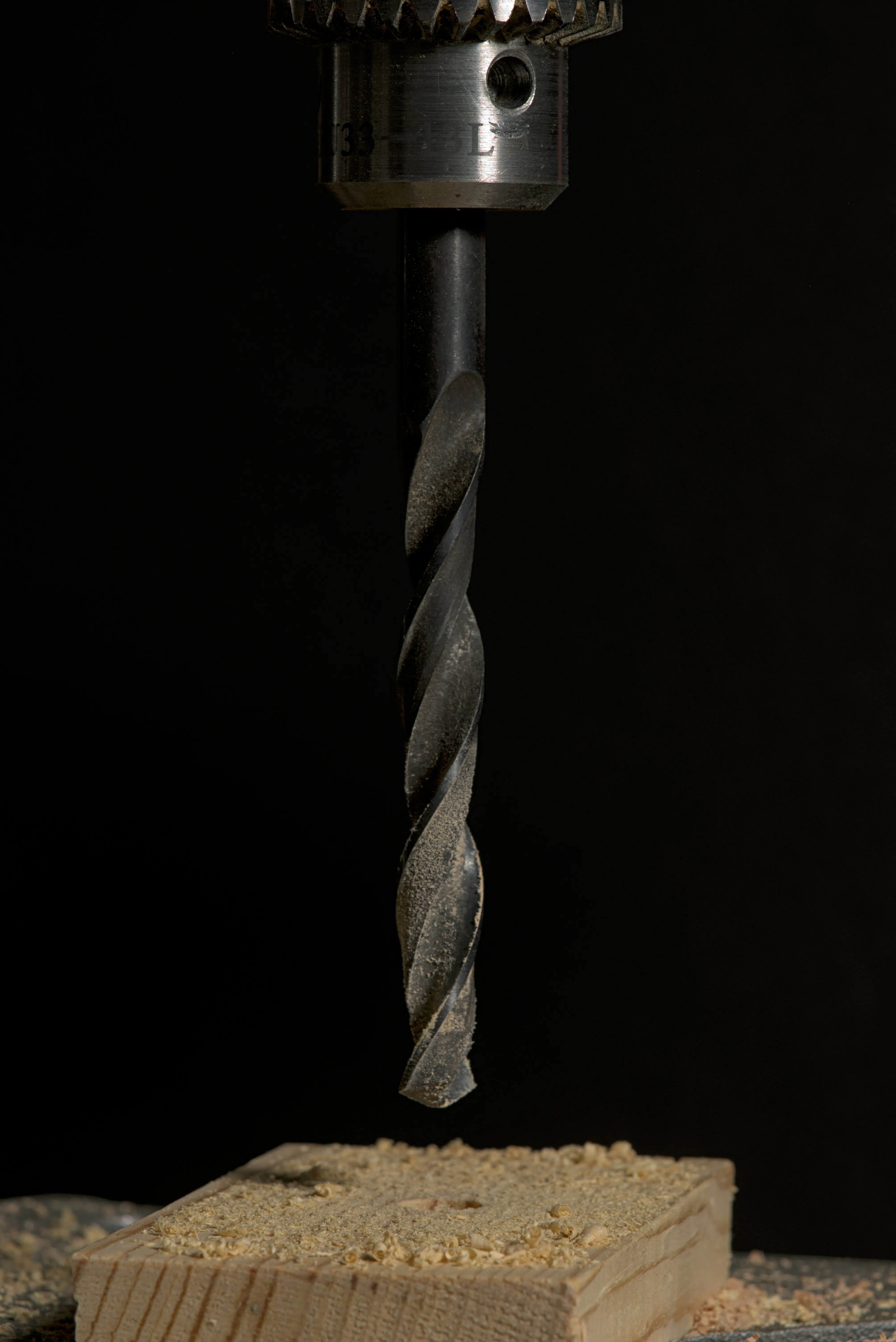
Cobra Resources (LSE: COBR) has started drilling in South Australia to confirm a rare earth deposit that could supply critical minerals the West urgently needs outside of China.
- Cobra Resources (LSE: COBR) started drilling in South Australia on 12 March 2026 to confirm the size of its rare earth deposit across two sites, Boland and Head, using two drill rigs at the same time.
- The drilling programme covers up to 36 holes at Boland and up to 54 holes at Head, with results expected in early April 2026 and a formal resource estimate to follow by mid-2026.
- Boland is the only rare earth project in Australia that can use a low-cost, low-impact extraction method that pulls minerals out of the ground without any digging or excavation.
- Lab tests have already confirmed the company can recover up to 68% of the valuable rare earth minerals at the site and produce a high-purity product, reducing the biggest technical risks before large-scale drilling even began.
- Cobra raised approximately £4.5 million in late March 2026 to fund its drilling programmes, with new shares beginning trading on 1 April 2026.
Company Overview
Cobra Resources (LSE: COBR) started drilling at two locations in South Australia, called Boland and Head, to determine the size and quality of its rare earth deposit. Two drill rigs are operating simultaneously. Up to 36 holes are planned at Boland and up to 54 holes at the Head site, which sits about 20 kilometres south of Boland. The first results from the laboratories analysing the drill samples are expected in early April 2026.
What the Company Does & How It Operates
Cobra Resources is a small exploration company listed on the London Stock Exchange. It finds and develops mineral deposits in South Australia that contain metals the world increasingly needs. Its main project is called Boland, which it discovered in 2023. Boland contains rare earth elements, a group of metals that are essential for making the powerful magnets found in electric vehicle motors, wind turbines, and military equipment.
The company does not yet produce or sell anything. It is at the stage where it is proving its deposit is large enough and economically viable enough to eventually build a mine. Think of it like a property developer who has found a promising piece of land and is now conducting surveys before committing to construction.
What makes Cobra unusual is how it plans to extract those rare earths. Rather than digging a traditional open pit or underground mine, its Boland deposit can be developed by pumping a mild solution into the ground, dissolving the rare earth minerals, and then pumping the solution back up to the surface. No excavation. No large pits. No mountains of waste rock. This approach is the same technique used for decades to mine uranium in South Australia, and it is far cheaper and less disruptive than conventional mining.
The Market Context for Rare Earths
The specific rare earths at Boland are two of the most strategically important minerals on the planet right now. They are used in the high-performance magnets that make electric vehicle motors and wind turbines work. Without them, the global shift to clean energy stalls. The problem is that China currently controls approximately 69% of global rare earth supply, and it has been restricting exports of precisely these materials. That has western governments and manufacturers scrambling to find alternative sources.
Australia sits in a politically stable, resource-rich region with strong mining regulations and strong government support for critical minerals development. A US-Australia critical minerals agreement valued at $8 billion creates a potential government funding pathway as the Boland project advances toward a development decision. For a small company like Cobra, that kind of government interest at a national level reduces the risk that funding dries up before the project reaches production.
Rupert Verco, Managing Director of Cobra Resources, framed the commercial opportunity:
"We're producing a carbonate at a cost metric that's around $6 US per kilo, for a value add of around $100 per kilo."
In simple terms, the company is spending approximately $6 to produce something worth approximately $100, a margin that, if validated at full scale, would make Boland one of the most cost-competitive rare earth operations outside of China.
The Extraction Method & Its Cost Implications
One of the most important things to understand about Boland as an investment is why it is cheaper to develop than most rare earth projects. The deposit sits inside a layer of sandy material underground that is naturally sandwiched between two layers of hard, waterproof clay, one above and one below. This means any solution pumped into the sand layer stays contained within it and cannot leak upward or downward into surrounding rock.
Nature has effectively already built the containment system. Cobra does not need expensive engineered barriers or waste management infrastructure. The leaching solution stays exactly where it is supposed to, within the mineralised layer, and travels only toward the extraction wells drilled to collect it.
The practical result is that the company can develop Boland in stages, adding capacity module by module using equipment that fits in shipping containers, without building large fixed processing plants upfront. That dramatically reduces the amount of money needed to get into production and lowers the risk for investors that costs blow out before the first dollar of revenue arrives.
The Current Drilling Program
Cobra is currently drilling at both Boland and the nearby Head site simultaneously. The purpose is straightforward: to collect enough geological data to publish a formal estimate of how much rare earth material is in the ground. That document is the standard industry requirement before a company can move to financial modelling and eventually a construction decision.
Verco described the significance of the drilling milestone directly:
"We have two rigs out there going full ball on demonstrating the resource. That's going to close out the work that we're going to need to do to do economic evaluation at the Boland and Head rare earth projects, and that's really going to then enable us to focus on the economic analysis for the rare earths."
For investors, once a formal resource estimate is published, the company moves from being valued as a speculative exploration play to being valued on the basis of what its deposit is actually worth.
The Head site adds meaningful scale potential to the story. Lab tests on historical drill samples confirmed that the same type of rare earth mineralisation found at Boland is present across an area of approximately 85 square kilometres at Head, located approximately 20 kilometres south of the Boland Project. If the current drilling confirms that scale, the combined resource could be substantially larger than Boland alone.
Capital Position & Portfolio Scope
Cobra raised approximately £4.5 million net through a placing and subscription of nearly 117 million new shares at 4.0 pence, with strong participation from institutional investors, major Australian shareholders, and directors, with the new shares beginning trading on 1 April 2026. That money funds the current rare earth drilling and also accelerates work at the Manna Hill copper project, giving investors exposure to two critical minerals from a single holding.
Manna Hill sits in a region of South Australia that hosts major copper deposits. An 18-hole, 3,200-metre drilling programme completed in February 2026 found visible copper in 10 of the 18 holes, along with signs of a large-scale copper system at depth. Assay results from that programme are pending, and if they confirm commercially interesting copper grades, Manna Hill becomes a second near-term catalyst that the current share price does not yet reflect.
Cobra also sold its gold assets to Barton Gold for up to A$15 million, receiving cash, shares in Barton Gold, and future payments. That sale removed a non-core asset from the company's books, sharpened its focus on rare earths and copper, and provided funding without needing to issue more shares to investors.
The Investment Thesis for Cobra Resources
- Consider building a position before the formal resource estimate is published in mid-2026, as confirmation of a commercially sized deposit is the first event likely to attract broader institutional attention to the stock.
- Watch the early April 2026 lab results closely, since the grade and thickness of rare earth mineralisation across both Boland and Head will determine whether the deposit is large enough to support a viable mine plan.
- Treat the cost advantage as the central valuation argument: a project that can produce high-value rare earth material for approximately $6 US per kilogram, against a product value of approximately $100 per kilogram, has a margin structure that most peers cannot match.
- Note the Manna Hill copper assay results as a potential near-term bonus catalyst that could support the share price independently of the rare earth programme.
- Size the position according to exploration-stage risk tolerance, as the company has no revenue, no published resource yet, and will need additional capital to move from economic studies to construction.
- Track the planned field extraction trial in late 2026 as the final proof-of-concept gate, since that trial will demonstrate whether the underground extraction method works at full field scale rather than just in laboratory conditions.
Key Takeaway for Investors
Cobra Resources has done something unusual for a company its size. Before spending heavily on drilling, it spent two years proving the science of its extraction method works under laboratory conditions. It proved the geology contains the minerals. It proved those minerals can be recovered cleanly and cheaply. And it proved the underground solution system stays safely contained. Now it is drilling to answer the one remaining question: how much is there? The answer, expected by mid-2026, will determine whether Cobra remains a speculative exploration stock or begins the transition to a development company with a defined, economically credible rare earth asset. For investors willing to accept the risks typical of early-stage mining companies, including no revenue and no certainty of eventual production, the current period represents the window between technical validation and commercial confirmation.
TL;DR
Cobra Resources (LSE: COBR) has spent two years proving its rare earth deposit in South Australia can be extracted cheaply and cleanly without digging up the land. It is now drilling at two sites to determine how much material is in the ground, with a formal resource estimate due by mid-2026. That result will determine whether the company transitions from a speculative exploration stock to one with a commercially credible rare earth asset. The company has no revenue and no published resource yet, and the share price depends entirely on results still pending.
FAQs (AI-Generated)
Analyst's Notes





Subscribe to Our Channel







Stay Informed

























