




Could Hormuz Recovery Reprice Oil Before an Iran Settlement?


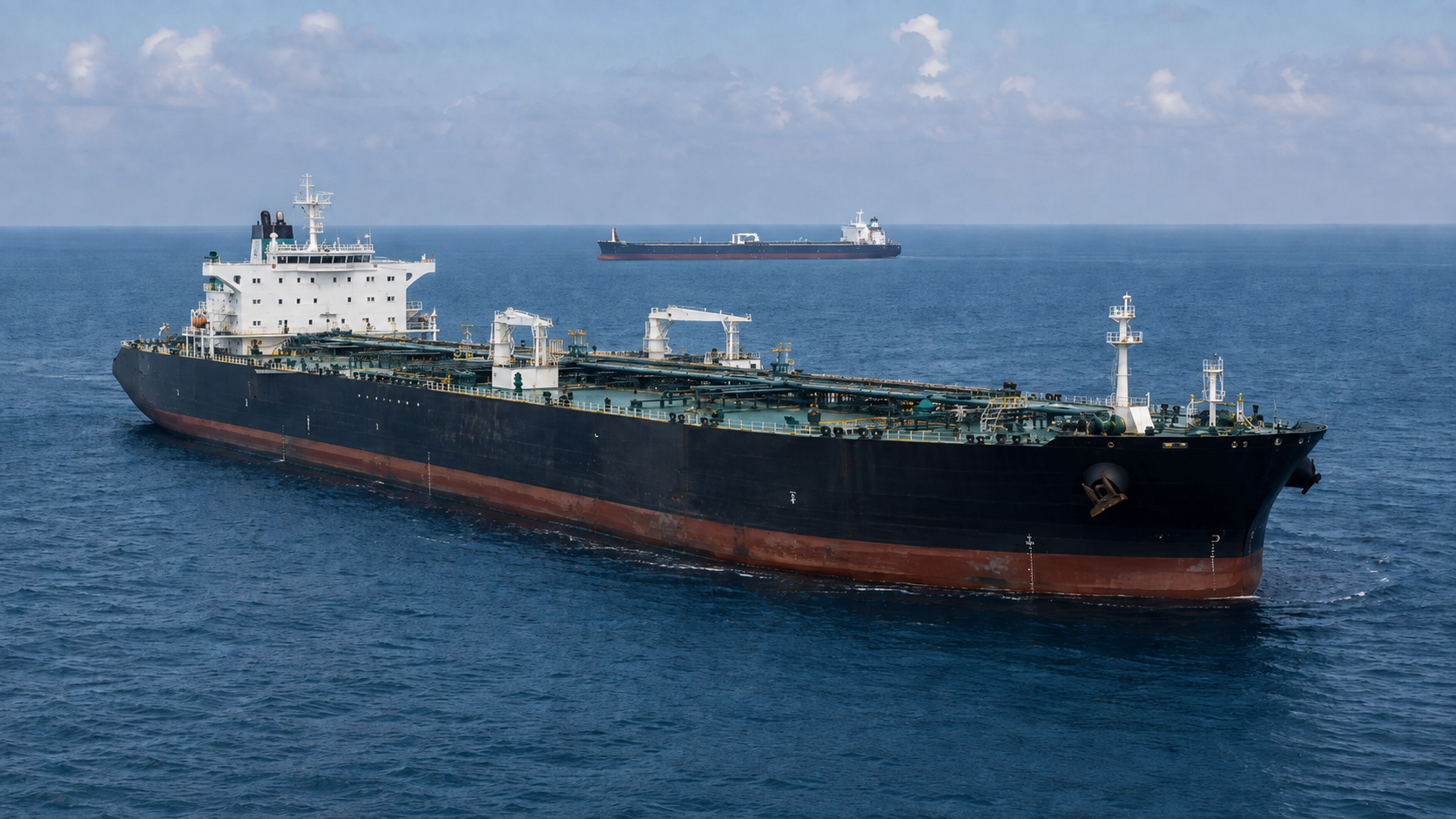
A 60% Hormuz flow recovery could revive oil oversupply expectations and lower Brent and diesel costs before a full Iran settlement.
- West Texas Intermediate (WTI) fell 1.62% to $85.65 per barrel and Brent 1.38% to $93.09 on August 24, 2026, as markets awaited details of what Washington calls its toughest-ever Iran sanctions campaign, leaving prices sensitive to further supply restrictions.
- Commonwealth Bank of Australia on August 24, 2026, was targeting Brent at $70-$100 per barrel for the second half of 2026 and estimated that restoring 50%-60% of pre-war Hormuz flows could revive oversupply expectations and pressure prices toward the lower end of that range.
- The US military has helped tankers move more than 660 million barrels of oil through Hormuz since early May, showing Gulf supply can continue flowing without a full reopening.
- US distillate inventories stood at 105.6 million barrels, 13% below the five-year average, while crude inventories were in line with the average at 428.8 million barrels for the week ending August 14, 2026, keeping diesel supply tighter than crude.
- New York Harbor ultra-low sulfur diesel averaged $3.401 per gallon in June 2026, down from $3.969 in May as a deal appeared closer, showing partial de-escalation can reduce fuel costs before a full settlement.
Sanctions Uncertainty Pulls Brent to $93.09 & Leaves Supply Risk Intact
Oil prices fell as markets awaited details of the new sanctions package, with WTI down 1.62% to $85.65 per barrel and Brent down 1.38% to $93.09. Treasury Secretary Scott Bessent said the measures would begin an economic D-Day and represent the greatest financial offensive mounted against an adversary, raising the risk of tighter Iranian oil exports.
Both benchmarks gained more than 6% the previous week, with Brent settling at $94.39 and WTI at $87.06 as sanctions risk lifted oil prices. Saxo Bank analysts said new sanctions could tighten global supply further as Iranian exports remain disrupted and offers to China decline, supporting prices despite the latest pullback.
660 Million Barrels Cross Hormuz & Reduce Full Supply-Cutoff Risk
The US military has helped tankers move more than 660 million barrels of oil through the Strait of Hormuz since early May, confirming the route remains partially operational under escort. Continued flows reduce the risk of a complete supply cutoff and keep further transit recovery in play.
US commercial crude inventories rose 4.4 million barrels to 428.8 million, matching the five-year average, as production reached 13.83 million barrels per day and exports rose to 4.07 million barrels per day from 3.06 million. Those figures show crude supply has returned near seasonal norms despite the conflict, reducing the risk of an immediate domestic shortage. Distillate remains tighter at 105.6 million barrels, 13% below the five-year average, keeping diesel more exposed to supply pressure.
60% Hormuz Recovery Could Revive Oversupply & Pull Brent Toward $70
Oil could reprice before a full settlement if Hormuz flows recover enough to restore oversupply expectations. Commonwealth Bank of Australia is targeting Brent at $70-$100 per barrel in the second half of 2026 and estimates that restoring 50%-60% of pre-war Hormuz flows could revive oversupply expectations and push prices toward the lower end of that range. Barbara Lambrecht, Commodity Analyst at Commerzbank Research, said US sanctions were likely to target buyers of Iranian oil, with China the most important, which could reduce Iranian exports without directly restricting Gulf transit.
Base case: If sanctions target Iranian crude buyers without further restricting Gulf transit, Brent remains in the $85-$100 upper half of Commonwealth Bank of Australia’s range, while distillate inventories stay about 13% below the five-year average into the fourth quarter of 2026.
Bear case: If escorted transits recover to 50%-60% of pre-war volumes, oversupply expectations return and Brent moves toward the lower end of the $70-$100 range, consistent with the US Energy Information Administration’s (EIA) August 11, 2026 forecast of $78 per barrel for the fourth quarter.
57-Cent Diesel Drop Shows Partial De-Escalation Can Cut Fuel Costs
Mining fuel costs can fall before the war ends if partial de-escalation lowers diesel prices. New York Harbor ultra-low sulfur diesel fell from $3.969 per gallon in May to $3.401 in June as a settlement appeared closer, before rebounding to $3.913 in July. The 57-cent June decline shows that partial de-escalation can lower wholesale diesel costs without a signed agreement.
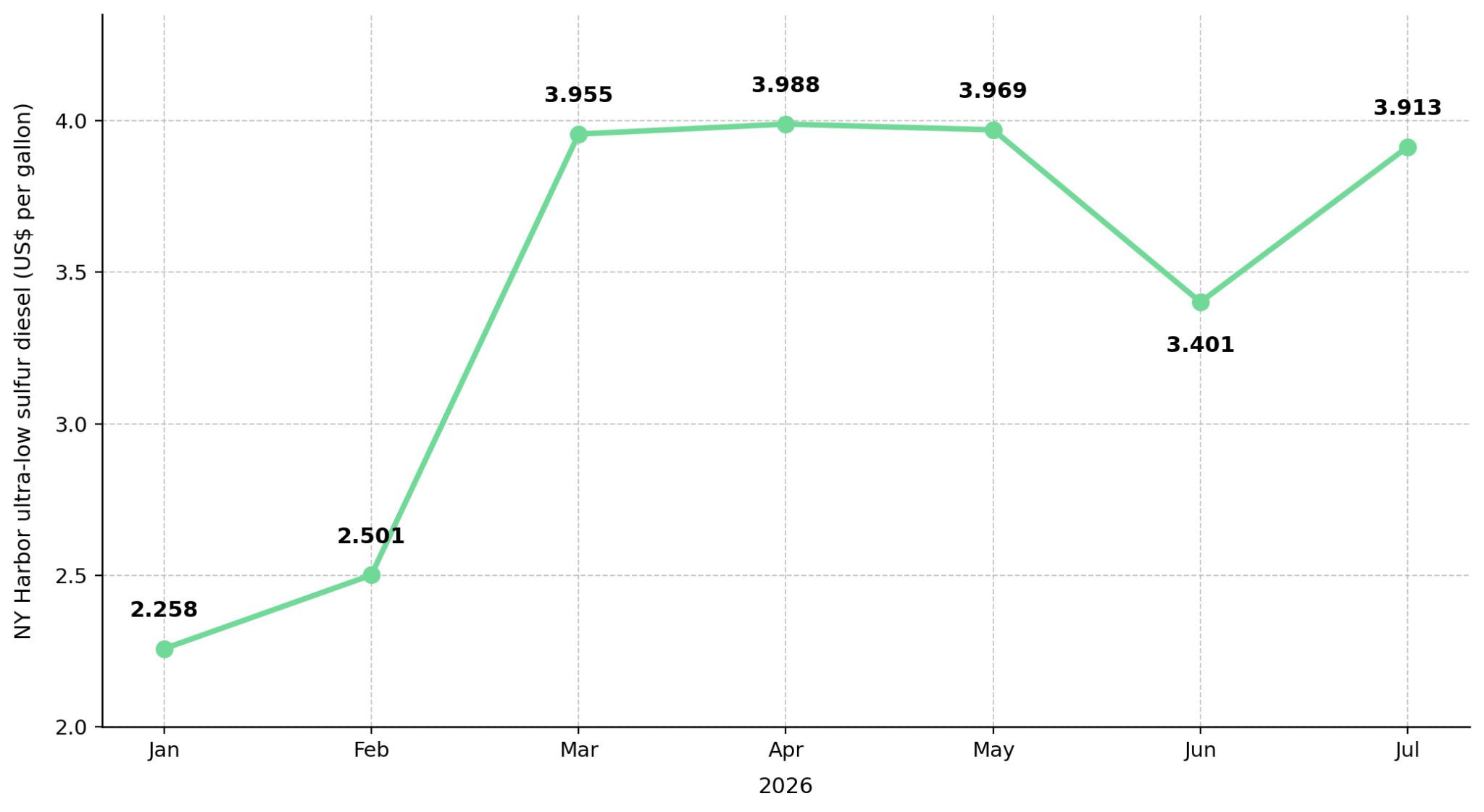
New York Harbor ultra-low sulfur diesel reached $4.332 per gallon versus $2.280 a year earlier, while national retail diesel rose to $5.454 per gallon, $1.741 above the year-ago level. Both prices now exceed pre-June levels, keeping mining fuel costs elevated despite the earlier decline.
A recovery in Hormuz transit could lower diesel prices before a full settlement. Mine fuel budgets that assume costs stay elevated until a settlement may therefore miss an earlier cost decline. Partial transit recovery is the lower threshold, and escorted Hormuz flows show that the process is already underway.
Check $3.401 Diesel for Signs Mine Fuel Costs Could Fall
Distillate inventories remain at 105.6 million barrels, 13% below the five-year average, despite refineries running at 97.2% of operable capacity. Until inventories recover, tight distillate supply supports national retail diesel near $5.454 per gallon.
A recovery in Hormuz transit to 60% of pre-war volumes would revive oversupply expectations before a full settlement. A return in New York Harbor ultra-low sulfur diesel toward its $3.401 per gallon June average would confirm that shift is reaching wholesale fuel prices.
Watch whether the sanctions restrict Gulf transit or target only Iranian crude buyers, as the first could tighten regional supply while the second leaves Hormuz recovery intact. Then compare the August 26 EIA Weekly Petroleum Status Report with the 105.6 million-barrel distillate baseline to see whether diesel supply is rebuilding.
Analyst's Notes





Subscribe to Our Channel



Stay Informed


