




Sovereign Metals' $750M Kasiya Funding Hinges on Malawi License & Fiscal Terms


Sovereign Metals' Kasiya DFS is complete; a pending Malawi mining license, Mine Development Agreement, and fiscal terms now shape its US$750M funding plan.
- Kasiya's definitive feasibility study (DFS) is complete, and Sovereign says no further drilling or geological work is needed before financing.
- Sovereign's large-scale mining license application remains pending, and no Mine Development Agreement has been signed with the Government of Malawi.
- Malawi's Mines and Minerals Act 2023 gives the Government a negotiable right to equity in large-scale mining projects.
- A proposed supernormal profits tax would tax profits above MWK10 billion at 40%, against the standard 30% corporate rate.
- Sovereign is targeting about US$ 750 million of peak funding, including roughly US$ 450 million of debt from development finance institutions.
Sovereign Metals Limited (ASX: SVM | AIM: SVML | OTCQX: SVMLF) has completed the engineering case for Kasiya in Malawi, the world's largest known natural rutile deposit and one of the world's largest flake graphite deposits. In its definitive feasibility study (DFS), Sovereign reports a pre-tax net present value (NPV8%) of US$727 million of capital to first production. Several steps between that study and a closed funding package are in Malawi itself: a mining license, a negotiated agreement with the Government, and the fiscal terms that agreement may fix.
Engineering Is Done & the License Is Pending
Sovereign released the DFS on April 16, 2026, after completing it under the oversight of the Sovereign-Rio Tinto Technical Committee. The company is targeting annual production of 222,000 tonnes of rutile and 275,000 tonnes of graphite. Operating cost is US$450 per tonne of product, free on board at the Port of Nacala. Sovereign says no further drilling or geological work is required. The next technical phase is front-end engineering design (FEED), which will refine capital and operating cost estimates.
On July 8, 2026, Sovereign announced that Rio Tinto had notified it that it had not exercised its option to become operator. In its notice, Rio Tinto said the decision reflected a change in its corporate strategy for its titanium business, not a change in Kasiya's fundamentals, economics, or strategic importance. Sovereign is now developing the project on an owner-operated basis.
Sovereign has applied for a large-scale mining license covering the areas in both the DFS and the rare earth scoping study. The application was pending as at the date of its 2026 Annual Report. Failure to obtain the license or a grant on unfavorable terms could materially and adversely affect the project's viability.
What a Mine Development Agreement Would Settle
Under Malawi's Mines and Minerals Act of 2023, the Government has the right to an equity stake in large-scale mining licenses. These are defined as operations that mine more than 5 million tonnes per year or spend more than US$250 million in capital. The extent and terms of that stake are subject to negotiation, likely through a Mine Development Agreement (MDA). Sovereign has not yet entered into an MDA.
An MDA may also clarify Kasiya's fiscal regime, including any deviation from standard Malawian tax law. The open question is whether the existing resource rent tax (RRT), or a proposed supernormal profits tax (SPT) that could replace it, applies to Kasiya. Under the proposed SPT, profits up to MWK10 billion (about US$6 million) would be taxed at the standard 30% corporate income tax rate, with profits above that level taxed at 40%.
The DFS economics are stated before tax: steady-state annual earnings before interest, taxes, depreciation and amortization (EBITDA) of US$ 476 million and pre-tax, unlevered free cash flow (FCF) of US$ 452 million. Government equity and the final tax regime will determine what share of that cash flow reaches Sovereign shareholders.
Financing Is Built Around a Permitted Project
Sovereign is targeting peak funding of about US$450 million in debt from development finance institutions (DFIs) and about US$300 million in equity, offtake prepayments, and offtake financing. Chief Commercial Officer of Sovereign Metals, Sapan Ghai, said the company is prioritizing DFIs over commercial banks because the cost of debt is lower. Sovereign has a Collaboration Agreement with the World Bank Group's International Finance Corporation (IFC), a potential co-lead mandated lead arranger for project financing.
Ghai described the order in which the company wants the pieces to fall into place:
"We're hoping that we can get to a position where that equity check is going to be the last dollar in. Everything else will be aligned: a fully permitted project, fully bound offtake agreements so we understand how much revenue and where the product is going to go and who is going to take it, so we have line of sight on that and on cash flows."
Sovereign intends to move its non-binding arrangements with Mitsui & Co. and Traxys North America toward binding agreements. The company ended June 30, 2026 with about A$25.1 million in cash and no debt. Ghai said Sovereign is targeting a financing solution within 6 to 9 months. Separately, 13,262,500 performance rights on the issue convert only on a Construction and Finance Milestone, and they expire on June 30, 2028.
The Social Record DFI Lenders Will Test
DFIs require alignment with defined environmental and social standards, and Sovereign prepared the DFS in line with the IFC Performance Standards. An Environmental and Social Impact Assessment is nearing completion, and the full suite of specialist studies is complete. An on-the-ground social team of 22 core staff and a 90-member Community Liaison Team is in place.
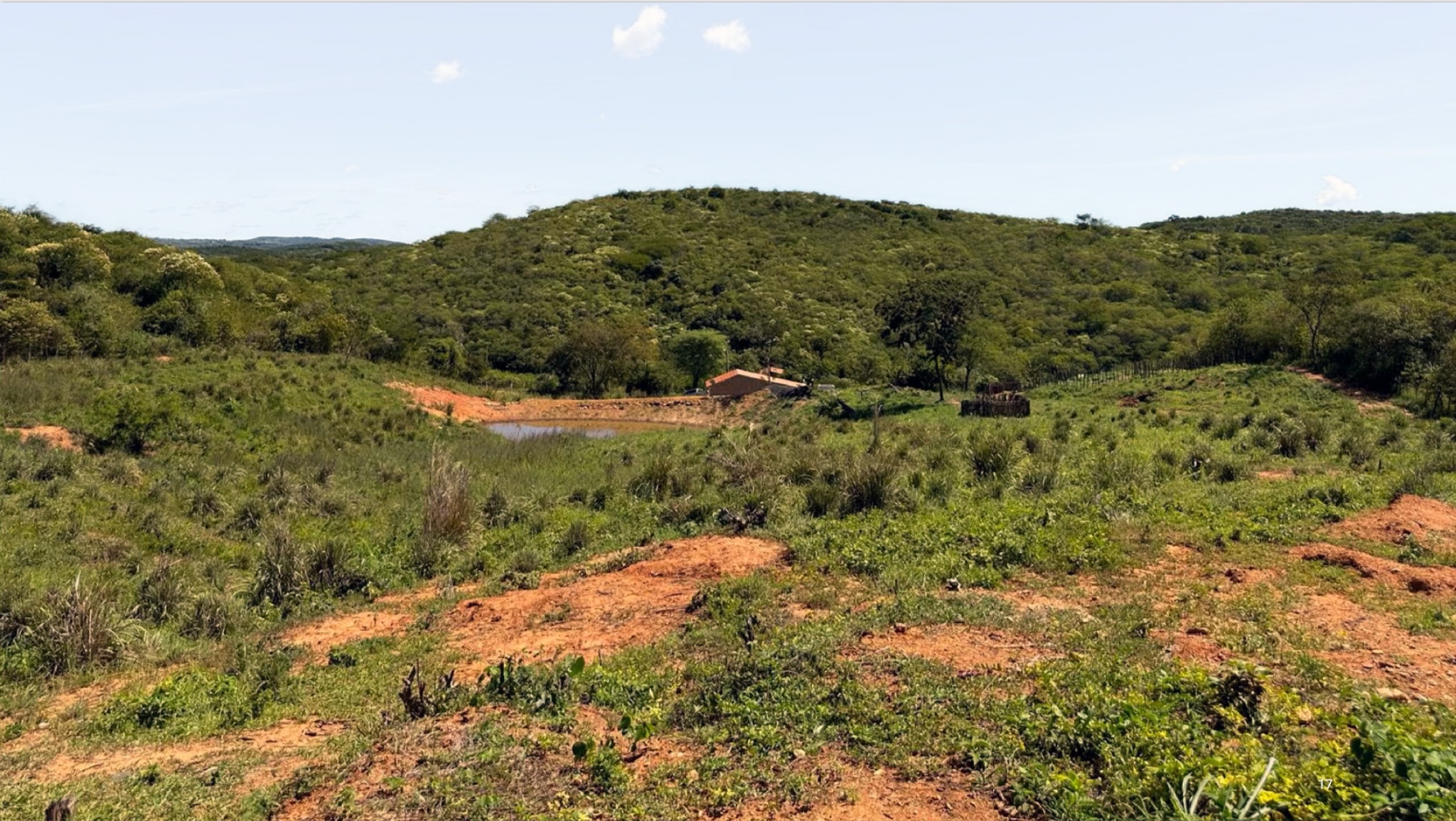
First-year rehabilitation trials produced maize yields of 5.2 tonnes per hectare, compared with a regional average of 1 tonne per hectare. Second-year yields were expected to match that benchmark at the mid-2026 harvest. The 28 farmers involved have asked Sovereign to stay and help them establish a farming co-operative, and trial data now feeds the Mine Closure and Mine Rehabilitation Plans.
Ghai pointed to the former Rio Tinto staff who now work on the project:
"We've taken a bunch of ex-Rio environmental and social people who work on the ground with us right now. We've just hired someone in corporate affairs from the old Rio team. These are people who've moved in-house now, and they would never have moved in-house if there was something technically wrong with the project."
Decision Points Ahead
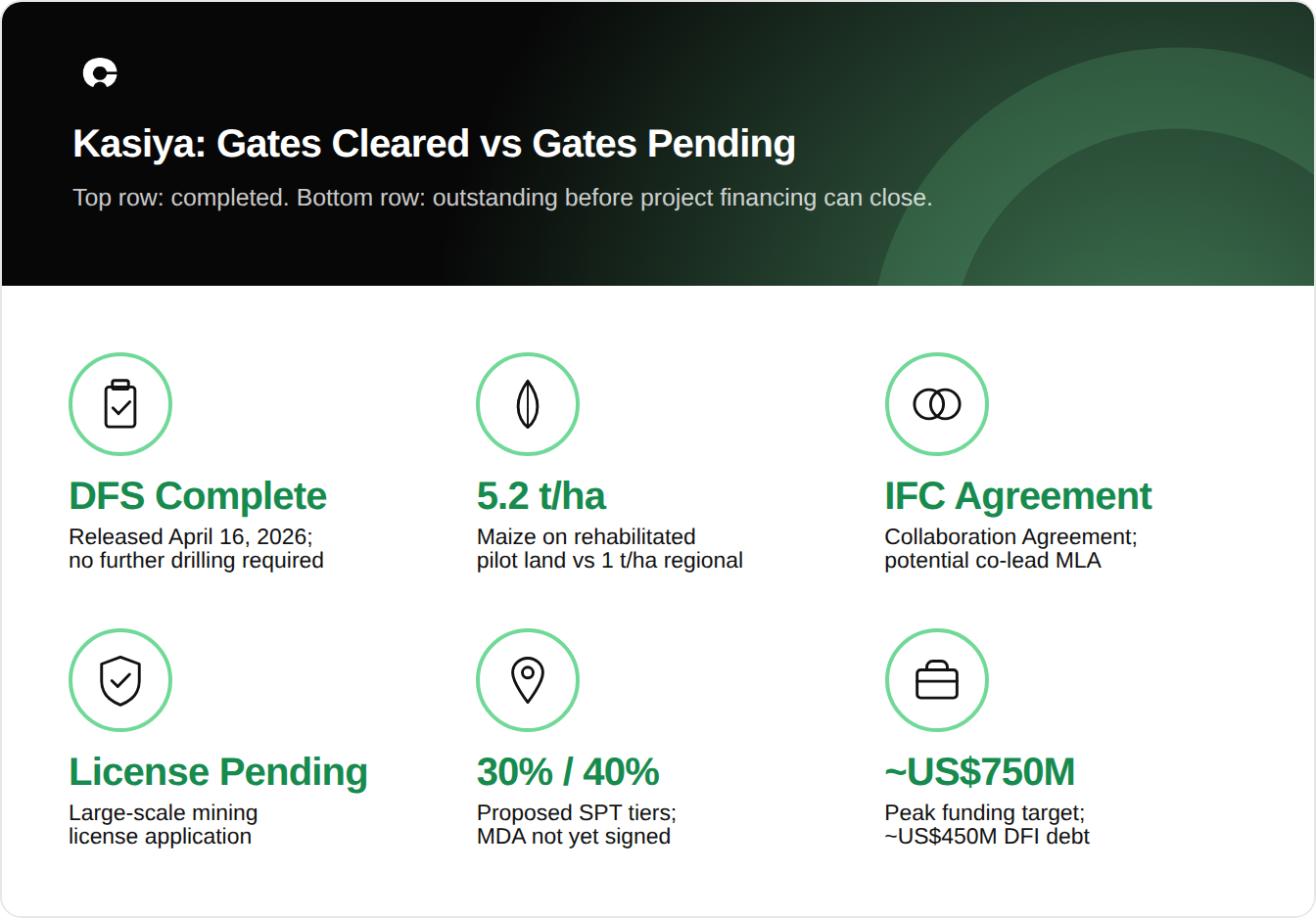
The next milestones are regulatory and commercial. The first is the grant and terms of the mining license, followed by the MDA's treatment of Government equity and the choice between the RRT and the SPT. Alongside those, Sovereign needs to convert its offtake arrangements into binding agreements, complete FEED, and close the funding package itself.
A pre-feasibility study (PFS) to add a rare-earth by-product is targeted for 2027. For the rutile and graphite operation in the DFS, though, the next value steps depend as much on agreements in Malawi as on engineering.
FAQs (AI-Generated)
Analyst's Notes





Subscribe to Our Channel

.png)




Stay Informed


