




De-Risking the Engine: How Cabral Gold's MG Infill Drilling Protects Its Non-Dilutive Growth Strategy


Cabral Gold's MG infill drilling de-risks Year 1 heap leach production, protecting gold loan repayments and funding Phase 2 exploration without equity dilution.
- Cabral Gold completed 68 reverse circulation (RC) infill holes totalling 3,174 metres at the MG gold deposit within the Cuiú Cuiú Gold District in Pará State, northern Brazil, with the initial 24-hole batch confirming near-surface oxide grade continuity across the planned year 1 starter pit.
- Notable intercepts from the first 24 holes include 48 metres at 1.35 grams per tonne gold from 4 metres depth, 17 metres at 2.27 grams per tonne gold from surface, and two 50-metre intersections grading 0.87 and 1.35 grams per tonne gold from surface, consistent with the July 2025 pre-feasibility study (PFS) mine plan.
- The infill program is designed to upgrade the current MG Probable Reserve of 4,035,000 tonnes at 0.64 grams per tonne gold for 82,912 ounces ahead of a revised reserve estimate targeting release by the end of April 2026, providing greater grade confidence in the first year of heap leach operations, aligning with when quarterly gold loan repayments commence.
- Phase 1 construction is 60% complete and fully funded through a US$45 million gold loan closed in November 2025, targeting plant commissioning in the third quarter of 2026 and commercial production in the fourth quarter of 2026 at an all-in sustaining cost (AISC) of approximately US$1,200 to US$1,300 per ounce.
- Phase 1 is designed to produce approximately 25,000 ounces per year at a US$37.7 million capital cost, generating an after-tax internal rate of return (IRR) of 78% and a net present value at a 5% discount rate (NPV5%) of US$74 million at a US$2,500 per ounce base case gold price per the July 2025 PFS, with a 10-month payback period that determines when Phase 1 cash flow becomes available to self-fund Phase 2 hard-rock exploration.
Why Heap Leach Grade Control Is a Debt Servicing Issue, Not Just a Technical One
The MG infill program at Cabral Gold (TSXV: CBR | OTCQX: CBGZF) is a mine plan precision exercise, not a grade discovery exercise. The 68-hole RC program, drilled on a 25 x 25 metre grid across the eastern and central portions of the Year 1 pit outline, targets the shallow weathered saprolite profile extending to approximately 60 metres below surface. Additional infill at a tighter 12.5 x 12.5 metre spacing will be completed in higher-grade zones. The purpose is to reduce spatial uncertainty in grade distribution within material already scheduled for mining - a prerequisite for converting lower-confidence resource categories into Probable Reserves that underpin a bankable mine plan. The initial 24-hole batch, including intercepts of 48 metres at 1.35 grams per tonne gold and 17 metres at 2.27 grams per tonne gold from surface, is consistent with the July 2025 pre-feasibility study (PFS) mine plan, though not yet conclusively proving the grade continuity the reserve upgrade requires.
What makes grade control financially critical at MG is the structure of the US$45 million gold loan used to fund construction. The loan is repaid in physical gold deliveries, which means Year 1 production performance determines directly how much gold is available to service debt and how much remains as discretionary capital for exploration reinvestment. If recovered ounces run below schedule for any reason, both the repayment timeline and the self-funded growth model are affected simultaneously. Tightening the drill grid from exploration to production spacing before commissioning reduces that grade uncertainty, though it does not eliminate it.
Grade uncertainty is only one of several independent risks to Year 1 performance. Management identified Brazil's wet season as a material constraint on earthmoving, with construction scheduled around it, and flagged equipment delivery as a key remaining risk to the third quarter of 2026 commissioning target. Neither is mitigated by infill drilling. Cash-flow funded Phase 2 exploration, therefore, depends on grade risk, wet season, equipment delivery, and ramp-up, each performing within PFS assumptions - a necessary condition, but not a sufficient one. Initial results support grade continuity, with multiple holes returning 42 to 50-metre intersections from surface and a higher-grade sub-interval of 10.92 grams per tonne gold over 3 metres. The April 2026 reserve update, based on the full 68-hole dataset, is intended to convert that spatial confidence into an upgraded Probable Reserve ahead of commissioning.
The 10-Month Payback & the Capital Chain It Unlocks
The PFS economics - a US$37.7 million capital cost, 78% after-tax internal rate of return (IRR), US$74 million net present value at a 5% discount rate (NPV5%) at a US$2,500 per ounce gold base case, and a 10-month payback - are well-established. What the infill program adds is a layer of execution confidence the PFS alone cannot provide: the difference between a reserve estimate derived from wider-spaced exploration drilling and one derived from production-stage infill spacing is the difference between a projected mine schedule and a de-risked one. A project generating discretionary cash flow following a 10-month payback, funds Phase 2 hard-rock exploration from production rather than from the capital markets.
President and Chief Executive Officer of Cabral Gold, Alan Carter, outlined the Year 1 production economics:
"We anticipate producing about 25,000 ounces in the initial 12 months at an all-in sustaining cost of around about $1,200 an ounce. That may be a little bit higher with now the increased fuel prices, that could be 1,300, but still the potential profit on that is going to be significant."
Any shortfall in recovered gold ounces - whether from unexpected grade variance or the wet season and equipment delivery delays Carter cited - directly reduces the physical gold available for loan repayment and compresses the capital available for internally funded Phase 2 drilling. The infill program reduces the grade uncertainty component of that risk before commissioning, not after.
The Market Misclassification Argument
Cabral currently trades with a market capitalisation of approximately C$200 million - a valuation consistent with a developer in the construction-phase dip of the Lassonde Curve, at a discount to projected production-stage value. The PFS NPV of US$74 million covers Phase 1 alone, and does not incorporate the Phase 2 hard-rock resource base, four new discoveries since the 2022 resource estimate, or gold prices that have traded materially above the base case. Carter noted that junior gold producers are typically valued at approximately seven times annual cash flow, and that Phase 1 targeting 25,000 ounces per year at current gold prices implies cash generation that would support a substantially higher market capitalisation.
The self-funded growth model is exactly what Carter believes will drive that re-rating. Carter framed the strategic intent:
"This recent raise that we've announced of $20 million may well be the last equity raise that we ever do as a company. I can't guarantee it, but we're not planning on doing any more equity raises now."
Carter also positioned Cabral's current construction stage explicitly on the curve, noting the headroom ahead:
"We're just over halfway through the build, so we're somewhere on this curve, so we think there's still a lot of headroom in terms of potential value creation from the stage 1 operation."
Cabral is currently priced as a developer while approaching the inflexion point to a self-funded explorer-producer. That transition is where the gap between market classification and operational profile begins to close. Phase 2 optionality widens the gap further: the hard-rock resource has not been updated since September 2022, when it stood at over 900,000 ounces at a US$1,800 per ounce gold price assumption, and excludes 35,000 metres of drilling - including the Jerimum Cima intercept of 9.5 metres at 87.4 grams per tonne gold located 3 kilometres outside the current resource boundary. A second Lassonde Curve tied to the Phase 2 system has yet to register in valuation.
Permitting Status & Construction Execution Risk
Cabral received the Licença Prévia (LP) in March 2026, covering both the Phase 1 expansion to the full 1 million tonnes per year PFS-scale operation and the Phase 2 hard-rock development at Cuiú Cuiú. Phase 1 is currently operating under trial mining licences capped at 500,000 tonnes per year; the LP unlocks the full PFS design capacity of 3,000 tonnes per day.
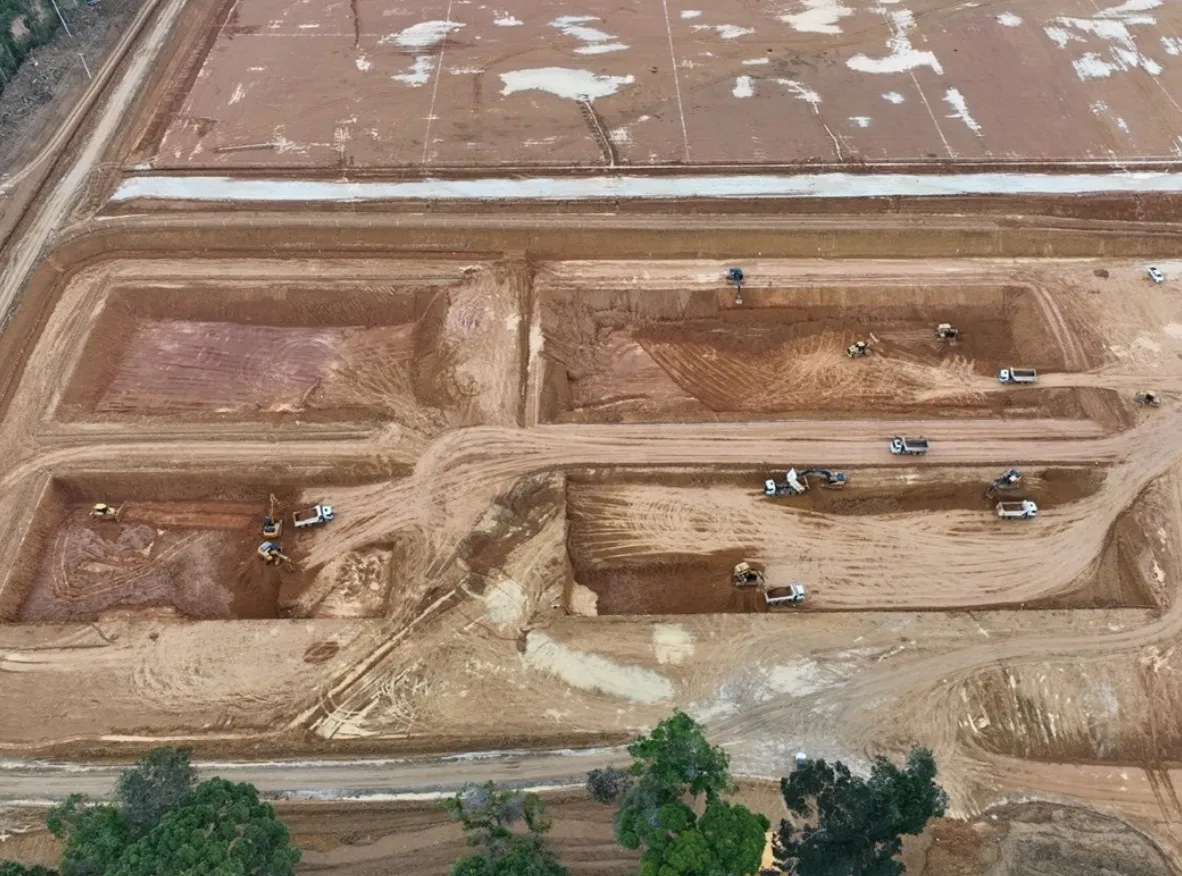
Phase 1 construction reached 60% completion as of Carter's latest interview, on schedule and on budget despite the Brazilian wet season, with the weather-sensitive earth-moving exercise now complete, concrete foundations in place, and structural erection underway. A fourth RC rig is expected on site by mid-April 2026, bringing the total rigs to 4, supported by the C$20 million exploration capital.
Carter cited equipment delivery as a key remaining construction risk to the third quarter of 2026 commissioning target. Because quarterly gold loan repayments commence in early 2027, commissioning delays or grade variance pose a direct operational risk to debt servicing - a risk the infill reserve upgrade is designed to mitigate.
Execution Track Record Against Stated Milestones
Cabral's management has delivered on a consistent sequence of stated milestones over the past 18 months: the July 2025 PFS completed on schedule, the US$45 million gold loan closed in November 2025, the LP granted in March 2026, and the C$20 million bought deal closed the same month with no risk to the company and at no broker's warrant cost. The MG infill program was sequenced ahead of commissioning specifically to support a reserve upgrade on updated mine plan data - the end-of-April 2026 target reflects that discipline. Each completed milestone helps close the valuation gap.
Investment Thesis for Cabral Gold
- The MG starter pit at Cuiú Cuiú carries a pre-feasibility study after-tax internal rate of return of 78%, a net present value at a 5% discount rate of US$74 million at a US$2,500 per ounce gold base case, and a 10-month payback period on a US$37.7 million capital cost - economics that fund Phase 2 exploration from production rather than from equity markets.
- The 68-hole RC infill program is designed to upgrade the existing PFS reserve base ahead of a revised mine plan targeted for April 2026, providing greater grade confidence in the first year of heap leach operations, aligning with when quarterly gold loan repayments commence.
- Phase 1 construction is 60% complete, fully funded through a US$45 million non-dilutive gold loan, and on schedule for third quarter of 2026 commissioning and fourth quarter of 2026 commercial production.
- The Licença Prévia granted in March 2026 removes the trial mining licence throughput ceiling and provides the regulatory pathway for both the full PFS-scale Phase 1 operation and Phase 2 hard-rock development.
- The Cuiú Cuiú district resource base, last formally estimated in September 2022 at US$1,800 per ounce gold, is materially understated relative to current drilling, with four new hard-rock discoveries, including Jerimum Cima, sitting outside the 2022 resource boundary and requiring maiden estimates.
- The C$20 million bought deal closed in March 2026 is directed exclusively at hard-rock exploration, with management characterising it as potentially the final equity raise required before Phase 1 cash flow generation.
Cabral's investment case rests on two concurrent value drivers: near-term execution of the Phase 1 production economics now supported by infill grade confirmation at MG, and longer-term optionality from a district-scale hard-rock resource base that remains largely unquantified. The MG infill program addresses the most tractable risk within the first driver - it does not eliminate all uncertainty, but it closes the key gap that drilling can resolve before commissioning begins.
TL;DR
Cabral Gold's MG infill drilling confirms near-surface oxide grade continuity ahead of an April 2026 reserve update and the fourth quarter of 2026 first gold. Phase 1 carries a 78% after-tax IRR and a 10-month payback on US$37.7 million of capital, with Year 1 cash flow expected to fund Phase 2 exploration without further equity issuance. The district holds four new discoveries outside the 2022 resource estimate, including 9.5 metres at 87.4 grams per tonne gold at Jerimum Cima. The C$20 million bought deal funds accelerated drilling, with management indicating it could represent the final equity raise required.
FAQs (AI-Generated)
Because the gold loan is repaid in physical gold, Year 1 grade performance directly affects debt servicing capacity. Tightening the drill grid to 25 x 25 metres, and 12.5 x 12.5 metres in higher grade zones, reduces grade uncertainty ahead of commissioning.
The US$45 million gold loan is ring-fenced for Phase 1 construction; the C$20 million bought deal is directed exclusively at hard-rock exploration, Jerimum Cima and other new discoveries, to demonstrate Phase 2 economic viability faster than Phase 1 cash flow alone would allow.
Trial mining licences cap Phase 1 at 500,000 tonnes per year; the LP granted in March 2026 removes that ceiling and unlocks the full pre-feasibility study design capacity of 3,000 tonnes per day, while also providing the regulatory pathway for Phase 2 hard-rock development.
The current Probable Reserve at MG is 4,035,000 tonnes at 0.64 grams per tonne gold for 82,912 ounces per the July 2025 pre-feasibility study; the full 68-hole infill dataset will determine the magnitude of any revision.
Cabral made its production decision in November 2025 and is 60% through construction, sitting in the post-trough phase of the curve, where the market prices companies as developers - a classification Carter argues does not yet reflect the Phase 1 economics, 35,000 metres of drilling since 2022, or four new discoveries outside the current resource boundary.
Analyst's Notes





Subscribe to Our Channel







Stay Informed






















