




C$14 Million Debenture Conversion Clears Dune Oil's Largest Liability


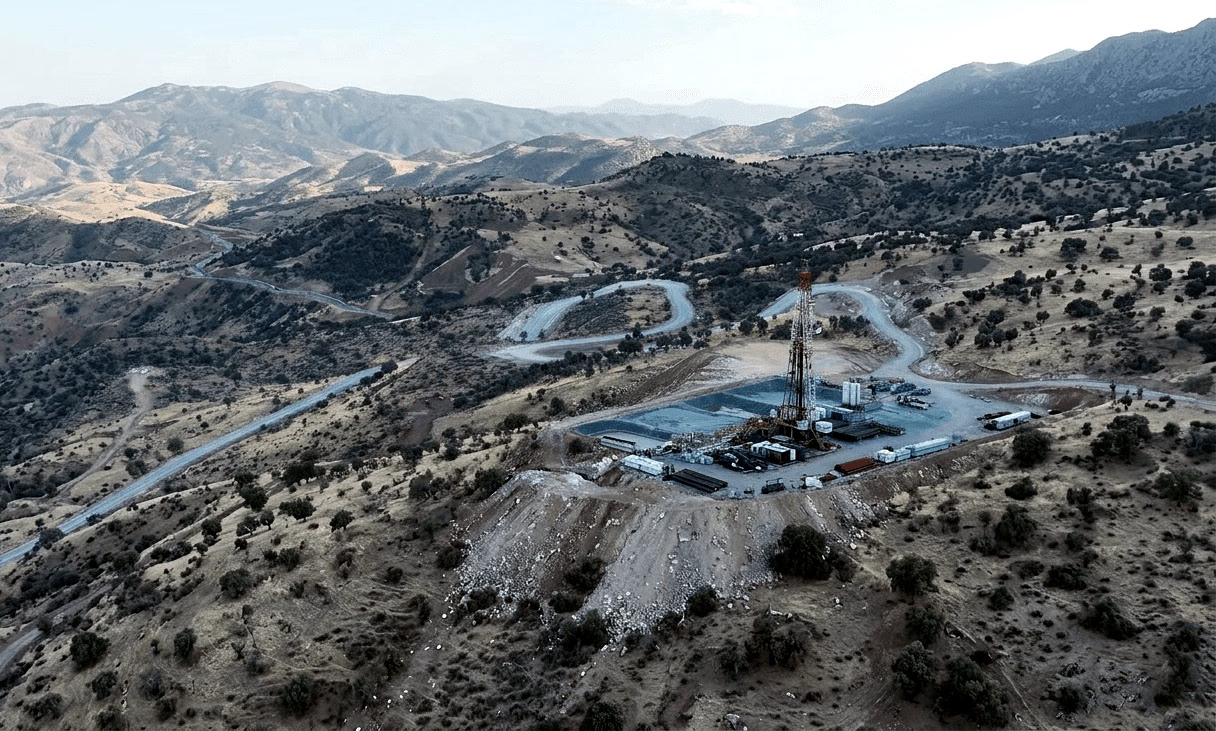
Dune Oil is converting C$14 million owed on legacy debentures into shares at C$0.15 each, ahead of a US$4.1 million M47 payment due by November 15, 2026.
- Dune Oil is converting its legacy 12.0% convertible debentures into shares at C$0.15 each.
- The C$14,000,000 settlement amount converts into 93,333,334 shares, released from lock-up over 36 months.
- The Canadian Securities Exchange (CSE) approved the settlement under a hardship exemption, with no shareholder vote.
- Existing shareholders will hold about 42.94% of the 163,569,062 shares outstanding after completion.
- A US$4.1 million M47 work-program payment is due on or before November 15, 2026.
Dune Oil (CSE: DUNE | OTCQB: DUNXF) is converting its legacy 12.0% convertible debentures into common shares at a fixed C$0.15 per share, in a transaction approved by the Canadian Securities Exchange (CSE). On closing, all obligations under the debentures are extinguished. The company announced the conversion on October 26, 2026, to strengthen its balance sheet as it advances the M47 oil block work program over the next 12 months in the Cudi-Gabar province of southeastern Türkiye.
Debenture Conversion Terms & CSE Approval
The amount due under the debentures, including principal and interest, is deemed to be C$14,000,000, and all further amounts otherwise owing are written off. That amount converts into 93,333,334 common shares, with no warrants or other securities issued. The settlement shares are subject to a contractual lock-up with a 36-month release schedule. The share issuance, the forgiveness of remaining amounts, and the cancellation of the debentures all occur together on the closing date, and the company expected to close on or about October 27, 2026.
Holders of at least 66⅔% of the outstanding principal approved the settlement, and a fifth supplemental indenture to the April 20, 2023, debenture indenture gives effect to it. The settlement shares represent about 132.9% of the 70,235,728 common shares outstanding before the conversion. Upon closing, a single debenture holder and its affiliates would hold about 26.70% of the company, exceeding the 20% threshold at which a holder is presumed to be a Control Person under CSE policies.
An issuance above 100% of the outstanding shares, or above 50% where it creates a new 20% holder, would ordinarily require shareholder approval under CSE Policy 4. The CSE accepted Dune Oil's reliance on the hardship exemption in section 4.6(2)(b) of that policy, based principally on a pre-settlement working-capital deficit and near-term cash requirements. Dune Oil has more than 5,000 shareholders, none of whom holds more than 5%, and more than 90% of its shares are held through brokerage accounts. The independent directors determined that the timelines for reaching beneficial holders would not permit a shareholder meeting before the November 15, 2026, payment date.
Block M47 in the Cudi-Gabar Province
Dune Oil is earning a 29% working interest in the M47 oil exploration block, covering the C3 and C4 licenses in the Cudi-Gabar petroleum province. The province reached a record 83,300 barrels per day of oil production, with cumulative crude output above 50 million barrels since production began in 2021. Brent oil prices reached US$117 per barrel in October 2026, nearing 5-year highs.
Earn-In Payments & Funding Needs
Dune Oil earns its 29% by funding US$15 million of work over 2 years in 2 tranches, with all costs shared pro rata to each partner's interest thereafter. As of October 2026, US$800,000 had been paid, and US$14.2 million remained in future commitments. Derkim, the block holder, has a 51% interest, and GYP, a local driller, has 20%.
Dune Oil's share of the first tranche is US$4.3 million, against US$2.5 million from GYP. The first tranche covers 1 to 2 new wells, a re-entry into the C-1 and C-2 wells, an early production facility, and a 40-kilometer staged seismic program. The Tranche 1 capital raise was underway as of October 2026. A Tranche 2 raise is planned for early 2027 to fund Dune Oil's US$8 million share of a second tranche of at least 3 new wells.
President and Chief Executive Officer of Dune Oil, Scott Lower, separated what the money raised so far covers from the cost of a full field build-out:
"So far, we've raised enough money to conduct the seismic program on the block, and that is the next milestone on the block. From there, development in this area, a full development program, is really hundreds of millions of dollars for upwards of 50 to 60 wells. So the current milestone is getting the seismic and the re-entries done, and we're well on our way to having that accomplished."
The new seismic program covers the area around the 2 discovery wells and the South Lead, and its data will be used to fine-tune future well locations.
What the Conversion Changes for Shareholders
The settlement is designed to improve the company's financial position by eliminating its largest liability.
Existing shareholders will hold about 42.94% of the 163,569,062 shares outstanding once the settlement is complete. Three former debenture holders will each hold more than 10% and become insiders. None receives a board nomination, management, veto, special voting, or other governance right.
Two payments fall due in November. The US$4.1 million M47 work-program payment is due on or before November 15, 2026, and a C$1 million settlement payable to a creditor is due no later than November 30, 2026.
Resource Context
The North Field on M47 has a best-estimate contingent resource (2C) of 27.6 million barrels net to Dune Oil's 29% interest, from an independent evaluation effective December 31, 2025. The 2025 C-1 well found 32.4° API light oil across more than 70 meters (m) of gross oil pay and 38 m of net pay, and recovered 63 barrels of oil on test. API gravity is a standard measure of oil density, where higher values indicate lighter oil. The seismic program and the C-1 re-entry are the next field steps.
Lower tied any move from contingent resource to reserves to the re-entry work that follows the seismic:
"And then after that occurs, there's going to be a conversion potentially from the 2C contingent resource into the reserve category, and there'll be production rates on those wells. So all of those are near-term catalysts for the company over the next 12 months."
On closing, Dune Oil enters that 12-month sequence with no debenture obligations.
FAQs (AI-Generated)
Analyst's Notes





Subscribe to Our Channel







Stay Informed


