enCore Energy: America's Only Uranium Producer Built for Right Now


enCore Energy is one of America's only producing uranium companies, operating two Texas ISR plants with a pipeline built for the nuclear decade ahead.
- enCore Energy operates two active uranium processing plants in South Texas, the Alta Mesa CPP and Rosita CPP, making it one of the few U.S. companies actually extracting yellowcake today.
- Independent government data confirms that Kazakhstan, Russia, and Uzbekistan together supplied 37% of all U.S. uranium deliveries in 2024, a supply chain vulnerability Washington is aggressively moving to close.
- Uranium spot prices reached approximately $100 per pound in January 2026, the highest level since February 2024, driven by utility demand re-emergence and tightening supply conditions.
- enCore's total Measured and Indicated resource base stands at 30.94 million pounds U₃O₈, with an additional 20.54 million pounds Inferred.
- The global nuclear reactor fleet stood at 404 operating units as of January 1, 2026, with 66 reactors under active construction across 11 countries, underpinning long-term uranium demand.
Why the Global Energy Crisis Is a Uranium Inflection Point
The global energy system is under extraordinary strain. Current oil supply disruptions, triggered by escalating conflict in the Middle East, have been described by analysts as worse than the 1970s oil shocks. At least 40 energy assets have been severely damaged globally and governments are weighing emergency fuel rationing measures. The strategic fragility of fossil fuel supply chains has rarely been more visible or more consequential for energy investors.
For uranium, this is not noise. It is acceleration. Nuclear energy's core value proposition, namely stable and carbon-free baseload power with no exposure to tanker routes, pipeline politics, or chokepoint disruptions, is now being validated in real time. enCore Energy sits at the intersection of all of these forces as one of the only U.S. companies producing yellowcake today, with permitted infrastructure, active wells, and a multi-project pipeline already in motion.
enCore Energy: A Uranium Producer Operating in the Real World
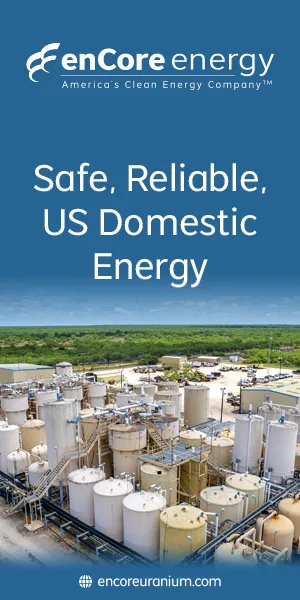
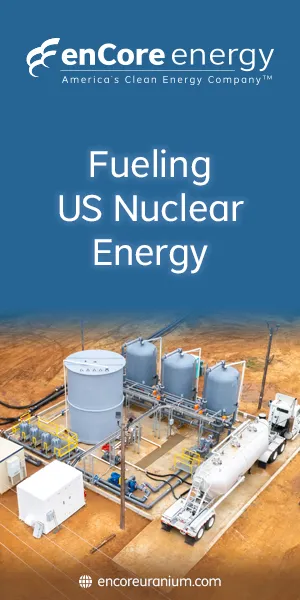
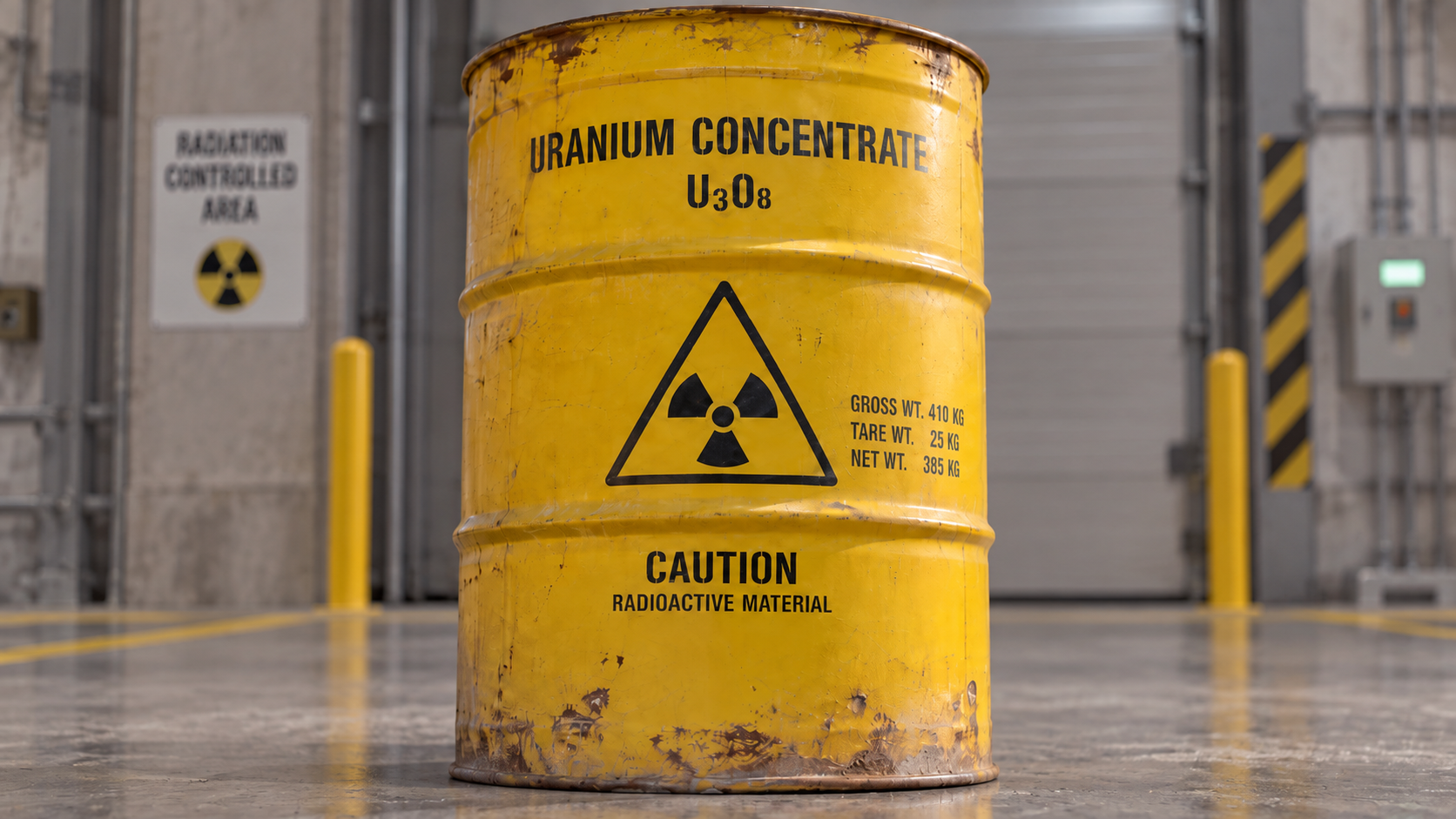
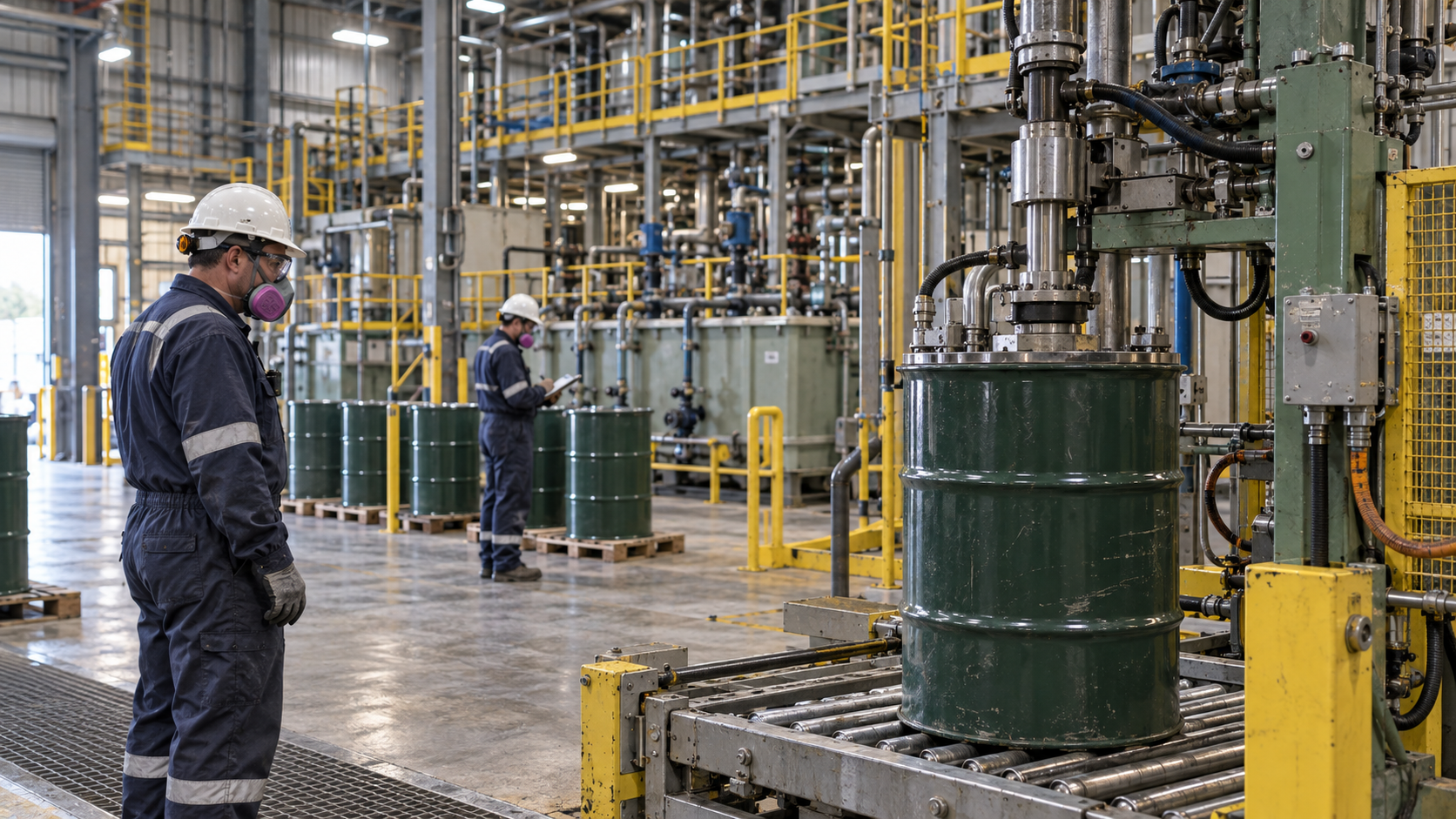
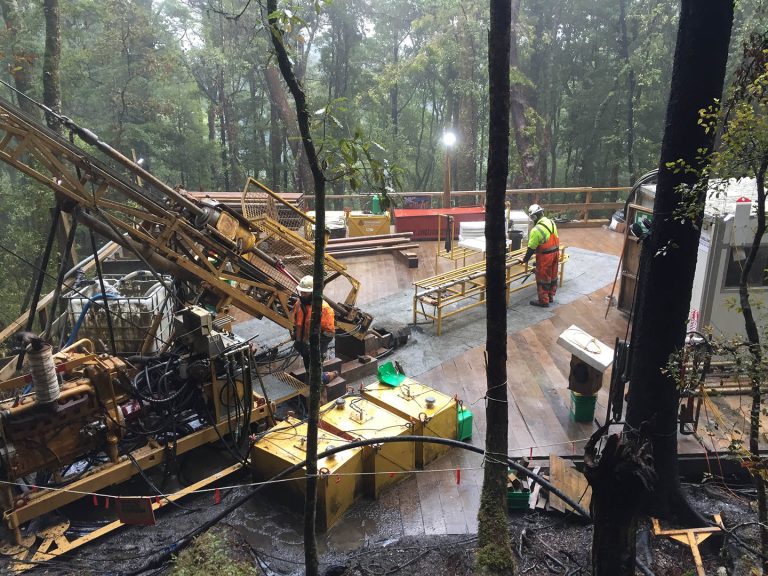
enCore Energy (NASDAQ: EU, TSX-V: EU) extracts uranium using In-Situ Recovery (ISR), a method in which oxygenated water is injected underground to dissolve uranium, which is then pumped to the surface and processed into yellowcake (U₃O₈). Industry research confirms ISR accounts for approximately 60% of global uranium production and carries average capital expenditure of less than 15% of conventional mining operations. Operations are active at two South Texas Central Processing Plants. The Alta Mesa CPP commenced production in Q2 2024 and is currently configured at 1 million lbs U₃O₈ per year capacity across approximately 200,000 acres of private land. The Rosita CPP carries an 800,000 lbs annual capacity and uses satellite Ion Exchange plants to capture uranium from remote wellfields.
EnCore Energy founder William Sheriff emphasizes that this modern ISR process bears little resemblance to the invasive mining techniques of the past, stating:
"It’s as different as day and night, being so environmentally friendly and short term, short timeline, short cost, to reclaim them.'"
In 2025, Alta Mesa turned on 270 new production wells, averaging 22 per month, roughly one every 1.35 days. As at February 18, 2026, enCore had a market capitalization of approximately $489 million USD at $2.52 per share, with 194,088,865 shares issued and outstanding. The company is covered by seven analyst firms across the U.S. and Canada.
Why America Urgently Needs Domestic Uranium Producers
The numbers behind America's uranium dependency are striking. The most recent full-year government uranium marketing data shows Canada leading U.S. uranium deliveries at 36%, followed by Kazakhstan at 24%, Australia at 17%, Uzbekistan at 9%, and Russia at 4%. Combined, Kazakhstan, Russia, and Uzbekistan supplied 37% of total U.S. deliveries in 2024. U.S.-origin material accounted for just 8% of deliveries, up from 5% in 2023, but still negligible relative to total reactor demand.
Washington has responded with structural policy changes. The ban on Russian uranium imports came into effect in August 2024 and runs through 2040. The U.S. government simultaneously committed $2.72 billion in contracts to boost domestic enrichment capacity over the next decade. Uranium was reinstated to the government's final list of critical minerals for 2025. Government data also confirms that domestic uranium production in Q4 2024 totaled 375,401 pounds U₃O₈, more than triple the 121,296 pounds recorded in Q3 2024, with Alta Mesa and Rosita identified as two of only five active U.S. production facilities.
Sheriff points out, the company’s proprietary geological database provides a significant shortcut in a high-demand market:
'We have the largest domestic database of uranium exploration and development in the United States. It allows us to identify and move on projects with a degree of certainty that others simply don't have.'"
The Uranium Market Has Repriced & the Supply Gap Is Widening
The structural uranium story is a straightforward one. Global reactor demand continues to climb while new mine supply has been slow to respond. Uranium spot prices reached approximately $100 per pound in January 2026, the highest level since February 2024, driven by utility demand re-emergence following prolonged under-contracting, tightening supply conditions, and strengthening policy support for nuclear power. The global reactor fleet stood at 404 operating units as of January 1, 2026, across 31 countries, contributing approximately 10% of the world's electricity and about a quarter of all low-carbon power. A further 66 reactors were under active construction across 11 countries as of the same date, with China alone accounting for 36 of those builds. More than 20 countries have pledged to triple nuclear capacity by 2050.
enCore's own supply and demand forecast, compiled from independent uranium market research as of February 10, 2026, illustrates a widening gap between established production and projected demand through 2040. The supply shortfall requires significant new production volumes that the market has not yet secured, a dynamic that directly underpins the value of producers already in operation today.
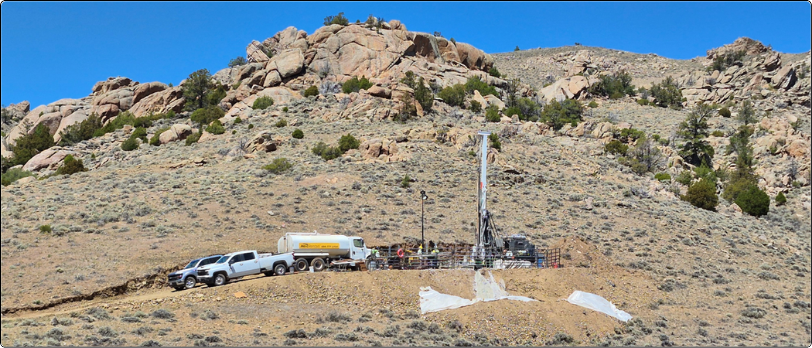
Beyond active South Texas operations, enCore has built a staged domestic project pipeline extending through 2030 and beyond, spanning Texas, South Dakota, and Wyoming. The Dewey Burdock ISR Uranium Project in South Dakota holds a nuclear regulatory license in timely renewal, environmental and aquifer exemption approvals, and was approved for U.S. Government Fast Track Permitting in August 2025. Published project economics show initial capital costs of $264.2 million USD, a pre-tax IRR of 39% at a long-term uranium price of $86.34/lb, a post-tax IRR of 33%, a 28-year mine life, and annual production of 750,000 lbs. State permitting is expected to complete by end of 2027, with plant engineering starting in 2026.
A Sales Strategy Built to Protect Investors & Capture Upside
enCore's commercial approach is designed to protect the company through market cycles while retaining meaningful upside if uranium prices continue to rise. Contracts are structured with inflation-adjusted pricing collars, with minimum floors and maximum ceilings, that protect baseline revenue while preserving exposure to spot market appreciation. As of March 2026, current contracts represent less than 38% of planned extraction through 2033. The company plans to contract less than 50% of annual extraction at current price levels, with contracting likely to increase if spot prices move materially higher. Additional inbound contracting opportunities from 2030 onwards are under review.
This approach, deliberately limiting long-term contract exposure at current price levels, gives enCore investors leverage to upside price moves that fully contracted producers simply cannot offer. It also reflects management's confidence in the direction of uranium prices over the medium term.
The Investment Thesis for enCore Energy
- enCore's two producing Texas plants remove execution risk, the primary risk in junior mining, from the investment equation for investors seeking direct domestic uranium exposure.
- Government data shows only 8% of U.S. uranium is domestically sourced, making every additional pound from enCore strategically significant for investors focused on energy security themes.
- The Russian uranium import ban, the $2.72 billion domestic enrichment contracts, and the critical minerals listing are compounding demand signals for domestic producers that policy-focused investors should track.
- enCore's approximately $489 million market cap represents a significant discount to the scale of its resource base and pipeline if uranium sustains above $80/lb.
- The inflation-adjusted collared contract structure protects revenue floors, limiting downside if uranium spot prices retreat from current levels.
- Investors with a 3 to 5 year horizon should watch the Dewey Burdock state permitting timeline as, if completed by end of 2027 as projected, it becomes a material production catalyst with a 28-year mine life at 750,000 lbs per year.
What Investors Should Know Before They Decide
enCore Energy is not a speculative uranium story. It is a company extracting, processing, and selling uranium today, in the United States, at a moment when domestic uranium supply is a declared national security priority. The macro environment, an oil shock exposing global supply chain fragility, a uranium spot price back above $100/lb, 66 reactors under construction worldwide, and $2.72 billion in U.S. government enrichment contracts, is precisely the environment a domestic ISR producer is designed to benefit from. With active operations in South Texas, a layered project pipeline stretching from South Dakota to Wyoming, a balanced sales strategy, and direct alignment with U.S. energy independence policy, enCore is one of the only pure-play domestic uranium producers capable of scaling to meet demand that the data already confirms is coming.
The risks are real. They include permitting delays on pipeline projects, uranium spot price volatility, production execution risk in wellfield ramp-ups, and capital requirements for future development stages. Investors should read enCore's full SEC filings and forward-looking statement disclosures carefully before making any decision. But for investors who believe the global energy system is being structurally repriced, and that domestic, carbon-free nuclear fuel is the logical response to both geopolitical energy vulnerability and the surge in electricity demand, enCore Energy presents a case that is difficult to ignore.
TL;DR
enCore Energy is a producing U.S. uranium company using low-cost ISR extraction, with two active Texas plants, 30.94 million lbs of Measured and Indicated resources, and a project pipeline to 2030. It operates at approximately $489 million market cap inside the most policy-supportive uranium environment in decades.
FAQs (AI-Generated)
Analyst's Notes





Subscribe to Our Channel





Stay Informed