enCore Energy Crosses The Line From Explorer to Earner



enCore Energy swung to profit in Q1 2026, reversing a prior-year loss, as uranium output rose approximately 22% and the company held $84.7 million in total available funds.
- enCore Energy reported a profit of $0.03 per share in the first quarter of 2026, reversing a loss of $0.13 per share in the same period last year.
- The company extracted approximately 22% more uranium in the first quarter of 2026 compared to the same period in 2025, reaching 90,000 pounds.
- enCore delivered uranium into existing customer contracts during the quarter at an average selling price of $67.78 per pound, against a direct operating cost of $34.94 per pound.
- The company held $84.7 million in total available funds as of May 8, 2026, including $41.6 million in cash and shareholdings in other companies, excluding Verdera Energy shares.
- A new chief executive is now in place alongside a four-point action plan covering cost cuts, faster permit approvals, shareholder communication, and industry consolidation opportunities.
Why enCore Energy Matters Right Now
Most uranium companies on the stock market are still years away from producing anything. They own land, run test drilling programmes, and wait for government permits. enCore Energy Corp. (NASDAQ: EU | TSXV: EU) is not in that category. It is already pulling uranium out of the ground, selling it to customers under agreed contracts, and as of the first quarter of 2026, making a profit while doing so. For a first-time investor trying to find a foothold in the uranium sector, that difference matters.
Nuclear energy is experiencing renewed interest globally. Governments and power companies are turning back to nuclear as a reliable, low-emission source of electricity, and that is pushing up demand for uranium, the fuel that powers nuclear reactors. Supply, meanwhile, is tight, and very few companies based in the United States are currently producing uranium at all. enCore sits squarely inside that gap, and its latest quarterly results show it is doing so with improving output and a strengthening financial position.
From Loss to Profit: What Actually Changed
A year ago, enCore was reporting a loss. In the first quarter of 2025, the company lost $0.13 for every share held by investors. In the first quarter of 2026, that number turned into a profit of $0.03 per share. The numbers themselves are small, but the direction is what a beginning investor should focus on. A company that moves from loss to profit in a single year is demonstrating that its operations are improving, not deteriorating.
Two things drove that turnaround. The first was a one-off financial gain from the sale of its New Mexico mining assets to a company called Verdera Energy. The second, and more meaningful for the long term, was a jump in uranium output. According to the company's first quarter results, uranium extraction rose approximately 22% compared to the same period a year earlier. More uranium produced at a broadly similar cost per pound means the business is getting more out of what it already has.
William M. Sheriff, Executive Chairman of enCore Energy, pointed to the operational improvement directly:
"enCore's first quarter results reflect year-over-year improvements in uranium extraction with only a slight increase in our cost per pound."
How enCore Actually Makes Money
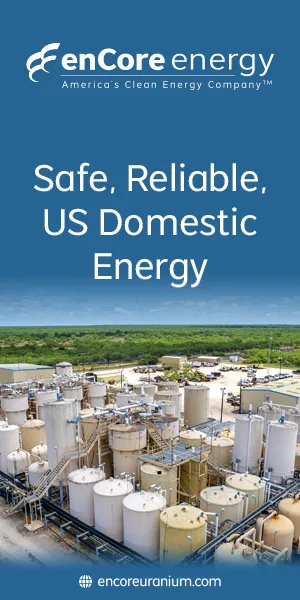
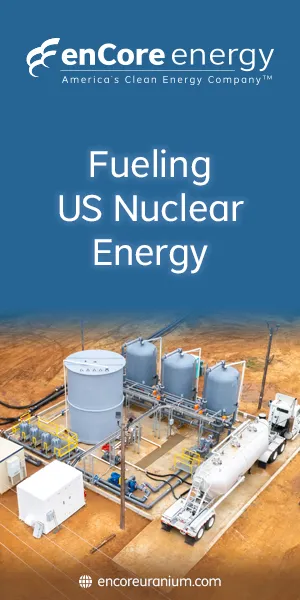
enCore uses a method called In-Situ Recovery to extract uranium. In plain terms, the company pumps a water-based solution underground, where it dissolves uranium naturally present in the rock. That uranium-carrying solution is then pumped back to the surface, and the uranium is separated out. There is no conventional open-pit mine and no large-scale blasting or excavation. It is a quieter, less land-disrupting process, and it generally costs less to run than traditional mining methods.
The business model is straightforward. enCore produces uranium from this process and also purchases some uranium separately from the open market. It then delivers that uranium to customers under pre-agreed contracts at a set price per pound. The gap between what the uranium costs to produce and what customers pay for it is the company's margin. In the first quarter of 2026, the direct operating cost to extract uranium was $34.94 per pound, and the average price received across all deliveries was $67.78 per pound.
Sheriff outlined what the company is targeting for the rest of the year, noting that he and incoming Chief Executive Richard Little are "excited by the company's prospects for the remainder of 2026 and beyond as the results of our decisive action plan take full effect."
A Financial Cushion That Buys Time and Options
One of the most significant details in the first quarter results is the size of enCore's financial reserve. As of May 8, 2026, the company had $84.7 million in total available funds. That figure includes cash on hand, a shareholding of 23.8 million shares in fellow uranium producer Ur-Energy, and other investments, not including shares in Verdera Energy.
For a first-time investor, this is worth understanding in simple terms. A mining company with a strong financial reserve can pay its bills, advance new projects, and apply for permits without needing to raise fresh money by issuing new shares. When a company issues new shares to raise funds, it dilutes the value of shares already held by existing investors. A healthy financial cushion reduces that pressure and gives management room to make decisions on their own timeline rather than the market's.
Sheriff confirmed the scale of that reserve publicly:
"Our early execution is already showing improvement as our overall liquidity as of May 8, 2026, stood at $84.7 million, including cash, 23.8 million shares of Ur-Energy, plus other marketable securities, excluding Verdera Energy shares."
What Is Still Being Built
enCore's current production comes from its South Texas operations, but the company is not stopping there. It has additional projects in the pipeline across two other US states that could meaningfully expand how much uranium it produces in the years ahead. The Dewey Burdock project in South Dakota and the Gas Hills project in Wyoming are both at the stage of waiting for government approval. Once those permits come through, they add new sources of uranium output without the need to build entirely new infrastructure from scratch.
The broader context here matters. The United States imports a significant share of the uranium its nuclear power plants require. Following restrictions placed on Russian uranium imports in 2024, the pressure to develop more domestic supply has grown considerably. A company with multiple projects progressing through the approval process across three US states is positioned to benefit from that shift, regardless of short-term movements in the uranium price.
Beyond new projects, enCore also entered the second quarter of 2026 holding a stockpile of uranium already sitting in inventory, valued at $64.52 per pound. That material is available for future deliveries into customer contracts without the need to extract additional uranium first, giving the company a degree of flexibility in meeting near-term obligations and managing its costs across upcoming delivery periods.
Management has set out four clear priorities for the remainder of 2026: cutting costs, speeding up communication with shareholders, pushing for faster permit approvals, and actively evaluating potential deals with other uranium companies that could expand the business.
The Investment Thesis for enCore Energy Corp.
- Watch the gap between enCore's uranium production cost of $34.94 per pound and its average selling price of $67.78 per pound, as a widening of that gap is the clearest sign of improving profitability.
- Track permit decisions at Dewey Burdock in South Dakota and Gas Hills in Wyoming, since each approval adds a new source of uranium output and reduces the company's reliance on its South Texas operation alone.
- Monitor whether management follows through on its stated plan to pursue consolidation deals with other uranium companies, which could add reserves or production without building new projects from the ground up.
- Note that the 23.8 million shares of Ur-Energy held on the balance sheet add a layer of value that exists independently of enCore's own operations.
- Consider that enCore is one of very few US-based uranium companies currently in active production, a structural advantage at a time when domestic uranium supply is under growing political and regulatory scrutiny.
- Keep watch on the uranium stockpile already held in inventory, since that material is available for future customer deliveries without additional extraction, giving the company flexibility in managing near-term costs and obligations.
For investors evaluating uranium exposure, enCore's first quarter of 2026 represents more than a single profitable period. It marks a demonstrable shift from a company building toward production to one that is producing, selling, and generating a surplus. The combination of improving extraction volumes, a healthy financial reserve, a growing pipeline of projects awaiting approval, and a management team with a stated consolidation agenda gives enCore a profile that is uncommon among junior uranium companies at this stage of the market cycle.
Key Takeaways & What This Means for Investors
enCore Energy's first quarter of 2026 is a story of a company moving in the right direction. It extracted approximately 22% more uranium than a year earlier, turned a prior-year loss into a profit, and closed the quarter with a strong financial reserve of $84.7 million in total available funds. The risks remain real. A portion of the uranium it sells is purchased from the open market at a higher cost than self-extracted material, permit timelines are outside the company's direct control, and uranium prices can shift significantly. For investors looking for uranium exposure through a company that is already producing, already profitable, and already building a pipeline across three US states, enCore's first quarter 2026 results present a grounded, data-supported case.
TL;DR
enCore Energy went from loss to profit in a single year, produced approximately 22% more uranium than twelve months ago, and held $84.7 million in total available funds, making it one of the few US uranium companies already in production.
FAQs (AI-Generated)
Analyst's Notes





Subscribe to Our Channel


Stay Informed