Energy Fuels & the Mine-to-Magnet Pivot: Why the $1.9B VAC Deal Changes Everything


Energy Fuels' $1.9 billion VAC acquisition adds magnet manufacturing to its rare earth platform, extending the supply chain from monazite to finished magnets.
- Energy Fuels has agreed to acquire Vacuumschmelze GmbH & Co. KG ( VAC) for an equity value of approximately $1.9 billion, adding permanent magnet manufacturing to its rare earth business.
- The acquisition complements Energy Fuels' existing rare earth separation operations at the White Mesa Mill and its pending acquisition of Australian Strategic Materials (ASM), which would add rare earth metals and alloy production capabilities.
- White Mesa currently has the capacity to process up to 10,000 tonnes of monazite annually and produce up to 1,000 tonnes of neodymium-praseodymium oxide, a key material used in permanent magnets.
- Energy Fuels' feedstock strategy is built around monazite supply from the Vara Mada Project in Madagascar, the Donald Project in Australia, the Bahia Project in Brazil, and an existing supply arrangement with Chemours. Combined, these sources can supply 40,900 tonnes of monazite annually.
- Management's stated objective is to connect monazite production, rare earth separation, metals and alloy production, and magnet manufacturing into a single mine-to-magnet supply chain operating outside China.
Completing the Final Link in the Rare Earth Processing Chain
Energy Fuels (NYSE American: UUUU | TSX: EFR) has agreed to acquire Vacuumschmelze GmbH & Co. KG (VAC) for an equity value of approximately $1.9 billion, adding permanent magnet manufacturing to a rare earth business that already includes monazite feedstock projects, rare earth separation at the White Mesa Mill, and a pending acquisition of Australian Strategic Materials (ASM). The transaction adds the final manufacturing stage to a strategy that now spans mineral feedstock, rare earth oxides, alloys and finished magnets.
Prior to the VAC transaction, Energy Fuels had already established rare earth separation capacity at the White Mesa Mill in Utah and was pursuing the acquisition of ASM to add rare earth metals and alloy production. The company is also advancing heavy mineral sands projects in Madagascar, Australia and Brazil to secure future monazite feedstock for those facilities. VAC extends that chain into magnet manufacturing, a downstream step not previously included in the company's portfolio. President and Chief Executive Officer Ross Bhappu described the VAC acquisition as the final component required to connect those individual assets into a single operating platform.
Adding Manufacturing Beyond Rare Earth Separation
The White Mesa Mill currently has the capacity to process up to 10,000 metric tonnes of monazite concentrate annually and produce up to 1,000 metric tonnes of neodymium-praseodymium oxide. Neodymium-praseodymium is the primary rare earth material used in permanent magnets deployed across electric vehicles, robotics, wind turbines and defence applications.
The pending ASM acquisition extends Energy Fuels' activities beyond oxide production. ASM's Korean Metals Plant currently has an installed capacity of approximately 1,300 tonnes per annum of neodymium-iron-boron alloy production, with expansion phases targeting 3,600 tonnes and 5,600 tonnes per annum. The transaction also includes the Dubbo Project in New South Wales and a planned American Metals Plant targeting initial alloy production capacity of approximately 2,000 tonnes per annum.
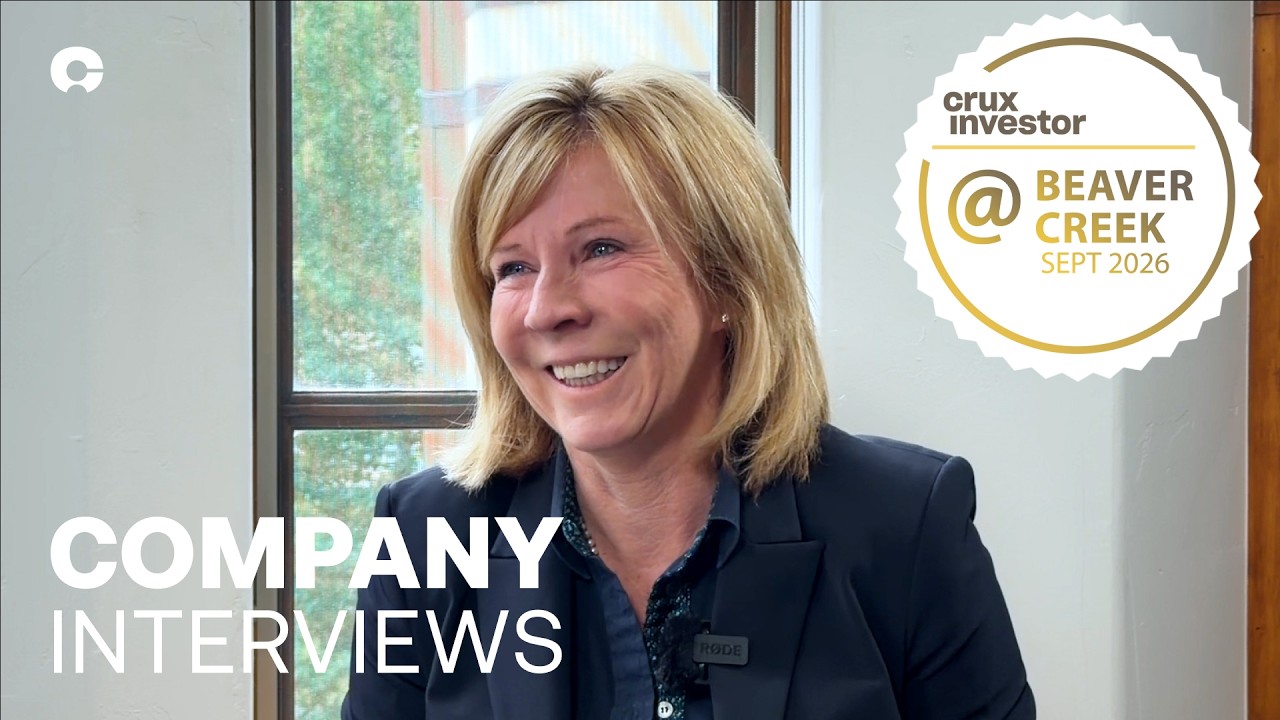
Bhappu commented on how the VAC acquisition changes the company's position within the rare earth industry:
"This is really a transformational acquisition for us. It sets us apart from anyone else operating in this space. It gives us the ability to go from the mine all the way to the magnet."
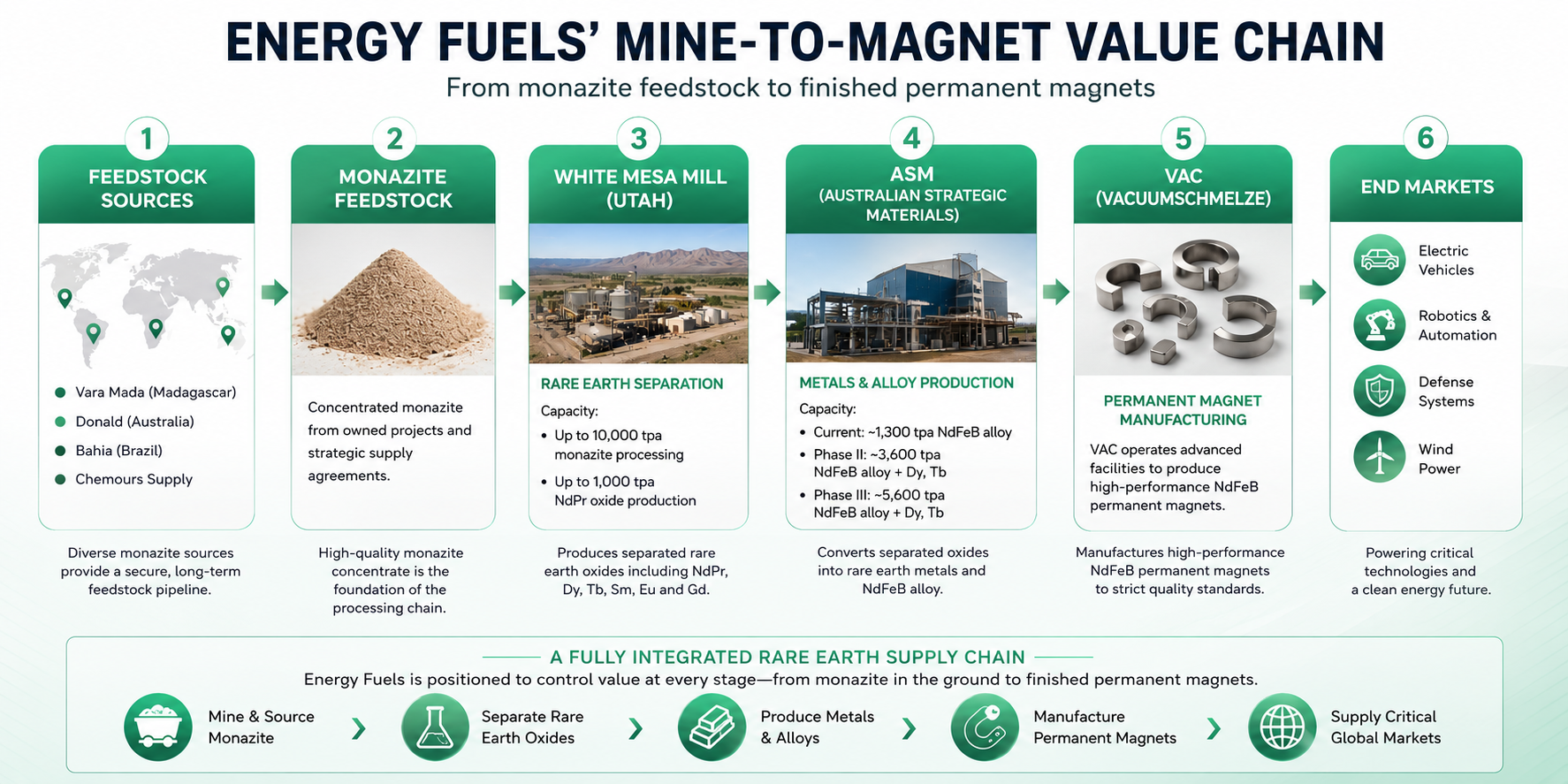
White Mesa currently produces separated rare earth oxides. ASM adds alloy manufacturing, while VAC adds finished magnet production. Together, the assets allow Energy Fuels to participate in multiple processing stages rather than relying solely on rare earth oxide sales.
Securing Feedstock for Downstream Growth
The ability to operate downstream facilities depends on access to long-term feedstock. Energy Fuels' strategy centres on monazite, a rare earth-bearing mineral that contains elevated concentrations of Neodymium-praseodymium and other critical rare earth elements.
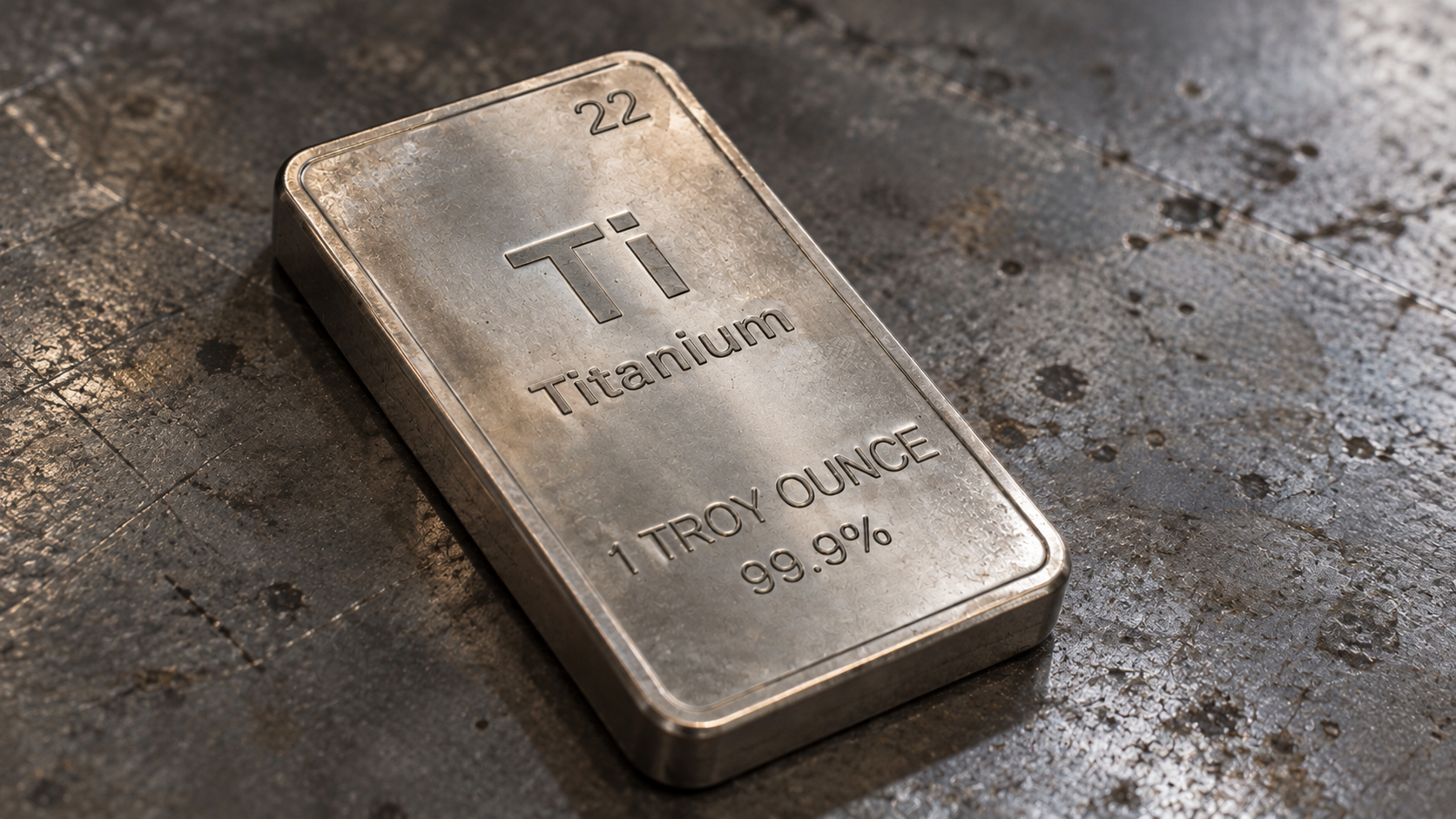
The Vara Mada Project in Madagascar represents a key component of that feedstock strategy, with a post-tax net present value at a 10% discount rate (NPV10%) of $1.8 billion. The project is designed to produce titanium minerals and zirconium minerals while generating monazite as a by-product that can be processed at White Mesa.
Addressing the economics of the model, Bhappu noted:
"I think we can be competitive with China. We're developing a mine in Madagascar called Marta. That mine is going to be a low-cost mine. We'll bring that rare earth concentrate. We call it monazite. That material will come to our mill in Utah, and we will be cost-competitive with China."
The company's broader feedstock pipeline also includes the Donald Project in Australia, the Bahia Project in Brazil and an existing monazite supply arrangement with Chemours. Collectively, these sources can supply 40,900 tonnes of monazite annually, containing 5,381 tonnes of Neodymium-praseodymium oxide, as well as additional heavy rare earth oxides. This feedstock base supports future oxide, alloy and magnet production while reducing dependence on third-party monazite purchases.
Building on an Existing Operating Asset
Many rare earth development companies must finance, permit and construct new processing facilities before generating commercial production. Energy Fuels is expanding around existing infrastructure. The White Mesa Mill is the only operating conventional uranium mill in the US and the only US facility capable of processing monazite into separated rare earth oxides. The facility has operated for more than 45 years and already possesses the permits and licenses required for commercial operations.
Current Phase 1 capacity allows White Mesa to process up to 10,000 tonnes of monazite annually and produce up to 1,000 tonnes of Neodymium-praseodymium oxide. Energy Fuels is also targeting additional production of oxides of dysprosium, terbium, samarium, europium, and gadolinium, broadening the range of rare earth products available for downstream manufacturing.
Bhappu highlighted the existing production platform:
"We are actually in production, and we have the ability to produce roughly a thousand tonnes today of NdPr. That's the primary metal that goes into magnets."
Because White Mesa already operates at commercial scale, future expansion relies on increasing throughput and product mix rather than developing a new separation facility from the ground up.
Tying the Assets Together
The processing chain begins with monazite feedstock from Vara Mada, Donald, Bahia and Chemours. That material is processed at White Mesa into separated rare-earth oxides, converted into metals and alloys via ASM, and ultimately manufactured into permanent magnets via VAC. Each asset performs a specific function within the chain. Heavy mineral sands projects supply feedstock. White Mesa produces separated oxides. ASM manufactures metals and alloys. VAC produces finished magnets for industrial and technological applications.
By adding each processing stage sequentially, Energy Fuels has expanded beyond mineral production into higher-value manufacturing activities. The proposed VAC acquisition completes that progression by adding permanent magnet production to capabilities that already include feedstock development, rare earth separation and alloy manufacturing.
Taken together, the White Mesa Mill, the pending ASM acquisition, the company's monazite projects and the proposed $1.9 billion VAC acquisition create a platform that spans mineral production, oxide separation, alloy manufacturing and finished magnet production. The management views the transaction as the final step in connecting those capabilities into a single operating business.
FAQs (AI-Generated)
Analyst's Notes





Subscribe to Our Channel


.jpg)

Stay Informed