Energy Fuels Advances Multi-Commodity Critical Materials Strategy as Uranium Output Rises & REE Pipeline Expands


Energy Fuels is scaling uranium output and building a fully integrated rare earth supply chain, positioning itself as a leading US critical minerals producer.
- Energy Fuels is the largest uranium producer in the United States, currently guiding for up to 2.5 million pounds of uranium production in 2026, providing near-term cash generation to fund its Rare Earth Element (REE) build-out.
- The company's uranium division is producing at the highest rate of any US-based producer, anchored by the Pinyon Plain Mine in Arizona, where ore grades reached 1.62% equivalent uranium oxide (eU3O8) in 2025, and the La Sal Complex in Utah.
- A research-arranged convertible note at just 0.75% interest has pushed Energy Fuels' deployable capital to nearly one billion US dollars, materially de-risking a previously questioned two billion US dollar total build-out requirement.
- The company's Rare Earth Element strategy is anchored by a monazite processing pathway at the White Mesa Mill in Utah that delivers both light and heavy rare earth elements, including those critical for permanent magnets in electric vehicles and defence systems.
- President and Chief Executive Officer Mark Chalmers will transition to an exclusive consultant role on 15 April 2026, with Ross Bhappu assuming the Chief Executive Officer position, while Chalmers affirmed his continued involvement in the company's global strategy.
- Full Rare Earth Element revenue generation is not expected until 2028 to 2030. This is a medium-to-long-term investment case, not a near-term earnings story.
Energy Fuels (NYSE American: UUUU; TSX: EFR), the largest uranium producer in the United States, is accelerating a multi-year strategy to diversify beyond uranium into Rare Earth Elements (REE), vanadium, titanium, and zirconium. The company describes these as commodities that are co-located with, or derived from, uranium-bearing minerals.
The Lakewood, Colorado-based company's March 2026 corporate presentation outlines a production ramp-up at its flagship uranium operations, ongoing commissioning of REE separation capabilities at its White Mesa Mill in Utah, and a proposed acquisition of Australian Strategic Materials (ASM) announced in January 2026 that would extend its footprint into metals and alloys production.
Uranium Production on the Rise
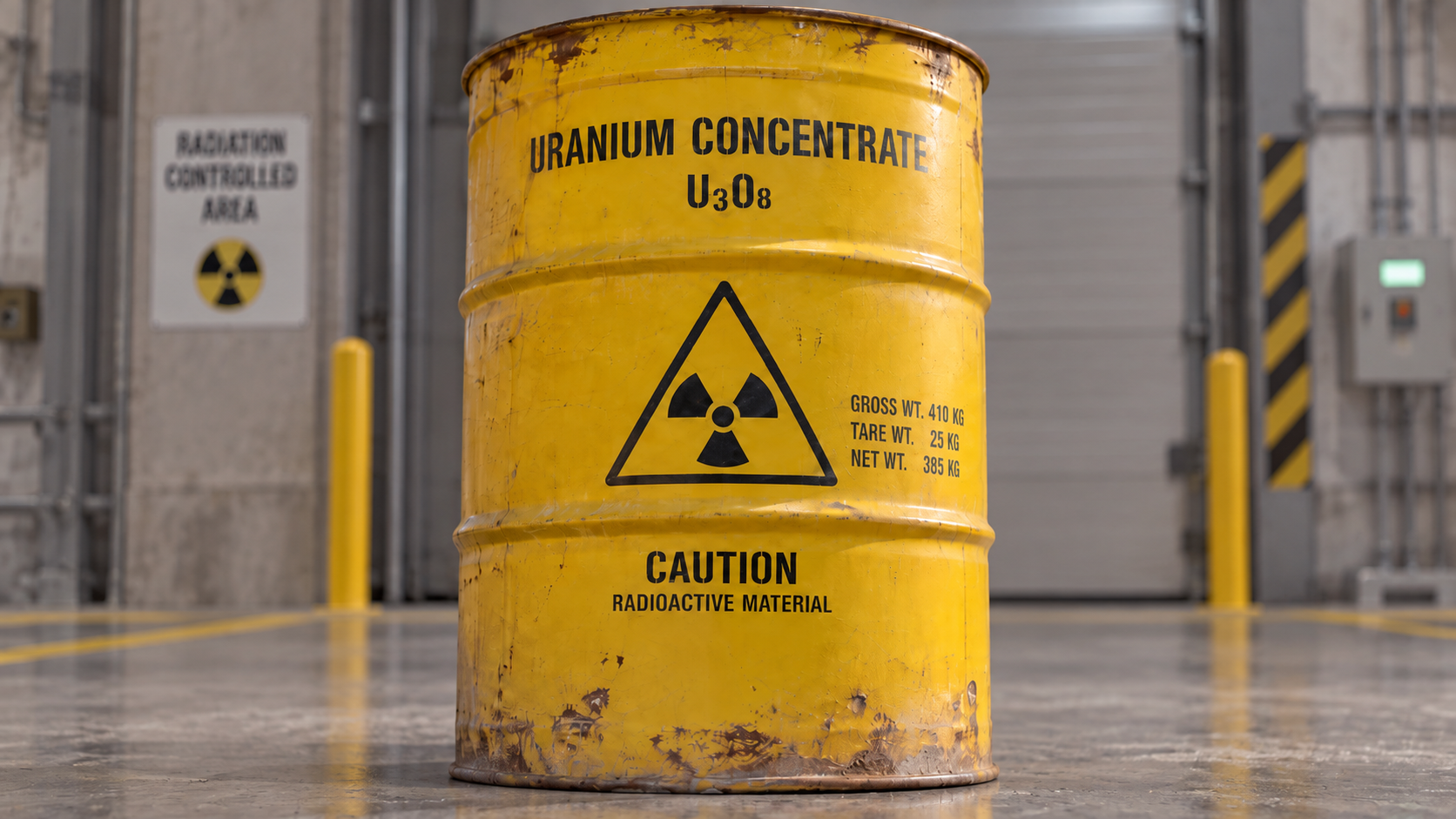
Energy Fuels produced over one million pounds of uranium oxide (U3O8) in 2025 and is targeting production of 1.5 to 2.5 million pounds in 2026. That guidance is the highest of any US-based uranium producer. Output draws primarily from two operating mines.
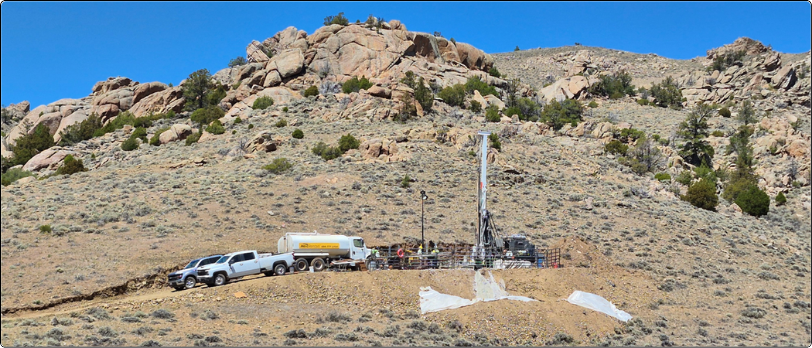
The Pinyon Plain Mine in Arizona, which the company describes as potentially the highest-grade uranium mine in US history, mined ore grading 1.62% eU3O8 in 2025. The company expects to extract over two million pounds of U3O8 from the site in 2026 at an all-in cost of approximately 23 to 30 US dollars per pound.
The La Sal Complex in Utah, a cluster of mines along an 11-mile trend, continues to ramp up and is being readied for additional production areas, including the Energy Queen mine, targeted for potential output in 2026 or 2027. The complex also holds high-grade vanadium resources.
In 2025, the company sold 650,000 pounds of uranium at a weighted average price of 74.21 US dollars per pound, generating sales of 48.2 million US dollars. For 2026, the company is guiding for sales of 1.5 to 2.0 million pounds through a combination of long-term contracts and spot market transactions.
Speaking at the Prospectors and Developers Association of Canada (PDAC) 2026 conference in Toronto, President and Chief Executive Officer of Energy Fuels, Mark Chalmers, characterised uranium as a genuine business in its own right, not simply a legacy asset being wound down to fund rare earth ambitions. The uranium operation generates cash that funds the REE build-out without excessive dilution, providing a degree of financial self-sufficiency that peers focused solely on rare earths cannot replicate.
Energy Fuels holds six long-term supply contracts with US nuclear utilities, with deliveries scheduled through 2032. Two new contracts were signed in 2025, which the company says are expected to improve overall portfolio pricing in coming years.
White Mesa Mill: A Strategic Processing Hub
Central to the company's strategy is the White Mesa Mill near Blanding, Utah, the only conventional uranium processing facility operating in the United States. Licensed to produce more than eight million pounds of U3O8 per year, the mill has been in operation for over 45 years. It is also the only US facility capable of processing monazite concentrate for the production of separated rare earth oxides.
The mill's current Phase 1 Rare Earth Element configuration can process up to 10,000 metric tonnes per annum (tpa) of monazite and produce up to 1,000 tpa of neodymium-praseodymium (NdPr) oxide. NdPr oxide produced at the site has been validated at scale by a permanent magnet manufacturer and qualified for use in automotive motors.
The company is now piloting the separation of heavier rare earth elements. Approximately 29 kilograms of dysprosium (Dy) oxide at 99.9% purity were produced through 2025, and one kilogram of terbium (Tb) oxide was expected in March 2026. A Phase 1 expansion targeting commercial production of mid and heavy REE oxides, including dysprosium, terbium, samarium, europium, and gadolinium, is planned for mid-2027.
A larger Phase 2 expansion, which would add 50,000 tpa of monazite processing capacity and bring total throughput to 60,000 tpa, is targeted for commissioning in 2028 or beyond. At current market prices, the company projects annual revenues approaching 1.2 billion US dollars once Phase 2 volumes are fully realised.
Integration: The Core Competitive Argument
Chalmers explained why end-to-end integration is central to the company's positioning against Chinese dominance of the rare earth supply chain:
"To really compete with China, you have to have all those steps. You can't be missing a step in the middle of it. We've been very focused on the integration at least through alloys and we've got the hydrometallurgy skills, we've got the heavy mineral sand skills, mining and the metal alloy skills."
The company's rare earth pathway runs from mining projects in Australia, Madagascar, and Brazil, through the White Mesa Mill where monazite is processed into separated oxides, and ultimately to metals and alloys. Few Western companies have assembled this chain in full.
Chalmers has been consistent on this point across multiple industry forums. At an earlier investor event, he outlined the company's ambitions in broader terms:
"Our strategy is clear. We're building a world-scale, world-class, low-cost critical mineral hub unlike any other publicly traded company."
NdPr oxide is currently trading at approximately 135,000 US dollars per tonne for North American delivery, while dysprosium and terbium command significant premiums over Chinese pricing, at 443% and 401% respectively, according to analyst pricing data cited in the presentation.
Proposed Acquisition of Australian Strategic Materials
On 20 January 2026, Energy Fuels announced a proposed acquisition of Australian Strategic Materials (ASM), a company that operates a rare earth metals and alloys plant in Ochang, South Korea, with current neodymium-iron-boron (NdFeB) alloy capacity of approximately 1.3 kilotonne per annum (ktpa). ASM is also advancing a planned American Metals Plant and the Dubbo rare earth development project in New South Wales, Australia, which carries a 42-year mine life.
The acquisition, scheduled to close around mid-2026, is intended to extend Energy Fuels' value chain from oxide production into metals and alloys. As Chalmers explained at PDAC 2026, the skills required at each stage of the chain take years to develop organically, which is why the company has pursued acquisitions rather than organic growth to close capability gaps quickly.
Financing: The 700 Million US Dollar Note & Path to Two Billion US Dollars
A persistent investor concern has been whether Energy Fuels could realistically finance a build-out estimated at approximately two billion US dollars. That concern shifted materially following the company's fourth quarter 2025 convertible note arranged by research analysts, executed at just 0.75% annual interest and oversubscribed by more than seven times.
The transaction pushed the company's deployable capital to approaching one billion US dollars against a market capitalisation of approximately five billion US dollars. Chalmers noted that the capital markets' response had caused investors to reassess the feasibility of the company's ambitions:
"I think that's a big reason why we've had to re-rate in our stock because people are seeing that two billion is achievable by Energy Fuels to build out a world significant, low-cost critical mineral company, but also including uranium."
Beyond capital markets, the company is in dialogue with offtake partners seeking non-Chinese supply, exploring floor price arrangements that would provide revenue certainty, and engaging with both the US and Australian governments as potential sources of concessional financing or supply agreements. Management has maintained that government support is beneficial but not essential to its business case.
Monazite Supply Chain Taking Shape
Energy Fuels is assembling a geographically diversified monazite supply base to feed the White Mesa Mill. Key projects include the Donald Heavy Mineral Sands (HMS) project in Victoria, Australia, a joint venture with Astron Corporation in which Energy Fuels is earning a 49% joint venture (JV) interest and is entitled to 100% of the monazite output. A Final Investment Decision (FID) was expected as early as the first quarter of 2026, with potential deliveries to the mill by late 2027. Total project funding is estimated at approximately 520 million Australian dollars (approximately 340 million US dollars), with conditional financing support of 80 million Australian dollars from a government export finance agency.
Discussing the Donald project's readiness, Chalmers confirmed the project is shovel-ready and that the company hopes to enter construction in 2026, with the mine expected to deliver a material volume of monazite to the White Mesa Mill once operational.
In Madagascar, the Vara Mada project, formerly known as Toliara, is one of the company's most significant long-term assets. The project carries a post-tax net present value at a 10% discount rate (NPV10) of 1.8 billion US dollars and an internal rate of return (IRR) of 24.9%, with Stage 1 capital expenditure (CAPEX) estimated at 769 million US dollars and expected earnings before interest, taxes, depreciation, and amortisation (EBITDA) of 500 million US dollars following ramp-up. Development is subject to government approvals. Combined with the Phase 2 rare earth expansion, Chalmers cited a net present value of close to four billion US dollars across the two projects, with combined EBITDA potential of 800 to 900 million US dollars per year at steady-state production.
In Brazil, the Bahia project is in active exploration, with a resource estimate expected to be completed in 2026. The project has the potential to supply 3,000 to 5,000 tpa of monazite to White Mesa for decades, depending on production rates.
Financial Position & Leadership Transition
As of 31 December 2025, Energy Fuels reported working capital of 927.4 million US dollars, including 797.1 million US dollars in marketable securities, 73.5 million US dollars in inventory, and 64.7 million US dollars in cash. Total assets were 1.41 billion US dollars. The company reported a net loss of 86.1 million US dollars for 2025, compared to a loss of 47.8 million US dollars in 2024, reflecting higher operating costs from global expansion and a 13.8% decline in average uranium spot prices year over year.
On the leadership front, Chalmers will transition to an exclusive consultant role on 15 April 2026, with Ross Bhappu assuming the Chief Executive Officer position. Chalmers affirmed his continued involvement in the company's global strategy and expressed strong conviction that Energy Fuels' best days remain ahead.
Energy Fuels has spent the better part of five years assembling what its management describes as the only fully integrated critical minerals company in the Western world. With a stated ambition to reach a market capitalisation of ten billion US dollars or more, the company is positioning itself as a cornerstone of the United States' response to Chinese dominance in critical mineral supply chains. Full rare earth revenue generation is expected to ramp between 2028 and 2030.
Energy Fuels is also evaluating the recovery of radium isotopes from its existing uranium and REE process streams for potential use in targeted alpha therapy (TAT) cancer treatments, an area it characterises as an early-stage but high-potential revenue opportunity.
Analyst's Notes





Subscribe to Our Channel








Stay Informed