Energy Fuels Mid-Year 2026 Update: 6 Things You Need to Know


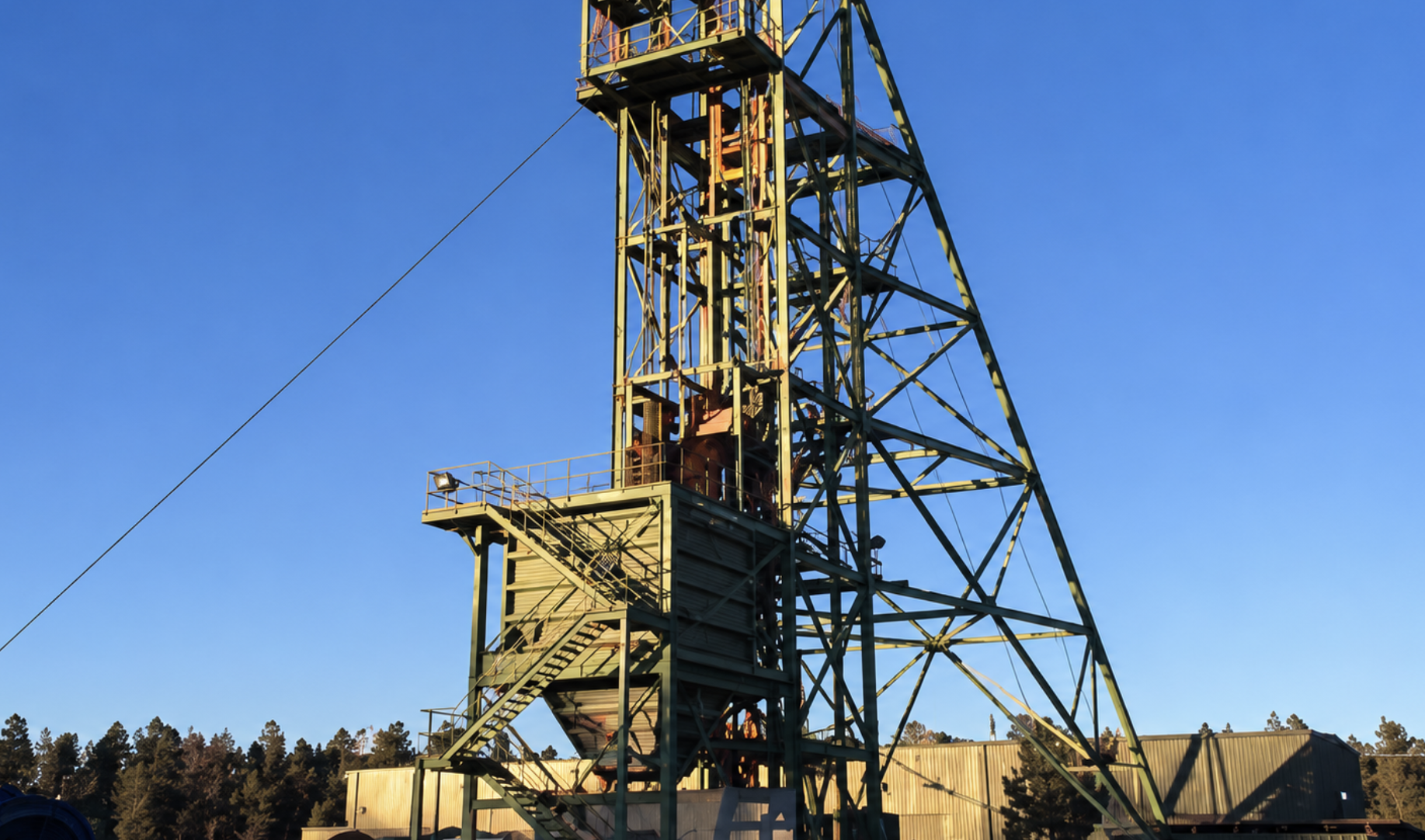
Energy Fuels' June 2026 update details achieving its 1.6M pound uranium target in six months and launching a new MREC circuit at the White Mesa Mill in July.
Project Overview
Energy Fuels (NYSE: UfUUU | TSX: EFR) has achieved the low end of its full-year uranium oxide production guidance before the halfway point of 2026, giving management the flexibility to pause milling, rebuild ore inventory, and begin rare earth element (REE) infrastructure upgrades without sacrificing guidance. The company outlined a July 2026 start date for Phase 1 circuit modifications, including a new mixed rare earth carbonate (MREC) processing circuit, contracted sales visibility through 2032, and rehabilitation progress at three standby uranium assets. Each development carries a distinct implication for 2026 production volumes, processing economics, and the company's medium-term revenue profile.
1. Guidance Floor Secured Before the Mill Pause Begins
The White Mesa Mill is targeting approximately 1.6 million pounds of finished uranium oxide by June 30, 2026 - the low end of the full-year guidance range of 1.5 to 2.5 million pounds - at an average monthly run rate exceeding 265,000 pounds from ore mined at the Pinyon Plain mine in Arizona and the La Sal Complex in Utah.
Achieving the low end of 2026 guidance before the planned third-quarter processing pause reduces near-term execution risk and gives the company flexibility to rebuild ore stockpiles while advancing other initiatives. A planned fourth-quarter restart of ore processing, subject to operating conditions, provides the opportunity to move toward the upper end of the 2.5 million pound guidance range.
Chief Executive Officer of Energy Fuels, Mark Chalmers, described the production scale and competitive position in the US uranium market:
“Uranium is now, we gave guidance up to two and a half million pounds, and that's greater than anybody else in the United States, with really good cost structures and prices are firming. That is the revenue story right now. We completed the feasibility study on the Phase 2 expansion. We completed feasibility on Vara, formerly Toliara, and if you add those together, you've got an NPV of pushing $4 billion. But what's really incredible is that the EBITDA between those two projects is pushing 800, 900, a million a year of EBITDA. That's the future.
2. Processing Costs at the Lowest Levels in Mill History Support Margin Durability
Pinyon Plain mine-site costs are tracking between $23 and $30 per pound of uranium oxide, while White Mesa Mill processing costs are at historic lows of $9 to $12 per pound, supporting Energy Fuels' position as a low-cost US uranium producer.
The White Mesa Mill's established infrastructure and the high-grade nature of the Pinyon Plain deposit contribute to the current cost profile. The company also expects the cost of sales to continue declining in 2026 as contracted deliveries increase.
Ore grades at Pinyon Plain are lower in the first half of 2026 because mining is progressing through the upper portions of the Main Zone before reaching higher-grade areas. The company estimates that ore processed during the first half contained approximately 750,000 to 850,000 pounds of uranium oxide, with grades and tonnage expected to increase in the second half of the year.
3. Why the Mill Pause Is Not a Production Problem
The company is targeting completion of its current uranium processing campaign at the White Mesa Mill by the end of June 2026, with processing expected to resume in the fourth quarter, subject to ore production levels, uranium market conditions, and the timing of any rare earth element processing campaign.
The planned pause allows Energy Fuels to rebuild ore inventories while maintaining mining activity at Pinyon Plain and La Sal. Because the fourth-quarter restart is contingent on stockpile levels, market conditions, and REE campaign timing, management retains flexibility to align processing schedules with operational and commercial priorities.
4. The MREC Circuit Adds a Second Revenue Stream Without New Uranium Equipment
Starting in July 2026, the White Mesa Mill's Phase 1 rare earth element circuits will be modified to add a mixed rare earth carbonate processing circuit, enabling the facility to accept feedstock from ionic adsorption clay projects and expand its role in the downstream rare earth supply chain.
Unlike the monazite-based circuit currently operating in Phase 1, mixed rare earth carbonates can be fed directly into solvent extraction for separation. This allows Energy Fuels to process third-party ionic clay material while maintaining uranium production, creating an additional potential revenue stream during periods when uranium ore inventories are being rebuilt.
Chalmers addressed the positioning advantage of an integrated facility over fragmented single-step producers:
5. Six Long-Term Contracts Provide Revenue Visibility Through 2032
Energy Fuels holds six uranium supply agreements with US nuclear utilities extending through 2032 and is targeting 1.5 to 2 million pounds of uranium oxide sales in 2026 through a mix of contracted deliveries and spot market transactions, more than double the 650,000 pounds sold in 2025.
The portfolio includes fixed and market-linked pricing, floors, ceilings, and inflation-escalation provisions. Two agreements signed in 2025 are expected to improve overall portfolio pricing in future years. This structure provides downside protection while preserving exposure to stronger uranium prices on uncommitted volumes. The company's realised sales price of $74.20 per pound in 2025 provides a benchmark for assessing profitability. Relative to the production costs, the pricing achieved in 2025 suggests a meaningful margin between operating costs and realised revenue.
6. Three Assets Advancing Toward the Next Production Wave
Whirlwind, Energy Queen, and Nichols Ranch are progressing through different development stages that could expand Energy Fuels' future uranium production base. Whirlwind is targeting completion of decline rehabilitation in 2026 ahead of potential production in 2027, while Energy Queen is advancing infrastructure upgrades in preparation for a planned 2027 rehabilitation program.
Nichols Ranch is advancing through resource definition rather than physical rehabilitation. Delineation drilling exceeded 136,000 feet across 214 holes in 2026, with an updated NI 43-101 and S-K 1300-compliant Technical Report expected later this year. The company states that its standby uranium assets have the potential to add up to 500,000 pounds of annual uranium oxide production within 6 to 12 months of a development decision.
Key Takeaways for Investors
- The low end of 2026 uranium oxide production guidance was achieved before the planned mill pause: The White Mesa Mill produced approximately 1.6 million pounds of finished uranium oxide by June 30, 2026, matching the lower end of the Company's 1.5 to 2.5 million pound guidance range at a run rate exceeding 265,000 pounds per month.
- Historic low processing costs support margins at current uranium prices: Pinyon Plain mine-site costs of $23 to $30 per pound and White Mesa Mill processing costs of $9 to $12 per pound compare favourably with the 2025 realised sales price of $74.20 per pound.
- The MREC circuit expands the White Mesa Mill into dual uranium and rare earth processing: Phase 1 modifications, beginning in July 2026, target operational status in late 2027 to early 2028 and will enable the simultaneous production of uranium oxide and separated rare earth element oxides.
- Six long-term utility contracts provide revenue visibility through 2032: Energy Fuels is targeting 1.5 to 2.0 million pounds of uranium oxide sales in 2026, supported by contracts containing fixed and market-linked pricing, floors, ceilings, and inflation adjustments.
- Three standby uranium assets are advancing toward potential production decisions: Whirlwind rehabilitation is targeting completion in 2026, Energy Queen upgrades are underway ahead of a planned 2027 rehabilitation start, and the Nichols Ranch technical report is expected later in 2026.
The Bottom Line
Energy Fuels has secured the minimum uranium oxide production volume required to meet the low end of its 2026 guidance before the planned third-quarter processing pause. The July 2026 start of Phase 1 circuit modifications, with the MREC circuit targeting operational status in late 2027 to early 2028, marks the next major milestone in the White Mesa Mill's transition toward concurrent production of uranium oxide and rare earth elements. The key developments to monitor are the scale of the fourth-quarter uranium processing restart, progress on MREC circuit construction through 2027, and completion of the Nichols Ranch technical report, which would position the asset for a development decision.
Analyst's Notes





Subscribe to Our Channel








Stay Informed