Energy Fuels Qualifies US-Produced Heavy Rare Earth Oxides & Establishes a Domestic Magnet Supply Option


Energy Fuels qualifies 99.9% pure dysprosium oxide for permanent magnets, establishing first US heavy rare earth supply chain as Chinese export controls bite.
- Energy Fuels' successful qualification of 99.9% purity dysprosium oxide for permanent magnet use marks a rare execution milestone in a supply chain dominated by China.
- The qualification materially de-risks the company's rare earth strategy and demonstrates that Western separation and refining of heavy rare earth elements is technically and commercially viable.
- With Chinese export controls implemented in April 2025 remaining in place, qualified non-Chinese supply carries increasing scarcity value for automotive, defence, and advanced manufacturing end-markets.
- Energy Fuels' ability to leverage the White Mesa Mill as a multi-commodity processing hub differentiates it from primary rare earth element developers still navigating permitting and capital expenditure risk.
- A clearly defined 2026 pilot-to-commercial timeline creates visible near-term catalysts that may influence investor re-rating expectations.
Why Heavy Rare Earth Qualification Matters
The rare earth element supply chain has moved from a theoretical vulnerability to an operational constraint for Western manufacturers. For investors evaluating exposure to this sector, understanding the distinction between resource ownership and qualified production capability has become essential to assessing which companies can capture value in a restructuring supply chain.
Supply Chain Fragility Moves from Theory to Constraint
Heavy rare earth elements, specifically dysprosium, terbium, and samarium, serve as critical performance enhancers in neodymium-iron-boron permanent magnets. These elements enable magnets to maintain performance at elevated temperatures, a requirement for electric vehicle drivetrains, wind turbine generators, and defence applications.
The structural dependence on Chinese refining and separation capacity has persisted for decades, but April 2025 Chinese export controls on seven rare earths, including dysprosium, terbium, and samarium, transformed this dependency from a strategic concern into a commercial constraint. Downstream manufacturers now face procurement uncertainty that cannot be resolved through traditional sourcing diversification. The constraint is not ore availability but rather separation and refining capacity outside China.
This shift changes the valuation framework. Qualification for end-user specifications matters more than resource tonnage in a market where downstream access is the binding constraint.
Qualification vs. Resource: A Key Investor Distinction
The difference between owning rare earth element resources and producing qualified magnet-grade oxides represents a material distinction. Resource ownership provides exposure to commodity price movements. Qualified production provides access to customers and contracted revenue.
End-user quality assurance and quality control validation represents a higher bar than pilot production. Automotive and defence manufacturers require not only purity specifications but also consistency, traceability, and supply chain documentation meeting internal procurement standards.
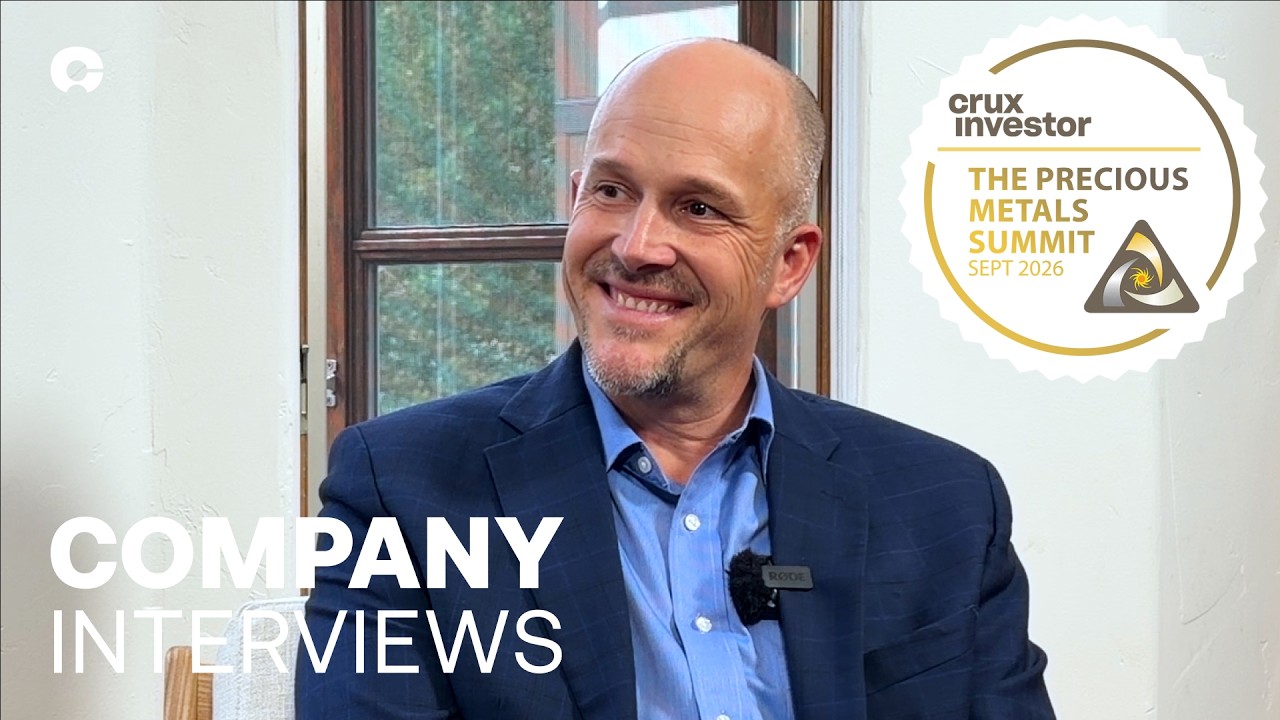
Mark Chalmers, Chief Executive Officer of Energy Fuels, emphasizes the company’s focus:
"We're focused on monazite which contains uranium, really significant concentrations of NdPr and also has very significant concentrations of the dysprosium, terbium, and the samarium, which are the real key missing links."
Energy Fuels as a Case Study in Execution, Not Optionality
Energy Fuels' recent qualification milestone illustrates what execution looks like in a sector often characterized by development-stage optionality. The company's dysprosium oxide qualification represents a tangible step from technical demonstration to commercial validation.
Dysprosium Qualification as a De-Risking Event
Energy Fuels achieved 99.9% dysprosium oxide purity, exceeding the 99.5% specification typically required for automotive permanent magnet applications. This qualification was validated by a major South Korean automotive manufacturer, providing third-party confirmation of commercial acceptability.
This milestone builds on the company's September 9, 2025 neodymium-praseodymium qualification, establishing a pattern of progressive validation across the rare earth element suite. Through September 2025, pilot operations have produced approximately 29 kilograms of high-purity dysprosium oxide.
Why This Is Operationally Unusual
Heavy rare earth elements are more complex to separate than light rare earth elements. The separation circuits require tighter impurity control, more precise chemistry, and greater operational discipline. Achieving heavy rare earth separation at an existing, licensed facility rather than a greenfield plant compounds the significance.
Mark Chalmers describes the operational approach:
"We've been publicly saying we're going to put in a separation circuit for the heavies in the existing circuit that we have in the mill building. We're doing that. We're going to build that."
The White Mesa Mill & the Value of Existing Infrastructure
Infrastructure represents a competitive advantage that is difficult to replicate on development timelines relevant to current supply chain restructuring. Energy Fuels' White Mesa Mill provides a foundation that compresses execution risk relative to projects starting from permitting stage.
Infrastructure as Competitive Advantage
White Mesa currently operates as the only conventional uranium mill in the United States. The mill recently started up and is processing low-cost Pinyon Plain ore. This operational status provides more than uranium processing capability. It provides an existing licensed facility with established regulatory relationships, community agreements, and operational workforce.
The mill's capability to process minerals containing uranium, rare earth elements, vanadium, titanium, and zirconium leverages this infrastructure. A greenfield rare earth separation facility would require years of permitting to establish equivalent operational standing.
Multi-Commodity Optionality Without New Permitting Risk
Mark Chalmers positions this integration as central to the company's strategy:
"Energy Fuels is a company that is unique from all others that you'd look at because we are focused on building a critical mineral hub that is built around our uranium business but also includes the rare earth suite of elements and also the heavy mineral sands."
This integration means capital allocation decisions can respond to commodity market conditions without restarting permitting processes.
Economics: Why Monazite Changes the Cost Curve
The feedstock economics of rare earth production differ significantly between primary mining operations and by-product processing. Energy Fuels' monazite-based strategy provides structural cost advantages relative to primary rare earth miners.
By-Product Feedstock vs. Primary Mining
Monazite is a by-product of heavy mineral sands operations. The mining cost is borne by the primary products, typically titanium and zirconium minerals. This by-product status provides a structural cost advantage versus primary rare earth miners who bear full mining costs including strip ratios, ore variability, and mining dilution.
Energy Fuels is earning into the Donald project in Australia and advancing the Toliara project in Madagascar to secure feedstock optionality.
Mark Chalmers explains the feedstock structure:
"We're earning into 49% ownership of Donald but we get 100% of the monazite, including 100% of the heavies."
Cost Visibility & Margin Optionality
Planned commercial capacity targets 48 metric tonnes per annum of dysprosium oxide and 14 tonnes per annum of terbium oxide. Margins in rare earth production are driven by qualification status and pricing power as much as by throughput volume. Qualified producers can negotiate pricing that reflects scarcity value rather than commodity spot markets.
Heavy Rare Earths & Strategic End-Markets
The end-markets for heavy rare earths share common characteristics: high performance requirements, limited substitution options, and strategic importance that transcends commercial considerations.
Permanent Magnets as a Bottleneck Technology
Dysprosium and terbium enable permanent magnets to maintain magnetic properties at temperatures that would degrade unmodified neodymium-iron-boron magnets. This thermal stability is essential for electric vehicle traction motors, wind turbine direct-drive generators, and industrial robotics.
Demand growth aligns with electrification trends extending across transportation, power generation, and industrial automation.
Defence & Policy Overlay
National defence applications create demand with characteristics distinct from commercial markets. Missile guidance systems, drone propulsion, naval reactor components, and radar systems require permanent magnets meeting military specifications.
Mark Chalmers addresses the jurisdictional positioning:
"If the United States wants to reshore the ability to be independent of China, particularly on rare earth, or reduce dependency on Russia, we have a facility in the United States that's constructed, permitted, and operating to do that."
Near-Term Catalysts & Execution Timeline
The progression from pilot validation to commercial production provides defined milestones for investor monitoring. Energy Fuels has outlined a timeline that creates near-term visibility into execution progress.
Pilot to Commercial Progression
Terbium pilot production was scheduled to begin in late December 2025, with kilogram-scale qualification samples expected in early 2026. Gadolinium and samarium pilots will follow. Commercial production of heavy rare earth oxides is targeting as soon as Q4-2026.
Key upcoming milestones include the Phase 2 Feasibility Study expected by year-end 2025, Donald Project final investment decision targeting Q1 2026, and Toliara Project final investment decision in 2026. The Toliara updated Feasibility Study is expected to be finalised before year-end 2025.
The company's $700 million convertible note, carrying a 0.75% annual coupon and oversubscribed six to seven times, provides funding for commercial buildout.
Mark Chalmers describes the capital deployment:
"The money we raised was mainly for two things. The phase two at White Mesa to build this expanded plant, which is the size of Lynas."
As of September 30, 2025, the company held $298.5 million in working capital, with the convertible note adding approximately $625 million in net post-quarter liquidity.
Risk Factors & What Could Go Wrong
Scale-up risk persists in the transition from pilot to commercial throughput. Processing parameters that perform at kilogram scale may require adjustment at tonne scale. Rare earth pricing lacks the transparency of exchange-traded commodities, creating uncertainty in margin forecasting.
Jurisdiction & Policy Considerations
While processing occurs in the United States, feedstock sourcing remains global. The Toliara project in Madagascar has experienced recent political transitions, though a new government has formed with initial indications of pro-economic development positioning. Export controls represent both opportunity and volatility driver.
The Investment Thesis for Energy Fuels
- Energy Fuels has achieved qualification thresholds that limited Western peers have demonstrated, distinguishing execution from exploration-stage optionality.
- Existing licensed infrastructure at White Mesa materially compresses development timelines and reduces execution risk relative to greenfield projects.
- Non-Chinese heavy rare earth supply remains structurally limited, creating scarcity value for qualified producers as export controls constrain alternative sources.
- The 2026 timeline provides defined pilot-to-commercial milestones offering near-term visibility into execution progress.
- Portfolio exposure aligns with defence, electrification, and industrial automation themes supporting multi-year demand growth.
- Multi-commodity optionality across uranium, rare earths, and heavy mineral sands provides strategic flexibility without incremental permitting burden.
- By-product feedstock economics provide structural cost advantages versus primary rare earth mining operations.
Why This Qualification Changes the Conversation
The dysprosium qualification represents a commercial validation rather than a laboratory milestone. Third-party confirmation by an automotive manufacturer establishes that Energy Fuels can produce material meeting end-user specifications. This advances the company's rare earth position from development optionality toward execution credibility.
Western rare earth supply has moved from theoretical discussion to demonstrated pilot-scale capability. Energy Fuels provides an example of how existing infrastructure, appropriate feedstock strategy, and operational execution intersect to create commercial outcomes. For investors evaluating critical minerals exposure, the qualification milestone illustrates that in constrained supply chains, the ability to deliver qualified production matters more than resource scale.
TL;DR
Energy Fuels has achieved a significant milestone by qualifying 99.9% pure dysprosium oxide for permanent magnet applications, validated by a major South Korean automotive manufacturer. This makes the company one of the few Western producers capable of delivering commercial-grade heavy rare earth oxides outside Chinese supply chains. With April 2025 Chinese export controls restricting dysprosium, terbium, and samarium exports, qualified non-Chinese supply carries increasing scarcity value. The White Mesa Mill's existing infrastructure compresses development timelines versus greenfield competitors. Commercial heavy rare earth production targets Q4 2026, with approximately $925 million in available capital supporting the buildout. By-product feedstock economics from monazite provide structural cost advantages.
FAQs (AI-Generated)
The 99.9% purity qualification, validated by a major automotive manufacturer, demonstrates that Western separation and refining of heavy rare earths is commercially viable. This moves Energy Fuels from development-stage optionality to execution credibility, providing third-party confirmation that the company can meet end-user specifications for permanent magnet applications.
Dysprosium and terbium enable neodymium-iron-boron permanent magnets to maintain performance at elevated temperatures. This thermal stability is essential for EV traction motors, wind turbine generators, missile guidance systems, and industrial robotics—applications where substitution options remain limited.
White Mesa is the only conventional uranium mill operating in the United States and holds existing permits for processing multiple commodities including rare earths, vanadium, and heavy mineral sands. This licensed infrastructure eliminates years of permitting delays that greenfield competitors face, compressing execution timelines.
The company targets commercial heavy rare earth oxide production as soon as Q4 2026. Near-term milestones include terbium pilot production in late December 2025, Phase 2 Feasibility Study by year-end 2025, and final investment decisions on the Donald and Toliara feedstock projects in 2026.
Key risks include scale-up challenges transitioning from pilot to commercial throughput, opaque rare earth pricing that complicates margin forecasting, and geopolitical exposure through feedstock sourcing from Madagascar's Toliara project. Processing parameter adjustments may be required as production scales from kilograms to tonnes.
Analyst's Notes





Subscribe to Our Channel







Stay Informed