




Meet the Team: Hashim Ahmed's Blueprint for New Found Gold


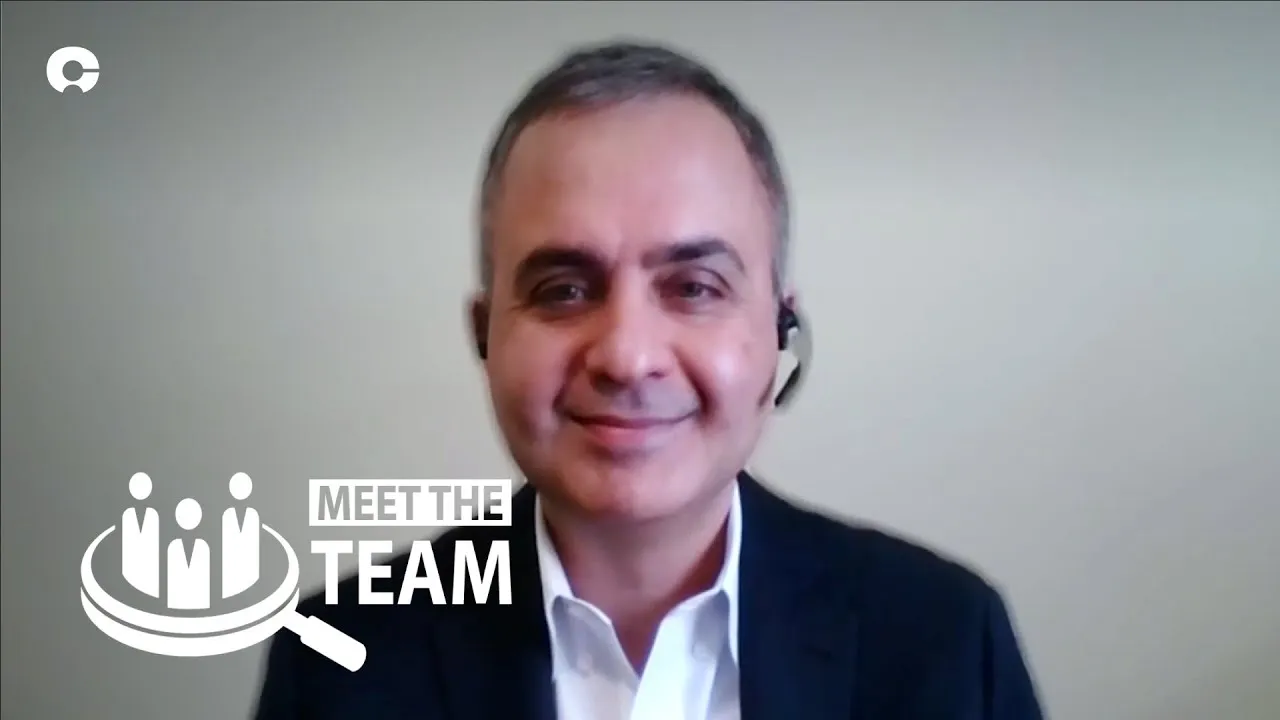
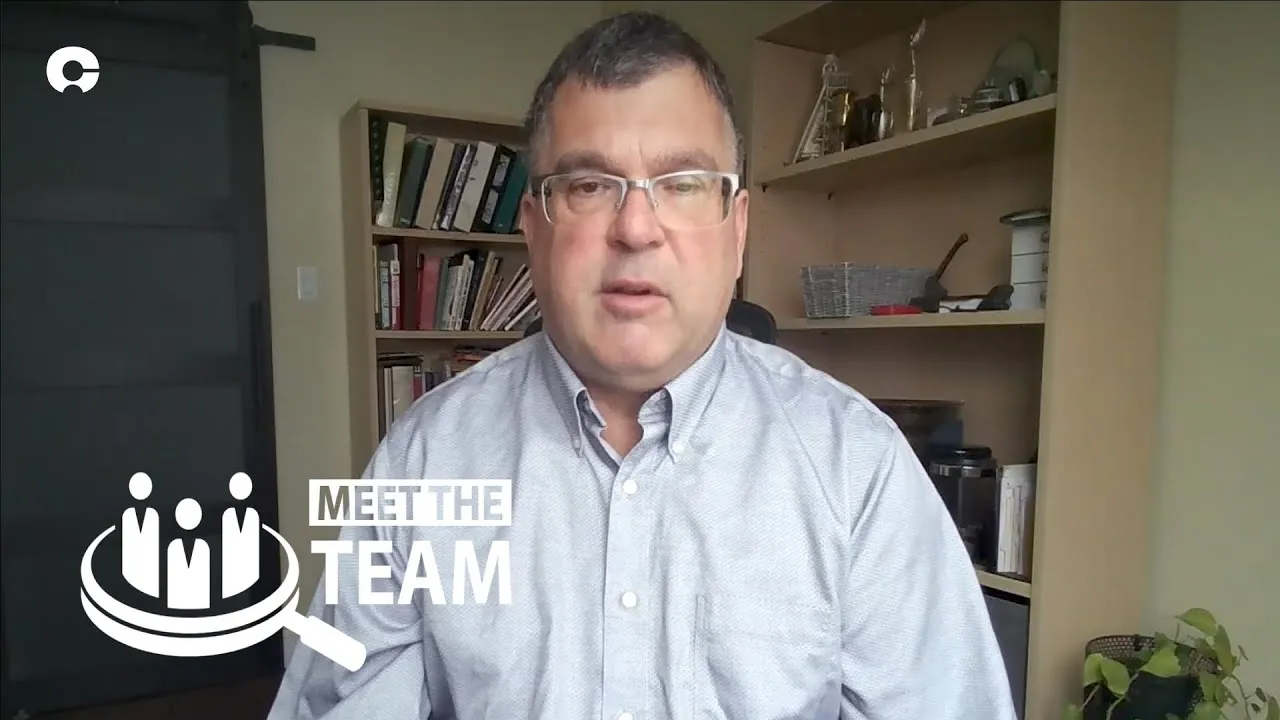
Meet the Team: Hashim Ahemed, Chief Financial Officer, New Found Gold
In mining development, financial stewardship during the transition from exploration to production determines whether projects create or destroy shareholder value. The compressed timeline from discovery to cash flow, the temptation to overspend in strong commodity price environments, and the challenge of implementing systems that scale from junior explorer to operating miner require CFO leadership that balances opportunity with discipline. For investors evaluating development-stage companies, understanding how financial leadership translates experience across market cycles into systematic capital allocation can be as important as understanding the resource economics. This profile examines Hashim Ahmed's approach to financing New Found Gold's accelerated development through the lens of what separates value-creating financial stewards from those who stumble through the transition to production.
From Majors to Turnarounds: The Foundation Years
Hashim Ahmed brings 20 years of mining finance experience to his role as Chief Financial Officer of New Found Gold, with a career spanning major mining companies, distressed turnarounds, and successful exits. His foundation at Barrick Gold Corporation provided exposure to corporate finance at one of the world's largest gold producers, working both in Toronto head office and at mine sites - experience that demonstrated how financial systems operate at scale while understanding operational realities on the ground.
Following Barrick, Hashim's career trajectory moved deliberately toward operational finance in the junior mining sector. He joined Jaguar Mining as CFO when the company had recently emerged from CCAA protection with a market capitalization of just $30 million. "Our team took it, turned it around. It's now trading at north of $500 million. So pretty good turnaround story there," Hashim reflects, describing a transformation that demonstrated ability to rebuild financial systems and credibility after distress.
Subsequent roles as CFO at Nomad Royalty (acquired by Metalla Royalty) and Mandalay Resources (acquired by Alkane Resources) provided experience across different business models and through successful exit transactions. This progression from major company systems through distressed turnarounds to acquisition exits gives Hashim relevant experience for New Found Gold's accelerated development timeline.
His decision to join New Found Gold three months ago stemmed from three specific factors.
"First of all, I've worked in jurisdictions which are often quite challenging from the names I just mentioned. And I can appreciate what a good jurisdiction can command in valuations," he begins, highlighting Newfoundland as "probably one of the best provinces to establish your next mine."
The asset's exploration potential provided the second attraction:
"The prospectivity. This asset is a multi-generational asset. It's going to be explored for multiple generations after us. 110 kilometers of strike and we've just explored less than 10. So this is a huge plus," Hashim explains.
Financial discipline during the transition to production completed his rationale. "The third one is financial discipline as we transition in a phased approach towards production," he states, identifying the mandate that aligns with his experience managing capital-constrained development projects.
Balancing Nimbleness With Scalable Systems
Hashim's approach to implementing financial systems reflects understanding that New Found Gold occupies an unusual position - moving from exploration through development to production within an exceptionally compressed timeline while maintaining the flexibility that characterizes successful junior mining companies.
"Bigger companies might look at implementing best practices, and I've seen those in the past. And then the junior companies on the other end of that range implement nimble processes. What I'm trying to do here at New Found Gold is balance both of these aspects," Hashim explains, describing the challenge of building systems that provide discipline without creating bureaucratic overhead that slows decision-making.
The company's accelerated development schedule makes this balance critical.
"This is one of the projects which is probably going to move at a very fast pace among the sphere of universe we see around us, going from exploration to production within a period of two years. That's pretty fast in our industry," Hashim notes.
This compressed timeline requires anticipating operational needs before they emerge. "The key theme there is operational readiness. The processes you need in exploration, the processes you see in development, and the processes you see in production, they're entirely different. And we need to be having the foresight in developing them before we get to each one of those stages," he emphasizes.
Hashim's focus on operational readiness prevents the common mistake of implementing systems reactively after problems emerge, rather than proactively building capabilities ahead of operational requirements.
"That's one of my key focuses - making the organization operationally ready for each one of those phases," he states.
Building Multi-Generational Financial Capabilities
Hashim's team-building philosophy extends beyond filling immediate roles to developing local capabilities that will support operations across decades. "The province has got a lot of talent. It needs a lot of mentorship as well. And so a lot of my time is being spent in hiring the right people in finance, which we most recently did, but also doing a lot of mentorship," he explains.
This emphasis on mentorship reflects understanding that New Found Gold's long-term success depends on building institutional knowledge within Newfoundland rather than relying entirely on imported expertise.
"I can bring in from my past 20 years of experience a lot of those best practices and how I can impart that to my team and make sure at the right pace, they develop the right processes," Hashim describes.
The multi-generational perspective shapes his definition of success. "I'd be very happy if after three, four years I look back at this asset and it can function on cruise control even without a CFO. I think a successful company is which has continuity in it, has continuity through various phases of transitioning," he states.
This focus on continuity and institutional capability-building distinguishes Hashim's approach from CFOs who view their role purely as managing current financial operations. "This asset is going to be there after you and me are gone long time. And there's going to be an entire provincial finance and operational workforce that's yet to come, which is going to build this and take this forward in the future," he emphasizes.
His measure of success centers on creating foundational capabilities. "Making sure I build that right team and those foundational processes would be something which I would be really proud of if we can do in the next few years," Hashim reflects, defining achievement in terms of sustainable systems rather than short-term financial metrics.
Capital Allocation Framework & Discipline
Hashim's approach to financial discipline centers on systematic capital allocation rather than simply tracking expenditures:
"When you're transitioning an asset from exploration to development to production in such a short period of time, and you are going to be spending a lot of capital, capital allocation becomes a key theme at the background of all of that," he explains.
The framework emphasizes process discipline and governance. "Making sure management has the right processes in place, which almost force the management in reviewing each capital decision, documenting it in a proper way, and getting the right approvals within the governance framework," Hashim describes, outlining systems that create accountability without creating bureaucratic paralysis.
Recent implementations demonstrate this philosophy in practice. "We recently put in place an approval for expenditure process. We have most recently done a segmented or almost like a bucket approach for capital allocation," he notes.
The bucket approach provides prioritization clarity. "There's capital required for health and safety, which needs to be done, our environment. Then there's growth capital. And then we've got a third capital, which is contingent capital, and we will dip into this if operational cash flows allow us in the future," Hashim explains.
This segmentation forces explicit decisions about capital prioritization:
"Just parsing your capital in those different buckets and then making sure you're looking at the health of the spend, how do you dip into each of those buckets - that's the kind of discipline we are bringing in at New Found Gold," he states.
The emphasis on non-discretionary capital (health, safety, environment) before growth capital and contingent capital reflects understanding that sustainable operations require unwavering commitment to foundational requirements regardless of market conditions or production pressures.
Problem-Solving & Organizational Alignment
Hashim views the CFO organization as central to cross-functional problem-solving rather than simply financial scorekeeping. "In my past experience, I have seen CFO's organization has to be the problem solver. And we are almost quote unquote the village elders. We bring everybody together, everybody sits together and watches, sees what needs to be solved and we become the problem solver and the risk identifiers," he explains.
This approach builds trust across technical and operational teams:
"That really builds a lot of trust in the team. Alignment comes from basically looking at the same sheet. We're all looking at the same numbers. We're looking at the same KPIs - all the decisions are being made from the same numbers. So I think that brings the alignment," Hashim describes.
The emphasis on shared metrics and common information prevents silos where different groups optimize for conflicting objectives. When engineering, operations, and finance teams all reference identical data and KPIs, decisions become more transparent and disagreements focus on interpretation rather than competing sets of facts.
Hashim's characterization of finance as "village elders" and "problem solvers" reflects a collaborative philosophy rather than adversarial relationship between finance and operations. This approach proves particularly important during accelerated development when cross-functional coordination determines whether aggressive timelines prove achievable or create costly mistakes.
Managing Risk in Favorable Market Conditions
Hashim maintains disciplined perspective despite exceptionally strong gold prices. "Today's gold environment is very forgiving and we all know that. Margins are easy to make. But the same inflationary environment that's taking the gold price up is also taking your cost up as well. So a lot of focus has to be on the cost," he observes.
His financial metric emphasis reflects this cost discipline:
"My metric that I look at is not the cash cost or all in sustaining costs, although the industry does like to see that. At the end of the day, what we internally look at is how much cash are we generating net-net? And that's the key number we look at," Hashim explains.
This focus on net cash generation rather than industry-standard cost metrics forces attention on total economics rather than mining-specific benchmarks that can obscure underlying financial performance. "It brings in more discipline. It removes the noise from the numbers as well," he notes.
The risk Hashim emphasizes isn't commodity price decline but rather complacency induced by favorable markets:
"It's being financially disciplined in making sure that this gold price does not allow us to make wrong decisions, which we have seen happen in the past in our industry," he states, referencing the sector's history of capital destruction during previous bull markets when easy access to capital funded marginal projects and excessive construction costs.
Phased Development & Risk Management
Hashim views New Found Gold's phased development strategy as fundamentally aligned with financial discipline:
"A key approach that I really like what the management team has decided upon is this phased approach of building Queensway. This enables us to be more disciplined in capital allocation," he explains.
The Hammerdown acquisition's Pine Cove mill proves central to this strategy. "This enables us to reduce construction risk because we just acquired Maritime Resources and there's the Pine Cove mill. So now we have reduced construction risk in my view," Hashim notes.
Beyond capital efficiency and construction risk reduction, the phased approach provides learning opportunities. "By distributing this development over three phases, we're going to learn from each one of those phases and build up on those lessons," he states, describing how early-phase experience informs later-phase execution.
This iterative development model contrasts with traditional large-scale construction where all learning occurs during a single compressed timeline with limited opportunity to incorporate lessons before major capital commitments are made. "I think this approach that the senior leadership team prior to me decided and implemented - this is a really good approach for building these assets in today's time in a disciplined way," Hashim emphasizes.
Operational Transition & Team Integration
Hashim's arrival at New Found Gold coincides with significant operational transitions beyond Queensway development:
"Not to mention we are transitioning from exploration to development to production. With the Maritime Resources acquisition, we have a producing asset going into commercial production in the next few quarters," he describes.
This rapid pace of change across multiple simultaneous transitions creates organizational complexity. "You've got a lot of fast-paced transition happening. My team has been focused on developing the right processes at this moment. That will enable management to make the right decisions," Hashim explains.
The team he inherited represents a mix of experience levels. "The team is pretty young and new, just like myself, new but not young," he notes with characteristic directness, acknowledging both the opportunities and challenges of building financial capabilities with developing professionals.
His focus during these early months centers on establishing foundational systems. "At this moment, I think my role is to once again define the processes as we transition through these different phases at a very fast speed," Hashim states, prioritizing infrastructure over immediate firefighting.
Looking Forward
Hashim Ahmed's combination of major company financial systems experience, distressed company turnaround capabilities, and successful exit transaction involvement provides New Found Gold with CFO leadership directly relevant to accelerated development through multiple simultaneous transitions.
His systematic approach to capital allocation - implementing approval processes, segmenting capital into prioritized buckets, and emphasizing net cash generation over industry-standard cost metrics - reflects disciplined financial stewardship designed to prevent capital misallocation during favorable market conditions.
The two-stage development strategy aligns with Hashim's emphasis on operational readiness, learning through phased implementation, and reducing construction risk through leveraging existing infrastructure at Pine Cove. His view of finance as organizational problem-solver and risk identifier rather than purely scorekeeper creates collaborative relationships with technical and operational teams essential for executing aggressive development timelines.
For investors evaluating New Found Gold, Hashim Ahmed's track record of successful turnarounds and acquisition exits, his focus on building multi-generational local capabilities rather than importing all expertise, and his disciplined approach to capital allocation during strong commodity markets represent valuable financial leadership for navigating the transition from exploration through development to production. His emphasis on operational readiness, systematic processes, and sustainable team building reflects understanding that successful mine development requires financial competence, governance discipline, and genuine commitment to creating capabilities that support operations across decades rather than simply funding current activities.
Analyst's Notes





Subscribe to Our Channel




.jpg)




Stay Informed






















