Critical Uranium Projects Advance as Supply Deficit Intensifies with 400 Million Pound Demand Outlook



Uranium producers advance critical projects as structural supply deficit intensifies. Extended development timelines and Kazakhstan nationalisation constrain response.
- The global uranium sector enters 2026 with fundamental supply-demand imbalances as producers demonstrate operational progress whilst confronting extended development timelines and technical complexities that prevent rapid supply response to price signals.
- Uranium prices climbed above US$88 per pound in January 2026, representing approximately 10% appreciation since mid-December, driven by strengthening demand visibility and accelerating government policy momentum supporting nuclear power generation globally.
- Actual mine production typically runs 25-30% below theoretical capacity figures cited in industry forecasts, whilst mobile inventory measures in tens rather than hundreds of millions of pounds, creating a larger supply deficit than commonly understood.
- Kazakhstan's effective nationalisation of uranium exploration eliminates the world's most prospective greenfield opportunity at precisely the moment global demand enters sustained growth, with requirements projected to reach 400 million pounds by 2040—more than double current consumption.
- Multiple producers advanced critical projects through derisking milestones including grid power connections, record low-cost production, wellfield acidification exceeding design parameters, and approaches to nameplate capacity, positioning the sector for production growth amid tightening market fundamentals.
The global uranium sector enters 2026 confronting fundamental supply-demand imbalances that industry veterans characterise as unprecedented in modern nuclear fuel markets. Recent company updates from producers across North America, Africa, and Australia reveal both the operational challenges of restarting and developing uranium production and the strategic value these constrained supply sources represent for investors. With uranium prices trending upward—the spot price climbing above US$88 per pound in January 2026, approximately 10% higher than mid-December levels—the sector reflects strengthening demand visibility and accelerating government policy momentum supporting nuclear power generation globally.
2025 was a Year of Operational Progress Amid Supply Challenges
The uranium market closed 2025 with producers demonstrating tangible advancement on critical projects whilst confronting the extended timelines and technical complexities inherent to uranium mine development and restart operations.
Lotus Resources continued operational ramp-up at the Kayelekera uranium mine in Malawi during the December 2025 quarter, as mining activities progressed with first high-grade ore delivered from the mining pit to the Run-of-Mine pad. The company's Accelerated Restart programme continued advancing, with acid plant rebuild remaining on schedule for commissioning and production during March 2026. Management stated:
"The Company continues to target achieving nameplate production during March 2026; however, acid availability along with some additional plant maintenance work is likely to delay achieving full month steady-state uranium production of 200,000lbs per month until Q4 FY26."
Lotus noted that 90% of 2026 contracted commitments (1 million lbs) are scheduled for second-half 2026 deliveries and closed the December quarter with A$56.2 million cash (unaudited), exclusive of US$10 million restricted cash, with an additional A$7.2 million equipment finance facility drawn post-quarter delivering pro-forma cash balance of A$63.4 million.
Boss Energy delivered strong operational performance at the Honeymoon uranium project during the December 2025 quarter, completion of the Honeymoon review and initiation of the new feasibility study, and achieving record drummed production of 456,000 lbs U₃O₈ (up 18% quarter-over-quarter) and IX production of 406,000 lbs (up 8%), driven by higher flow rates from new wellfields.
The company reconfirmed FY26 production guidance of 1.6 million lbs whilst lowering cost expectations. Managing Director and CEO Matthew Dusci commented:
"With regards to production, the team has delivered a record quarter of 455,791 lbs of U₃O₈ drummed at a C1 cash cost of $30/lb. As a result of the continued work to optimise the operation, it is pleasing to reconfirm production guidance of 1.6 Mlb for FY26 while revising down our C1 and AISC costs."
Boss's balance sheet strengthened during the quarter with cash and liquid assets reaching $208 million, including cash on hand of $53 million (up 11%) and 1.62 million lbs of drummed inventory (up 12%).
Denison Mines achieved a significant milestone in January 2026 with the completion of SaskPower's 138kV transmission line to the future Phoenix in-situ recovery uranium mine site. David Cates, President & CEO, stated how Denison secured access to 8.8 MW of power under a five-year minimum purchase agreement, with electrification now requiring only on-site distribution equipment installation—all long-lead items already procured and scheduled for delivery during the first construction year. The approximately 6-kilometre transmission line connects Phoenix to Saskatchewan's established grid infrastructure serving operating uranium mines in the eastern Athabasca Basin.
Phoenix represents the largest undeveloped uranium project in the infrastructure-rich eastern Athabasca Basin. Permitting efforts commenced in 2019 achieved Provincial Environmental Assessment approval in July 2025, with Federal approval and construction licensing concluded through Canadian Nuclear Safety Commission public hearings in December 2025. Construction commencement remains subject to final regulatory approvals and Denison's final investment decision.
Strong Start 2026: Sector Developments
Laramide Resources announced a significant strategic shift in January 2026 following Kazakhstan's legislative changes effectively nationalising uranium exploration. CEO Marc Henderson explained:
"We were right at the cusp of drilling with a big program for our initial program. The government [started] changing the rules essentially to what we think is de facto nationalisation of uranium in the country."
The legislative changes specifically target uranium whilst leaving other mineral exploration frameworks intact, requiring foreign partners to accept 75-90% state ownership in any future production joint ventures. Henderson noted the new framework eliminates commercial viability for foreign explorers, prompting Laramide's withdrawal from Kazakhstan and refocus on US and Australian assets.
The company's Churchrock in-situ recovery project in New Mexico assumes greater strategic importance, benefiting from inclusion in the federal government's FAST-41 permitting process providing defined timelines and coordinated agency review. Henderson confirmed:
"We put economic numbers out around it. It's going to be in the low part of the cost curve. I think it was $30 a pound, and uranium's $85 now really. So there's a big margin there."
Churchrock will commence production at 1 million pounds annually with expansion capacity to 3 million pounds, with Laramide's ownership of the processing facility providing competitive advantages relative to other ISR developers requiring third-party toll milling or new plant construction. Henderson expects permitting completion in Q2 2027, enabling construction commencement.
Interview with Marc Henderson, President & CEO of Laramide Resources
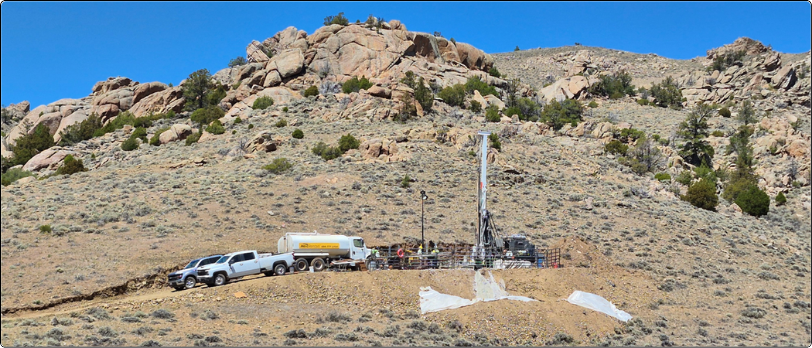
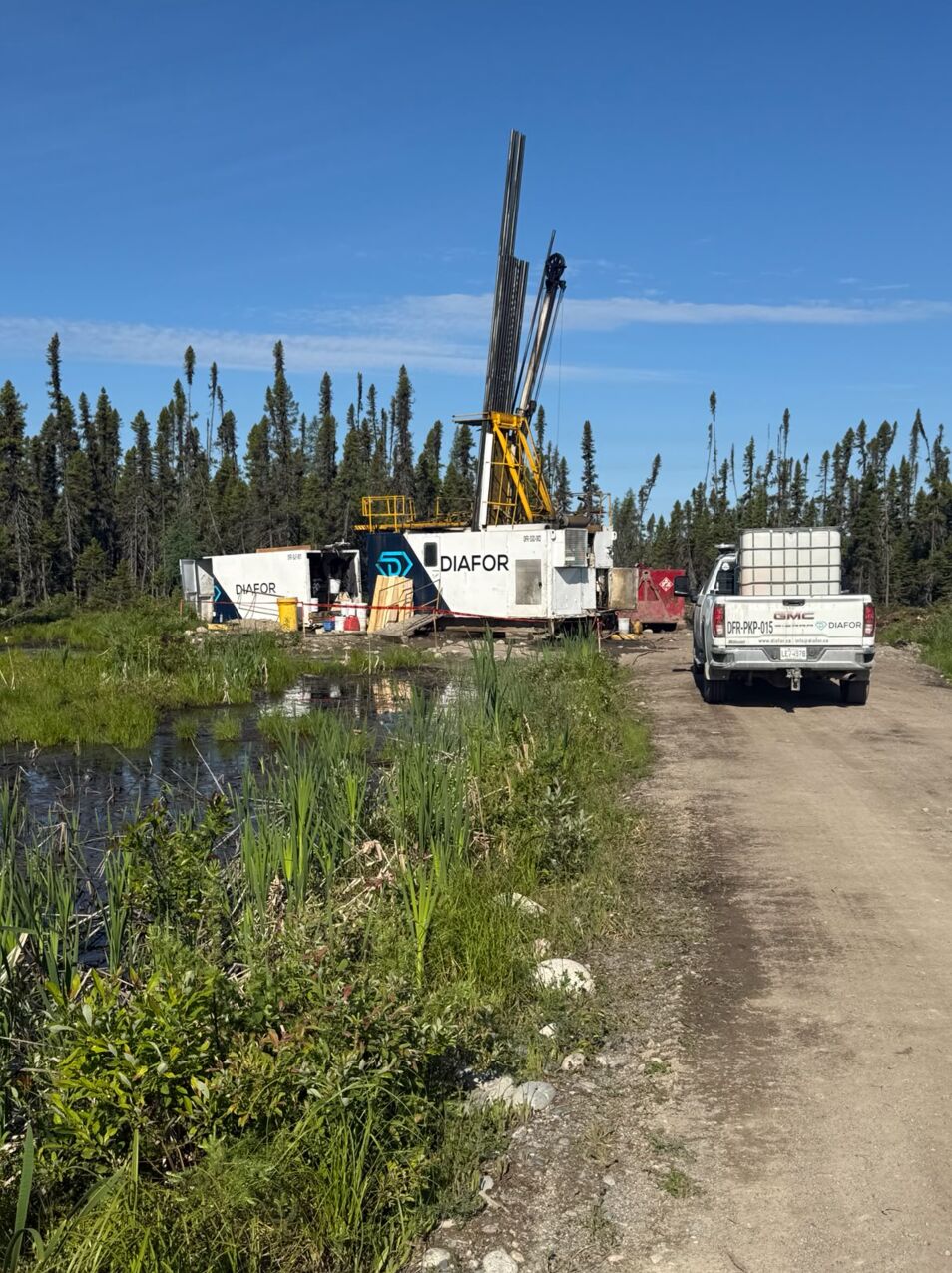
Standard Uranium announced finalised drilling and mobilisation plans for the inaugural drill programme on the Corvo Uranium Project under a three-year earn-in option agreement with Aventis Energy. The programme comprises approximately 2,500-3,000 metres across 8-10 drill holes targeting shallow high-grade basement-hosted uranium mineralisation, with drilling focusing on the highest-priority target area along the northern electromagnetic corridor, investigating the never-before-drilled Manhattan Showing (8.10% U₃O₈ at surface) coincident with modelled electromagnetic conductors. Uranium target zones lie within less than 200-300 metres below surface, with Aventis funding 100% of the programme to meet year-one expenditure requirements under the option agreement.
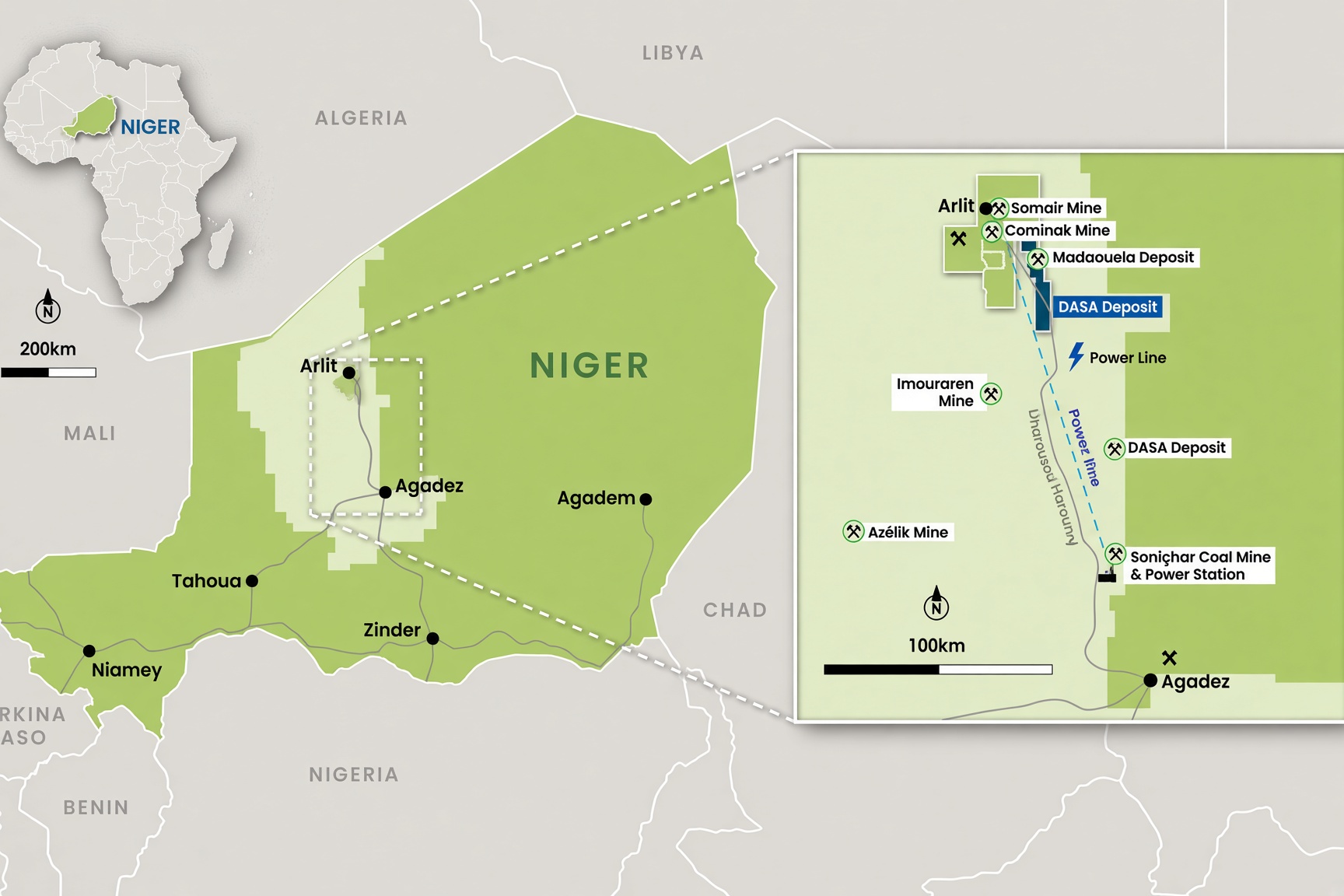
Similarly, Global Atomic announced a bought deal public offering for gross proceeds of C$25 million, with proceeds allocated to advancement of the company's Dasa Project and general working capital. The Dasa Project in Niger represents fully permitted, large, high-grade uranium development with commissioning currently estimated for H2 2027.
Why Production Cannot Respond Quickly
Chris Frostad, a uranium exploration veteran, recently articulated the sector's core dynamic:
"Demand is stable in this industry. It's very stable. It's well understood and it doesn't move around based on price at all."
The fundamental investment case for uranium derives from structural supply constraints that higher prices cannot rapidly overcome.
For idle operations considering restarts, challenges extend far beyond capital deployment pointing to operational challenges during restart attempts requiring reoptimisation of plant operations, upgrading mechanical systems, rehiring specialised personnel who have moved to other careers, and navigating updated regulatory requirements changed since facilities were mothballed.
For new uranium projects, timelines from exploration discovery to commercial production present another often-underestimated hurdle. Industry estimates suggest 12-14 years, though Frostad cautioned this figure can be misleading because past projects experienced periods where low uranium prices halted advancement. The permitting and licensing process alone consumes years, with environmental studies and regulatory approvals following sequential rather than parallel paths.
Interview with Chris Frostad, Market Commentator & CEO of Purepoint Uranium
Financing represents another critical bottleneck, with projects potentially stalled if capital cannot be secured. In higher interest rate environments, the capital intensity of uranium mine development has increased substantially compared to previous cycles.
Frostad noted, "All that does though is from an investor standpoint, it makes the case even better, right? Because we're actually producing a lot less uranium than you might think if you're looking at the wrong number."
Additionally, supply forecasts often include layered projections of mines at various stages—currently operating, restarting, under development, and planned—without accounting for execution risk, financing challenges, or regulatory delays. Frostad cautioned:
"The only stuff you can rely on right now to any degree is what's currently operating or someone who's actually given you a date as to when this stuff is actually going to show up and start coming out the other end. And very few have got that."
2026 Outlook: Policy Momentum and Market Tightening
The uranium sector enters 2026 with strengthening fundamentals driven by policy developments and supply-demand realities. Boss Energy's Dusci observed:
"The uranium price has been trending up in recent weeks, with the spot price climbing back above US$88/lb, up around 10 per cent since mid-December. The rise has been driven by strengthening demand visibility across global nuclear fuel markets. It also reflects accelerating Government policy momentum across the world aimed at encouraging strong growth in nuclear power generation as a source of reliable, clean baseload power to meet surging energy demand requirements over the coming decades."
Peninsula's Bauk echoed this sentiment, noting:
"The rise has been driven by strengthening demandvisibility across global nuclear fuel markets. It also reflects accelerating Government policy momentumacross the world aimed at encouraging strong growth in nuclear power generation as a source of reliable,clean baseload power to meet surging energy demand requirements over the coming decades.”
Laramide CEO Marc Henderson characterised the market dynamics:
"We don't need more demand announcements. We need supply and we need people focused on companies and governments to make this all happen."
With demand projected to reach 400 million pounds by 2040—more than double current consumption—and major producers showing declining reserve profiles, the market lacks clear pathways to meet requirements. This structural shortage will likely trigger utility vertical integration strategies reminiscent of 1970s supply panics when power plant sales outpaced fuel procurement capabilities. This describes how utilities might begin contracting earlier than traditional inventory metrics would suggest, driven not by current consumption needs but concerns about future availability.
The Investment Thesis for Uranium
- Supply-Demand Structural Deficit: Global uranium demand is projected to reach 400 million pounds by 2040—more than doubling current consumption—whilst primary production enters its first sustained deficit with actual mine output running 25-30% below theoretical capacity and mobile inventory measured in tens rather than hundreds of millions of pounds.
- Price-Inelastic Demand Dynamics: Unlike discretionary commodities, nuclear reactor fuel requirements are scheduled years in advance across 30-40 year operational commitments and remain stable regardless of price, meaning uranium price movements derive from supply scarcity rather than demand fluctuations.
- Severe Supply Response Constraints: Extended 12-14 year timelines from discovery to production combined with sequential permitting requirements, specialised workforce challenges, and capital intensity create barriers that higher prices cannot quickly overcome, particularly as Kazakhstan nationalisation eliminates the world's most prospective greenfield exploration opportunity.
- Operational Derisking and Production Visibility: Producers are advancing projects through critical milestones with permitting pathways defined through government programmes (US FAST-41, Saskatchewan regulatory approvals) providing visibility to construction commencement and production within 18-36 months whilst demonstrating technical improvements through reagent optimisation and revised wellfield designs.
- Infrastructure and Jurisdictional Advantages: Leading projects are concentrated in tier-one mining jurisdictions (Saskatchewan, Wyoming, South Australia) with established regulatory frameworks and infrastructure advantages including grid power access, existing processing facilities, and proximity to operating mills that provide competitive moats and capital efficiency.
- Margin Expansion and Cash Generation: Producers are achieving significant margins with operating costs in the US$20-30 per pound range whilst realised prices exceed US$70 per pound, supporting strong cash generation and balance sheet strengthening that positions companies to fund development through internal cash flows and strategic partnerships.
- Strategic M&A and Portfolio Diversification: Industry consolidation is emerging as a strategic pathway with horizontal M&A among developers required to create diversified 8-10 million pound annual producers aligned with utility procurement preferences, evidenced by strategic investments and major producer partnerships validating asset scarcity recognition.
TL;DR
The uranium sector presents a compelling investment opportunity driven by structural supply-demand imbalances that higher prices cannot quickly resolve. With global demand projected to reach 400 million pounds by 2040—more than double current consumption—and primary production entering its first sustained deficit, the market faces severe supply constraints. Actual mine production runs 25-30% below theoretical capacity, whilst extended 12-14 year development timelines, sequential permitting requirements, and Kazakhstan's uranium nationalisation create barriers to new supply. Producers are advancing critical projects through operational milestones including grid power connections, record low-cost production (US$20-30/lb operating costs versus US$70+/lb realised prices), and wellfield performance exceeding design assumptions. With uranium prices climbing above US$88/lb in January 2026 (up 10% since mid-December) on strengthening government policy momentum for nuclear power generation, the sector offers investors exposure to price-inelastic demand, margin expansion, and strategic scarcity in tier-one jurisdictions. The investment case rewards fundamental analysis and patient capital in companies demonstrating proven resources, infrastructure advantages, defined permitting pathways, and operational execution across Saskatchewan, Wyoming, and South Australia.
Frequently Asked Questions (FAQs) AI-Generated
Uranium mines operate at optimised throughput levels determined by ore grades and milling capacity and cannot be throttled up and down like oil wells. For idle operations, restarts require years to reoptimise plant operations, upgrade mechanical systems, rehire specialised personnel who have moved to other careers, and navigate updated regulatory requirements. For new projects, the timeline from exploration discovery to commercial production spans 12-14 years due to sequential permitting and licensing processes, with environmental studies and regulatory approvals following required order with limited shortcuts. Additionally, the capital intensity of uranium mine development has increased substantially in higher interest rate environments, creating financing bottlenecks that can stall projects regardless of uranium prices.
While various analyses suggest hundreds of millions of pounds of inventory exist, the mobile and accessible portion is far smaller than headline numbers suggest. Strategic inventories held by China and India aren't available to Western utilities, and significant volumes are tied up in the 18-24 month fuel cycle for conversion, enrichment, and fabrication. Additionally, the elimination of underfeeding—a process where excess enrichment capacity allowed putting additional pounds back into the system—has removed a secondary supply source. When accounting for these constraints, mobile inventory available to plug supply gaps is measured in tens of millions of pounds rather than hundreds of millions, representing a far more limited buffer than commonly understood.
Kazakhstan's legislative changes requiring 75-90% state ownership in any future uranium production joint ventures effectively nationalise uranium exploration, eliminating commercial viability for foreign explorers and removing the world's most prospective greenfield exploration opportunity. This occurs at precisely the moment global uranium demand enters sustained growth, with Kazakhstan representing approximately one-fifth of global primary production (60-70 million pounds annually through Kazatomprom). The nationalisation constrains future supply pathways beyond current production and fragments uranium markets geographically, as strategic inventories controlled by China won't return to Western markets and allocation of "middle ground" supply from Kazakhstan remains uncertain for Western utilities.
Unlike discretionary commodities such as oil or natural gas where consumption adjusts based on price, nuclear reactor fuel requirements are scheduled many years in advance and remain stable regardless of market conditions. Once a reactor is operational, utilities have customer commitments spanning 30-40 years with highly structured reload schedules that cannot be altered based on price fluctuations. The uranium price represents a relatively small component of overall nuclear power generation costs compared to conversion, enrichment, and fabrication expenses. This means uranium price movements are driven primarily by supply scarcity rather than demand growth—when supply tightens sufficiently, prices rise not because reactors need more uranium but because accessibility to fuel is dwindling, prompting utilities to contract earlier than traditional inventory metrics would suggest based on concerns about future availability.
Investors should focus on companies demonstrating proven resources in established jurisdictions (Saskatchewan, Wyoming, South Australia) with tier-one regulatory frameworks and supportive government policies. Infrastructure advantages including grid power access, existing processing facilities, and proximity to operating mills provide competitive moats and capital efficiency versus greenfield developments. Prioritise management teams demonstrating operational execution through successful permitting navigation, cost performance improvements, and systematic derisking milestones. Balance sheet strength and financing strategies matter, with preference for companies maintaining liquidity through production cash flows, strategic partnerships, or completed capital raises that avoid dilution at project inflection points. Consider diversification across development stages—near-term producers providing production exposure and cash flow, advanced development projects offering construction optionality within 18-36 months, and exploration plays in proven districts capturing discovery upside—whilst monitoring contracting strategies that balance uncontracted production exposure to uranium price upside with baseload revenues through utility partnerships using market-linked pricing structures.
Analyst's Notes





Subscribe to Our Channel











Stay Informed