Formation Metals Advances N2 With 30,000-Metre Drill Program and Multiple Growth Catalysts


Formation Metals: 870k oz Abitibi gold project at $10/oz targeting 2-3M oz through shallow open-pit drilling. Maiden resource Q3/Q4 2026. Prime takeout candidate.
- Formation Metals CEO Deepak Varshney positions the company as the next developer in Abitibi with the N2 gold project, currently trading at approximately $10/ounce against a historical resource of 870,000 ounces.
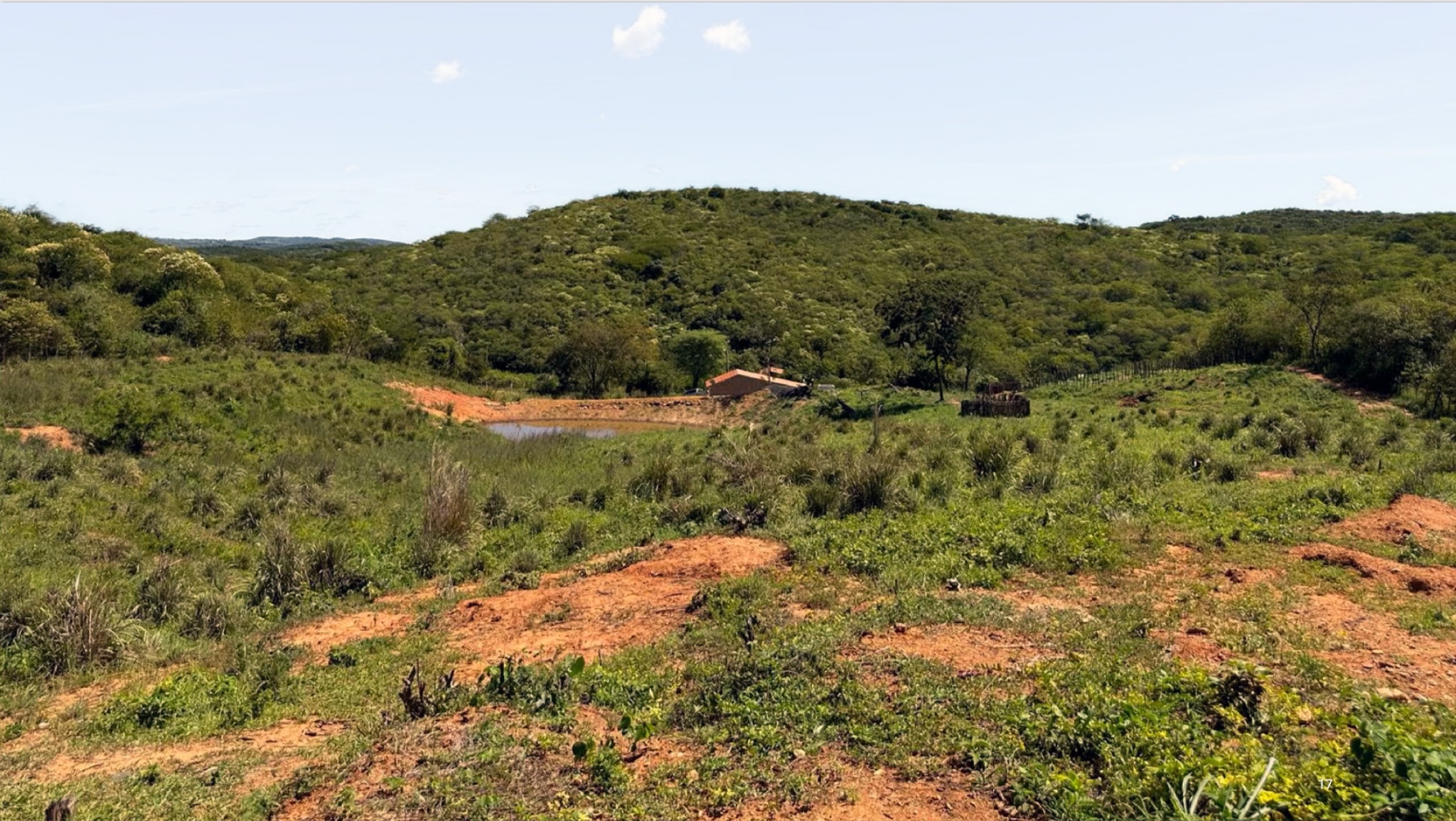
- The project features shallow, open-pit mineralisation with 8 km of strike, minimal overburden, and consistent 1-2 g/t grades across 30-meter thick zones.
- The company has $11 million in working capital funding 30,000 meters of drilling in 2026, with a maiden resource expected in Q3/Q4 and potential for 1.5-2 million ounces in the core A Zone alone.
- Strategic positioning near multiple toll mills (Matagami 20km, Casa Berardi 50km) and proximity to Maple Gold Mines makes N2 a prime takeout candidate, with estimated production costs under $2,000/ounce at a 4:1 strip ratio.
- The company plans to deliver a maiden resource this year, pursue a PEA in 2028, and either develop independently or position for acquisition by regional producers seeking shallow, high-margin gold.
Formation Metals is advancing the N2 gold project in Quebec's Abitibi greenstone belt, a district that has produced over 200 million ounces of gold in the past century. CEO Deepak Varshney, a geologist with deep capital markets experience through his family's Vancouver merchant bank, has assembled what he describes as a significantly undervalued asset trading at roughly $10 per ounce despite a historical resource of 870,000 ounces. The company's strategy centers on converting and expanding this historical resource through systematic infill and step-out drilling, with the ultimate goal of becoming either an independent producer or an acquisition target for established regional operators.
The Valuation Disconnect: Historical Resources and Market Perception
Formation Metals currently faces a valuation gap that Varshney attributes primarily to the historical nature of the resource estimate. The existing 870,000-ounce resource dates from the 1990s and was calculated using a $200 gold price pit shell with a half-gram cutoff grade. This historical resource was developed by major companies including Agnico, Cyprus, and Minnova, providing credibility to the geological foundation but limiting current market recognition without a modern, company-stamped resource estimate.
The project has been approached historically as an underground deposit, with significant focus on high-grade intercepts rather than the bulk-tonnage open-pit potential that Formation Metals is now demonstrating. The philosophical shift in exploration approach has revealed consistent, wide intercepts including 1.75 g/t Au over 30.4 metres and 0.95 g/t Au over 61.1 metres.
The company raised $19 million in flow-through financing during softer market conditions, which provided the capital to de-risk the project but created some share overhang. However, Varshney notes that much of the 2026 flow-through has now traded free, institutional holders have converted positions to hard-dollar funds, and the capital structure has cleaned up significantly since the November 2025 financing.
Geological Model: A Simple, Continuous Bulk-Tonnage System
The N2 project spans 8 kilometers of strike length, with three deformation zones in the northern section forming the primary focus. Of this 8-kilometer strike, 5 kilometers have been drilled historically with 55,000 meters of drilling, and the bulk of the historical ounces are concentrated within a 1.5-kilometer core zone known as the "A Zone". This concentration provides both opportunity and risk mitigation - the deposit is well-understood in the core area, reducing geological uncertainty, while significant strike extensions remain to be tested.
Formation Metals has completed approximately 15,000 meters of drilling in the A Zone without twinning any historical holes, instead focusing on gap drilling and step-outs at 50-100 meter intervals. This work has validated the historical model while revealing that previous operators did not sample systematically from top to bottom, instead cherry-picking high-grade zones suitable for underground mining at historical gold prices. The company's top-to-bottom sampling approach has identified multiple stacked vein sets: a primary zone, a secondary shallower vein set, and a tertiary deeper set.
The Drilling Strategy: Connect-the-Dots Expansion
Formation Metals has structured its 2026 program around 30,000 meters of drilling funded from existing treasury. The immediate 14,000-meter program targets the gap between the A Zone and the eastern zones (East zone and RJ East zone), which are separated by approximately 1.5 kilometers of virgin ground. Historical drilling demonstrated the same geology, geometry, and mineralisation style in these eastern zones, but operators never systematically tested the gap, likely because they were not interested in 2 g/t material.
The company's phased approach prioritises the highest-confidence drilling first. The current program focuses on infill and step-out drilling in the 1.5-kilometer core area and the eastern gap, which Varshney characterises as "connect the dots" drilling rather than true exploration. This distinction is important for risk assessment - the company is not searching for new discoveries but rather demonstrating continuity of known mineralisation in a well-understood geological setting.
Looking ahead, Varshney outlined an aspirational 70,000-meter total program if the company successfully raises an additional $8-10 million in Quebec flow-through financing. The flow-through structure provides a 45% tax credit lift, meaning a $10 million raise delivers $14.5 million in effective capital, funding another 40,000+ meters of drilling. This additional drilling would focus 20,000 meters to the west, where limited historical drilling intersected gold in similar geological settings, and increase confidence in the eastern extensions through tighter spacing.
Interview with CEO Deepak Varshney, Formation Metals
From 870,000 Ounces to Multi-Million Ounce Target
Formation Metals expects to deliver a maiden resource in Q3 or Q4 2026 based on the 14,000 meters of drilling completed in the core A Zone combined with historical data. The company's internal modeling suggests this 1.5-kilometer core zone alone could support 1.5-2 million ounces using a quarter-gram cutoff (versus the half-gram historical cutoff) and incorporating the multiple stacked vein horizons now recognised.
Varshney provided a clear volumetric case for resource expansion: the A Zone demonstrates 30-meter average thickness across 100-meter width, continuing for 1.5 kilometers of strike with multiple mineralised horizons. Beyond this core, an additional 3 kilometers of strike have been drilled at wider spacing showing consistent geology and mineralisation, and a further 3 kilometers of strike remain essentially untested to the west.
The company's target for the maiden resource is to demonstrate significant growth beyond the 870,000-ounce historical estimate within the core area, then systematically add ounces through step-out drilling to the east and west. Varshney articulated a vision of reaching 3+ million ounces across the 5-kilometer drilled strike length, with potential for additional discovery to the west along the 3-kilometer untested extension. This represents a potential 3-4x increase over the historical resource through a combination of cutoff optimisation, recognition of multiple stacked zones, and strike extensions.
Development Path: Toll Milling, Partnerships, or Independent Production
Formation Metals has positioned the project with multiple strategic optionalities given the mature infrastructure of the Abitibi district. The company identified several nearby toll milling options: Matagami to the north (20 kilometers), Casa Berardi to the west (50 kilometers), and the Sleeping Giant mine's mill (70 kilometers). This toll milling pathway provides a lower-capital route to cash flow, particularly attractive given the shallow nature of the mineralisation.
The company's internal preliminary economics suggest production costs under $2,000 per ounce with a strip ratio around 4:1, which would generate significant margins at current gold prices above $4,500 per ounce. Varshney emphasised that the lack of overburden and shallow mineralisation starting at 30 meters vertical depth provides a distinct advantage over deeper deposits in the region.
However, Varshney was candid about viewing N2 as a prime acquisition target, particularly for Maple Gold Mines which currently holds a 3 million ounce resource but faces deeper overburden (50-100 meters in some areas) compared to N2's surface exposure. Varshney suggested that combining the two deposits would create a standalone mining scenario where "you could use the gold we have already just in the A zone to pay back their mine" by accessing N2's shallow gold first before mining Maple's deeper material.
Similarly, the Matagami operation to the north presents partnership potential, as that operation will be mining progressively deeper ore after Glencore stripped the first 300 meters from their predecessor project. For Formation Metals, the strategic calculus is clear:
"Whether it's us or somebody else, people will produce it one day just because we're a unicorn. There isn't a lot of gold this shallow available in the area."
Timeline and Execution Towards Preliminary Assessment
The company has laid out a clear 24-36 month roadmap. The immediate milestone is delivering the maiden resource in the second half of 2026, which Varshney believes will trigger a re-rate as the market gains confidence in Formation Metals' own technical stamp on the project. The company currently has 39 holes awaiting assay results from backed-up laboratories, which will provide a steady news flow through 2026.
For 2027, the focus shifts to additional drilling funded by potential flow-through financing, targeting the 70,000-meter cumulative drilling scenario that would demonstrate continuity across 5 kilometers of strike and push the resource above 2 million ounces. By 2028, Formation Metals plans to advance a Preliminary Economic Assessment, marking the transition from exploration company to development-stage project. As Varshney noted,
"Pushing towards a PEA will be the really big catalyst in 2028. And then you really see us catch up to, you know, we'll go for a lot further than 10 bucks an ounce."
The company maintains just under $11 million in working capital, providing runway to execute the 2026 program without immediate financing pressure. This financial positioning allows Formation Metals to drill through market volatility and deliver results on its own timeline rather than being forced to raise capital in unfavorable market conditions.
The Investment Thesis for Formation Metals
- Valuation Anomaly: Trading at approximately $10/ounce against 870,000 historical ounces with clear pathway to 2-3+ million ounce resource through systematic infill and step-out drilling
- De-Risked Geology: 55,000 meters of historical drilling by major companies (Agnico, Cyprus, Minnova) validates geological model; Formation Metals' 15,000 meters confirms continuity without requiring high-risk exploration
- Exceptional Economics: Minimal overburden, 9-meter vertical starting depth, sub-$2,000/oz estimated production costs, and 4:1 strip ratio create high-margin profile at $4,500+ gold prices
- Strategic Positioning: Prime acquisition target for regional consolidators (Maple Gold Mines, Agnico Eagle, Matagami operators) seeking shallow, high-grade ounces to optimise mine sequencing
- Near-Term Catalysts: Maiden resource Q3/Q4 2026, continuous drill results from 39 holes in laboratory, potential flow-through financing for 40,000-meter expansion program
- Clean Capital Structure: 97 million shares outstanding with 60% held by management (9% family office), institutional investors, and strategic holders; flow-through overhang from 2025 financing largely cleared
- Macro Tailwind: Rising gold prices transform previously sub-economic bulk-tonnage deposits into compelling development opportunities; N2 purchased for $1/ounce now valued conservatively at $10/ounce
Macro Thematic Analysis
The dramatic rise in gold prices from $1,800 to over $4,500 per ounce has fundamentally revalued bulk-tonnage, shallow open-pit deposits that were previously considered marginal. Formation Metals' N2 project exemplifies this transformation - a deposit calculated with $200 gold pit shells and half-gram cutoffs in the 1990s now presents compelling economics at current prices with quarter-gram cutoffs. The elimination of overburden stripping through near-surface mineralisation starting at 9 meters depth creates immediate cash flow potential through toll milling arrangements, while the mature Abitibi infrastructure reduces permitting and development risks.
As Varshney noted, "at $4,000-5,000 gold, this thing will print cash." This macro shift is driving consolidation in established mining districts as producers seek shallow, low-strip-ratio ounces to optimise mine sequencing and extend mine life, positioning quality near-surface deposits like N2 as prime acquisition targets trading at significant discounts to replacement value.
TL;DR
Formation Metals offers leveraged exposure to a 870,000-ounce historical gold resource in Quebec's Abitibi district trading at $10/ounce with clear pathway to 2-3+ million ounces through systematic drilling. The N2 project features exceptional open-pit economics with minimal overburden, 9-meter starting depth, estimated sub-$2,000/oz production costs, and multiple toll milling options within 50km. With a maiden resource due Q3/Q4 2026 and $11 million in treasury funding 30,000 meters of drilling, the company is positioned either as an independent developer or prime acquisition target for regional consolidators seeking shallow, high-margin ounces.
Analyst's Notes





Subscribe to Our Channel








.png)
Stay Informed