Fraser Institute Ranking & 2025 Annual Report Strengthen IsoEnergy's Institutional Confidence in Tier-1 Uranium Exposure


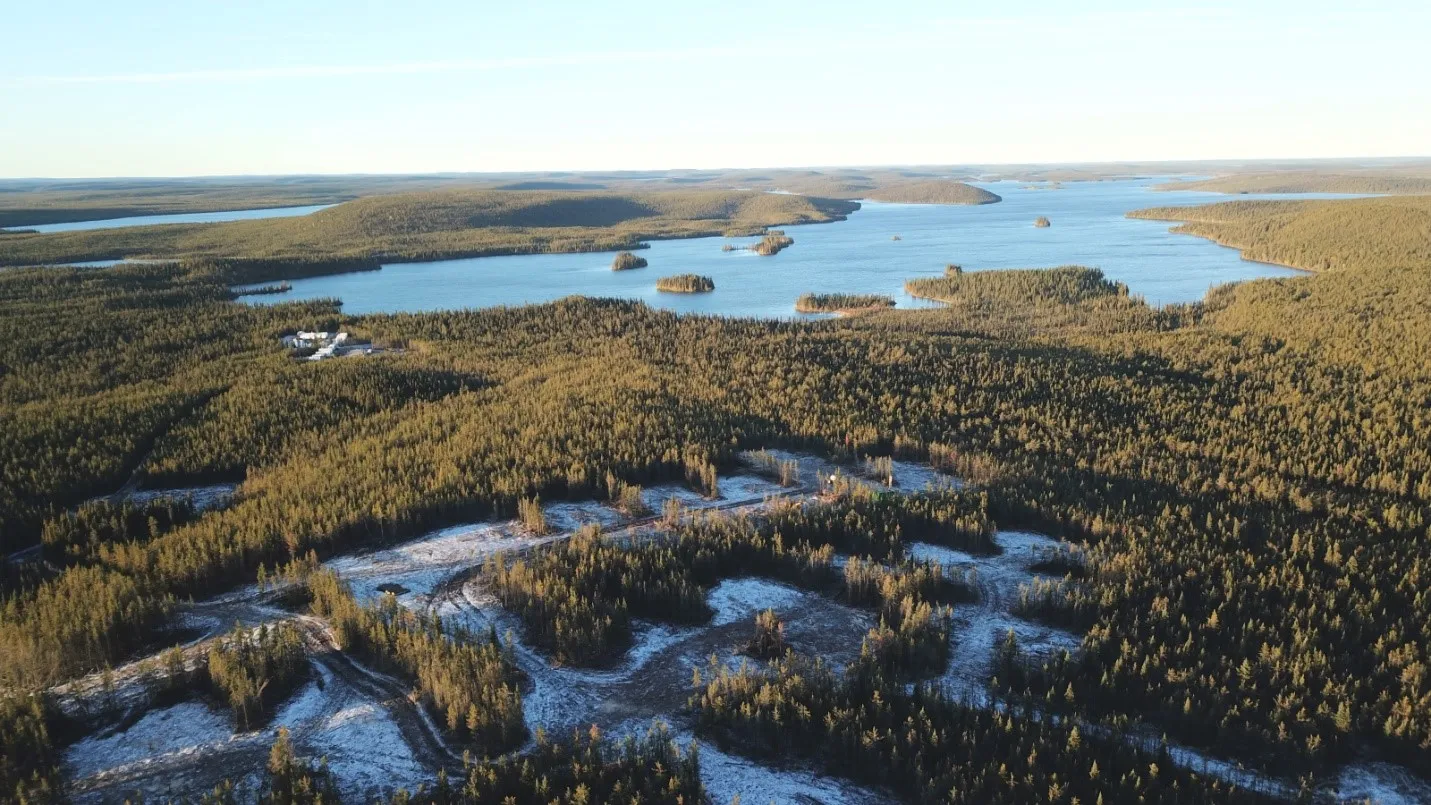
IsoEnergy holds top Fraser Institute rankings across Saskatchewan, Utah, and Australia, the world's highest-grade uranium resource at Hurricane, and C$155.6M in pro forma cash.
- IsoEnergy's core jurisdictions - Saskatchewan, Utah, and Western Australia - ranked among the highest globally in the 2026 Fraser Institute Annual Survey of Mining Companies, directly reducing the sovereign and permitting risk that institutional capital screens for first.
- Hurricane remains the world's highest-grade published Indicated uranium resource, at 48.6 million pounds U₃O₈ at 34.5% average grade, as confirmed in the Technical Report on the Larocque East Project dated August 4, 2022, placing IsoEnergy within the shrinking pipeline of Tier-1 replacement deposits capable of justifying development capital at current uranium prices.
- Utah restart optionality provides near-term production leverage. Key state and federal operating permits are in place, and a toll milling arrangement with Energy Fuels at the White Mesa Mill shortens the path to potential production by three to five years relative to greenfield development.
- The 2025 Form 40-F filing clarifies financial position and risk exposure, including reliance on uranium pricing, the absence of declared mineral reserves, and capital intensity sensitivities that remain material to any production decision.
- Jurisdictional quality, regulatory transparency, and infrastructure access increasingly determine which uranium developers attract step-change financing, and IsoEnergy's positioning on all three criteria is sourced and verifiable.
Jurisdictional Quality Is Now a Primary Capital Filter in Uranium Markets
The uranium market faces a structural supply gap extending toward 2040, driven by reactor restarts across Europe and Asia, the acceleration of small modular reactor programs, and rising baseload demand from artificial intelligence data center buildout. Not all uranium pounds carry equal investability, however. Institutional capital - particularly from fund mandates with ESG screens, sovereign risk limits, and permitting timeline requirements - increasingly applies a jurisdictional filter before evaluating grade or project economics.
The 2026 Fraser Institute Annual Survey of Mining Companies provides the most widely cited proxy for this filter. The survey produces two primary indices: the Investment Attractiveness Index (IAI), which combines mineral potential with policy perception, and the Policy Perception Index (PPI), which isolates regulatory risk from resource endowment. Institutional analysts use these rankings to justify discount rate assumptions in net present value (NPV) models. A Tier-1 jurisdiction typically provides top Fraser Institute survey rankings; jurisdictions with permitting uncertainty or rule-of-law risk may deter institutional capital allocation, a difference that materially impacts the project investment attractiveness even when resource grades are comparable.
Saskatchewan's Ranking & Hurricane's Strategic Value
Saskatchewan ranked 3rd globally on the Investment Attractiveness Index in the 2026 Fraser Institute Annual Survey. The province hosts the Athabasca Basin and maintains one of the more predictable permitting environments among major uranium-producing regions. For developers with assets in the Basin, that ranking supports a lower jurisdictional discount applied against project NPV and a broader eligible investor universe under institutional fund mandates that exclude higher-risk regions.
Philip Williams, Chief Executive Officer of IsoEnergy, frames the company's jurisdictional footprint as a differentiator:
"We're a diversified uranium explorer, developer, and near-term producer with assets in the top jurisdictions in the world - Canada, the United States, and Australia. We're focused on restarting production in the United States and on exploring our ultra-high-grade Hurricane deposit in Athabasca, Saskatchewan."
Hurricane Deposit - Resource Quality in Context
The Hurricane deposit contains 48.6 million pounds U₃O₈ at 34.5% average grade in the Indicated category, with an additional 2.7 million pounds at 2.2% in the Inferred category, at approximately 325 metres depth with no surface water cover, as set out in the Technical Report on the Larocque East Project, effective July 8, 2022. No mineral reserves have been declared, meaning the deposit has not yet been assessed under the economic and technical thresholds required to support a formal production decision.
The distinction between Indicated and Inferred resources is material for institutional disclosure purposes. Indicated resources carry sufficient drilling density and geological continuity to support pre-feasibility-level economic studies; Inferred resources reflect lower confidence and cannot form the basis of a reserve estimate without further drilling.
Higher uranium grade reduces the tonnes of ore that must be processed per pound of U₃O₈ produced, which reduces milling costs, haulage volumes, and unit operating cost per pound. Hurricane's grade, the highest of any published Indicated resource globally as of the August 2022 technical report, positions it at the low end of anticipated unit cost, contingent on development proceeding.
Philip Williams is direct about the asset's long-term strategic value:
"When you think about the world and where the better projects are, it's unquestionable that Hurricane rises to the top of that list for a lot of different companies... We're not ever looking to offload Hurricane. It's a tremendous asset, and our job is to maximize the value of it."
Utah Restart Optionality & Permitted Infrastructure
Utah ranked 12th globally on the Policy Perception Index in the 2026 Fraser Institute Annual Survey. IsoEnergy's Utah assets - the Tony M, Daneros, and Rim conventional uranium and vanadium mines - are past-producing operations with key state and federal operating permits in place and on standby. The permitted status of these assets as providing a time savings of three to five years relative to greenfield development, which directly affects internal rate of return (IRR), payback period, and capital at risk for any production scenario.
IRR measures the annualized return on capital deployed into a project. A shorter path to first production compresses the capital-at-risk period, improving IRR even when total capital costs are comparable to a greenfield project. Philip Williams confirms that a 2,000-tonne bulk sampling program is currently underway at Tony M, with completion targeting April 2026:
"We're back in mining at Tony M. The detail is that we're doing a bulk sample, which really just represents a small-scale mining exercise. We're taking about 2,000 tonnes out of the mine and sending it down the road to the White Mesa Mill for processing."
Near-term production activity is limited to this bulk sample exercise and does not constitute commercial production. Any broader restart decision remains subject to uranium spot price, long-term contracting conditions, and working capital availability.
Toll Milling Arrangement with Energy Fuels
Toll milling is an arrangement under which a mining company delivers ore to a third-party processing facility in exchange for a per-tonne processing fee, avoiding the capital cost of building a standalone mill. For IsoEnergy, the operative toll milling arrangement with Energy Fuels at the White Mesa Mill eliminates what would otherwise be a capex requirement measured in the hundreds of millions of dollars for a conventional uranium processing facility, materially reducing the financing requirement and dilution risk associated with a restart decision.
Philip Williams quantifies the strategic advantage this creates:
"The White Mesa Mill is the only operable conventional uranium mill in the United States today. It's the mill that took ore from all of our mines historically, and it's up and running... We love the circumstance that we're in because it allows us a ton of flexibility, we can move ahead very quickly because the mill is operating and running, and we don't have to bear the costs of starting it up and maintaining it."
Australia Expansion & Geographic Diversification
South Australia ranked 4th globally on the Investment Attractiveness Index in the 2026 Fraser Institute Annual Survey; Western Australia ranked 6th on the IAI and 3rd on the Best Practices Mineral Potential Index. Diversification across Tier-1 jurisdictions reduces single-asset risk, single-jurisdiction risk, and political concentration risk — three factors that institutional fund mandates evaluate independently when assessing a uranium developer's overall risk profile.
Planned Toro Energy Acquisition
IsoEnergy announced the planned acquisition of Toro Energy on October 12, 2025 which remains subject to shareholder, regulatory, court, and stock exchange approvals. Upon completion, the acquisition would add exposure to carbonate-hosted uranium deposits in Western Australia, broadening the development beyond the Athabasca Basin and providing deposit diversification.
Philip Williams identifies the Australian assets as a distinct strategic pillar:
"The fourth thing would be Australia. We have an acquisition that we announced last year of Toro Energy - a tremendous project in Western Australia, an overlooked project for a whole host of different reasons. Together, the two companies can really drive that project forward."
The acquisition adds medium-term development optionality, subject to transaction completion and further technical work on the Australian assets.
The 2025 Form 40-F: What Institutions Actually Read
IsoEnergy's primary resource disclosures have historically been prepared under Canada's NI 43-101 standards. The Form 40-F filing subjects those disclosures to SEC S-K 1300, which requires a higher threshold of technical verification before resources can be publicly reported. IsoEnergy has not declared mineral reserves under either standard. No resource has been assessed as economically extractable under confirmed technical and economic conditions.
Financial Position & Funding Sensitivity
The company holds approximately C$155.6 million in pro forma cash and equivalents - reflecting the planned combination with Toro Energy based on both companies' public disclosures as of September 30, 2025, adjusted for subsequent events. The equity portfolio, valued at approximately C$55.8 million as of the February 18, 2026 market close, comprises positions in smaller companies acquired through non-core asset disposals. The company carries negative operating cash flow, consistent with its pre-production status, and is dependent on external financing for development activities.
NexGen Energy holds a 30.0% pro forma ownership position in IsoEnergy. Philip Williams identifies the institutional shareholder base as a structural financial signal:
"We have a large shareholder in NexGen, they own 30% of our company... The institutional interest in our company is mushrooming, and repeatedly hearing people saying they're in, or coming in, or asking how to get in, that is a testament to the story as we've built it and as we're telling it."
The primary valuation metric for pre-production uranium developers is enterprise value per pound of U₃O₈ in the resource (EV/lb), which allows capital-market participants to compare resource exposure across developers on a common basis. Dilution risk remains material if uranium prices do not sustain above restart and development thresholds.
Risk Register: What Could Falsify the Thesis
Commodity risk. A sustained decline in uranium spot prices below the restart threshold for Utah operations, or a delay in long-term contracting by US utilities, would extend IsoEnergy's pre-production timeline and increase financing requirements.
Development risk. The technical complexity of Athabasca Basin underground mining, including depth, ground conditions, and water management, can generate capital cost inflation and schedule delays that compress IRR. No feasibility study has been completed for Hurricane.
Financing risk. Negative operating cash flow and the absence of mineral reserves mean the company cannot self-fund development. Equity dilution at unfavorable valuations remains a risk if capital market conditions deteriorate.
Regulatory & ESG risk. Aboriginal title and consultation issues are identified as a general business risk in IsoEnergy's forward-looking disclosures. Environmental permitting timelines in Utah and Australia can delay development schedules independently of technical or economic conditions.
The Investment Thesis for IsoEnergy
- Saskatchewan (3rd), South Australia (4th), and Western Australia (6th) on the 2026 Fraser Institute IAI collectively reduce the jurisdictional discount applied to IsoEnergy's asset base in institutional NPV models, expanding the eligible investor universe under screened fund mandates
- Hurricane's 34.5% average Indicated grade, confirmed in the August 2022 Larocque East Technical Report, positions it within the smallest subset of the global uranium development pipeline where ultra-high grade materially reduces anticipated unit operating cost.
- Three-to-five year timeline advantage for the permitted Utah asset base relative to greenfield development, shortening IRR duration and reducing capital-at-risk for any restart scenario.
- The operative toll milling arrangement with Energy Fuels at White Mesa removes the largest single capital requirement for a Utah restart, preserving balance sheet flexibility for Hurricane development in parallel.
- Pro forma cash of approximately C$155.6 million and an equity portfolio of C$55.8 million provide execution runway without near-term financing pressure.
- NexGen Energy's 30.0% pro forma ownership position provides a verifiable signal of informed institutional conviction that is independently confirmable from public filings.
The 2026 Fraser Institute rankings and the 2025 Annual Report do not change uranium fundamentals. What they clarify is capital defensibility. For institutional allocators, the combination of Tier-1 jurisdictional positioning and transparent SEC-standard disclosure increases the probability of capital allocation independent of short-term uranium price movements. For sophisticated retail investors, the critical distinction is that high-grade geology is a necessary but not sufficient condition for investment value, jurisdiction, financing structure, and infrastructure access determine which developers survive a price cycle.
IsoEnergy's investment case rests on the verifiable combination of top-ranked jurisdictions across three countries, the world's highest-grade published Indicated uranium resource as of the August 2022 technical report, near-term production activity at Tony M targeting April 2026 bulk sample completion, and a balance sheet that does not require immediate dilution to sustain operations. The case remains conditional on uranium pricing and disciplined execution, neither of which is guaranteed, but the structural inputs that institutional capital screens for are in place and sourced.
TL;DR
IsoEnergy presents a jurisdictionally diversified uranium development case anchored by three distinct strengths. Saskatchewan (3rd globally on the 2026 Fraser Institute IAI) hosts Hurricane, the world's highest-grade published Indicated uranium resource at 34.5% average grade and 48.6 million pounds U₃O₈, a grade profile that materially compresses anticipated unit operating costs. In Utah, past-producing mines carry key state and federal permits already in place, a toll milling arrangement with Energy Fuels at White Mesa eliminates the largest single capital requirement, and a bulk sampling program at Tony M is targeting completion by April 2026. A planned acquisition of Toro Energy adds Western Australia exposure. Pro forma cash of approximately C$155.6 million, an equity portfolio of C$55.8 million, and a 30.0% ownership stake held by NexGen Energy collectively reduce near-term financing pressure and provide an independently verifiable institutional conviction signal. Material risks remain, including the absence of declared mineral reserves, negative operating cash flow, and uranium price dependency.
FAQs (AI-Generated)
Hurricane contains 48.6 million pounds U₃O₈ at 34.5% average Indicated grade — the highest of any published Indicated uranium resource globally as of the August 2022 Technical Report. Grade at this level materially reduces the tonnes of ore requiring processing per pound of U₃O₈ produced, compressing anticipated milling costs, haulage volumes, and unit operating cost per pound. No mineral reserves have been declared, meaning development remains conditional on economic assessment.
The Fraser Institute Annual Survey of Mining Companies is the most widely cited proxy for jurisdictional risk among institutional allocators. Analysts use Investment Attractiveness Index and Policy Perception Index rankings to justify discount rate assumptions in NPV models. Higher-ranked jurisdictions support lower jurisdictional discounts against project NPV and a broader eligible investor universe under fund mandates with sovereign risk screens. Saskatchewan (3rd), South Australia (4th), and Western Australia (6th) on the 2026 IAI directly expand IsoEnergy's addressable institutional capital pool.
Toll milling allows IsoEnergy to deliver ore to Energy Fuels' White Mesa Mill — the only operating conventional uranium mill in the United States — for a per-tonne processing fee, eliminating what would otherwise be a standalone mill capital requirement measured in the hundreds of millions of dollars. Combined with existing state and federal operating permits, this arrangement shortens the path to potential production by three to five years relative to greenfield development, compressing capital-at-risk duration and improving IRR comparability.
NexGen Energy's 30.0% pro forma ownership position functions as an independently verifiable institutional conviction signal. NexGen is itself a Tier-1 Athabasca Basin uranium developer with deep technical and market credibility, meaning its sustained ownership stake can be read by institutional analysts as informed peer validation of IsoEnergy's asset quality and strategic direction — a signal that is confirmable directly from public filings.
Four risk categories are material. Commodity risk: a sustained decline in uranium spot prices below restart thresholds would extend pre-production timelines and increase financing requirements. Development risk: Athabasca Basin underground mining involves technical complexity — depth, ground conditions, water management — that can drive capital cost inflation, and no feasibility study has been completed for Hurricane. Financing risk: negative operating cash flow and the absence of declared mineral reserves mean the company cannot self-fund development, leaving equity dilution as a live risk if capital market conditions deteriorate. Regulatory risk: Aboriginal consultation requirements and environmental permitting timelines in Utah and Australia can delay development independently of technical or economic conditions.
Analyst's Notes





Subscribe to Our Channel









Stay Informed