




G Mining Ventures Self Funds Oko West Build Becoming a Tier One Gold Asset


G Mining Ventures (TSX:GMIN) CEO Louis-Pierre Gignac on how TZ cash flow funds Oko West, a 500,000 oz expansion target and Gurupi PEA catalysts.
- Tocantinzinho (TZ) is tracking to a stronger second half on higher grades and throughput against 2026 guidance of 160,000 to 190,000 oz.
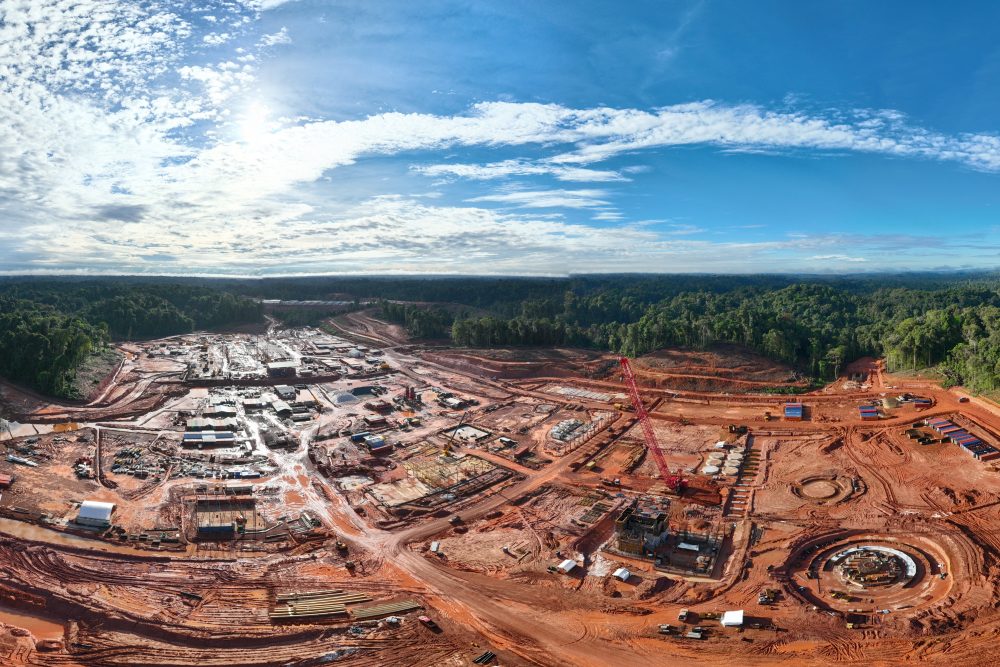
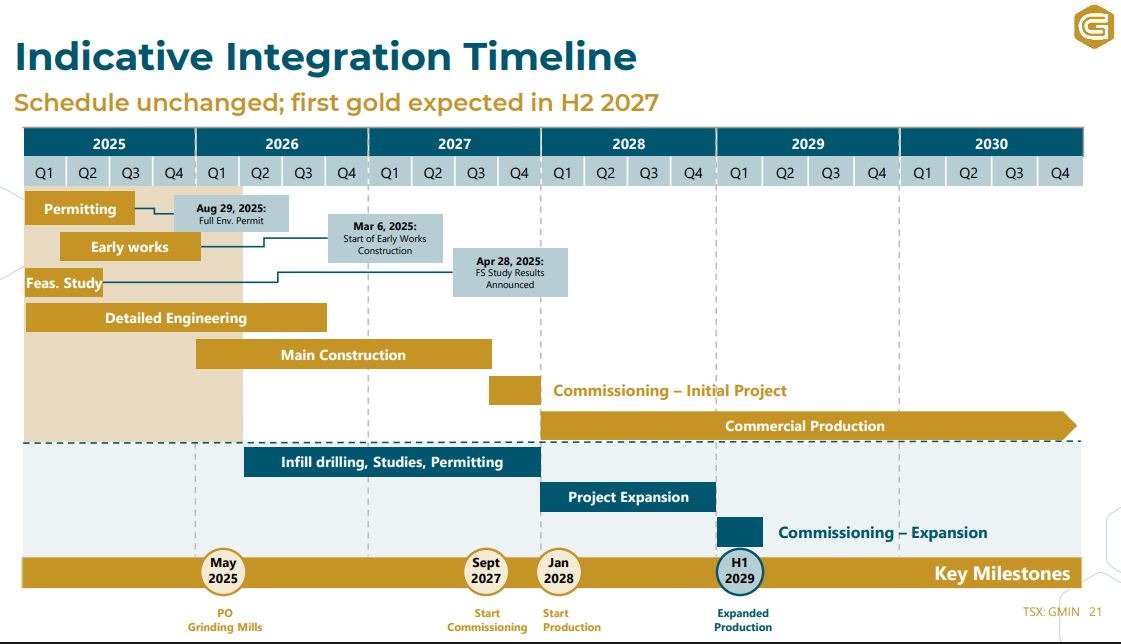
- Oko West had 44% of its initial project capital spent by the end of June, with first gold targeted for the second half of 2027.
- G Mining reports $1.288 billion of funding sources against $550 million of remaining Oko West capital, with its $350 million revolver undrawn.
- The planned Oko expansion adds about 2 million tonnes of processing capacity as the combined project targets 500,000 oz a year.
- At Gurupi, an updated resource and a preliminary economic assessment (PEA) are due before year-end, with management earmarking a project of about 200,000 oz a year.
G Mining Ventures Corp. (TSX:GMIN | OTCQX:GMINF) has a producing mine in Brazil, a large project under construction in Guyana and an exploration asset that could be its next development. President and CEO Louis-Pierre Gignac discussed all three in an interview. His central message was that cash flow from the Tocantinzinho (TZ) mine is paying for Oko West. Management now wants to expand Oko after acquiring neighbouring G2 Goldfields. Company guidance assumes gold at $4,000 per ounce. All figures are in US dollars unless stated.
Second-Half Recovery Sets Up 2027
Gignac said the first half of 2026 was always going to be the weaker half at TZ. The mine is now tracking well against guidance through the third quarter, with higher grades and good throughput. He said the higher volumes should lower all-in sustaining costs (AISC).
Mine sequencing explains the shift, as the widening pits reach higher-grade zones. The company reported production of 31,846 oz in the first quarter and 36,845 oz in the second. That totals 68,691 oz against 2026 guidance of 160,000 to 190,000 oz, so the second half carries the year.
Costs have moved higher. Gignac said the company made a slight adjustment to cost guidance for a stronger Brazilian currency and higher fuel prices. The 2026 AISC guidance went up to $1,330-1,544 per ounce from $1,230-1,444 per ounce. An active hedging programme on the Brazilian currency takes some of the bite out as Gignac stated.
For 2027, guidance is 200,000 to 235,000 oz at $977 to $1,146 per oz. Gignac cited higher-grade pockets in the intrusive orebody as the pit widens. He also cited a project to expand tailings pumping capacity, which he called a bottleneck for the plant. That should allow more tonnage next year.
Funding Oko West From Internal Cash Flow
Gignac said the company has funded Oko construction from cash and TZ cash flow, and that it has repaid the debts it had. The $350 million corporate revolver is undrawn, though Gignac said the company may draw on it temporarily. 44% of Oko capital expenditure had been spent by the end of June, and he put first gold about 12 months away. About $423 million spent, $628 million committed and 28% overall progress on an earned value basis. Commercial production is targeted for January 2028.
The company reports $1.288 billion of sources. These are cash, projected TZ free cash flow to the end of 2027 at $4,000 gold, and the revolver. Against that sit $550 million of remaining Oko West capital and $88 million of corporate and exploration spending. The projected liquidity surplus is about $650 million.
Gignac also cited the company's normal course issuer bid (NCIB), which lets it buy back shares on dips that do not make sense to management. He called now the best time to buy, before Oko is finished and the company re-rates. He said the shares trade below net asset value (NAV), which he attributed to the development-stage asset.
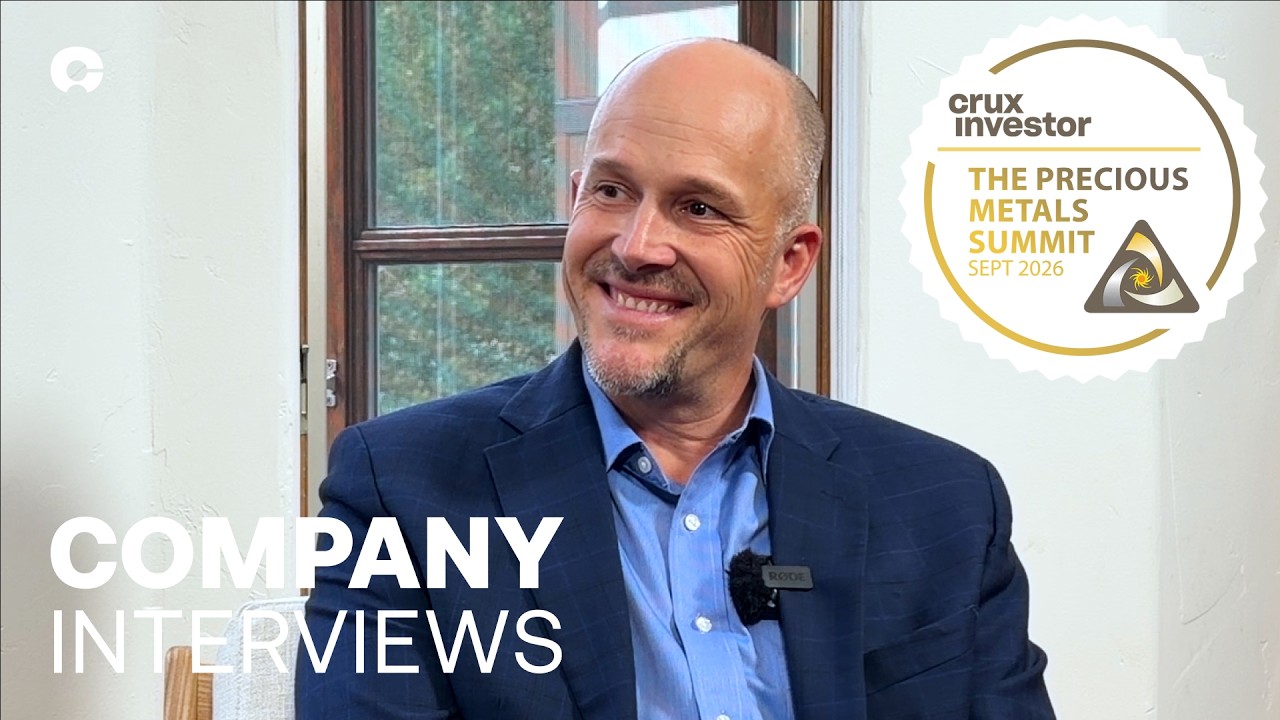
Interview with Louis-Pierre Gignac, CEO of G Mining Ventures
Combining Oko West & Ghanie
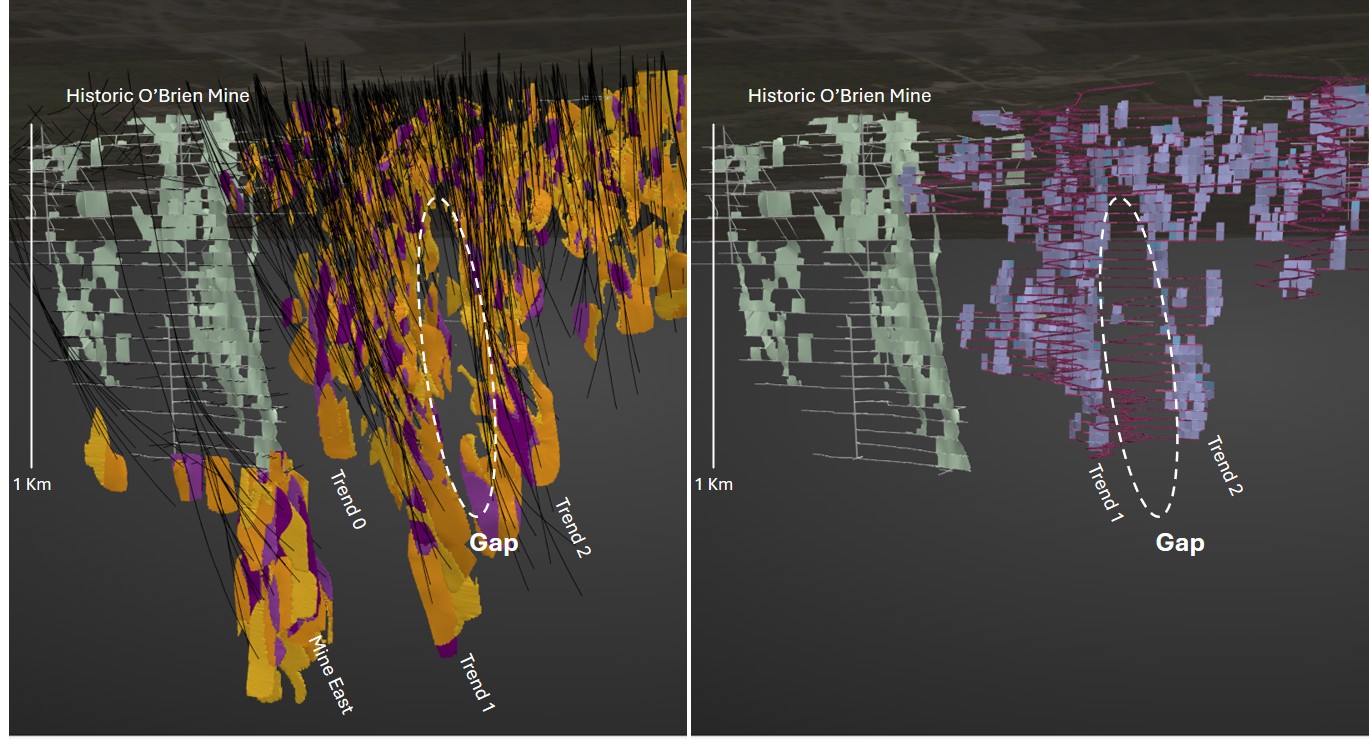
Gignac called the G2 Goldfields deal an obvious synergy, because both sides sit on the same deposit. Ghanie and Oko Main now join Oko West, giving almost 5 km of strike length. He described it as close to a contiguous pit, with two main underground mines now forming one project.
The plan adds about 2 million tonnes of processing capacity to the project designed for Oko West. Gignac expects low capital cost because the supporting infrastructure is already part of the current build. The company notes that the G2 Goldfields resources are historical estimates under National Instrument 43-101, which GMIN intends to upgrade.
The interviewer asked whether the combined project would follow the usual sequence of scoping, pre-feasibility and feasibility studies. Gignac pointed to the feasibility study (FS) that already exists for Oko West. The company is drilling the combined resource to feasibility level to convert inferred resources into reserves. It will then procure equipment for the expansion.
"We have a [feasibility study] for Oko West. We're 12 months away from first gold. So the point is we don't want to slow that down and we already know what we need to do."
He said the company's preliminary economic assessments (PEAs) are typically more in-depth than average, which lets it move straight to an FS. The expansion adds another year of construction, which he places in 2029.
Building Toward Tier-One Scale
Gignac said the company is optimising Oko for scale, not early cash flow. He wants the project at the 500,000 oz production level, illustrating combined Oko output as about 350,000 oz from Oko West and about 150,000 oz from Ghanie:
"We see this as becoming what everyone would call a tier one asset. That's 500,000 oz, at least 10 years of a mine life, bottom half of the cost curve, good jurisdiction, and [exploration] upside. That's checking all the boxes."
That study is the next milestone. Gignac said ten drills are turning at Oko, all on infill drilling. The company plans 55,000 m from now to year-end. The results will feed the updated FS in mid-2027. Gignac said G2 did not have time to fully explore its land, so much of the larger land package is unexplored. The company reports 362 km² at Oko.
Gurupi: Discovery Upside With Little Value Attributed
The Gurupi project in Brazil holds 1.8 Moz Indicated at 1.31 g/t Au and 0.8 Moz Inferred at 1.29 g/t Au. Gignac said very little value is attributed to it. His own rough split, in US dollars, was about $3 billion for TZ and $7 billion for Oko.
An injunction on Gurupi was lifted last year, and drilling has resumed after none since 2019. Gignac said this year's drilling has extended the known deposits, and all continue at depth or along strike. Drilling northwest along the Chega Tudo trend found mineralisation over another 5 km of strike. A 16 September news release reported maiden Grodiocal drilling, including 23.0 m at 1.97 g/T Au. The company noted that targets outside the current resource remain conceptual.
An updated resource estimate is due before year-end, followed by a PEA. Gignac called the PEA more of a marker than a final size. He is earmarking a project between TZ and Oko in scale, at about 200,000 oz a year or somewhat more, with at least 10 years of mine life. He sees the PEA as the catalyst for the market to recognise value. Permitting has started, aiming for a permitted project by mid-2028 or 2029.
Investment Thesis for G Mining Ventures
- TZ is expected to deliver a stronger second half. Output needs to lift toward 2026 guidance of 160,000 to 190,000 oz. Watch third-quarter production and AISC against the revised range of $1,330 to $1,544 per oz.
- Oko West construction is funded. G Mining owns $1.288 billion of sources against $550 million of remaining capital and $88 million of corporate spending. Watch any draw on the $350 million revolver.
- The Oko expansion targets 500,000 oz a year. It depends on drilling that converts inferred resources into reserves. Watch the updated feasibility study expected in mid-2027.
- Gurupi offers a near-term catalyst. An updated resource and a PEA are both targeted before year-end. Watch the resource size, the PEA's production scale and the environmental and social impact assessment (ESIA) filing.
- Capital returns are an option. The NCIB can be used on dips, and Gignac sees about $1.2 billion of cash flow in 2028 at $4,000 gold.
- Investors should weigh the risks. TZ costs are exposed to the Brazilian currency and fuel. Oko was 28% complete at 30 June, and the expansion relies on historical G2 resource estimates.
Macro Thematic Analysis
Gold at current prices is changing how intermediate producers weigh growth. Gignac argued that discovery is cheaper than acquisition, stating M&A suits a company that needs production soon.
"We've grown through to an existence through M&A obviously, but it's also picking the right projects. I think we've always been clear that a lot of the projects that have interested us is because we had visibility on getting permits and be able to act very quickly."
He added that exploration can go too far if it only extends a mine to year 15, though it is worth knowing the ounces are there. At these gold prices, finding more gold and putting it on the balance sheet is accretive.
Permit visibility is the second lever. Gignac said the company has been drawn to projects where it could see a route to permits. He said adding five years to a financial model destroys value quickly. Oko is one of only four tier-one development assets globally and the only one that is fully permitted and under construction. That is the company's own claim.
Scale is the third lever. Gignac said long-term holders such as La Mancha remain supportive. He said Fidelity is now the second-largest shareholder. Generalist investors are arriving as the company grows, because they need sufficient size to fit their mandates. He said the company is starting to get there.
TL;DR
G Mining Ventures (TSX:GMIN) says cash flow from its Tocantinzinho mine is funding the Oko West build in Guyana. CEO Louis-Pierre Gignac said 44% of Oko capital expenditure had been spent by the end of June, and first gold is targeted for the second half of 2027. The company wants to expand Oko toward 500,000 oz a year after acquiring G2 Goldfields, with an updated feasibility study due in mid-2027. At Gurupi, an updated resource and a PEA are targeted before year-end. Risks include higher Brazilian costs, a second-half-weighted TZ and reliance on historical G2 resource estimates.
FAQs (AI Generated)
Analyst's Notes





Subscribe to Our Channel


Stay Informed






















