




Ras Tanura Strike Lifts Brent Above $114 as Thin Buffers Favor Refiners



US distillate stocks are 9% below their five-year average, while Gulf Coast refineries run at 95.9% utilization, limiting room to increase diesel output.
- Brent rose 0.7% to $114.68 a barrel and West Texas Intermediate (WTI) gained 1.42% to $101.32 on October 28, 2026, after Houthi militants struck Saudi Arabia's Ras Tanura refinery.
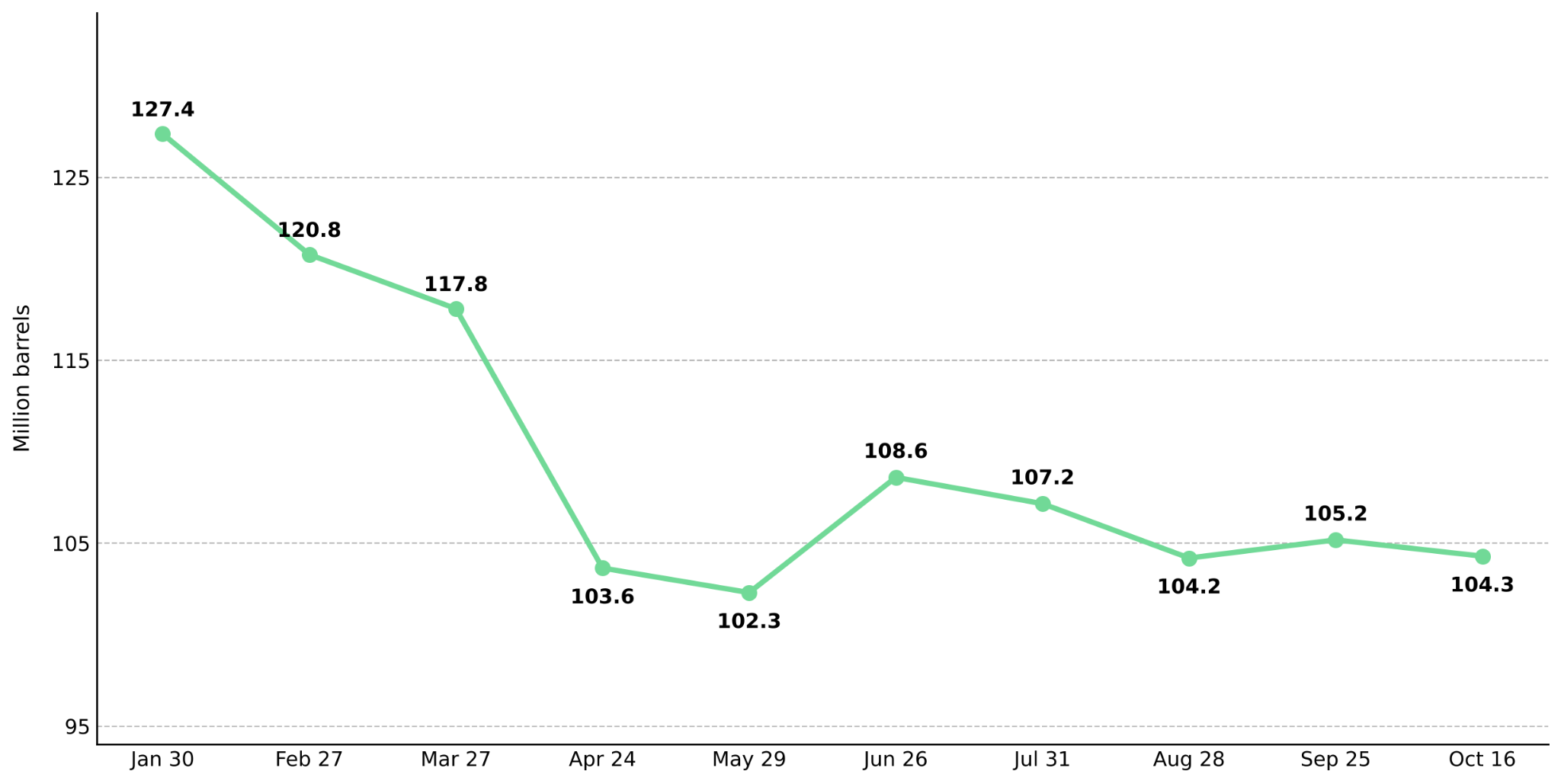
- US distillate stocks rose 1.7 million barrels to 104.3 million in the week ending October 16, 2026, but remained 9% below the five-year average, supporting diesel refining margins.
- The Strategic Petroleum Reserve (SPR) fell to 282.7 million barrels from 408.6 million a year earlier, a 30.8% drawdown that removes the release capacity used in past Gulf shocks.
- US operable refining capacity slipped to 18.044 million barrels a day from 18.160 million, with utilization at 93.4%, limiting spare capacity to increase diesel output.
- A return of US distillate stocks to their five-year average could narrow diesel price spreads and reduce refining margins.
Missile Strike Raises Saudi Crude Export Risk
Brent crude rose 0.7% to $114.68 a barrel and WTI gained 1.42% to $101.32 after Yemen's Houthi militants claimed a ballistic missile strike on Saudi Arabia's Ras Tanura refinery, raising concerns over crude exports. Saudi Arabia said it contained a fire near the export terminal, although further disruptions could threaten crude shipments.
Ras Tanura is Saudi Arabia's largest refinery and crude export terminal, putting crude shipments rather than production at risk. A sustained loading disruption could raise crude prices beyond the modest initial increase. With US distillate stocks 9% below their five-year average, limited diesel supply could support product prices, while higher crude costs may pressure refining margins.
9% Distillate Deficit Supports Diesel Prices
US distillate stocks rose 1.7 million barrels to 104.3 million but remained 9% below the five-year average. Inventories fell from 127.4 million barrels in January to 102.3 million in late May and have recovered only 2 million since, leaving stocks low ahead of winter. Refineries processed 16.6 million barrels a day at 93.4% utilization, limiting room to increase diesel output and supporting refining margins.
US operable refining capacity fell to 18.044 million barrels a day from 18.160 million a year earlier, limiting additional fuel production. The SPR declined to 282.7 million barrels from 408.6 million, leaving less crude available for emergency releases. President Donald Trump said the war with Iran would end on his terms and insisted Tehran must not acquire nuclear weapons, leaving the timing of a resolution uncertain and Gulf oil shipments exposed to further disruption.
High Refinery Utilization Limits Winter Supply Growth
High refinery utilization and limited autumn restocking restrict the ability to rebuild US distillate inventories ahead of winter, potentially keeping diesel price spreads elevated despite changes in crude prices. ING analysts said markets would likely have to wait until after the November 3 US midterm elections for further developments in the Iran conflict.
Lower Crude Prices Could Widen Refining Margins
US Gulf Coast refiners with diesel-heavy production can benefit when diesel prices rise faster than crude costs, widening refining margins. Crude producers and oil-tracking funds face potential losses as the conflict premium fades, while airlines and trucking companies face margin pressure from elevated fuel costs that cannot be passed on to customers.
Gulf Coast refineries operated at 95.9% utilization, up from 92.0% a year earlier, limiting room to increase diesel output and potentially supporting diesel prices. ANZ Research analysts said crude supply risks were increasing, which could raise refiners' input costs and reduce the benefit of higher diesel prices.
Further strikes and the November 3 midterm election outcome remain uncertain, making the 9% US distillate inventory deficit a more measurable basis for assessing refining margins. Brent-linked holdings purchased at $114.68 a barrel could lose value as the conflict premium declines, even as low distillate stocks continue to support diesel prices.
How Can Tight Capacity Benefit Refiners
Replenishing crude reserves would not directly restore diesel inventories, while new refining capacity takes longer to develop. These constraints limit the ability to respond to further Gulf supply disruptions, potentially keeping diesel prices elevated and allowing existing refiners to benefit when product prices outpace crude costs.
For US Gulf Coast refiners with diesel-heavy production, earnings depend on the spread between diesel selling prices and crude input costs. Emergency reserve releases could lower crude costs without increasing diesel output, potentially supporting refining margins even as oil prices decline.
Declining US refining capacity and long construction timelines give existing refiners an advantage during diesel shortages, potentially sustaining stronger margins even as crude prices decline.
Analyst's Notes





Subscribe to Our Channel







Stay Informed


