




Galena Complex Positions Americas Gold & Silver as Largest Active US Antimony Producer


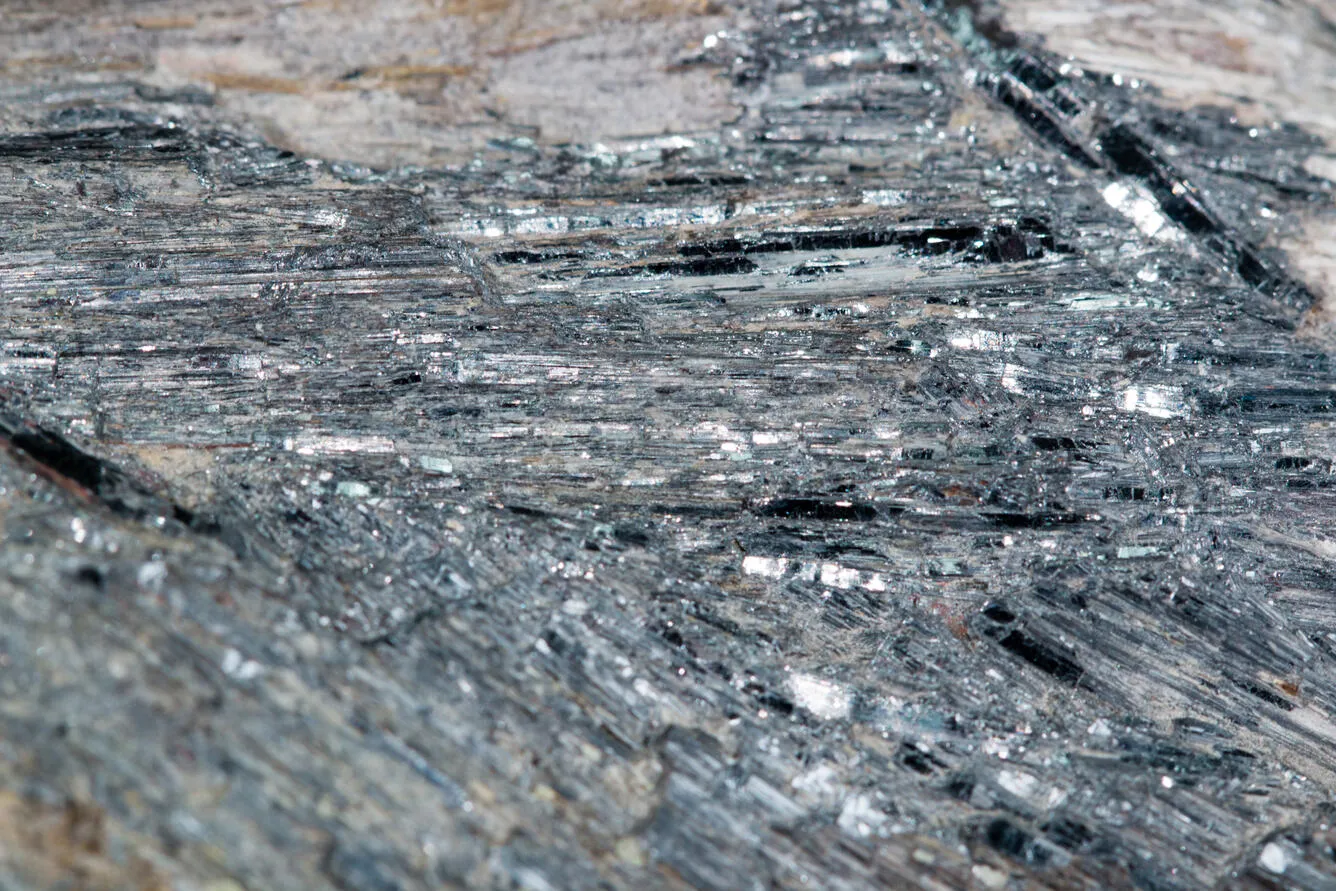
Galena Complex positions Americas Gold & Silver as the largest US antimony producer, combining scale, byproduct economics, and processing integration.
- Americas Gold & Silver’s Galena Complex produced approximately 561,000 pounds of antimony in 2025, establishing it as the largest active antimony operation in the United States.
- A 51% Americas Gold & Silver, 49% US Antimony Corporation joint venture will construct an antimony processing hub at Galena within an 18-month timeline, targeting completion in 2027, creating a fully domestic supply chain capturing downstream processing margins.
- Galena's tetrahedrite mineralisation contains antimony at approximately a 0.7 to 1 ratio relative to copper, meaning antimony production scales proportionally with silver mining rates without requiring dedicated capital allocation.
- The complex holds more than 150 million ounces of silver, supporting a 30-year mine life, with recent high-grade discoveries intercepting up to 5,443 grams per tonne silver, 5.04% copper, and 4.19% antimony.
- The 64,000-meter 2026 exploration program targets resource conversion of high-grade antimony zones, while the Crescent Mine acquisition added a second tetrahedrite source potentially delivering 1.5 million ounces of annual silver production with proportional antimony byproduct.
What Has Happened
Americas Gold & Silver Corporation's (TSX: USA) First Quarter 2026 production results position the Galena Complex as the largest active antimony operation in the United States. The complex produced approximately 561,000 pounds of antimony in 2025, establishing antimony as a material revenue contributor within a system where silver accounts for approximately 80% of revenue as of January 2026. The output establishes Galena as the dominant domestic antimony source in a market where US production has historically been negligible relative to consumption.
A 51% Americas Gold & Silver, 49% US Antimony Corporation joint venture will construct an antimony processing hub at the Galena site, targeting completion in 2027 within an 18-month timeline. This facility will process concentrate from Galena's tetrahedrite ore, recovering antimony that currently undergoes downstream processing elsewhere. The integration creates a fully domestic antimony supply chain on a single permitted site, capturing downstream margins that previously accrued to third parties and offering investors direct participation in both mining economics and processing margins.
Antimony as Embedded Byproduct Economics in a Silver System
Galena's antimony production does not operate as a standalone revenue stream. The antimony occurs within tetrahedrite mineralisation that contains silver, copper, and antimony in consistent ratios. Every tonne of ore mined for its silver content carries byproduct antimony at an approximately 0.7 to 1 ratio relative to copper. This metallurgical consistency means antimony production scales proportionally with silver mining rates, not through separate extraction infrastructure.
The economic consequence is that antimony byproduct credits reduce silver production costs without requiring dedicated capital allocation. Americas Gold & Silver's renegotiated concentrate sales agreement with Teck Resources Limited ensures the company receives payment for both copper and antimony content in shipped concentrates.
Executive Vice President of Corporate Development Oliver Turner explained the contract's impact:
"Up until last year, when we renegotiated that contract with Teck, this company was not being properly paid for the antimony and the copper that were in that ore. As of January 1, 2026, that contract flipped into effect. So today, we are getting paid for both of those."
Processing Integration Capturing Downstream Antimony Margins
The joint venture processing facility advances the byproduct economics by extracting antimony on site rather than shipping it embedded in concentrate to Teck's Trail, British Columbia smelter. Galena will recover antimony through the new processing hub, then ship only the remaining silver and copper concentrate to Trail. This separation allows Americas Gold & Silver to capture antimony at market pricing rather than as a concentrate deduction, while retaining the silver and copper revenue stream through the existing Trail agreement.
Turner framed the processing investment as a margin expansion mechanism built on extraction costs already committed to silver production:
"What we've done is we're handing over operation of that facility to one of the best groups in the business, in US Antimony, who are already treating our product that comes out of Teck. They are going to run that facility. We will be the majority owners of that facility, and we will collectively get market terms for this antimony that gets knocked off as a byproduct credit, and USA shareholders can enjoy the financial benefit of antimony while being invested in a silver miner."
This allocation of ownership keeps processing execution with a counterparty that already treats Galena concentrate downstream from Trail, while concentrating ownership economics with Americas Gold & Silver shareholders.
Resource Base Supporting Multi-Decade Antimony Production
Galena's antimony production potential is not limited by identified resources. The complex holds more than 150 million ounces of silver. Because antimony occurs within the same tetrahedrite mineralisation as silver, the silver mine life determines the antimony production horizon.
Turner outlined the resource base scale:
"This mine has an absolutely enormous resource endowment, right? Well over 150 million ounces of silver. If you ran that out at 5 million ounces a year, you've got a 30-year mine life. Mine life has never been a problem at Galena since it began mining in 1893. This mine will be going for a very long period of time to come."
The 2025 reserve and resource update reported increases in both tonnage and grade across multiple deposit areas. The 034 Vein, one of two major recent discoveries, returned drilling intercepts grading 4,458 grams per tonne silver, 3.34% copper, and 1.50% antimony over 0.5 meters, and 5,443 grams per tonne silver, 5.04% copper, and 4.19% antimony over 0.25 meters. The 149 Vein returned intercepts including 2,563 grams per tonne silver, 1.8% copper, and 1.4% antimony over 0.7 meters. The 520 Vein has defined a 150-meter by 150-meter mineralised structure with intercepts grading 619 grams per tonne silver, 1.1% copper, and 0.65% antimony over 1.1 meters. These intercepts demonstrate that newly defined zones carry antimony grades above the mine's current ore stream, implying potential for rising antimony production as these zones enter the mine plan.
Exploration Program Targeting High-Grade Antimony Zones
The 64,000-meter 2026 exploration program represents the largest drill campaign in company history, with the majority focused on Galena targeting the 034, 149, and 520 veins. Because the drill holes originate from underground rather than surface, the 64,000 meters translates to a higher number of pierce points relative to a surface-based program of equivalent meterage.
Turner positioned the program scale within Galena's operational context:
"We are going out with the largest exploration drill program that this company has seen in its history. We are going to be drilling 64,000 meters across the business. The majority of that will be focused in Idaho at Galena. One of the things that's important to notice there is that these are holes that are drilled from underground. These are much shorter holes where we are adjacent and very close to the targets that we're drilling. So 64,000 meters gets you a lot of pierce points here."
The drill program aims to convert inferred resources to measured and indicated categories at the high grades indicated by recent intercepts. Positive conversion would support rising antimony grades in future mine plans, increasing byproduct production per tonne of ore without requiring throughput expansion.
Crescent Acquisition Adding Near-Term Antimony Production
The December 2025 acquisition of the Crescent Mine, located 9 miles from the Galena Complex, added a second source of tetrahedrite ore containing silver, copper, and antimony. The Crescent deposit has historically graded over 900 grams per tonne silver, with current drilling intersecting mineralisation grading just above 600 grams per tonne. Because Crescent mineralisation is the same tetrahedrite material as Galena, the ore will process through the existing Galena mill, splitting the mill's fixed cost base over increased tonnage and generating incremental antimony byproduct alongside silver and copper.
Mechanisation Scaling Throughput for Antimony Byproduct Growth
Galena's transition from underhand cut and fill mining to mechanised long hole stoping has delivered more than 300% productivity improvement and 12 times faster cycle times. Hoist capacity upgrades completed in 2025 doubled skipping rates from 40 to 80 tonnes per hour, with planned 2026 and 2027 upgrades targeting rates exceeding 105 tonnes per hour. These throughput increases directly scale antimony production because each incremental tonne of tetrahedrite ore contains antimony at the metallurgically consistent ratios observed across the deposit.
The company delivered the highest mine grade at Galena in approximately 20 years during 2025, demonstrating that operational optimisation is recovering higher-grade material from the ore body.
Capital Position Funding Antimony Production Growth
The capital required to reach a 5 million ounce annual silver production target is fully funded. Americas Gold & Silver raised over US$300 million through equity and debt financings in 2024 and 2025, including US$100 million in long-term debt secured in June 2025. The 2026 guidance projects total capital investments between US$90 million and US$120 million, to be funded through cash balances, operational cash flow, or third-party debt financing.
Because antimony production scales proportionally with silver mining rates through the tetrahedrite metallurgy, the funded silver production growth to 5 million ounces annually implies equivalent antimony byproduct scaling without requiring dedicated antimony capital allocation. The June 2025 renegotiation of offtake agreements to recognise byproduct revenue converted antimony from an unrealised credit into reportable cash flow.
What to Watch Next
The 2026 exploration program will define whether the 034, 149, and 520 veins can convert inferred resources to measured and indicated categories at the high grades indicated by recent intercepts. Positive conversion would support rising antimony grades in future mine plans, increasing byproduct production per tonne of ore without requiring throughput expansion.
The antimony processing facility's construction progress through 2026 and into 2027 will determine whether the joint venture achieves its targeted 18-month completion timeline. On-schedule commissioning would allow the company to capture processing margins in 2027 as Galena production approaches the 5 million ounce annual silver rate.
Crescent Mine exploration results will clarify whether the asset can deliver the outlined 1.5 million ounces of annual silver production and the antimony grades within that production. Because Crescent has not been drilled in over a decade, initial drill results will establish whether historical grades persist or whether the deposit requires additional delineation to support mill feed rates.
FAQs (AI-generated)
Galena is the largest active antimony producer in the US, establishing it as a rare domestic source in a supply-constrained market and offering direct investor exposure.
Antimony is produced as a byproduct of silver mining, generating additional revenue and lowering costs without requiring separate capital investment.
The planned facility enables domestic processing, allowing the company to capture downstream margins and sell antimony at market prices within a US supply chain.
Production scales with silver output due to consistent ore composition, meaning growth to higher silver volumes supports increased antimony production.
Exploration drilling, integration of the Crescent Mine and completion of the processing facility in 2027 could increase both production volumes and realised margins.
Analyst's Notes





Subscribe to Our Channel



Stay Informed






















