




Gold Rises Despite Western ETF Selling as Central Banks Buy at Record Pace


Gold rises as record central bank buying offsets Western ETF selling, with a weaker dollar and lower rate-hike expectations supporting bullion demand.
- Spot gold rose 2.4% to $4,175.53 per ounce, its highest since July 7, as a weaker dollar and lower oil prices increased demand for bullion.
- The dollar index fell below 100, down 1.01% over the month, while lower oil prices reduced inflation expectations and Fed rate-hike expectations, reinforcing support for gold.
- Fed rate-hike odds for the Sept. 15-16 meeting fell to 59% from 67% a day earlier, although TD Securities continues targeting a range-bound price.
- With neither a Hormuz agreement nor the Fed decision confirmed, market direction still depends on incoming data rather than geopolitical headlines.
- A dollar index close above 100 or a Sept. Fed rate hike could pull gold back toward its July low of $3,959, offering disciplined buyers a lower entry point if the longer-term bullish backdrop remains intact.
Weaker Dollar & Lower Oil Lift Gold Above $4,175, Reinforcing the Bullish Trend
Spot gold climbed 2.4% to $4,175.53 per ounce, its highest since July 7, while US gold futures gained 2% to $4,235.30. The rally extended to a third straight session as a weaker dollar and lower oil prices reduced the opportunity cost of holding bullion.
The 2.4% gain showed how quickly gold can reprice when markets scale back Fed rate-hike expectations, reinforcing that macro sentiment rather than physical demand is driving short-term price action. A reversal in those expectations could create another buying opportunity without changing gold's longer-term demand outlook.
Hormuz De-escalation Lowers Inflation Expectations, Supporting Gold Through Fed Pricing
Qatar said an interim proposal to reopen the Strait of Hormuz had been prepared, while US Treasury Secretary Scott Bessent said a deal could be reached soon. Expectations of renewed shipping through the strait pushed oil prices lower, reducing inflation expectations and supporting gold through lower Fed rate-hike expectations.
Tehran denied President Trump's claim that talks are underway, leaving the timing of any agreement uncertain. With Fed officials still open to further rate hikes, the upcoming payrolls report remains the key catalyst for both monetary policy expectations and gold prices. If geopolitical optimism fades before the labor data, any short-term weakness could present another opportunity for disciplined accumulation rather than a change in the longer-term outlook.
289-Tonne Central Bank Buying & $12 Billion Asian ETF Inflows Reinforce Gold's Long-Term Demand
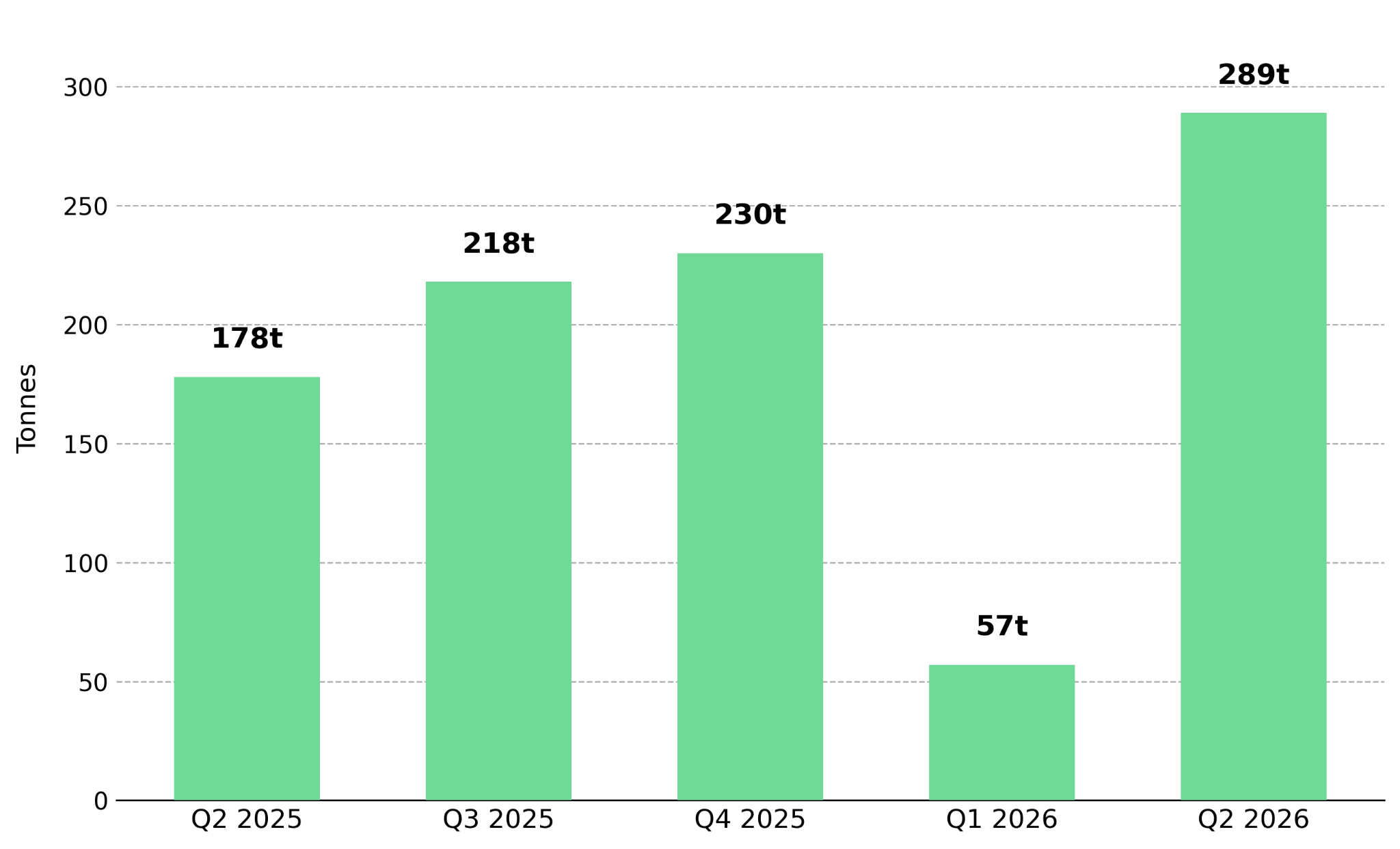
Gold has not fully priced in a confirmed Hormuz agreement, with OANDA senior market analyst Kelvin Wong saying a clear roadmap to de-escalation would provide further upside. Central bank buying remained the stronger long-term support, with purchases reaching 289 tonnes in Q2, up 62% year over year and the fastest second quarter on record. Asia-listed gold ETFs added $12 billion in H1, while North American funds recorded $7.7 billion of outflows, showing regional positioning remains uneven despite strong official-sector demand.
Base case: softer payrolls data keeps gold between $3,959 and $4,200 through the Sept. 15-16 Fed meeting.
Bull case: a confirmed Hormuz agreement and lower Fed rate-hike expectations weaken the dollar, lifting gold above $4,200 and supporting a retest of January's record futures high of $5,589.38.
Even if short-term volatility continues, record central bank purchases and resilient Asian ETF inflows suggest strategic demand remains intact. Separately, the World Gold Council and OCIM Metals and Mining agreed to formalize artisanal gold production, targeting 1,000 kg of traceable output by year-end to improve supply-chain transparency.
$86 Billion Jewelry Demand Masks Volume Weakness, Favoring Bullion Over Jewelry Stocks
Global jewelry demand value rose 22% year over year to $86 billion in H1 despite lower volumes, showing that higher gold prices more than offset weaker jewelry demand. Gold ETFs capture bullion price gains directly, while jewelry companies benefit only if pricing offsets lower sales volumes, creating different earnings outcomes across the sector. TD Securities continues targeting a $3,959 to $4,200 trading range until a stronger macro catalyst emerges.
The timing of any Hormuz agreement remains uncertain after Tehran denied talks are underway, leaving payrolls data and Fed expectations as the primary drivers of short-term price moves. If geopolitical uncertainty triggers another pullback without weakening central bank demand, it would reinforce the article's broader thesis that short-term volatility does not necessarily change gold's long-term demand outlook.
59% Fed Rate-Hike Odds Could Flip on Payrolls, Watch Whether Gold Holds $3,959
A dollar index below 100, down 1.01% on the month, and 59% Fed rate-hike odds continue to support gold by reducing the opportunity cost of holding bullion. A dollar index close above 100 or a Sept. Fed rate hike would strengthen the dollar and could pull gold back toward its July low of $3,959, weighing on gold ETFs and mining equities. The ADP private payrolls report and the July payrolls report are the final major catalysts before the Sept. 15-16 Fed meeting.
Weaker-than-expected employment data would reinforce the current bullish case for gold, while stronger data could trigger a short-term pullback. If that pullback occurs without a reversal in central bank buying or ETF demand outside North America, it would strengthen the contrarian case that macro-driven volatility creates opportunities without changing gold's long-term demand outlook.
Analyst's Notes





Subscribe to Our Channel


Stay Informed






















