Google's 22-Year Reactor Deal Meets a Constrained Uranium Market


AI power contracts extend reactor visibility while Kazakh extraction delays and Russian processing reliance support diversified uranium fuel-chain exposure.
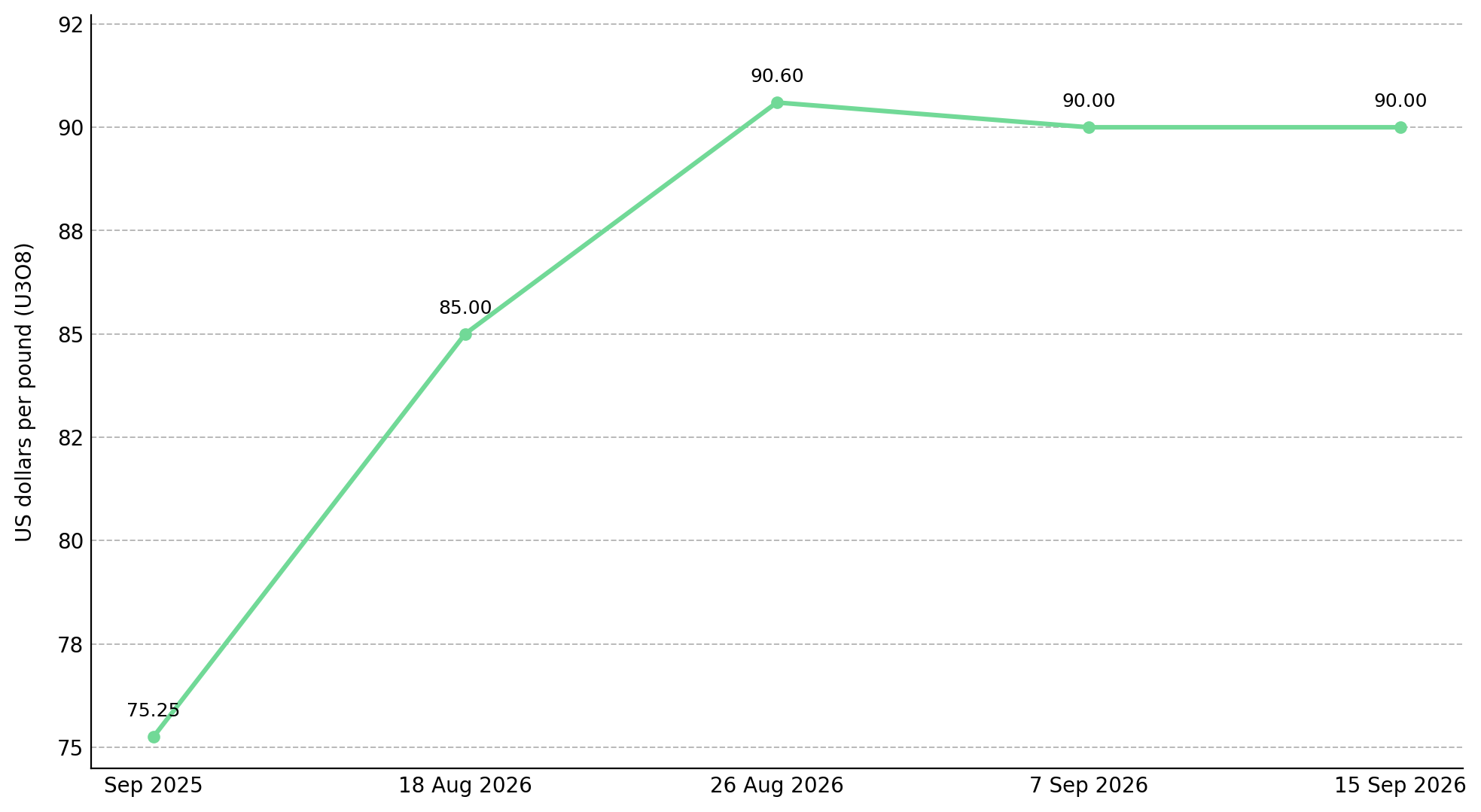
- Uranium spot held at $90.00 per pound on September 15, 2026, $0.60 below its August 26 six-month high and up 19.60% year over year.
- Google confirmed a 22-year agreement on September 9, 2026, for up to half of Fortum’s Loviisa output as part of a €13bn Finnish AI package, supporting long-term reactor fuel demand.
- Kazatomprom’s TQZ acid plant delays are restricting uranium extraction as nuclear agreements from Google, Meta, Amazon, and Microsoft support reactor demand.
- The unpublished TQZ restart timeline raises the risk of concentrated Kazakh exposure, supporting diversification across uranium supply-chain regions.
- A confirmed TQZ restart and a sustained uranium price below the near-$85 mid-August level would weaken the supply-driven contrarian case.
AI-Driven Reactor Contracts Push Uranium Spot Near $90
Uranium spot traded at $90.00 per pound, $0.60 below its six-month high and up 19.60% year over year. Google’s 22-year agreement for up to half of Loviisa’s electricity output supports long-term reactor operations and uranium demand as part of Finland’s €13bn AI infrastructure package.
The 22-year agreement secures long-term demand for Loviisa’s electricity, supporting continued reactor operations and uranium consumption. Loviisa supplies about 10% of Finland’s electricity, while the agreement could fund a life extension and capacity increase. This demand visibility, combined with constrained Kazakh supply, supports uranium near its six-month high.
Kazakh Output Delays Tighten Global Yellowcake Supply
Kazakhstan, the world’s largest uranium producer, faces TQZ sulfuric acid plant delays that restrict the key input used to extract uranium through in-situ recovery. Lower acid availability limits yellowcake production, supporting uranium prices and strengthening the contrarian case for supply outside Kazakhstan.
Western utilities are replacing Russian nuclear fuel suppliers, but limited conversion and enrichment capacity constrains the transition. Fortum switched Loviisa to Westinghouse fuel, ending its sole reliance on Rosatom subsidiary TVEL. Tarik Choho, President of Westinghouse Nuclear Fuel, said Russia remains dominant in conversion and enrichment even as fabrication moves West, so Kazakh supply delays support demand for Western fuel-cycle capacity.
Multi-Decade Power Deals Widen the Nuclear Fuel Demand Gap
Fortum’s transition to Western fuel reduces Russian supplier exposure without changing Loviisa’s underlying uranium requirements. Petra Lundstrom, Fortum’s Head of Nuclear Generation, said Loviisa had moved fully to Western fuel for the first time, supporting demand for non-Russian fuel-cycle capacity.
A TQZ restart could increase Kazakh production and return uranium toward its mid-August level near $85. Continued delays could keep supply tight as long-term reactor agreements support demand near six-month highs. A confirmed restart or a sustained move below $85 would weaken the supply-constrained contrarian case.
Russian Conversion Reliance Leaves Retail Fuel-Chain Exposure Untested
Uranium securities remain exposed to physical supply disruptions through changes in uranium prices and fuel-cycle costs. Physically backed trusts can benefit if Kazakh delays lift spot prices, while junior explorers carry company-specific risks and utilities face Russian contract-renewal and supply-disruption exposure.
A utility’s resilience partly depends on how quickly it can qualify non-Russian fuel suppliers. Fortum required about two years to select and load Westinghouse fuel, demonstrating the transition’s long lead time. With no published TQZ restart timeline, concentrated Kazakh exposure carries added price risk, supporting diversification across uranium production, conversion, and enrichment regions.
Data Center Buildout Sets a New Floor for Uranium Demand
Long-term AI electricity agreements give nuclear plants multidecade revenue visibility, supporting reactor life extensions and the uranium demand required to operate them. Technology companies remain power buyers rather than uranium buyers, while utilities continue to procure reactor fuel.
Alphabet’s $205bn 2026 capital-spending guidance supports further data-center power demand, although a reduction would weaken the case for additional nuclear agreements. Funds with single-country limits can reduce Kazakh production and Russian processing risks through exposure across producing regions and Western fuel-cycle capacity. Continued TQZ delays could support uranium prices and non-Russian capacity, while a restart would weaken that contrarian opportunity.
Analyst's Notes





Subscribe to Our Channel






Stay Informed