




West Red Lake Gold's Starratt-Olsen Drilling Confirms Grade at Surface, Leaves the Deep High-Grade Panel Unverified


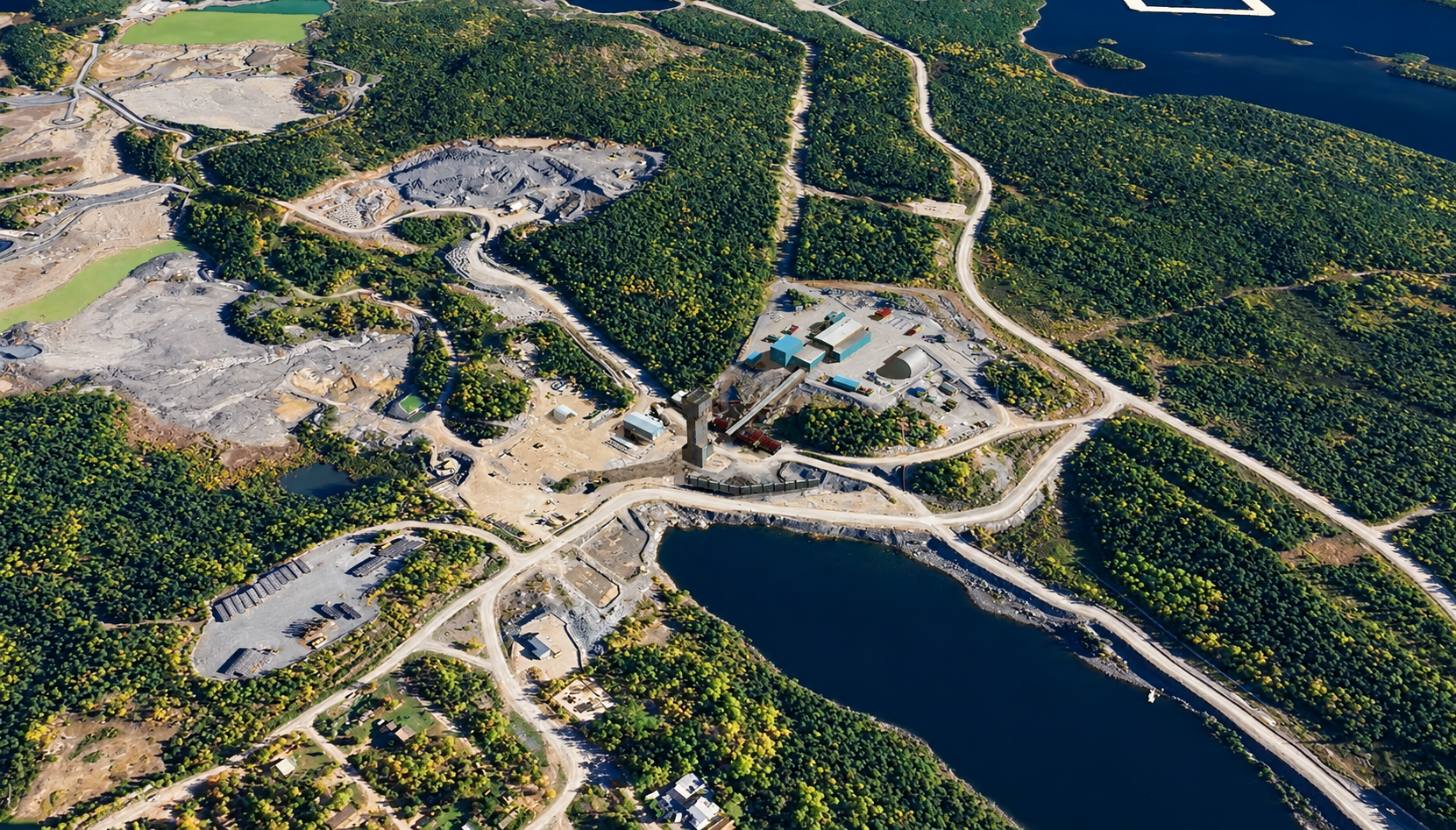
West Red Lake Gold's first Starratt-Olsen drill results confirm high-grade gold at surface; the deep high-grade panel remains unverified for QA/QC.
- The strongest hole returned 16.16 grams per tonne of gold over 1.5 meters, with a peak of 24.60 grams per tonne of gold over 0.85 meters.
- A second hole returned 5.16 grams per tonne of gold over 4.5 meters, including 10.94 grams per tonne of gold over 1.5 meters.
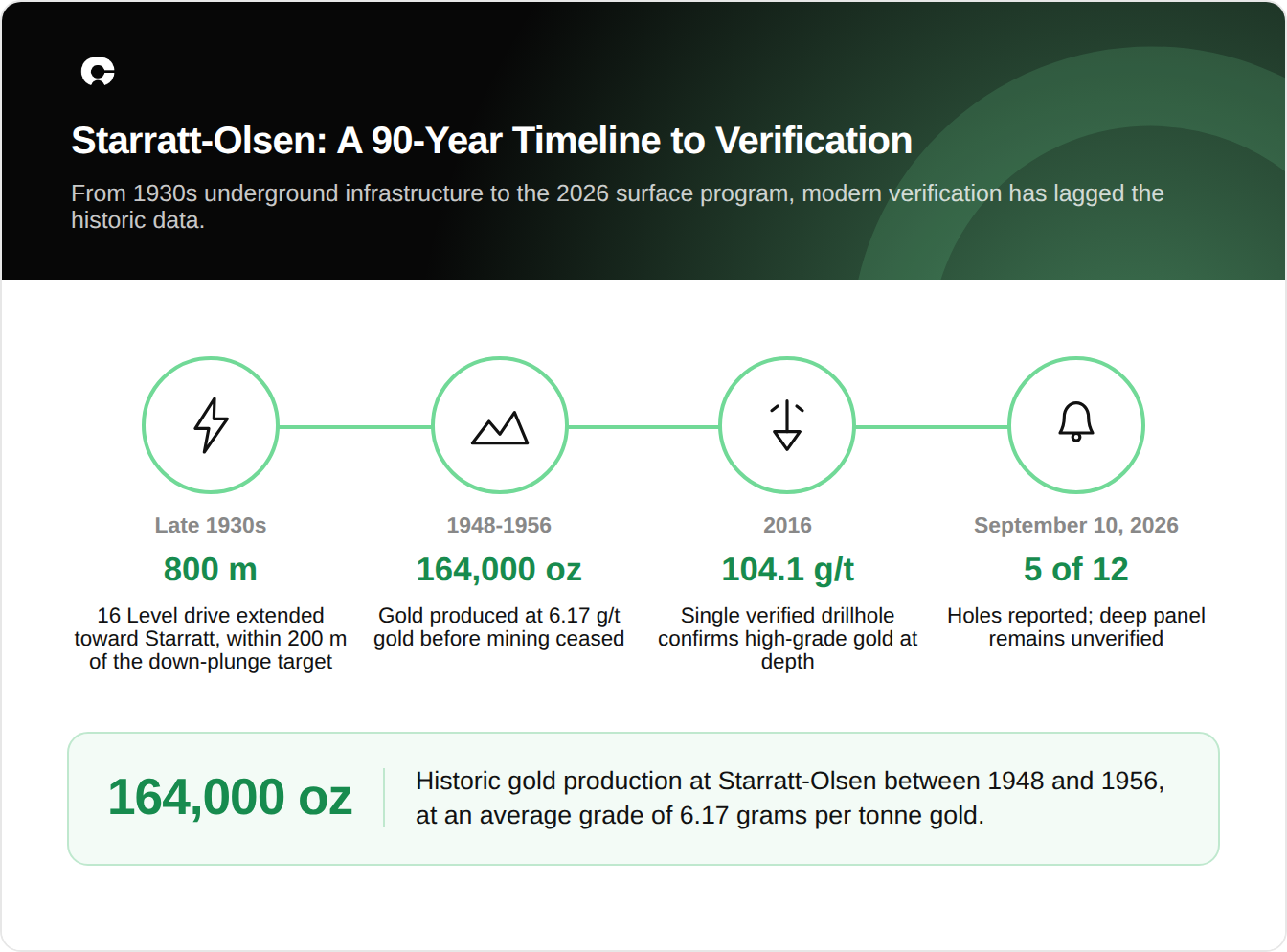
- Starratt-Olsen was Madsen's second-largest historic producer, yielding approximately 164,000 ounces of gold at 6.17 grams per tonne of gold between 1948 and 1956, before mining ceased.
- The company states that this surface program tested only the shallow portion of the system; a deeper, higher-grade panel, as indicated by historical underground drilling, has not been verified for Quality Assurance/Quality Control (QA/QC) purposes, except for a single 2016 drillhole.
- Assay results have not yet been reported for 7 of the program's 12 holes, and the company is preparing plans to access the deep target underground from Madsen's historic 16 Level exploration drive.
What Has Happened
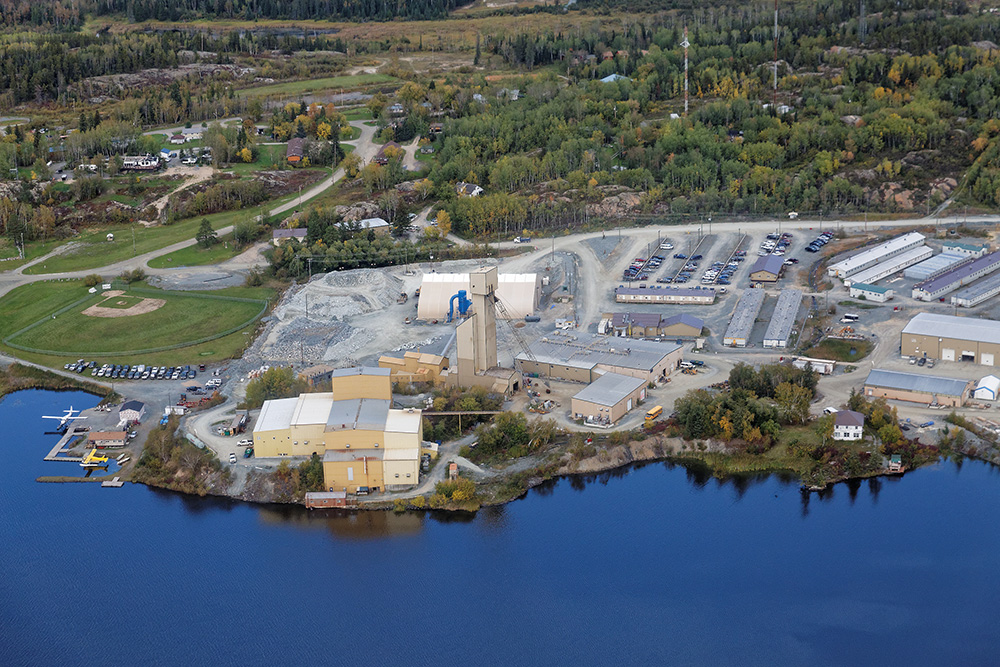
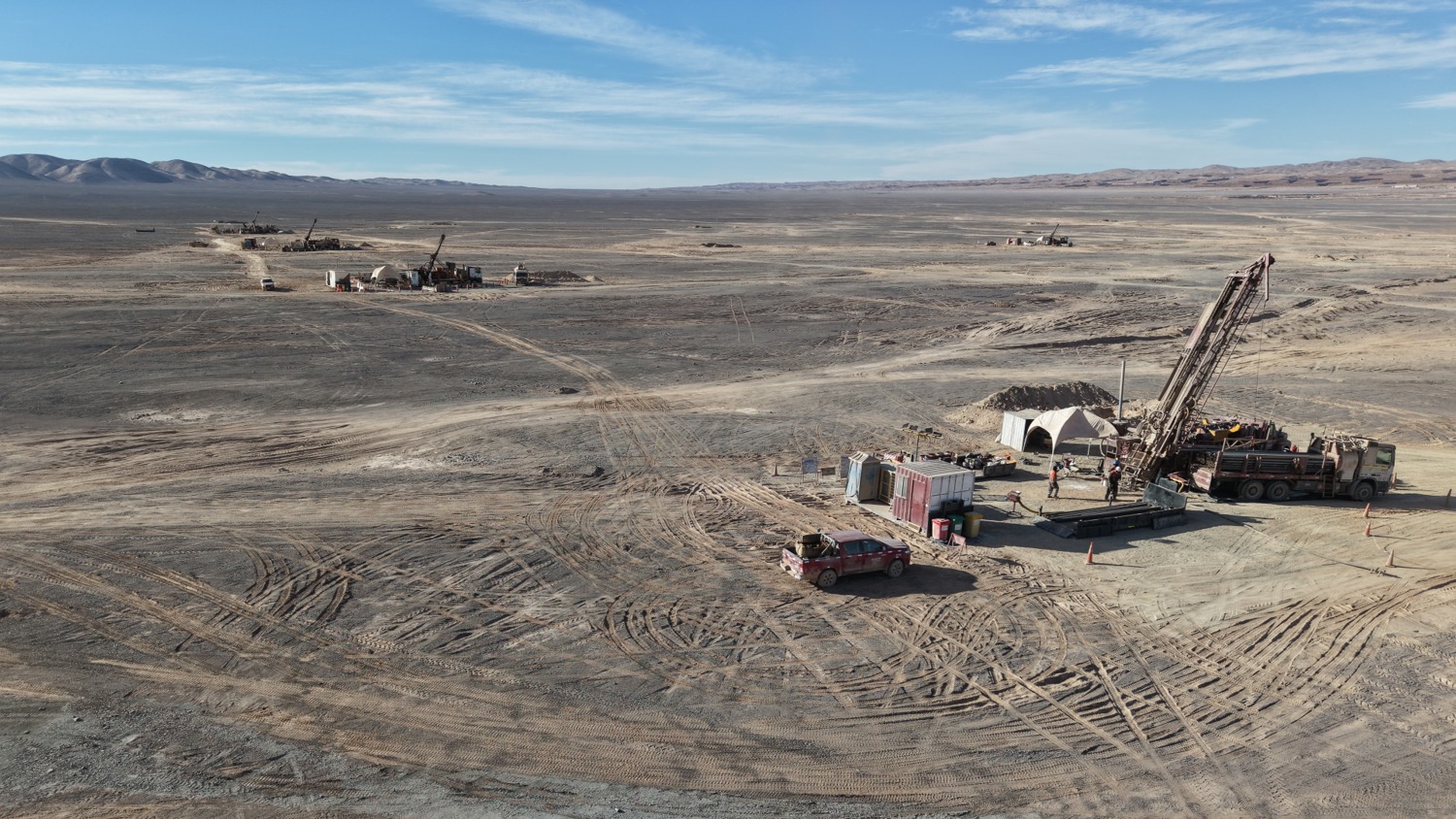
West Red Lake Gold Ltd. (TSXV: WRLG | OTCQX: WRLGF) announced assay results on September 10, 2026, from the first 5 of 12 holes drilled at Starratt-Olsen, a past-producing mine near its 100%-owned Madsen Mine in the Red Lake Mining District of Ontario. The program consisted of 4,100 meters of oriented HQ-diameter diamond drilling, targeting up-plunge and down-plunge extensions to previously mined panels, as well as testing for new sub-parallel mineralized lenses.
This marks the first focused drill test of Starratt-Olsen's main historic mining areas since production ceased in the 1950s. Between 1948 and 1956, the mine produced approximately 164,000 ounces of gold at an average grade of 6.17 grams per tonne gold, making it the second-largest historic gold producer on the Madsen property, according to the Ontario Ministry of Northern Development, Mines, Natural Resources and Forestry's Geology Ontario database, cited in the release.
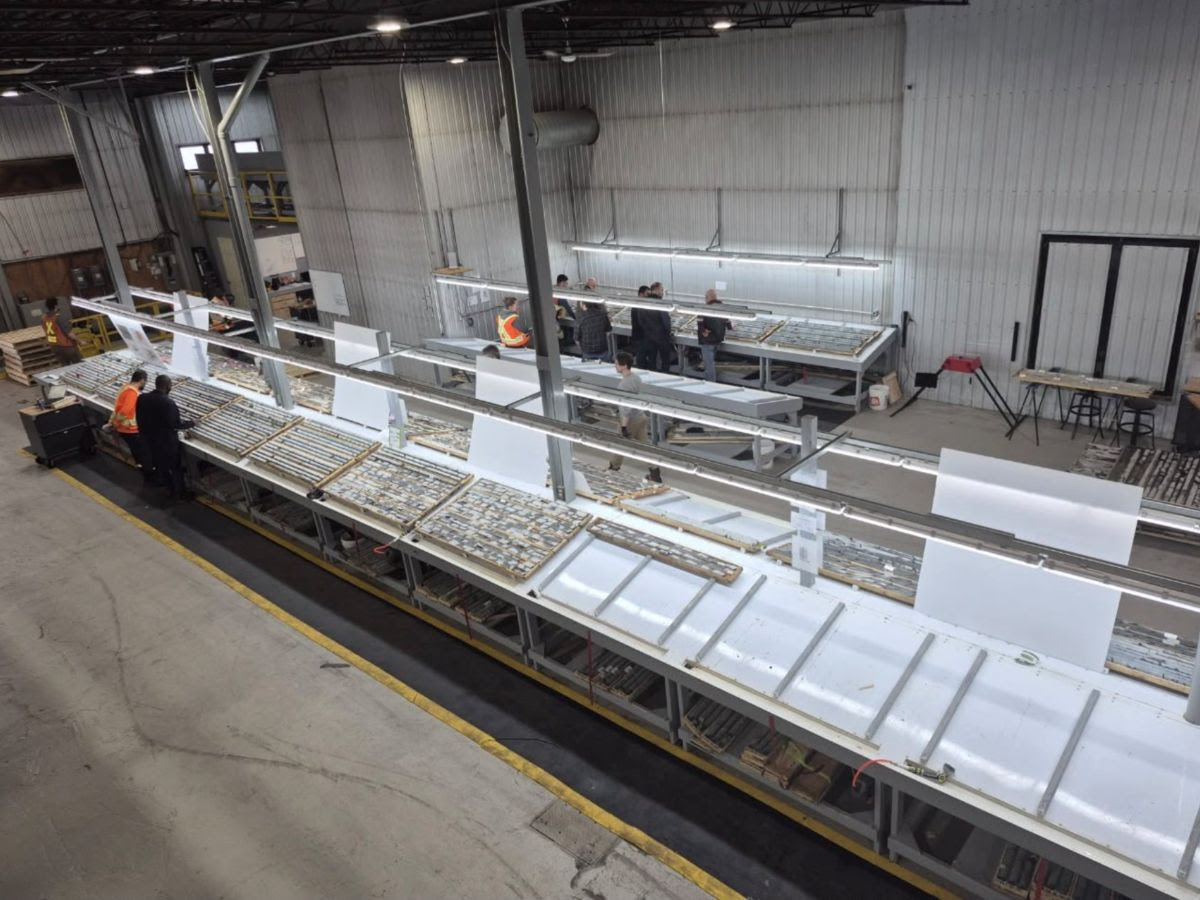
Samples were processed at the company's Madsen core facility and assayed by AGAT Laboratories in Thunder Bay, Ontario, using lead collection fire assay with an inductively coupled plasma-optical emission spectrometry finish. Standard reference materials and blanks were inserted at a target rate of 10%, consistent with the Quality Assurance/Quality Control (QA/QC) protocol disclosed for this program.

Reading the Drill Results
The 2 headline intercepts sit at comparable depths: the strongest hole returned 16.16 grams per tonne of gold over 1.5 meters, from 121.15 to 122.65 meters, including a higher-grade 0.85-meter interval at 24.60 grams per tonne of gold. A second hole returned 5.16 grams per tonne of gold over 4.5 meters, from 114.0 to 118.5 meters, including 10.94 grams per tonne of gold over 1.5 meters. Both holes were part of the same 12-hole surface program.
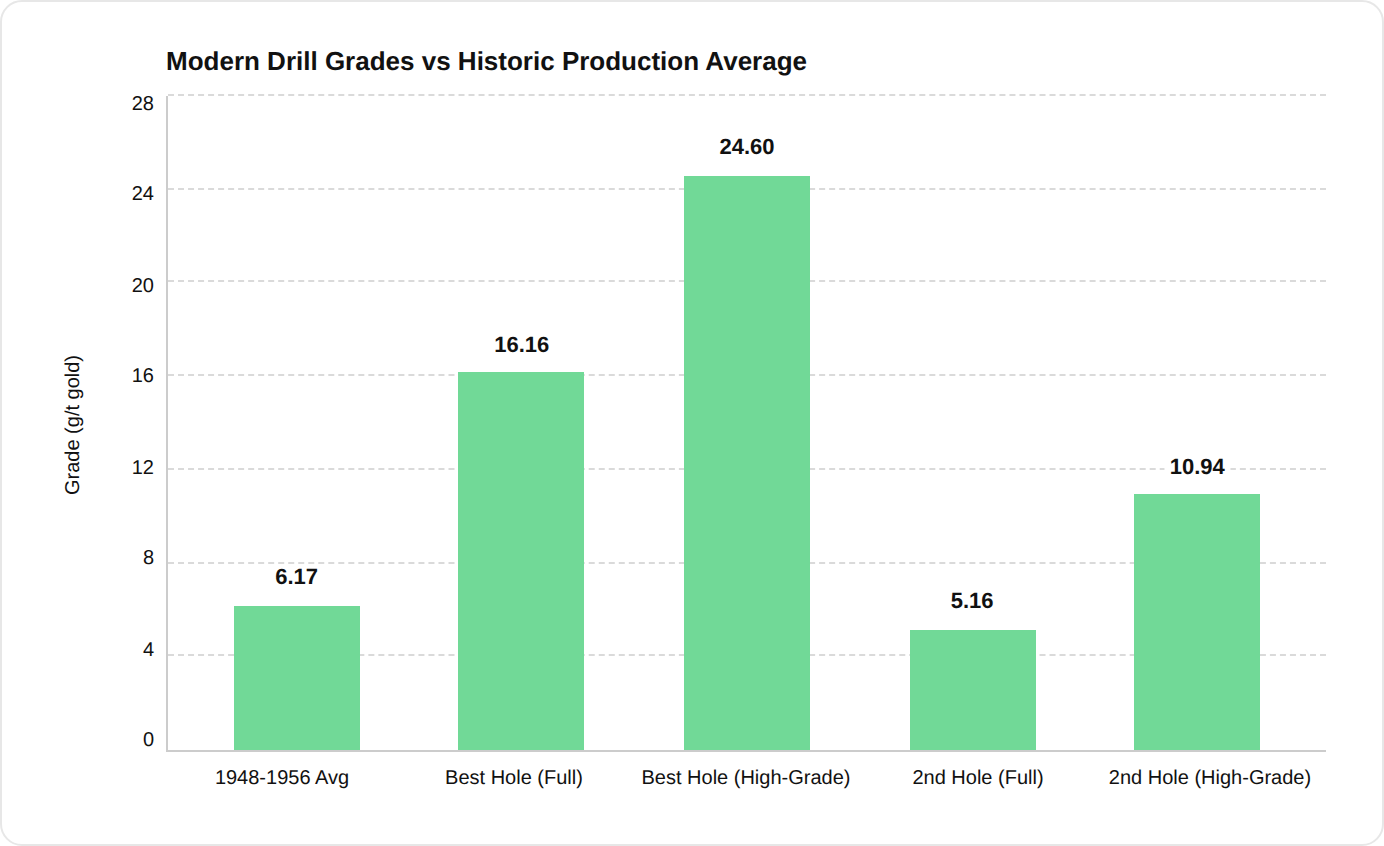
The remaining 3 reported holes returned lower-grade intervals. One intersected 0.71 grams per tonne of gold over 0.80 meters, and another returned 0.78 grams per tonne of gold over 1.0 meters and 1.05 grams per tonne of gold over 2.05 meters. A third returned no assays above the 0.5 grams per tonne gold reporting threshold. Of the 5 holes released, 2 produced intercepts above 5 grams per tonne of gold, while the other 3 returned lower-grade intervals near or below 1 gram per tonne of gold.
The company states that none of the reported holes were drilled within the main historic mining footprint; the intercepts came from the periphery. That means the September 10 results test the edges of the known system, not the previously mined ore zones.
Modern Evidence Versus Historic Evidence
West Red Lake Gold's interpretation of Starratt-Olsen's deeper potential rests heavily on drilling and chip sampling conducted during and after the mine's 1948-1956 production era, and the company is explicit about the limits of that data. Historic results include intervals such as 2 meters at 27.3 grams per tonne gold and 3 meters at 104.1 grams per tonne gold from a single verified 2016 drillhole, alongside numerous other high-grade historic intercepts from underground drilling and channel sampling. Apart from that one verified hole, the historic assay results have not been verified for QA/QC reliability and are shown only to indicate the mineral potential that could exist at depth.
The one verified data point is a single 2016 drillhole, which returned 2 meters at 27.3 grams per tonne gold from 561 to 563 meters and 3 meters at 104.1 grams per tonne gold from 567 to 570 meters. The company describes this interval as displaying classic Madsen-style mineralization often associated with high gold grades, including strong silicification, biotite alteration, pyrrhotite and pyrite, diopside veining, and multiple occurrences of visible gold. This single hole is the only piece of deep Starratt-Olsen data that meets the same verification standard as the September 10 surface results.
That distinction matters for how the deeper target should be read. Based on the broader body of historical underground sampling, the company describes a potential panel of greater than 10 grams per tonne gold mineralization measuring approximately 300 meters by 400 meters, and separately states that the previously mined ore shoot remains intact and open for expansion beyond 440 meters in depth. That panel is a geological interpretation built largely on unverified historical data, anchored by a single verified hole. The company has not disclosed this panel as part of a formal resource estimate for Starratt-Olsen, nor has it stated a timeline for verifying the historic dataset that underpins it.
From Historic Producer to Unverified Deep System
Starratt-Olsen's own production record gives the surface program historical context that the assay results alone do not. The mine produced gold at an average grade of 6.17 grams per tonne between 1948 and 1956, decades before West Red Lake Gold's involvement. The September 10 results, ranging from approximately 114 to 165 meters depth, sit well above the historic underground workings and the interpreted 440-meter-plus down-plunge target.
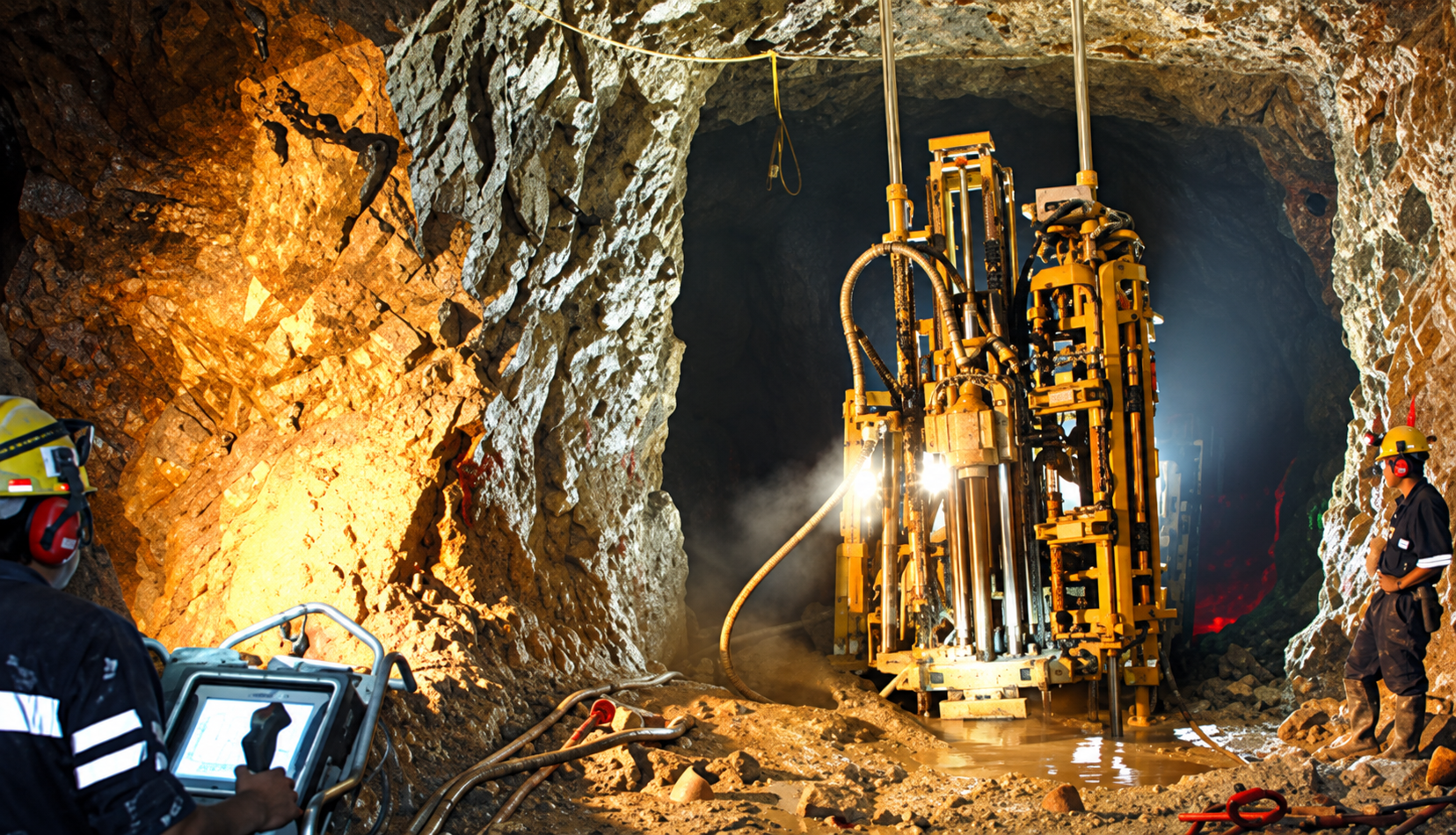
The company has not stated that active infrastructure currently reaches that deeper target. It instead points to an exploration drive extended from Madsen toward Starratt-Olsen along the 16 level, 800 meters deep, in the late 1930s, which comes within 200 meters of the down-plunge extension of the historic Starratt ore shoot. Madsen is currently dewatered to the 18 level, and the company states that plans are being prepared to access and rehabilitate the 16 level drift for mapping, sampling, and potential future underground drilling.
Until that drift is rehabilitated and drilled, the deep panel remains a historically informed target rather than a drill-confirmed one. The practical sequence, based on the release, would be to first rehabilitate and map level 16, followed by underground drilling designed to reach the down-plunge extension at a fraction of the hole length required from the surface.
Operating Context: Why a Near-Mine Target Carries Weight
West Red Lake Gold's exploration spending at Starratt-Olsen is occurring against a Madsen operation that management has described as capacity-constrained.
President and Chief Executive Officer Shane Williams described the mill situation directly:
"As we move into the back half of the year, we're actually mill-constrained. The history of this asset was that they were never able to get mining rates where they needed to be, and that's where we've got them now. Our mill is at permitted capacity."
This predates the Starratt-Olsen release and does not reference the project by name, but it establishes the operating backdrop against which any near-mine target gets evaluated: underground mining rates at Madsen have outpaced the mill's permitted throughput, and the company has been building a surface stockpile as a buffer.
Williams noted the company's broader planning horizon in the same interview:
"We are currently drilling into 2027 and 2028 material for the mine plan."
That statement reflects a company already planning multiple years out on its existing deposits, which is the context in which a new, still-unverified target like Starratt-Olsen's deep panel would need to compete for capital and drilling time.
What to Watch Next
The assay results still to come from 7 of the 12 holes in the current program will show whether the shallow, grade-defining intercepts already reported extend along strike or represent isolated pockets. Investors should also watch for any disclosure on a QA/QC verification program for the historic underground drilling and chip-sample dataset, since that data currently underpins the entire deep-target interpretation. Finally, any update on rehabilitation of the 16 Level exploration drive would mark the first concrete step toward testing the down-plunge extension with modern, verified drilling rather than historic estimates.
FAQs (AI-Generated)
Analyst's Notes





Subscribe to Our Channel




Stay Informed






















