Granada Gold’s 2026 Reset: New Leadership, a Planned Drilling Return and Capital Discipline


Granada Gold Mine's new President plans staged drilling on a largely untested 5.5 km trend after a price-driven resource upgrade near Québec's Cadillac Break.
- J.W. Dumont, appointed President on September 2026, is leading a turnaround focused on capital discipline, transparent communication and resolving legacy issues over the next three to 12 months.
- The 2026 resource reports 890,600 ounces Measured & Indicated (M&I) and 865,500 ounces Inferred, with the increase since 2022 driven by a higher gold price assumption and lower cut-offs rather than new drilling.
- Granada has applied for drill permits and plans staged infill and extension drilling, with management's aspirational ceiling set at 100,000 metres over two years funded in tranches.
- Only about 20% of the property has been explored, including 1.9 km of the trend with no drill holes and only 48 holes below 500 metres.
- The 2016 authorisation, ore-sorting results, and a pending gravity in preparation offer routes to less dilutive funding, though none has reached a production decision or a signed agreement.
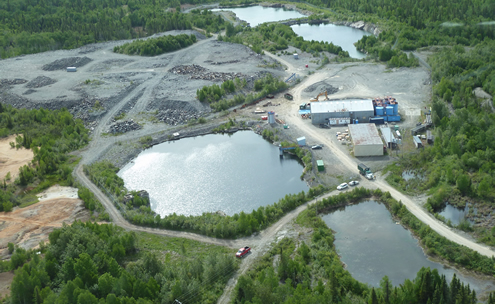
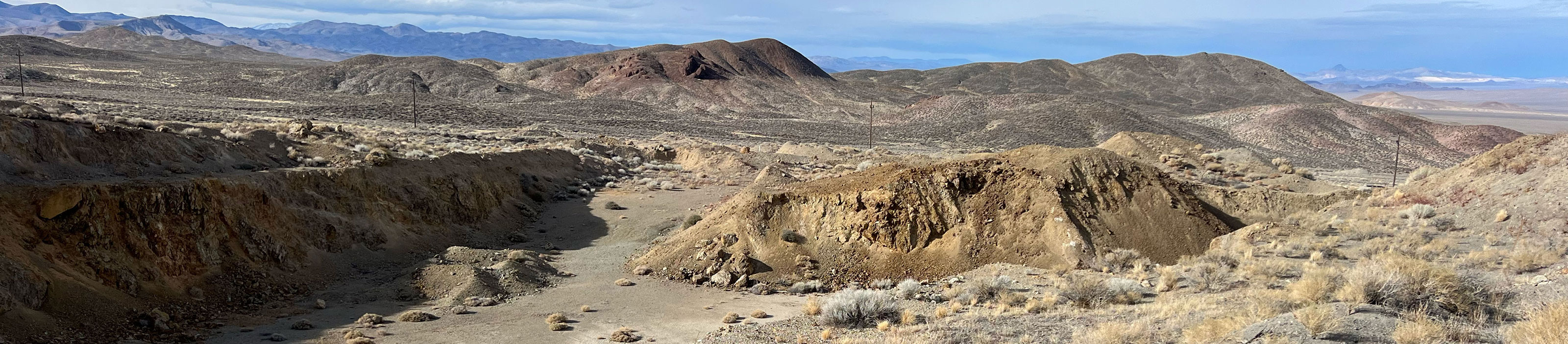
Granada Gold Mine Inc. (TSXV:GGM) is entering a reset. The company holds a past-producing gold project about five kilometres south of Rouyn-Noranda, Québec, alongside the Cadillac Break, one of the most productive gold corridors in Canada. Mining camps along the Break have produced roughly 115 million ounces of gold. The corridor has also seen about C$5 billion of acquisitions between October 2021 and October 2026. Granada, however, trades as a micro-cap, with a market capitalisation of C$7.95 million at a share price of C$0.035 as of October 9, 2026.
J.W. Dumont was appointed President on September 2026 and he described his task as a corporate turnaround. The geological case rests on a resource that has grown sharply on paper since 2022, a 5.5-kilometre mineralised trend that is largely untested and a 2016 authorisation that few juniors of Granada's size hold. The open question for investors is whether new management can turn those assets into a funded and executed drill programme.
New Leadership: Corporate Turnaround
Dumont spent almost seven years in Côte d'Ivoire before joining Granada. His venture began as a financing business, raising about four or five million euros through an initial coin offering (ICO) to fund small and mid-scale mining in developing countries. He said the model proved flawed during the COVID-19 period and led to heavy early losses. The team recovered its wash plants and earth-moving equipment and became the operator itself, hiring mainly local staff.
The operation grew into a mid-scale mine pouring its own gold, at a scale Dumont put at 4 to 10 kilograms. He ran it until the summer of 2026, funding exploration from operating revenue. Dumont was candid that he is a business executive rather than a geologist, and said he will add key technical people in the coming weeks.
A Mandate Built on Capital Discipline
Granada's history frames the conversation. The company has carried a mixed reputation, marked by false starts and strategies that were not carried through to completion. Dumont did not dispute that record and described his brief in direct terms.
"I'm coming in to kind of shore up the strategy, kind of have a more transparent communication with the public at large. And bring a lot of capital discipline. I think historically there's been some spending that maybe wasn't the wisest."
He also pointed to liabilities that weigh on the company, without specifying them, and said clearing these and the reputational issues is his focus over the next three to 12 months. The board is set to be reshuffled and new strategic advisers will be added. Dumont expects to move into the Chief Executive Officer (CEO) role as well, if the market is receptive to the nomination. Frank J. Basa currently holds that title.
Resource Growth Driven by Price, Not Drilling
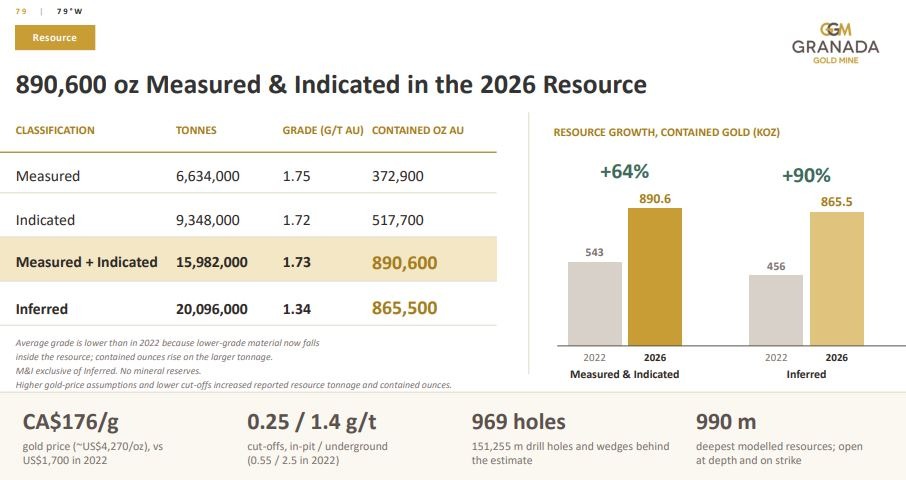
The 2026 mineral resource estimate (MRE), effective June 8, 2026, reports 890,600 ounces of gold in the Measured and Indicated (M&I) categories, within 15.98 million tonnes at 1.73 g/t. A further 865,500 ounces sit in the Inferred category, within 20.10 million tonnes at 1.34 g/t. Compared with the 2022 estimate, M&I ounces rose 64% and Inferred ounces rose 90%.
None of that growth came from the drill bit. There has been no new drilling since 2022. The update raised the gold price assumption from $1,700 to about $4,270 per ounce. It also lowered the pit and underground cut-off grades from 0.55 and 2.5 g/t to 0.25 and 1.4 g/t. Lower-grade material now falls inside the resource, which is why average grades fell as contained ounces rose.
Dumont accepted that publishing a resource at current prices is difficult. Asked how much of it survives at materially lower gold prices, he said it was one of the first issues he raised on arrival. His answer is more drilling, with the aim of building a resource whose sensitivity tables hold up across a range of price assumptions. That sensitivity work has not yet been published.
Drilling Plan: Infill First, Extensions Next
Granada applied for drill permits in early October 2026. The permits have been applied for, not granted, and the scope, budget and schedule have not been announced. The plan combines infill drilling to raise confidence in existing ounces with exploration drilling to test extensions. Dumont said infill needs few new permits because the target areas are already defined. He was clear that it would mainly add confidence rather than new ounces.
The larger opportunity lies in extensions at depth beneath the main open-pit area and along the east-west trend. Dumont set out an ambitious ceiling for the programme.
"The holy grail would be, if we can do 100,000 metres over the next two years in stages, obviously that would be ideal."
He described funding in tranches of between 2 and 5 million, without specifying the currency, and expects to release details over the coming weeks. He agreed that the programme will start small and build from there. With a market capitalisation below C$8 million, raising large sums in one step would be heavily dilutive.
Targets Along Strike & at Depth
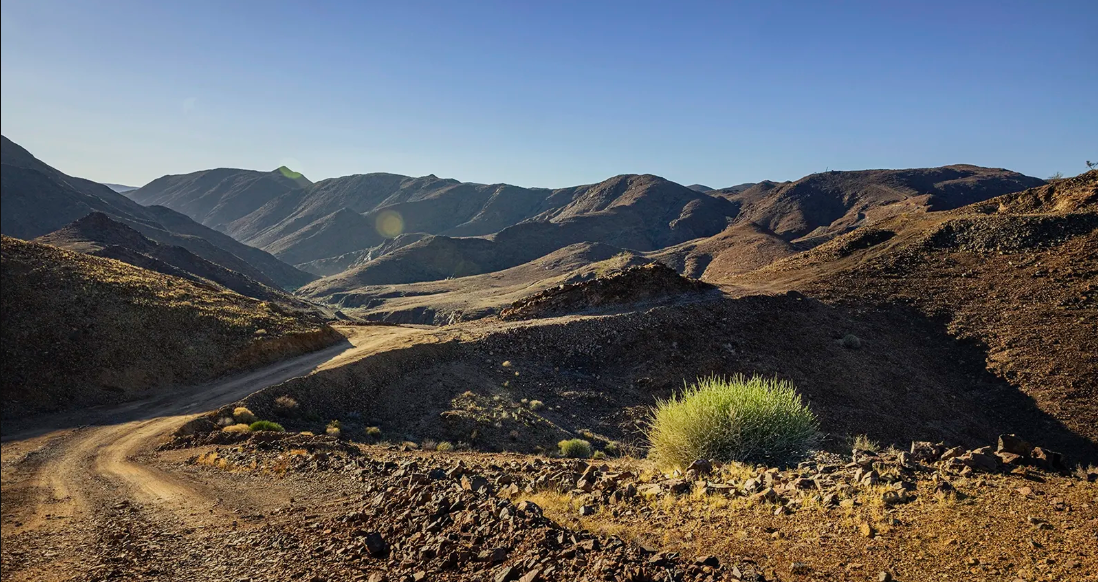
Historical work gives the company a base to build on. The 2026 estimate is supported by 969 holes for over 150,000 metres of drilling. Yet 87% of drilled metres sit within one kilometre of the Granada shafts, and 70% lie in the top 200 metres. The resource covers about 2 km of a conceptual 5.5 km structure, and the company estimates that about 20% of the property has been explored.
Three areas stand out. To the east, the 1.9 km between the historic Aukeko and Austin-Rouyn shafts has no drill holes. Dumont said the mineralisation appears, on a geological basis, to continue along the full trend. To the north, he pointed to encouraging results from the last campaign in an area with few drill collars. At depth, only 48 holes pass 500 metres. One of them, GR-20-21, cut 107.8 g/t gold over 4 metres from 617 metres beneath the main pit area.
Dumont said drilling at depth is expensive and would not be the first target, though it remains part of the near-term conversation. He deferred questions on true width and continuity to his technical team.
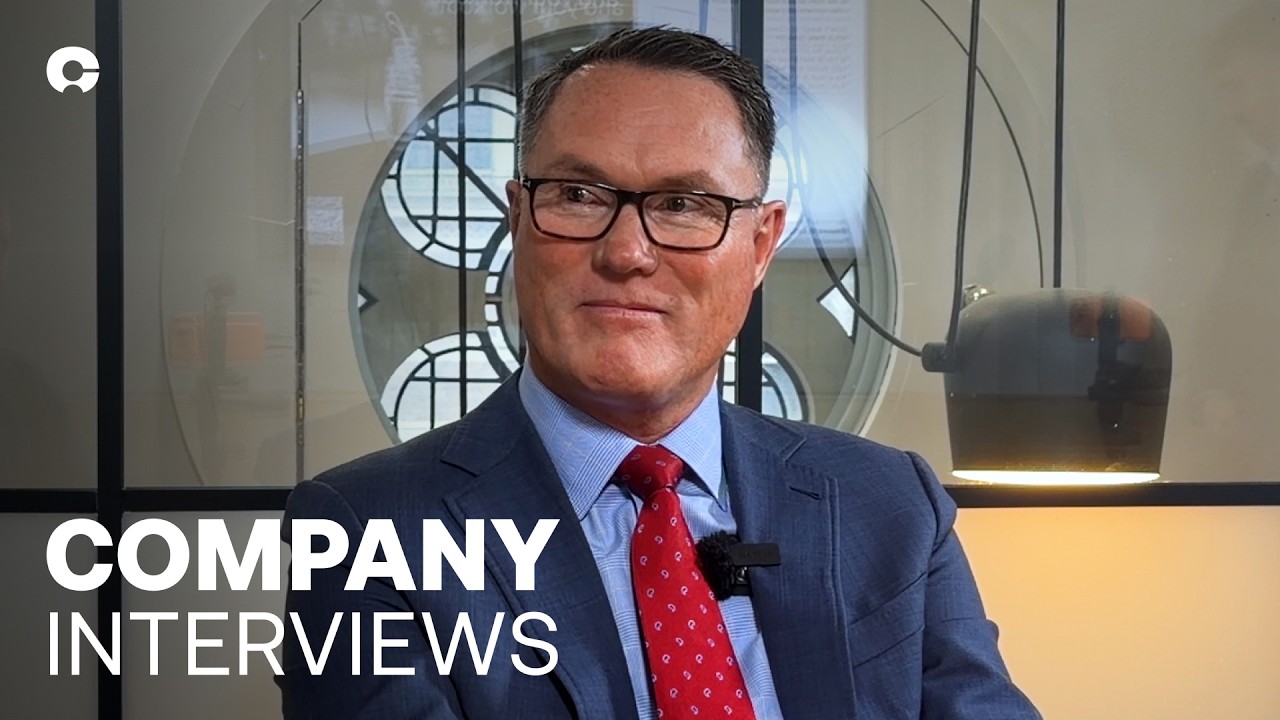
Interview with J.W. Dumont, President of Granada Gold Mine
Permits, Processing & Non-Dilutive Options
Granada has held a Certificate of Authorization since 2016, covering four open pits. Dumont described the authorisation as allowing 550 tonnes per day, an option few juniors of Granada's size hold. He added that a technical and economic case would still be needed before any production decision.
X-ray transmission (XRT) ore sorting on a 500 kg sample, reported in April 2026, upgraded feed grading 2.93 g/t to 7.87 g/t. That is a 2.7-times uplift with 88% gold recovery. The test feed graded well above the 1.73 g/t M&I average and may not be representative. Dumont called the work a first step and said further tests could follow in early 2027.
An application to add on-site gravity concentration under Article 30 of Québec's Environment Quality Act (EQA) remains in preparation. Dumont said it is taking longer than expected, with news possible early in 2027. Direct shipping ore (DSO) and toll milling remain under evaluation, with no agreement in place. Dumont said the company would be remiss not to hold those conversations given its permits, but that drilling is the primary focus.
Investment Thesis for Granada Gold Mine
- Granada holds 890,600 ounces M&I and 865,500 ounces Inferred near the Cadillac Break, at a market capitalisation of about C$7.95 million, or roughly C$4.50 per ounce of total resource.
- The 64% and 90% resource increases came from a higher gold price assumption and lower cut-offs rather than new drilling, so the ounces are sensitive to gold falling below the US$4,270 assumption.
- The 2016 Certificate of Authorization is a genuine differentiator for a junior of this size, but no production case has been demonstrated and no economic study supports one yet.
- The management change is the central catalyst, and investors should monitor the planned board changes and Dumont's proposed move into the CEO role.
- Investors should watch for a decision on the October 2026 drill permit applications and for the drill scope, budget and first financing tranche, which management expects to outline in the coming weeks.
- Tranche financing at C$0.035 per share could add materially to the 227.3 million shares outstanding, so the terms of each raise will matter for existing holders.
- News on the Article 30 gravity application, flagged for early 2027, and any toll-milling or DSO agreement would test whether the company can generate less dilutive funding.
Macro Thematic Analysis
Granada's 2026 resource reflects the gold price environment as much as the geology. The estimate assumes about US$4,270 per ounce, more than double the US$1,700 used in 2022. Gold traded near US$4,060 per ounce on October 22, 2026, slightly below that assumption. For a resource built on lower cut-offs, the gap between the modelled price and the market price matters. A modest decline would push some lower-grade tonnes back below economic thresholds.
Dumont, who describes himself as personally bullish on gold, framed the response around resilience rather than price forecasting.
"The goal is to put together a package that kind of survives at multiple price levels of gold because the downward pressure that we're seeing this year could continue."
That approach reflects a wider shift among junior developers. Higher gold prices have lifted reported resources across the sector, but investors increasingly separate ounces created by price assumptions from ounces created by drilling. Drilling that adds grade or tonnes at higher cut-offs would make Granada's resource less dependent on the gold price.
The Cadillac Break adds a second macro dimension. The company counts 16 mines and projects along the Break between Matachewan and Val-d'Or, and about C$5 billion of acquisitions in the five years to October 2026. Consolidation in the Abitibi has favoured assets with scale, permits and nearby infrastructure. Granada has a permit and infrastructure, including a 25 kV power line to site and road and rail access near Rouyn-Noranda.
What it has lacked is consistent execution and a clear message to the market. In a sector where many juniors repeat the cycle of raising, drilling and marketing, management's interest in revenue from ore sorting, gravity concentration or toll milling would, if delivered, offer a different funding path. Each of those options remains at the testing, application or discussion stage.
TL;DR
Granada Gold Mine appointed J.W. Dumont as President on September 28, 2026, with a mandate to tighten spending, improve communication and restart drilling. The 2026 resource reports 890,600 ounces M&I at 1.73 g/t and 865,500 ounces Inferred at 1.34 g/t. The increase since 2022 came from a higher gold price assumption and lower cut-offs, not new drilling. Drill permits have been applied for, with staged infill and extension drilling planned. Only about 20% of the property has been explored, and the company holds a 2016 authorisation covering four open pits. Key watch-items are the permit decision, financing terms, board and CEO changes, and early drill results.
FAQ (AI-generated)
Analyst's Notes





Subscribe to Our Channel






Stay Informed