Sullivan Hangingwall Unit Gives Gabbs a Second Stripping Cost Test for 2027


P2 Gold drilled gold-copper in Sullivan ground, its 2025 study appears to have modeled as waste, giving its 2027 study a second stripping cost test.
- Two of 6 new holes at the Sullivan Zone intersected a gold-copper unit in what appears to be ground that the preliminary economic assessment (PEA) modeled as waste.
- The unit could reduce the Sullivan strip ratio and improve the economics of the feasibility study (FS).
- The FS enhancement list already includes evaluating alluvium in waste to reduce stripping cost.
- The 2025 PEA carried US$73.6 million of mining within US$382.7 million of preproduction capital.
- Only holes completed by the end of October 2026 are included in the updated mineral resource estimate (MRE), the basis for an FS due in the first quarter of 2027.
New Hangingwall Unit at Sullivan
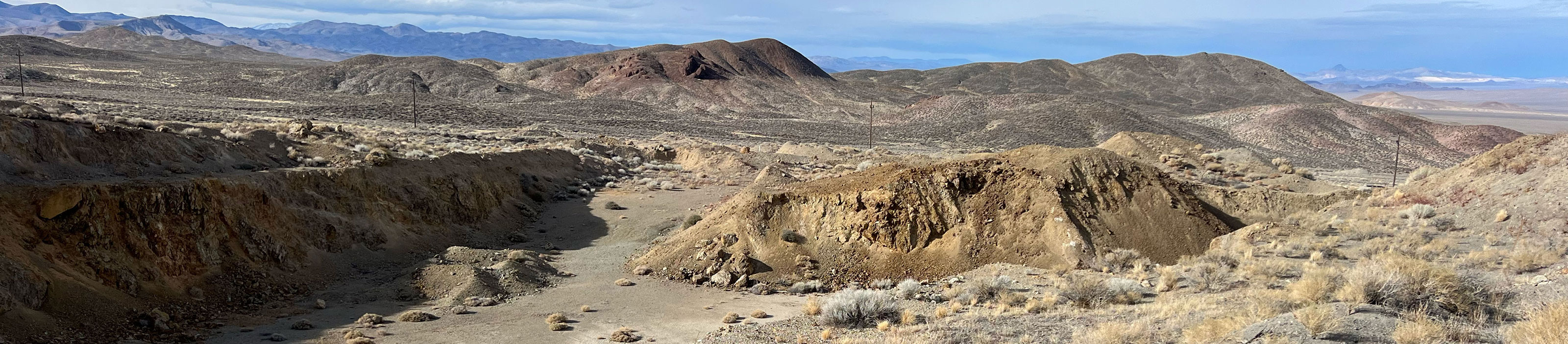
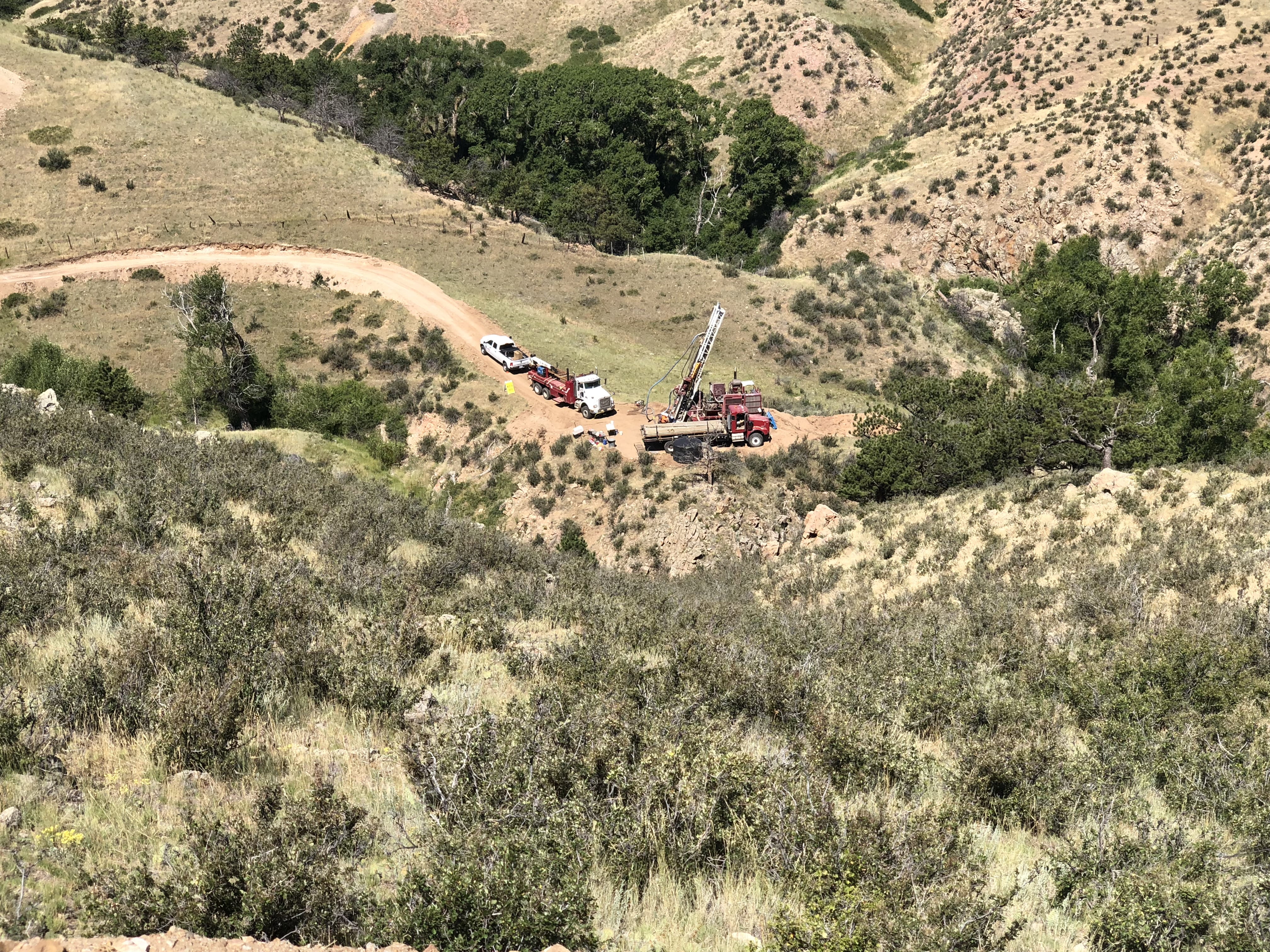
P2 Gold (TSXV: PGLD | OTCQB: PGLDF) has drilled 6 reverse circulation (RC) holes, a rock-chip drilling method, into the down-dip extension, or deeper continuation, of the Sullivan Zone at its Gabbs gold-copper project in Nevada. Two of them intersected a new unit of gold-copper mineralization in the hangingwall, the rock above the main zone. The unit appears to be in an area of the Sullivan Zone that the 2025 preliminary economic assessment (PEA) modeled as waste. Reported on October 14, 2026, the unit has the potential to reduce the Sullivan strip ratio, the tonnes of waste moved for each tonne of ore. It could also add to the economics of the feasibility study (FS) now underway.
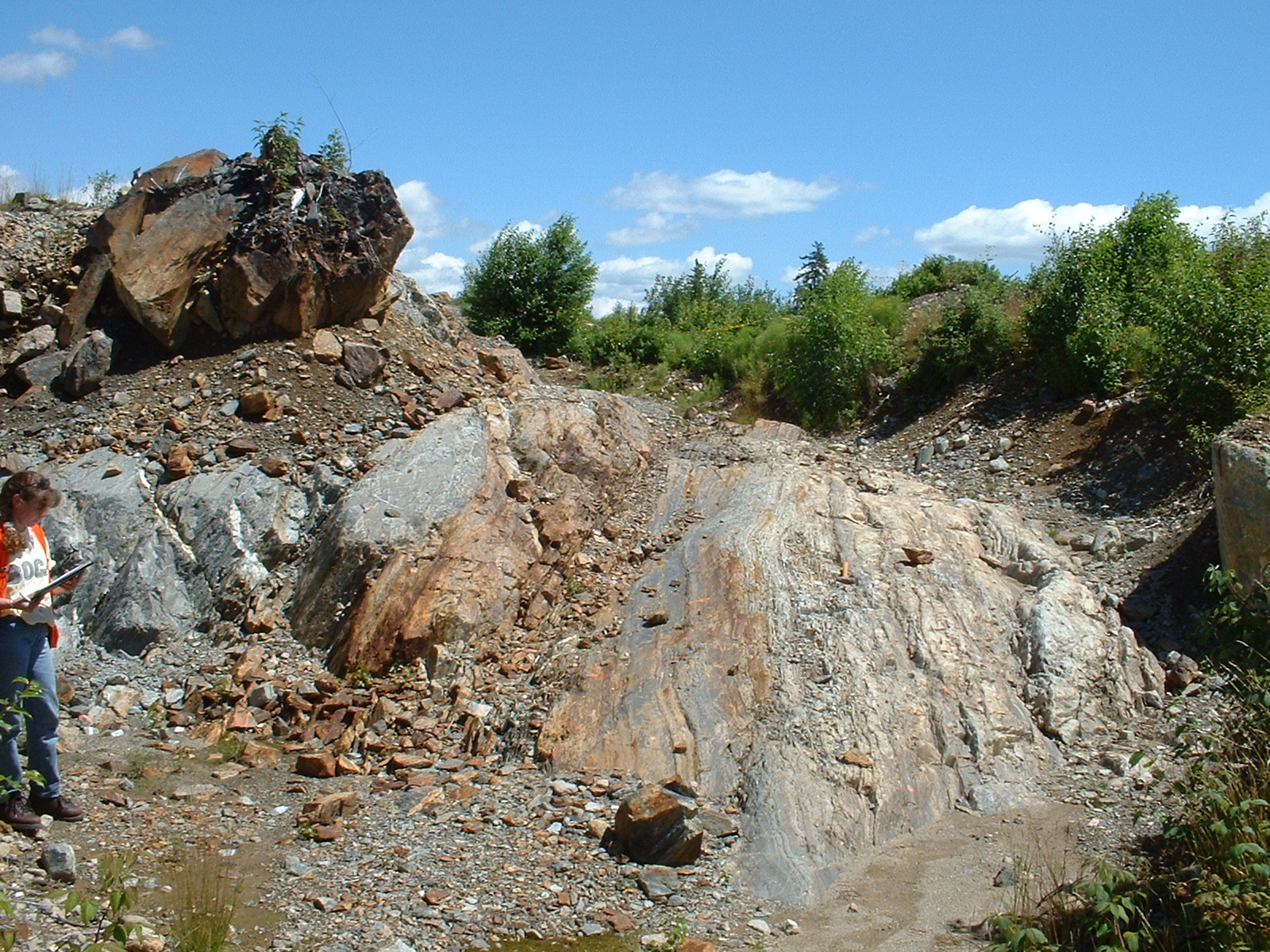
The unit is interpreted as a tabular, or sheet-like, body hosted in gabbro, an intrusive igneous rock, interlayered with thin beds of pyroxenite, a rock composed mostly of the mineral pyroxene. Its mineralization is predominantly oxide, meaning it consists of weathered material. Results from the 6 holes included 0.32 grams per tonne (g/t) gold and 0.18% copper over 70.10 meters (m) from 64.01 m downhole, and 0.32 g/t gold and 0.13% copper over 51.82 m from 94.49 m. Deeper intervals in the 2 holes that cut the new unit returned 0.21 g/t gold and 0.14% copper over 59.44 m from 198.12 m, and 0.21 g/t gold and 0.11% copper over 54.86 m from 160.02 m. Other holes returned 0.32 g/t gold and 0.17% copper over 71.63 m from 92.96 m, and 0.34 g/t gold and 0.19% copper over 65.53 m from 111.25 m, with true thicknesses yet to be determined.
All 6 holes, drilled from 2 pads 50 m apart, intersected the down-dip extension and ended in mineralization, and the zone remains open at depth. In the April 2024 mineral resource estimate (MRE), Sullivan held 33.7 million tonnes (t) of indicated oxide and 16.1 million t of indicated sulfide, the unweathered rock. It also held 6.2 million t of inferred oxide and 19.9 million t of inferred sulfide. Indicated is the higher of those 2 confidence categories, and inferred is the lower. That estimate predates the drill program that began in October 2025.
Waste Rock in the 2025 PEA Cost Structure
The 2025 PEA, effective October 7, 2025, is the baseline the FS enhancement list is based on. It outlined average annual production of 109,000 ounces (oz) of gold and 33 million pounds (lb) of copper from 9 million t per year over a 14.2-year mine life. Processing was phased, with a heap leach alone in years 1 to 5. A heap leach recovers metal by trickling solution through stacked crushed ore. From year 6, a heap leach at 4 million t per year was to run alongside a mill at 5 million t per year.
Preproduction capital totaled US$382.7 million. Mining accounted for US$73.6 million, process and heap leach for US$213.1 million, and other items for US$96.0 million. Total production capital, including the mill, came to US$571.8 million. At a base case of US$2,350 per ounce for gold, US$29.00 per ounce for silver, and US$4.50 per pound for copper, the PEA returned an after-tax net present value at a 5% discount rate of US$942.9 million. At the same prices, the after-tax internal rate of return was 33.8%, with a 2.4-year payback.
Waste is rock that is mined and moved to reach the ore, without being processed. The ground holding the new hangingwall unit appears to fall on that side of the PEA mine plan, inside the Sullivan pit shell, the outline of the planned open pit.
Stripping Cost Items on the Feasibility Agenda
The new hangingwall gold-copper unit joins the cost items P2 Gold had already listed for the FS. Among the opportunities for project enhancement from the 2025 PEA is an evaluation of the extent of alluvium, loose sediment deposited by water, in the waste to reduce stripping cost. It is 1 of 3 items filed under the "Reduced capital cost" label.
A second item under the same heading evaluates contract mining against owner-fleet and equipment alternatives. The third concerns leaching time: the PEA was based on a 150-day leach cycle, while Phase Three metallurgical testing recovered 98% of gold and 85% of copper in the first 58 days, with total recoveries in 110 days. As of September 2026, equipment selection and the general arrangement of the site were in progress for the FS.
The alluvium evaluation targets the cost of stripping waste. The hangingwall unit concerns how much of the Sullivan ground counts as waste at all.
Capital Cost & Mine Plan Trade-Offs
The FS works from a larger operation than the PEA. It is advancing on a nominal production rate of 12 million t per year, targeting average annual production of 150,000 oz of gold and 45 to 50 million lb of copper. The phased processing sequence runs a heap leach at 12 to 14 million t per year for the first 2 years. It then adds a mill that starts up in year 3 at 12 million t per year, and the heap leach drops to 2 to 4 million t per year of remaining oxide. Recoveries differ by route: 94.5% of gold and 79.9% of copper through the mill, versus 85% and 67% on the heap leach. The FS targets a mine life of at least 12 years.
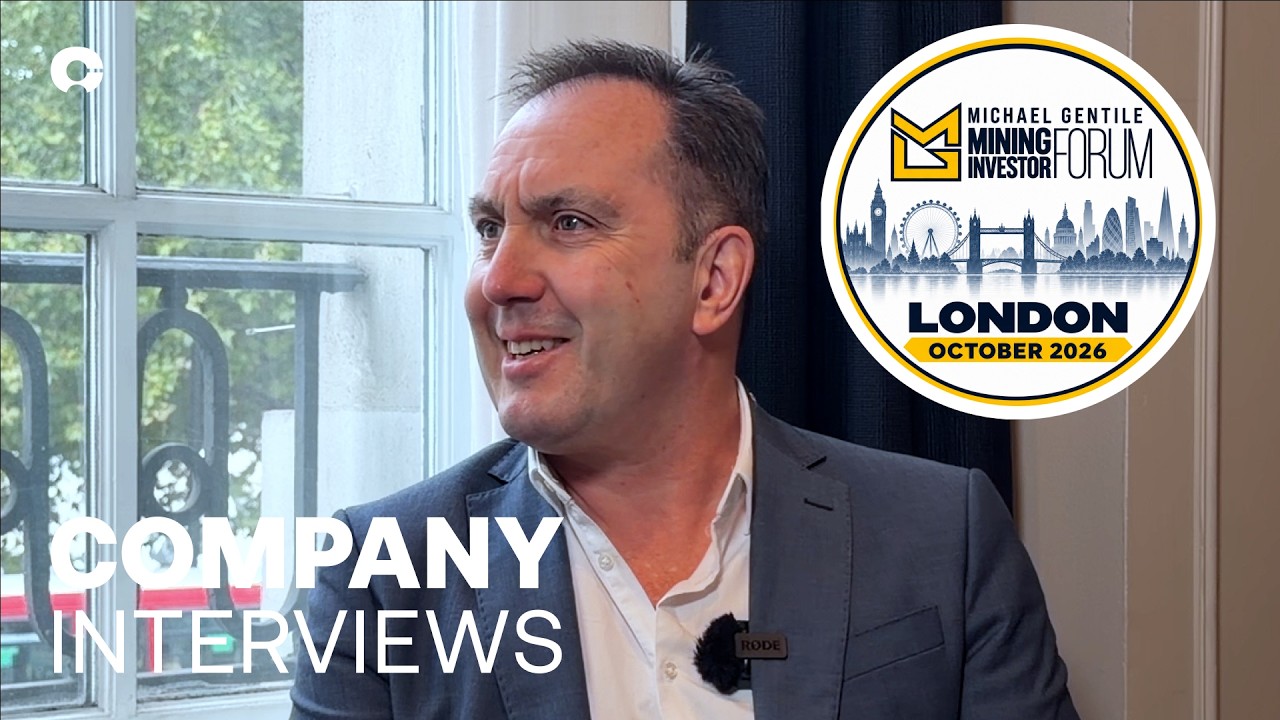
President and Chief Executive Officer of P2 Gold, Joe Ovsenek, measures the larger plan's capital against the PEA's US$382.7 million:
"We still expect, because there's going to be some trade-offs here. The way we're changing the parameters of the mine, we still think it's going to come in around 400 million, which is not a big ticket for a mine."
The estimate covers the plan as a whole and assigns no figure to any single trade-off. Ovsenek ranks the sulfide mill feed ahead of the oxide in the order of mining:
"It'll just be whatever oxide gets freed up as we're mining the sulfide for the mill. That'll be the priority of the mine plan."
Optimizing mine sequencing in the mine plan is also on the enhancement list, under increased return on capital. Pit optimization studies for the FS were underway as of September 2026.
The October Drill Cut-Off & the Path to Feasibility
The updated MRE has a fixed drilling cut-off date: only holes completed by the end of October 2026 will be included, although the Infill and Expansion Drill Program is expected to continue through the rest of the year. By October 14, 2026, the program had completed 105 RC holes since October 2025, 40 at Sullivan and 65 at Lucky Strike.
The updated MRE is targeted for completion later in the fourth quarter of 2026 and will form the basis of the FS, expected in the first quarter of 2027. Feasibility work is running in parallel. Oxide column tests, which trickle leach solution through crushed ore held in a column, were in progress as of September 2026 on 13 columns of Sullivan material and 9 of Lucky Strike. Flotation testing, which separates metal-bearing minerals into a froth, was underway across all zones, and an engineering study for grid connection was in progress.
The Sullivan holes were reported on October 14, 2026, ahead of the drilling cut-off date. The FS due in the first quarter of 2027 is the study in which the hangingwall unit and the alluvium evaluation can both be tested against the waste assumed by the PEA.
The Investment Thesis for P2 Gold
- P2 Gold drilled a new gold-copper unit at the Sullivan Zone in what appears to be ground the 2025 preliminary economic assessment modeled as waste.
- The unit could reduce the Sullivan strip ratio and improve the economics of the feasibility study.
- An evaluation of alluvium in waste to reduce stripping cost was already on the feasibility study enhancement list.
- The 2025 preliminary economic assessment carried US$73.6 million of mining within US$382.7 million of preproduction capital.
- All 6 new Sullivan holes ended in mineralization, and the zone remains open at depth.
- Only holes completed by the end of October 2026 are included in the updated mineral resource estimate, which forms the basis of the feasibility study due in the first quarter of 2027.
With the October drilling, the Gabbs feasibility study has a second route into stripping cost at Sullivan, through how the ground itself is classified, alongside the existing evaluation of what the waste is made of. Both arrive in a study already working from a 12-million-tonne-per-year plan, where management expects capital to come in around 400 million through trade-offs in the mine's parameters. The feasibility study in the first quarter of 2027 is where both can be measured against the waste that the 2025 plan assumed.
TL;DR
P2 Gold has found a predominantly oxide gold-copper unit at the Sullivan Zone in what appears to be ground the 2025 PEA modeled as waste, with the potential to reduce the Sullivan strip ratio. It joins an existing FS evaluation of alluvium in waste aimed at reducing stripping cost. The PEA carried US$73.6 million of mining within US$382.7 million of preproduction capital, and the FS now works from 12 million t per year. Only holes completed by the end of October 2026 will be included in the updated MRE, which underpins the FS due in the first quarter of 2027.
FAQs (AI-Generated)
Analyst's Notes





Subscribe to Our Channel






Stay Informed