




Recurring Road Salt Demand Supports Long-Life Mine Cash Flows



North America uses an estimated 30-40 million tonnes of road salt annually, making mine costs, financing and seasonal demand key to project value.
- US Geological Survey (USGS) estimates highway de-icing accounted for 37% of US salt consumption in 2025, making recurring winter road maintenance a major source of demand for salt mines.
- Federal Highway Administration (FHWA) estimates US state and local agencies spend more than US$4.6 billion annually on snow and ice control, including recurring salt purchases alongside equipment and labor costs.
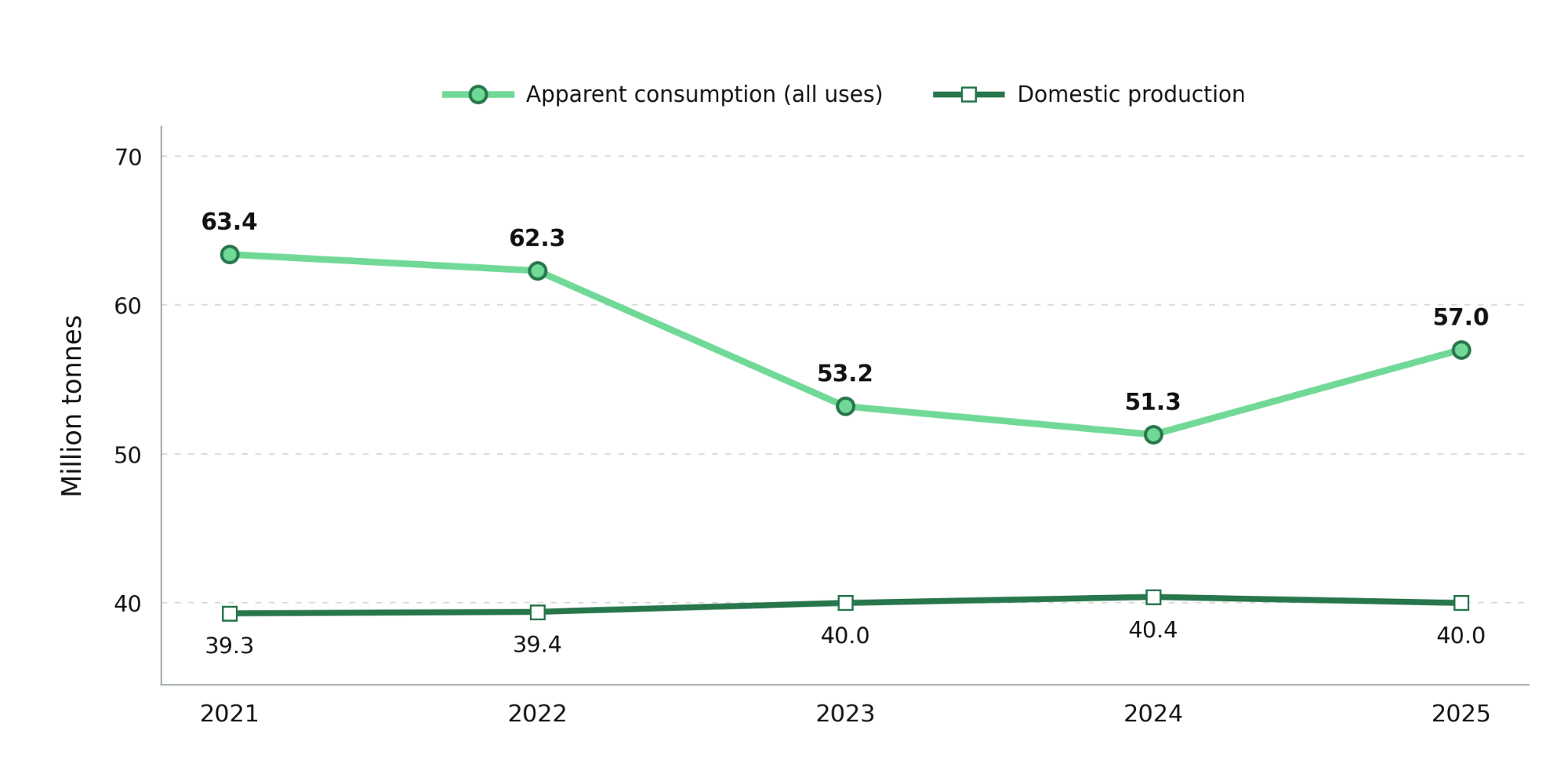
- US apparent salt consumption rose from 51.3 million tonnes in 2024 to an estimated 57 million tonnes in 2025, while domestic production remained near 40 million tonnes, showing consumption growth outpaced domestic output.
- Minnesota's road salt consumption rose from 141,489 tons in winter 2024-2025 to 190,758 tons in 2025-2026 as winter events increased, highlighting weather's influence on annual salt demand.
- Reserve-supported salt projects can target decades of recurring road salt sales, with construction financing and operating margins determining their future cash-flow potential.
Winter Road Maintenance Sustains Recurring Salt Demand
USGS estimates that highway de-icing accounted for 37% of US salt consumption in 2025, compared with 42% for chemical manufacturing. Unlike industrial salt demand, road salt consumption is driven primarily by winter maintenance requirements, creating recurring demand for suppliers across economic cycles. Based on 2019-2023 data, the FHWA estimates that state and local agencies spend more than US$4.6 billion annually on snow and ice control, including salt purchases alongside equipment and labor costs.
Environment and Climate Change Canada (ECCC) recorded approximately 3.94 million tonnes of road salt use during winter 2023-2024 among 250 reporting organizations, including 225 municipalities. These figures cover participating organizations rather than total Canadian consumption. Bedford Park Opportunities Fund estimates that North America consumes approximately 30-40 million tonnes of road salt annually, providing long-life mines with opportunities to serve recurring winter maintenance demand over decades.
Seasonal Weather Changes Annual Road Salt Demand
USGS estimates US apparent salt consumption across all uses rose from 51.3 million tonnes in 2024 to 57 million tonnes in 2025, while domestic production remained near 40 million tonnes. The agency attributes part of the increase to higher road de-icing requirements during winter weather, demonstrating how seasonal maintenance needs can increase salt demand without a corresponding rise in domestic production.
Minnesota's transportation department reported road salt consumption of 114,200 tons in winter 2023-2024, rising to 141,489 tons in 2024-2025 and 190,758 tons in 2025-2026. Average statewide winter events increased from 16.4 to 19.8 over the latest two seasons, contributing to higher salt requirements. These annual fluctuations affect projected salt sales and cash flows, making winter demand variability an important consideration when valuing long-life mines.
Long Mine Lives Extend Road Salt Cash-Flow Potential
Bedford Park's assessment argues that recurring road salt demand can support cash flows over decades. CFA Institute's 2026 infrastructure investment framework evaluates long-lived assets by discounting expected future cash flows to account for risk and the time value of money. This makes a project's reserve-supported mine life important in determining how long it could generate cash flow and what those future earnings are worth today.
Atlas Salt is advancing the Great Atlantic Salt Project in Newfoundland, where 95.0 million tonnes of probable reserves support a planned 24.3-year mine life and 4.0 million tonnes of annual production. Its updated feasibility study projects C$188 million in average annual after-tax free cash flow, with all-in sustaining costs (AISC) of C$34.9 per tonne shipped. The company has also received more than C$300 million in nonbinding financing letters of interest, indicating potential funding sources for its C$589 million pre-production capital requirement.
Nolan Peterson, Chief Executive Officer of Atlas Salt, explains how governments purchase road salt each year:
"The primary buyers of deicing road salt would be the northeast US, the Midwest, Ontario, Quebec, the Atlantic provinces. The buyers are the cities, governments, and municipalities in those regions. Thinking about road safety and infrastructure security, they traditionally buy the salt on year-long contracts."
Salt Market Economics Shape Long-Term Mine Valuations
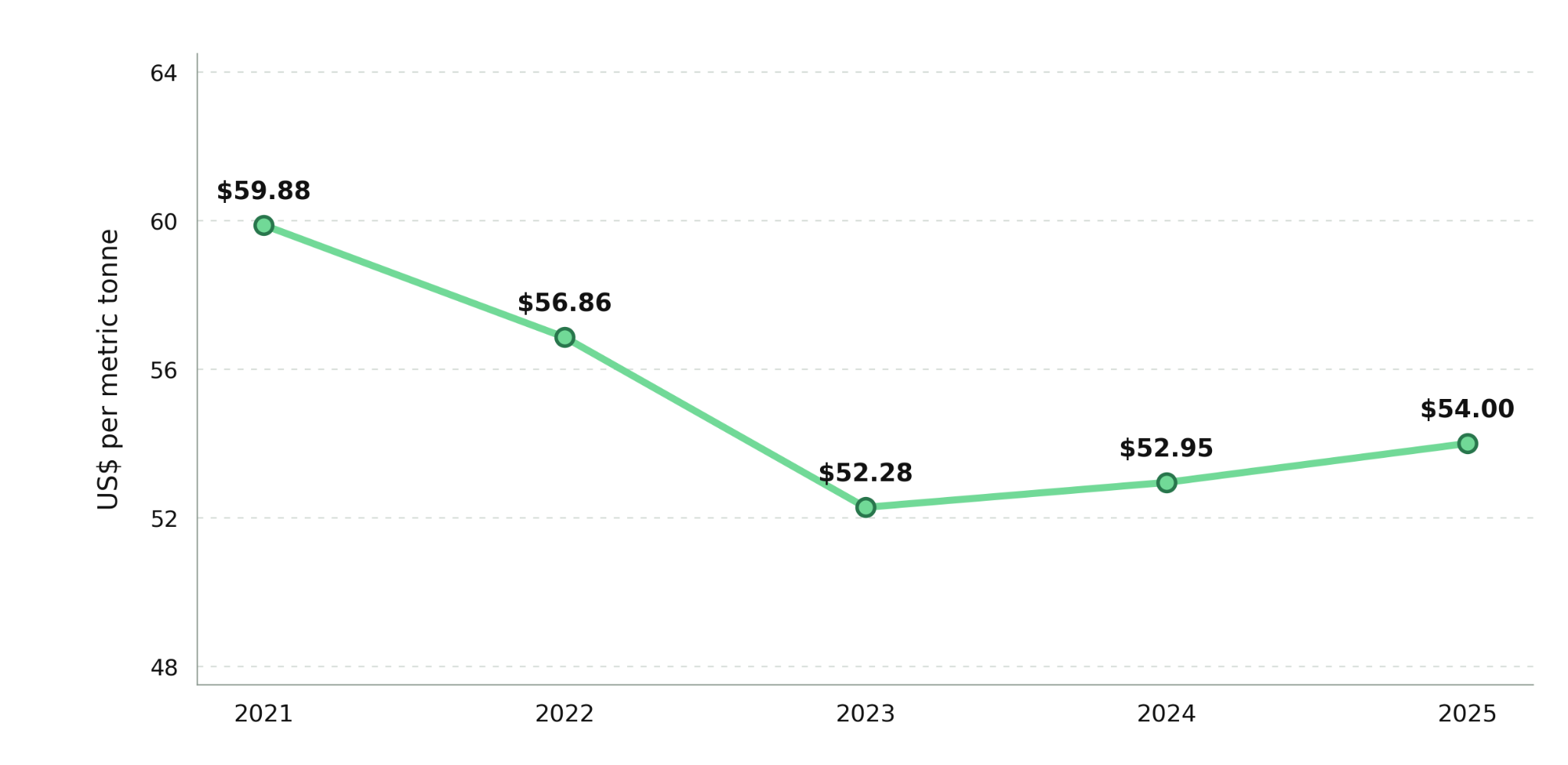
USGS estimates the average mine or plant value of rock salt rose from US$52.95 per metric tonne in 2024 to US$54 in 2025. Bedford Park's assessment explains that salt can be processed through crushing and screening without chemical treatment, reducing the number of processing steps required before sale. This simpler process can help control operating costs, allowing mines to retain more revenue from salt sales and support long-term cash flows.
25 companies operated 60 salt plants across 15 US states in 2025, while annual domestic salt production remained between 39.3 million and 40.4 million tonnes from 2021 through 2025. Bedford Park also cites company-reported estimates of 8-10 million tonnes in annual North American de-icing salt imports, showing that imported supply serves part of the region's recurring demand. This established supply base makes competitive operating costs important when assessing new salt projects, while feasibility studies determine whether projected cash flows can support construction financing.
Minnesota's snow and ice control spending rose from US$121.6 million in winter 2024-2025 to US$211.8 million in 2025-2026, while its average salt purchase cost increased from US$98.11 to US$102.13 per ton. The figures demonstrate recurring government spending on winter maintenance alongside higher salt purchase prices. Bedford Park's infrastructure comparison highlights how long-life mines can serve this established market for decades, while the CFA Institute's discounted cash-flow framework shows how projected earnings over those years contribute to a project's estimated value.
The Investment Thesis for Salt
- Annual winter road maintenance creates recurring salt demand, supporting long-term sales opportunities for mines with extended operating lives.
- Reserve-supported mine lives establish a projected operating period, allowing project valuations to account for potential cash flows across decades of salt production.
- Lower salt extraction and processing costs preserve more revenue from each tonne sold, supporting operating margins and long-term cash-flow potential.
- Feasibility studies estimate future mine cash flows, while price sensitivity analysis shows how changes in salt prices could affect project valuations.
- Securing construction financing and required permits can bring long-life salt projects closer to commercial production and future cash-flow generation.
- Long-life salt projects can support valuations through decades of projected cash flows without relying on continuous increases in salt prices.
Recurring winter road maintenance provides a long-term market for salt mines, creating opportunities for sustained sales across decades. Mines with extended operating lives and competitive costs can convert that demand into future cash flows, supporting higher project valuations as their earnings potential becomes clearer. The investment opportunity lies in the value of those projected cash flows over the mine's operating life rather than relying on short-term increases in salt prices.
TL;DR
Road salt demand recurs because cities and transportation agencies must maintain roads every winter, even as weather changes annual purchasing volumes. Highway de-icing accounted for 37% of US salt consumption in 2025, while Bedford Park estimates North American road salt use at 30-40 million tonnes annually. Established supply and imports serve this market, making competitive operating costs important for new projects. Long reserve-supported mine lives can support decades of potential sales, but future cash flow depends on achievable prices, sustaining costs, and construction financing. Atlas Salt's Great Atlantic project illustrates this opportunity through a planned 24.3-year mine life and feasibility-based cash-flow projections, not current production earnings.
FAQs (AI-Generated)
Analyst's Notes





Subscribe to Our Channel




Stay Informed


