




High-Grade Step-Out Doubles Group Eleven's Catalyst Potential


Group Eleven hits new high-grade zinc-lead zone 550m from its Stonepark resource in Ireland, opening fresh upside beside Glencore's PallasGreen.
- Group Eleven Resources intersected a new high-grade zinc-lead zone 550 metres from the existing Stonepark resource, its best result there since acquiring the project in 2017.
- The headline intercept graded 2.8 metres at 8.3% zinc and lead, including a metre at 22% zinc and lead, with true thickness estimated at 90-100%.
- Assays are pending from the first test for a deeper copper-silver system beneath the new zone, mirroring the model that identified Ballywire's copper-silver root.
- The company holds approximately C$18 million in cash and is running a 70,000-metre, two-year drilling programme split between Ballywire and Stonepark.
- Management will need board approval to reallocate additional Stonepark drill metres toward following up the discovery, alongside its existing "PallasGreen 2.0" target.
Group Eleven Resources has spent much of the past four years building its reputation on Ballywire, the 3.2-kilometre zinc-lead-silver-copper discovery that has anchored the company's story since 2022. But the news that broke in an interview with CEO Bart Jaworski came from a different part of the portfolio entirely: Stonepark, the company's 77.64%-owned deposit sitting adjacent to Glencore's 45-million-tonne PallasGreen project in County Limerick, Ireland. For a project that has waited quietly in Ballywire's shadow since it was acquired in 2017, the result marks a meaningful step-change in exploration potential.
The Stonepark Discovery: What Was Announced
Group Eleven stepped out 550 metres from the existing Stonepark resource and intersected what Jaworski described as the makings of a new discovery: a 15-metre zone of alteration breccia containing an aggregate of roughly a metre of massive sulphide across two separate zones. The headline result was 2.8 metres grading 8.3% zinc and lead, including a metre at 22% zinc and lead. A secondary 16-metre zone of partial replacement mineralisation associated with calcite veins was also intersected, carrying pyrite, sphalerite and galena. True thickness of the new intercept is estimated at 90-100% of the down-hole interval.
A historic hole drilled roughly 150 metres away had previously returned weaker mineralisation in the same area, but nothing to the same standard. Since acquiring Stonepark in 2017, Group Eleven has drilled nine holes at the project without hitting anything comparable. Jaworski was direct about the contrast:
"We have not hit anything like this before. Nothing, not even close."
Context: The Stonepark Resource and Regional Setting
Stonepark currently hosts an NI 43-101 inferred resource of approximately 5 million tonnes grading roughly 11% zinc and lead, split across three zones from an April 2018 technical report: Stonepark North (3.9 million tonnes at 12.1% Zn+Pb), Stonepark West (approximately 1 million tonnes at 9.3% Zn+Pb) and Stonepark itself (approximately 0.5 million tonnes at 8% Zn+Pb). The project sits roughly 20 kilometres north of Ballywire and immediately beside Glencore's PallasGreen deposit, part of the same geological trend.
Group Eleven's exploration approach at Stonepark mirrors the model that has driven recent success at Ballywire: testing beneath the shallower zinc-lead horizon for a deeper copper-silver system. Assays from beneath today's new zone are pending, representing the first such test at Stonepark itself.
Comparable Deposits and the Path to Production
Jaworski framed the discovery's scale against both Irish and international benchmarks. He noted a well-known rule of thumb in the Irish base metals sector for assessing production potential:
"In Ireland there's a rule of thumb, a well-worn rule of thumb here: 10 million tons of 10% zinc and lead, and you can start thinking seriously about getting into production."
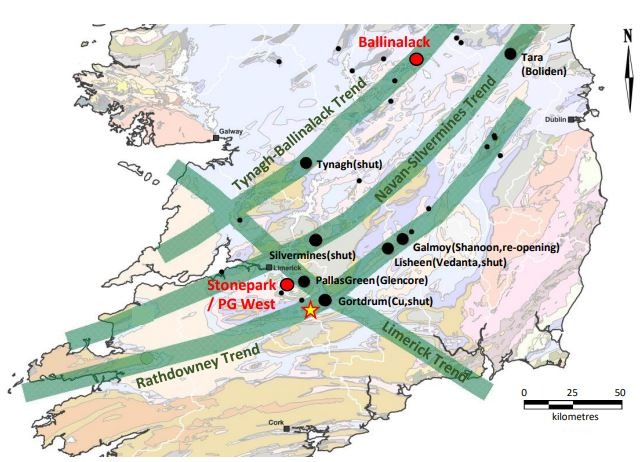
Ireland's existing road, rail and port infrastructure, along with proximity to European smelters, reduces the tonnage and grade threshold needed relative to remote jurisdictions, where a "100 million ton deposit at super grades" might be required to justify the capital cost of building infrastructure from scratch. By comparison, six deposits have historically been brought into production in Ireland, five of them - Silvermines, Tynagh, Lisheen, Galmoy and Gortdrum - in the 10-20 million tonne range at 10-15% Zn+Pb; Tara, at 140 million tonnes, is a regional outlier. Jaworski also pointed to the Arizona Mining/South32 transaction as an international reference point: a 100-million-tonne, 10% Zn+Pb deposit that was acquired for more than US$2 billion roughly five to six years ago, while noting Stonepark is "nowhere near that quite yet."
Depth is also a favourable factor: today's intercept sits at 300-400 metres, materially shallower than comparable Irish-type systems such as Tara Deep, which begins at 1.5 kilometres and grades around 9% zinc and lead across an estimated 30 million tonnes.
Funding and Drilling Plans
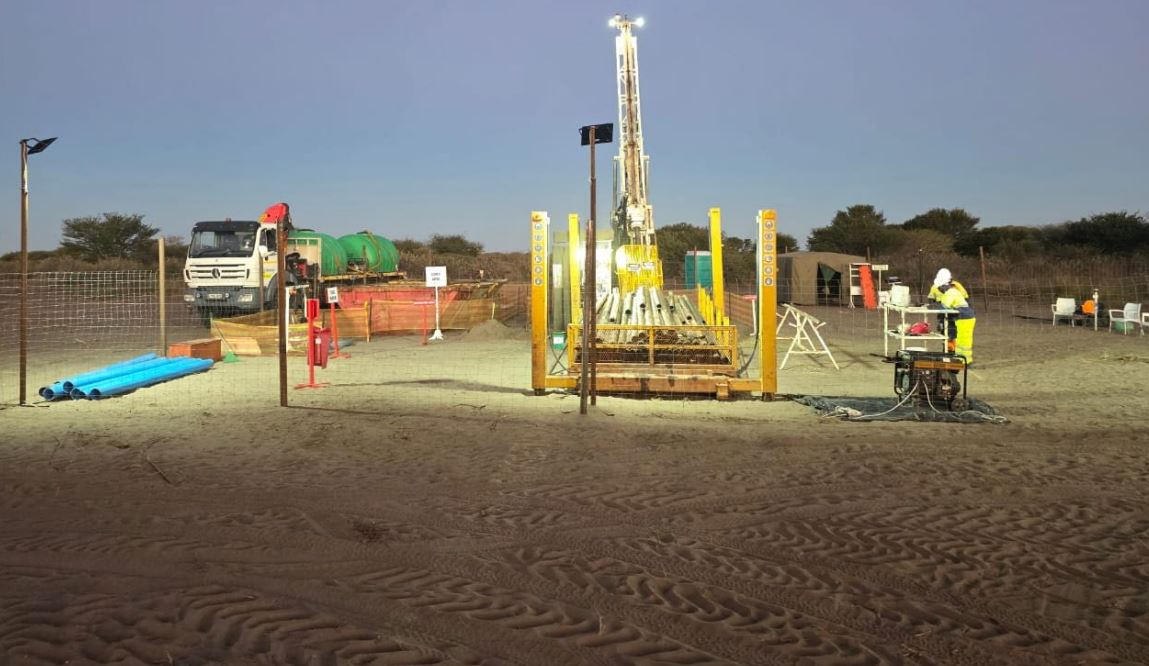
The company holds approximately C$18 million in cash following a C$12 million financing completed in March. That treasury underpins a 70,000-metre, two-year drilling programme split between the two properties: roughly 51,000 metres at PG West, where Ballywire is located, and the remaining 15,000 metres at Stonepark, of which a first-phase 2,700-metre programme is currently underway.
Reallocating additional metres toward following up today's result will require board approval, and management intends to keep the bulk of the 15,000-metre Stonepark allocation focused on its original target: locating a "PallasGreen 2.0" style discovery on the south side of the Limerick Volcanic Complex. Jaworski indicated the company would nonetheless look to add holes near the new zone to test for thicker, richer sections of what he described as a broadly tabular mineralised body.
Investment Thesis
- New exploration catalyst at a previously secondary asset: Stonepark has been the quieter half of Group Eleven's portfolio since 2017; today's step-out result reopens exploration upside at a project with an existing, bankable resource base.
- Untested deeper copper-silver target: Assays are pending from the first test beneath the new zone, applying the same geological model that identified Ballywire's copper-silver root system.
- Scale context is favourable: At 300-400 metres depth and adjacent to a 45-million-tonne Glencore deposit on the same trend, Stonepark sits well within Ireland's infrastructure-advantaged production threshold if tonnage can be grown.
- Existing resource plus new zone potential: approximately 5 million tonnes at roughly 11% Zn+Pb already meets a meaningful portion of the stated 10 million tonne/10% rule-of-thumb threshold for production consideration.
- Fully funded through the news flow: C$18 million in cash supports both the Ballywire and Stonepark programmes without near-term financing pressure.
- Catalyst to watch: Board sign-off on reallocating incremental Stonepark drill metres toward following up the new zone, and pending Cu-Ag assay results from beneath it.
- Portfolio context: Ballywire remains the primary near-term catalyst, with a maiden resource estimate targeted separately; Stonepark's re-rating potential is additive rather than a replacement narrative.
Macro Thematic Analysis
Ireland's zinc districts sit at an intersection of proven mining history and renewed strategic interest, as infrastructure-heavy energy transition demand keeps zinc, lead and silver in focus for base-metal investors. Group Eleven's Stonepark result illustrates a pattern increasingly visible across the Irish midlands: established, previously de-prioritised deposits can still deliver company-relevant discoveries when explorers apply lessons learned elsewhere in their own portfolios. Jaworski's own framing of the opportunity captured the broader camp dynamic at play:
"There's a huge resource right next door to us, literally about a kilometre away, part of the same geological system, and we're finding more of it here."
With Glencore holding both an equity stake in Group Eleven and the neighbouring PallasGreen deposit, and Irish jurisdictional advantages (permitting stability, existing infrastructure, tidewater access) continuing to lower the bar for what counts as an economic discovery, Stonepark's re-emergence adds a second potential value driver to a company whose narrative has, until now, been almost entirely about Ballywire.
TL;DR
Group Eleven Resources has intersected a new high-grade zinc-lead zone 550 metres from its existing approximately 5-million-tonne Stonepark resource in Ireland, the best result at the project since it was acquired in 2017. The intercept graded 2.8 metres at 8.3% zinc and lead, including a metre at 22%, with assays now pending from the first test for a deeper copper-silver system beneath it - applying the same exploration model that identified Ballywire's copper-silver root zone. With roughly C$18 million in cash and a 70,000-metre, two-year drilling programme underway across its Irish portfolio, Group Eleven now has two potential value drivers rather than one, pending board sign-off on further Stonepark follow-up drilling.
FAQ (AI-generated)
Analyst's Notes





Subscribe to Our Channel







Stay Informed


