




98.2% Copper Recovery Tests the Number B26's Resource Already Assumed


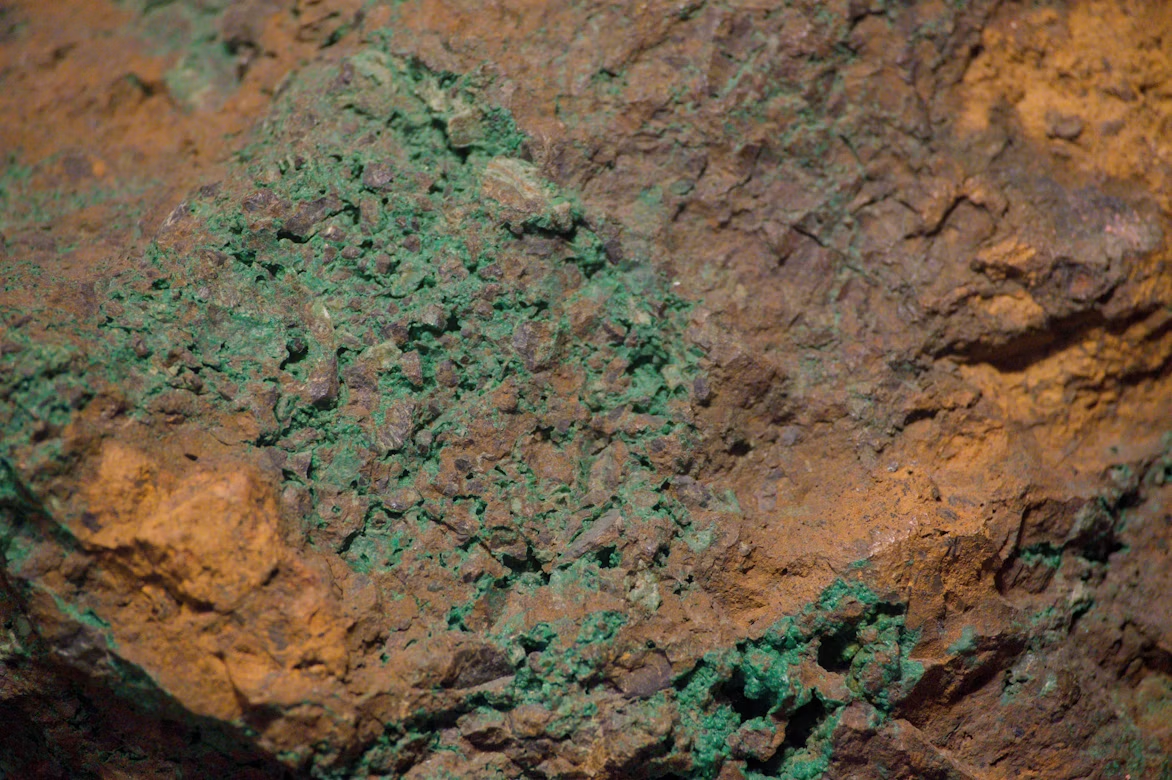
Initial flotation testwork at B26 recovered 98.2% of the copper, close to the 98.3% the 2026 resource assumed. Gold, silver, and zinc work is still running.
- Initial flotation testwork on B26's copper zone recovered 98.2% of the copper into a rougher concentrate grading 23.7% copper.
- The 2026 mineral resource estimate already assumed a copper recovery of 98.3% to set its cut-off grade and in-situ value.
- Fast-floating material points to low residence time and a simple flotation circuit.
- No gold, silver, or zinc recovery figure has been reported, and zinc flotation, cleaner, and locked-cycle testing all remain underway.
- Results are to be folded into the Preliminary Economic Assessment (PEA), which Abitibi Metals is targeting for the first quarter of 2027.
What Has Happened
Abitibi Metals (CSE: AMQ | OTCQB: AMQFF | FSE: FW0) has reported the first results from the metallurgical program running on the B26 polymetallic deposit in Quebec. B26 carries copper, gold, zinc, and silver across three separate zones in Quebec's Abitibi greenstone belt. Flotation on a copper zone sample recovered 98.2% of the copper into a rougher concentrate, the unfinished product that a flotation circuit makes before any cleaning stage, grading 23.7% copper. The program is not yet complete, and what has been released covers only the copper zone. The testwork is running alongside a drill program targeting 40,000 metres, with 3 drill rigs active on the project.
Recovery Assumptions Inside the 2026 Resource
The copper recovery percentage was already included in B26's resource statement before any of this testwork was conducted. The cut-off grade used for underground material is an in-situ value, meaning the value of the metal in the ground before mining costs, of US$100 per tonne after processing recovery. That threshold is equivalent to 1.03% copper, 3.50% zinc, 1.38 grams per tonne of gold, or 143.9 grams per tonne of silver. The in-situ values and the copper and gold equivalent grades behind it were calculated using recoveries of 98.3% for copper, 96.1% for zinc, 90% for gold, 72.1% for silver and 44% for lead, at US$4.50 per pound for copper, US$1.35 per pound for zinc, US$2,500 per ounce for gold, US$30 per ounce for silver and US$0.85 per pound for lead.
On that basis, the deposit holds an indicated resource of 12.96 million tonnes at 2.08% copper equivalent, alongside an inferred resource of 12.34 million tonnes at 2.20% copper equivalent. The base case totals 25 million tonnes; these are resources, not reserves, because economic viability has not been demonstrated.
The flotation work adds a measured number at the rougher stage, where the resource is used as an assumption applied to every tonne. The two are not the same quantity. One is a recovery achieved on a single copper zone composite, a blended sample built from material taken across the zone before any cleaning stage; the other is an input that converts grades into value across the whole deposit, including the zinc and silver zones that the flotation work has not yet reached.
Concentrate Grade, Grind Size & Circuit Design
Three observations from the copper zone sample describe the shape of a processing plant, not its cost. The rougher concentrate assayed 23.7% copper using laboratory-scale equipment. Fast flotation points to low residence time, the time material has to spend in the cells to float, and low residence time suggests a very simple flotation circuit design. The primary grind feeding it, the first stage of crushing and milling, was coarse.
Each of those observations belongs to a single sample from a single zone, obtained in a laboratory. Abitibi Metals says that observations regarding the simplicity of the flowsheet, the layout of the processing steps, and flotation residence time or process plant configuration may not translate into the process design, capital cost, or operating cost outcomes ultimately determined in the Preliminary Economic Assessment (PEA). Laboratory performance may also not be repeated at a commercial scale.
The plant description, therefore, stops at direction. A grind size and a flotation speed do not produce a capital number.
Sample Representativeness & Independent Testing
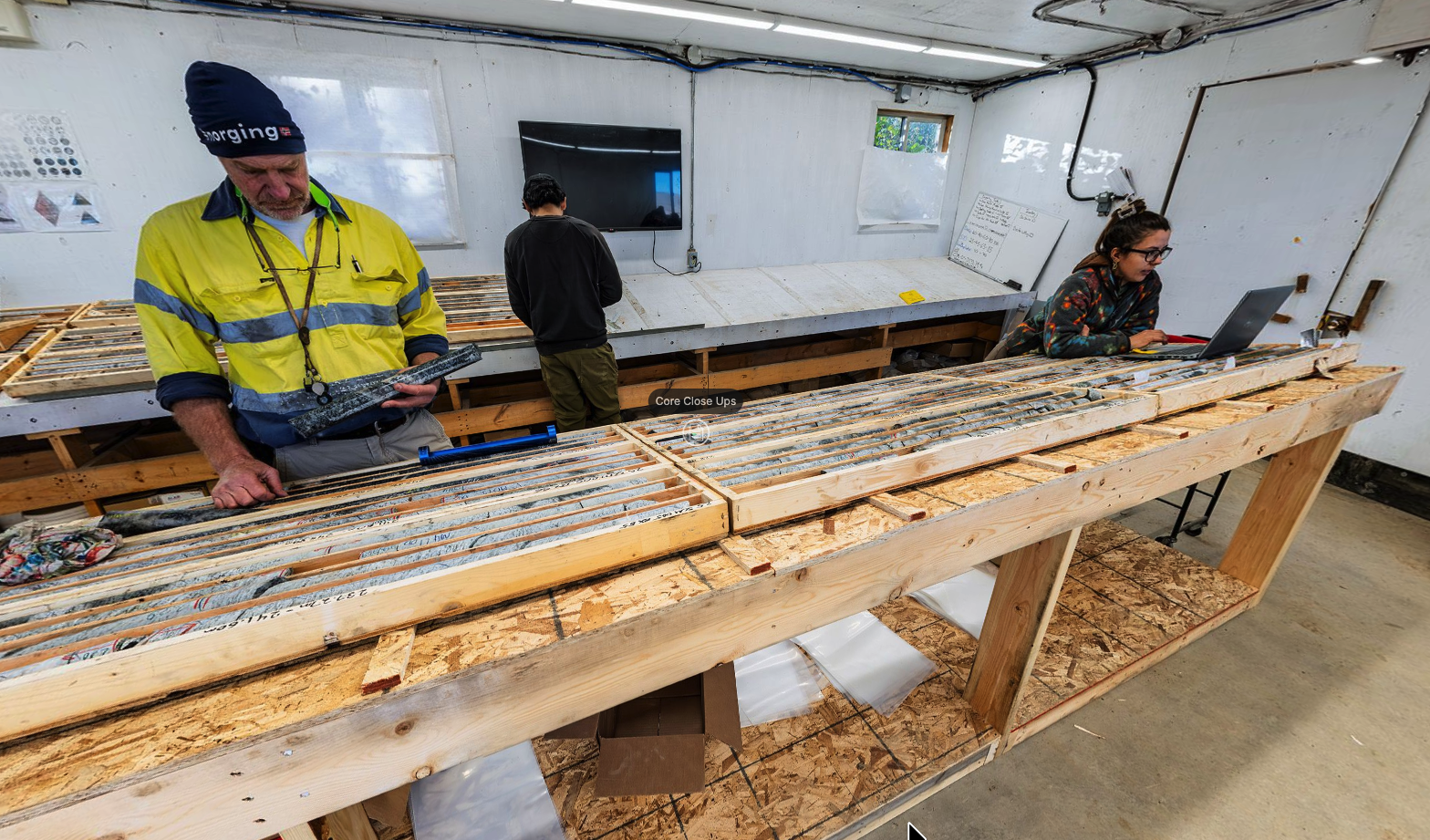
The testwork was carried out by SLR Consulting at its mineral processing facility in Cornwall, United Kingdom.
Abitibi Metals says the program independently confirms metallurgical performance demonstrated during earlier testing, and that it did so using significantly larger and more representative composite samples collected from across the deposit than were available during earlier studies. How much larger has not been quantified.
The company's own caution runs beside the claim. The composite tested may not be representative of the deposit as a whole, and the initial rougher flotation results may not indicate final metallurgical recoveries.
Gold, Silver & Zinc Work Still Underway
This release covers one part of the deposit. Management puts 85% of B26 in the copper-gold stringer zone, a network of narrow mineralized veins, with the balance in a parallel zone of near-solid zinc-silver sulfides. Neither a gold nor a silver recovery figure has been reported, and both metals were described only as in line with previous testwork.
Two zinc-bearing zones account for the balance of the resource. The zinc horizon holds 3.27 million tonnes of indicated resource at 4.02% zinc and 92.5 grams per tonne silver, plus 0.34 million tonnes inferred, and a separate zone of remobilized silver and zinc holds 0.40 million tonnes indicated at 2.55% zinc and 101.5 grams per tonne silver. Zinc flotation testwork on that material is running, and integration of the zinc-rich mineralization into the overall process design is still ahead, along with mineralogical characterization, a full assessment of final concentrate marketability, and batch cleaner and locked-cycle flotation testing, the stages that upgrade the rougher product and then recirculate material to approximate how a continuous plant would behave.
Four of the 5 recoveries the resource assumes have no measured counterpart in this release. Abitibi Metals says cleaner and locked-cycle testing, variability testing, and evaluation of the zinc circuit may produce results that differ materially from those already reported.
Broader Context
Metallurgy is one of several technical streams running at B26 through 2026 and 2027. The company's 2026 program covers drilling, a geological model and resource update, metallurgical and geotechnical testing, and regional drilling. The technical steps beneath those streams are resource growth, scoping and monitoring, mine optimization, metallurgical and geotechnical testing, geochemistry, and hydrogeology.
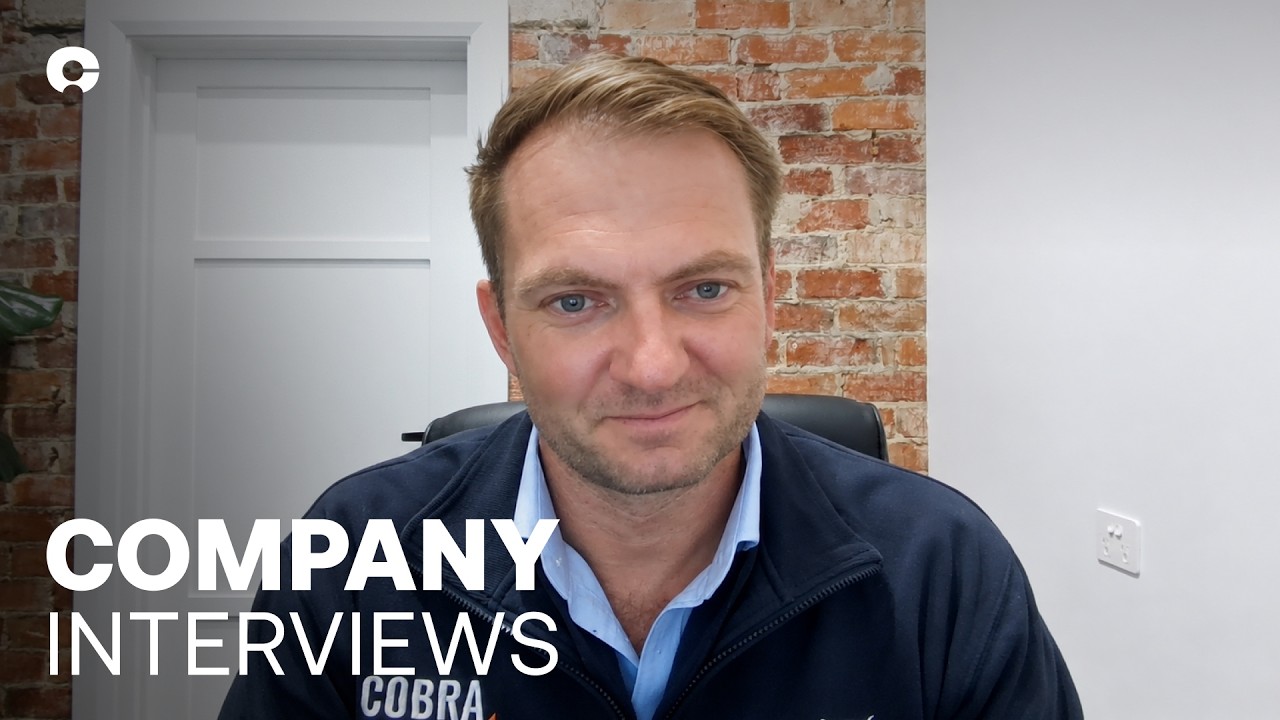
Founder and Chief Executive Officer of Abitibi Metals, Jonathon Deluce, groups the testwork with the geotechnical and environmental programs beside it:
"There's a lot of upside to come through exploration through early development, like PEA and the other ongoing work like we have with met work, geotechnical work, and environmental baseline. So, really moving both strategies forward quite aggressively, which is a strategy that I think worked out quite well for Foran."
The development sequence for those streams comprises technical studies, an internal scoping study, the PEA, and a feasibility study, with environmental baseline work and Indigenous and community engagement accompanying them.
Chief Operating Officer Dave Bernier, who previously held the same role at Foran Mining when McIlvenna Bay entered construction, is now running that development sequence at B26.
What to Watch Next
The near-term items are all metallurgical. Zinc flotation continues, gold and silver optimization continues, and the cleaner and locked-cycle work has yet to be completed. Abitibi Metals will publish the full results of the Phase 2 metallurgical program once it is complete, and those results will be incorporated into the PEA the company is targeting for the first quarter of 2027.
The project setting is part of what that study will price. B26 lies 7 kilometres southeast of the formerly producing Selbaie Mine, which gives it access to existing infrastructure, and management says a power line and a substation run through the project.
For Deluce, the infrastructure already standing on the property bears directly on the study to come:
"This already has very strong supporting infrastructure for this area of the Abitibi, which really increases in my view the likelihood of this being developed, and I think our ability to deliver a robust PEA, which is targeted for the first quarter of 2027."
The study is where the recovery assumptions, the flowsheet, and the mine design must meet the capital and operating cost estimate.
FAQs (AI-Generated)
Analyst's Notes





Subscribe to Our Channel



Stay Informed






















