




Highland Copper's Copperwood $50M Grant Approval Clears Path to 2027 Construction Decision



Highland Copper's $50M Michigan grant is fully approved as Copperwood's construction decision shifts to 2027, backed by a $250M EXIM LOI and rising copper prices.
- Highland Copper's $50 million Michigan Strategic Fund grant has received final approval, and no further state approvals are required.
- The company has pushed its construction decision from the second half of 2026 into 2027, with production now targeted for the second half of 2030.
- Copperwood's after-tax NPV ranges from $168 million at $4/lb copper to $855 million at $6/lb, with spot prices trading near $6.90/lb.
- The $250 million EXIM Letter of Interest (Export-Import Bank of the United States) remains non-binding, and Highland Copper still needs to raise an estimated $100-125 million in equity.
- The company has strengthened its leadership team, hiring an interim CFO from Capstone Copper and a Project Director from Rio Tinto's Resolution Copper project within the past six months.
Highland Copper Company Inc. (TSXV:HI) has cleared a major financing hurdle for its fully permitted Copperwood copper project in Michigan's Upper Peninsula, securing final approval for a $50 million state grant just as copper prices push toward $7 per pound. CEO Barry O'Shea used a recent interview to explain why the company has pushed its construction decision into 2027, and how a stronger copper price and a widening federal financing stack are reshaping Copperwood's economics.
Grant Approval Clears Key Financing Hurdle
The Michigan Strategic Fund gave final approval for $50 million in performance-based grant funding under the state's Strategic Site Readiness Program, with no further State of Michigan approvals required. Of that total, $45 million goes to wholly owned subsidiary Copperwood Resources Inc., with a further $5 million earmarked for the Gogebic County Road Commission, plus a separate $7.5 million Michigan Department of Transportation economic development grant. Regional backers project 380 jobs and roughly $15 million in annual tax revenue from the mine.
O'Shea explained how the reimbursable structure works in practice:
"It's a reimbursable grant when you spend on what they call eligible expenditure, and that's regional infrastructure expenditure... As we spend the first $50 million on that eligible expenditure, they return it to us dollar for dollar on a quarterly basis."
The eligible spend covers power upgrades, telecommunications and road improvements outside the mine gate, a meaningful slice of the project's roughly $400 million capital cost. Management expects to spend $80-90 million in that category overall, well above the US$50 million grant ceiling, meaning the full amount should be drawn.
Construction Decision Pushed to 2027
Highland Copper had previously targeted a construction decision in the second half of 2026. That has now moved into 2027, alongside a corresponding shift in the production target to the second half of 2030. O'Shea attributed the delay to ongoing engineering work rather than a setback: mine-height and cut-off grade optimisation identified in a June 2026 announcement, continued evaluation of incorporating the Upper Copper Bearing Sequence, and the extra time needed to land the Michigan grant. An updated feasibility study is now due in the first half of 2027, with the debt process expected to conclude in the third quarter of that year and construction beginning in the first half of 2028.
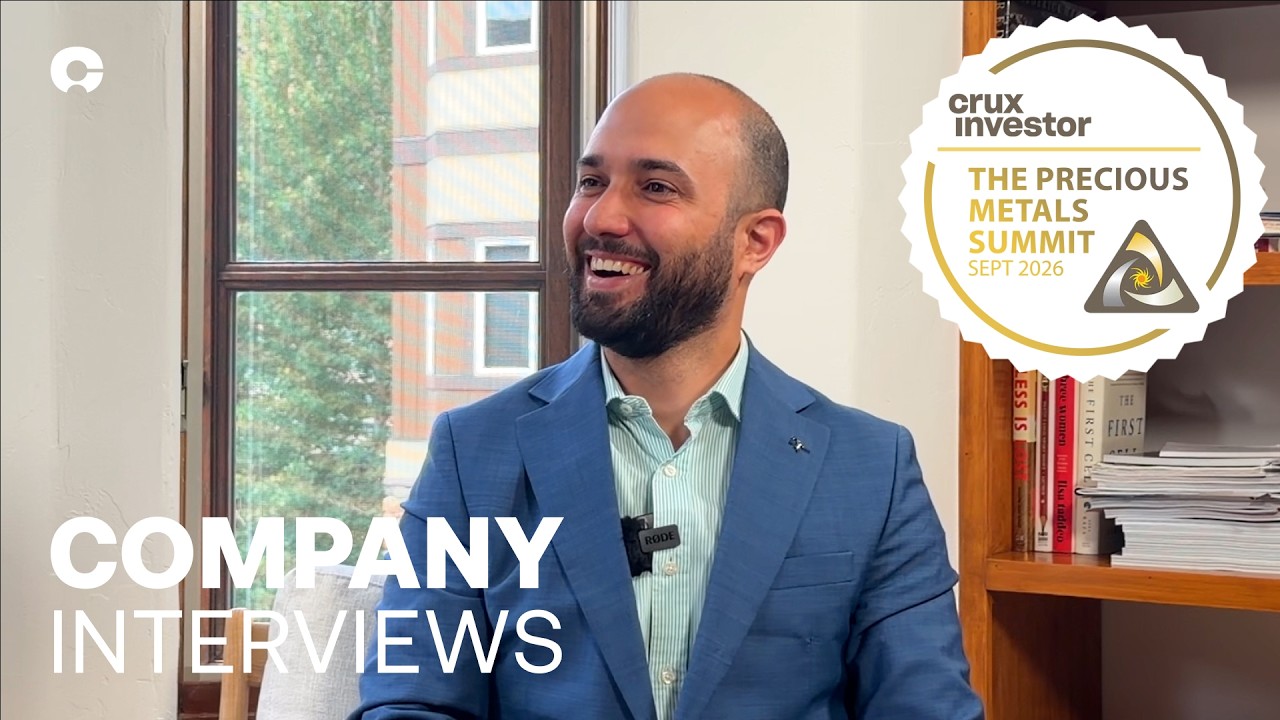
Interview with Barry O'Shea, CEO of Highland Copper
Building the Financing Stack
Beyond the Michigan grant, Highland Copper has a separate $50 million application pending with the U.S. Department of Defense, though O'Shea was candid that the company expects to receive closer to $20-25 million based on precedent. The largest single piece remains a $250 million Letter of Interest from the U.S. Export-Import Bank (EXIM), which the company is now working to convert into binding debt terms through a competitive process likely to bring in two financing partners - potentially including existing 28% shareholder Orion Mine Finance. Together, the non-dilutive sources could cover 70-80% of the capital stack, leaving an estimated $100-125 million equity raise, which O'Shea expects to come from a mix of Canadian, U.S. and other institutional funds once the binding debt terms and updated feasibility study are in hand.
Project Economics and Copper Price Leverage
Copperwood's 2023 feasibility study delivered a $168 million after-tax NPV at a $4 per pound copper price, with an 18% IRR which is respectable, but not enough to attract capital at the time. Long-term consensus copper pricing has since moved to roughly US$5 per pound, and O'Shea laid out the arithmetic behind the updated study due in H1 2027:
"So if you adjust nothing else, you simply take that old study and move from $4 to $5 copper price, it triples the net asset value from $170 million to $500 million. On top of that, we will add in dollar for dollar the $50 million grant from the state of Michigan. We will increase copper recoveries from 86% to 88% and we also think there's a lowering of processing cost per ton."
Company materials put the updated figure at $507 million NPV and 33% IRR at $5 per pound, rising to $855 million NPV and 48% IRR at $6 per pound, a level copper is already trading close to, with futures near $6.90 per pound. On top of the price move, the updated study will layer in the $50 million Michigan grant, a 1.6-percentage-point copper recovery improvement from newly incorporated Jameson cell flotation technology, and potential mine-life additions from converting more of the 79 million tonnes of inferred resource into the mine plan offset partially by three years of capital and operating cost escalation.
Strengthened Leadership Team
Highland Copper has added two senior hires in the past six months to support the move toward construction. Peter Hemstead, a founding executive at Capstone Copper, joined as interim CFO. Trace Arlaud, most recently execution director at Rio Tinto's Resolution Copper project after roughly two decades at Rio Tinto, joined as Project Director around three months ago. Outgoing Project Director Wynand van Dyk remains involved as a technical advisor.
The Investment Thesis for Highland Copper
- The US$50 million Michigan Strategic Fund grant is fully approved with no further state sign-off required, strengthening Copperwood's path to a construction decision.
- The construction decision has moved from H2 2026 to 2027 and production from 2029 to H2 2030, driven by optimisation work and grant timing rather than a fundamental setback.
- After-tax NPV rises from $168 million at $4/lb to $507 million at $5/lb and $855 million at $6/lb, with spot copper already trading near the top of that range.
- The $250 million EXIM Letter of Interest remains non-binding, and roughly $100-125 million of equity is still required as the company works to convert the LOI to binding debt terms.
- Mine-plan optimisation could add value with lower cut-off grade, potential incorporation of the Upper Copper Bearing Sequence, and geotechnical reassessment which could extend mine life and lift the resource-to-reserve conversion ahead of the H1 2027 feasibility study update.
- A strengthened execution team, with recent hires of an ex-Capstone Copper interim CFO and an ex-Rio Tinto Resolution Copper Project Director, adds construction-readiness credibility.
- Strong institutional backing from Orion Mine Finance (28%) and Condire Investors (19.9%), with nil debt following the January 2026 White Pine divestiture close.
Macro Thematic Analysis
U.S. copper policy has shifted decisively toward supporting domestic supply, with copper designated a critical mineral in late 2025 and the White House twice publicly acknowledging Copperwood's role in expanding U.S. copper production. That backdrop is layering federal and state capital - EXIM's letter of interest, a Department of Defense grant application, and now a finalised Michigan grant - onto a project that was already one of the few fully permitted, advanced-stage copper developments in the country. O'Shea framed the underlying commodity case plainly:
"Copper's in a great place. It was identified some time ago, the scale of the fundamental issues around supply and demand, and those have just played out steadily. Copper price has moved nicely, not erratically, and I think it creates a great base for developers."
For a project sitting on the higher end of the cost curve as an underground U.S. operation, that steady, well-telegraphed price strength is precisely what turns a marginal 2023 study into a financeable one in 2027.
TL;DR
Highland Copper has secured final approval for a US$50 million Michigan state grant for its fully permitted Copperwood copper project, removing a key financing uncertainty. The construction decision has shifted from H2 2026 to 2027, with production now targeted for H2 2030, as management continues mine-plan optimisation work. Copperwood's NPV ranges from US$168 million at US$4/lb copper to US$855 million at US$6/lb, with spot prices near US$6.90/lb. A US$250 million EXIM Letter of Interest remains non-binding, and roughly US$100-125 million in equity is still needed. New leadership hires - an ex-Capstone Copper CFO and ex-Rio Tinto Resolution Copper Project Director - support the push toward a 2027 decision.
FAQ (AI Generated)
Analyst's Notes





Subscribe to Our Channel



.jpg)
Stay Informed


