




Fed Hike Pressures Gold as Record Chinese Imports Support Demand


A 22-month PBoC buying streak makes the next reserve report a test of official demand; rising US real yields remain the key downside risk.
- Spot gold fell 0.6% to $4,329.31 an ounce on September 23, 22.6% below its January peak of $5,595; a two-month dollar high raised bullion costs for buyers outside the US.
- The Fed raised rates 25 basis points to 3.75-4.00% on September 16, increasing the income forgone by holding gold. China nevertheless imported more than 1,000 tonnes worth $158.8 billion from January through August 2026, compared with 886 tonnes in all of 2025.
- On September 23, BMI maintained its $4,400 average gold price forecast for 2026 and identified about $3,800 as potential support from central bank buying and geopolitical risk, not a guaranteed floor.
- Ahead of the Fed’s October 27-28 meeting and uncertain US-Iran talks, position size determines how much of a further gold decline a holder can absorb without selling.
- As of August 2026, the People’s Bank of China had reported gold reserve additions for 22 straight months. A September report showing no addition would weaken evidence of official demand, though it would not establish that price support had failed.
Fed Rate Hike & Firmer Dollar Pull Spot Gold 22.6% Below January Peak
Spot gold fell 0.6% to $4,329.31 per ounce at 0623 GMT on 23 September, and December US gold futures slipped 0.2% to $4,366.90, Reuters reported. The dollar held near a two-month high, raising the local-currency cost of dollar-priced bullion for buyers outside the US. Silver, platinum and palladium each lost more than 1%.
Spot now sits 22.6% below the $5,595 January peak recorded by the Financial Times, a Crux Investor calculation on the Reuters print. Physical demand has moved the other way. China imported more than 1,000 tonnes of gold worth $158.8bn in the eight months to August, the FT reported on 22 September from customs data, against $96.5bn spent on 886 tonnes in all of 2025. The price drop has shifted volume toward the buyer least exposed to US rates.
Low Chinese Domestic Returns Drive Record Gold Imports Against Higher US Rates
Gold pays no income, so higher yields raise the return forgone by holding it. The Fed raised its benchmark rate 25 basis points to 3.75-4.00% and projected another increase this year, while the Bank of Japan and European Central Bank also raised rates. Zijie Wu, an analyst at Jinrui Futures, said a firm yuan lowered the local cost of gold imports and created room for larger import quotas.
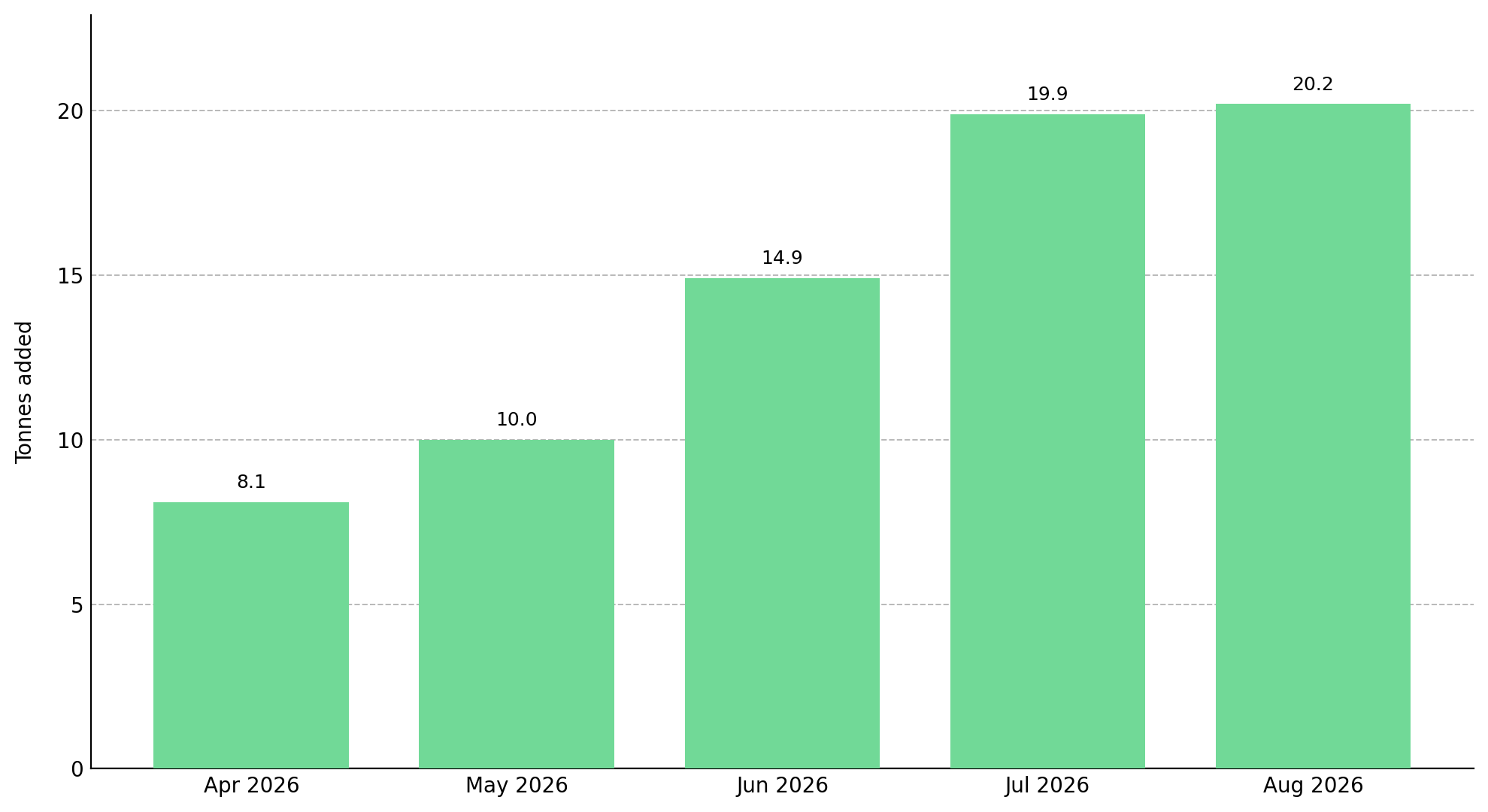
China’s weak property market, a 1.8% year-to-date decline in the CSI 300 and near-record-low government bond yields make gold more attractive than local alternatives. The People’s Bank of China reported adding 20.2 tonnes in August, extending its run of monthly gold reserve increases to 22 and supporting demand despite higher US rates.
Chinese Asset Reallocation Holds Gold Demand Through the Fed Tightening Cycle
Chinese gold imports and official reserve additions have continued despite higher US rates, giving gold a source of demand beyond rate-sensitive buyers. Lisa Liu, Managing Director at Gold Mountains Asset Management, said households and official holders are shifting assets toward gold over multiple years.
Another Fed hike and a firm dollar could weigh on gold, with BMI’s roughly $3,800 support level serving as a downside reference rather than a guaranteed floor. Continued Chinese buying could offset some pressure; BMI’s $4,400 figure is its average forecast for 2026, not a target triggered by a Fed hold. A US-Iran deal could reduce safe-haven demand, while any drop in energy prices could also change expectations for rates.
SAFE’s next reserve release will show whether the People’s Bank of China reported another monthly gold addition. The Fed’s October 27-28 meeting will clarify whether US rate pressure increases.
Higher US Rates Raise Carrying Costs for Physical Gold & Unhedged Producers
Gold bars and physical gold exchange-traded funds pay no income, so higher Treasury bill yields increase the return forgone by holding them. Lower gold prices can also reduce unhedged producers’ revenue and margins if output and costs are otherwise unchanged. Bar and coin premiums add to physical buyers’ costs, while BSI’s planned fourth-quarter dealer assessments could provide a new check on dealer practices.
Christopher Hamilton, Head of Client Solutions for Asia Pacific ex-Japan at Invesco, said gold has become less responsive to rising inflation-adjusted yields than it was historically. Chinese official buying may help offset rate pressure, but it cannot prevent a price decline or guarantee that Western fund inflows return.
The Fed’s next decision and US-Iran talks could move gold in either direction. At $3,800, gold would be about 12.2% below the article’s $4,329.31 spot price; purchase premiums, resale discounts and fund fees could deepen the loss. Position size determines whether a holder could absorb that decline without a forced sale.
Chinese Buyer Mix Shifts Gold Price Sensitivity Away From US Yields
Chinese demand has continued despite pressure from higher US rates: the People’s Bank of China reported a 20.2-tonne reserve addition in August, its 22nd consecutive monthly increase, while China imported more than 1,000 tonnes from January through August. That buying offers a potential offset to demand lost when higher yields make gold more costly to hold.
A SAFE report showing no new reserve addition would end the reported streak and weaken the official-demand case, but it would not establish that all Chinese buying had stopped. Subsequent reserve reports, import volumes, US real yields and the dollar provide clearer tests of whether demand continues to offset rate pressure.
At $4,329.31, spot gold was 22.6% below its January peak. Continued official buying during a rate-driven decline would strengthen the contrarian case for gold at a lower price; rising real yields or weaker Chinese demand would increase the risk of further losses.
Analyst's Notes





Subscribe to Our Channel



Stay Informed






















