




How Gulf Sulfur Disruption Is Repricing Copper Projects by Processing Route


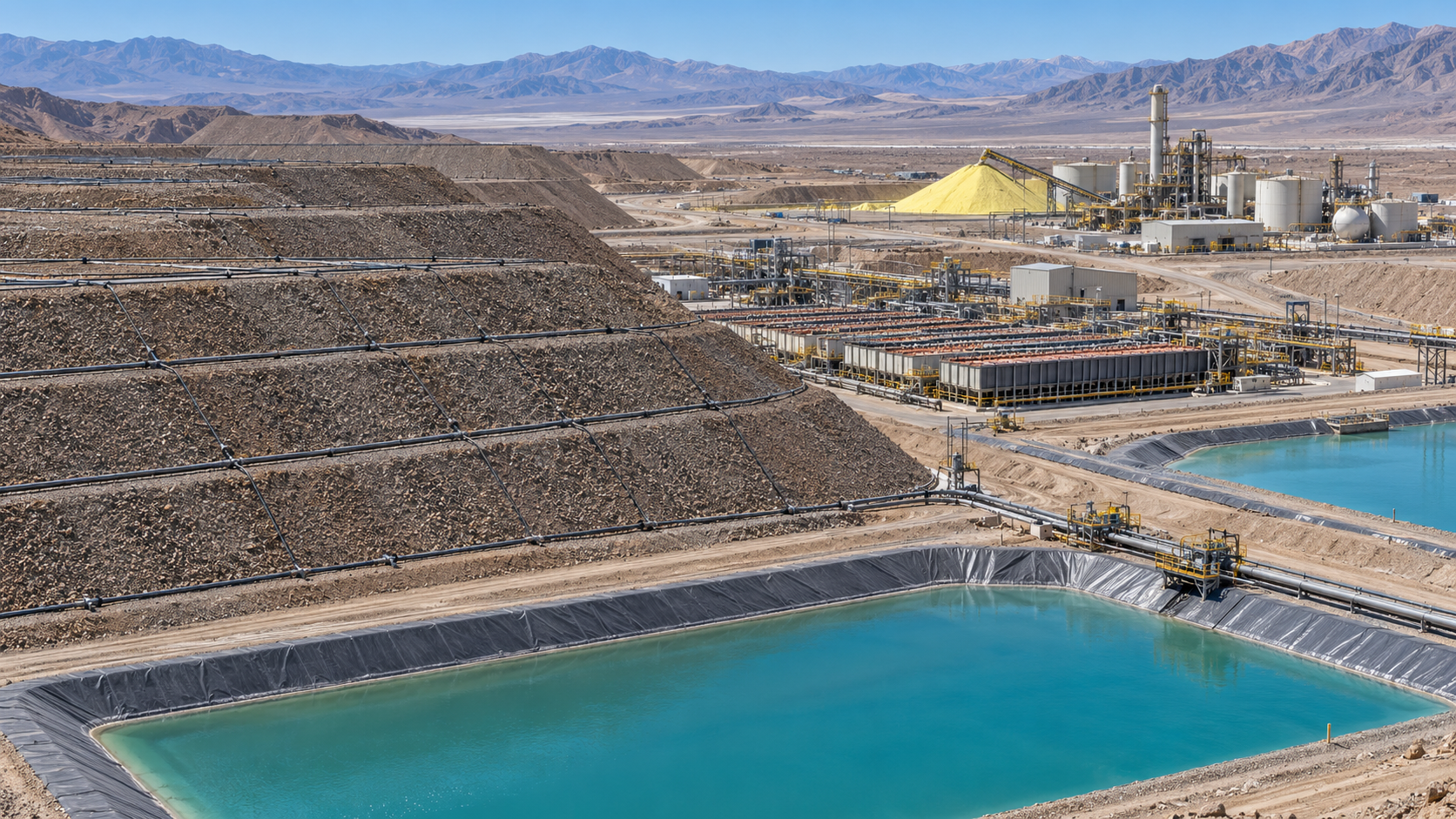
Stalled Gulf sulfur shipments are raising costs for the 17% of copper supply that depends on acid, pressuring margins and production growth.
- The International Energy Agency (IEA) reports that around half of global seaborne sulfur trade moves through the Strait of Hormuz, where the conflict has essentially halted sulfur shipments, while the US Geological Survey (USGS) places the Gulf at roughly a quarter of global sulfur production, constraining feedstock for the sulfuric acid used in copper leaching.
- Solvent extraction-electrowinning (SX-EW) accounts for 17% of global copper supply and leaves the Democratic Republic of the Congo (DRC) and Chile most exposed to disrupted sulfur supplies; in Chile alone, a Chinese sulfuric acid export ban lasting through 2026 would place 200,000 metric tons of copper production at risk, equal to 1% of global supply.
- International Copper Study Group (ICSG) data show SX-EW output rose 4.3% in the first half of 2026 while concentrate production fell 2.6%, placing higher sulfuric acid costs on the only production route that expanded during the period.
- Sulfur accounts for 20% of cash production costs for DRC SX-EW producers, with each US$100-per-metric-ton increase in the sulfur price raising cash operating costs by 4%.
- Smelters capture sulfur dioxide released while processing copper sulfide concentrate and convert it into sulfuric acid, while projects that recover copper through leaching must purchase or produce acid; higher acid prices therefore raise leach costs without creating the same direct exposure for concentrate projects.
Hormuz Disruption Pushes Sulfur Prices to Five-Year Highs, Raising Copper Leach Costs
Industrial sulfur is primarily recovered as a by-product when refiners and gas processors remove it from crude oil and natural gas, tying sulfur availability to oil and gas processing rather than copper demand. The IEA reports that around half of global seaborne sulfur trade moves through the Strait of Hormuz and that the conflict has essentially halted sulfur shipments through the Strait. S&P Global estimates that the Middle East supplies 47% of seaborne sulfur, with seven of the world’s 10 largest importers sourcing more than 40% of their supply from the region, including five that source more than 50%. Sulfuric acid dissolves copper from oxide ore, so a leach operation cannot produce cathode without it regardless of the deposit’s grade or reserve life.
By April 2026, sulfur prices had risen approximately 20% since the Iran war began to around US$600 per metric ton in Indonesia and 37% to US$715 per metric ton in Southern Africa, while small, bagged lots held at African port warehouses had risen 66% to US$1,000 per metric ton. These prices were the highest recorded in at least five years. For operations that purchase sulfur or sulfuric acid, these increases flow through processing expenses and raise C1 cash costs, which measure the cash cost of producing each pound of copper before sustaining capital.

According to ICSG, SX-EW output rose 4.3% in the first half of 2026 while concentrate production fell 2.6%. Goldman Sachs estimates that SX-EW accounts for 17% of global copper supply and identifies the DRC and Chile as the two jurisdictions most exposed because their producers depend on imported sulfur or sulfuric acid. The disruption therefore raises reagent costs for the only copper production route that expanded during the first half.
Sulfur at 20% of Cash Costs Raises Margin Risk for Import-Dependent Leach Projects
Sulfur accounts for 20% of cash production costs for DRC SX-EW copper producers, with each US$100-per-metric-ton price increase raising cash operating costs by 4%, reducing margins and weakening expansion economics. Goldman Sachs estimates that DRC producers normally hold 2 to 3 months of sulfuric acid inventory, placing approximately 125,000 metric tons of 2026 production at risk if delays extend beyond that window. A Chinese sulfuric acid export ban through the end of 2026 would place another 200,000 metric tons of Chilean production at risk, equal to 1% of global supply, because Chile sourced approximately one-third of its acid from China in 2025. Exposure therefore depends on proximity to sulfuric acid supply and whether an operation purchases acid or produces it on site.
Port Proximity & On-Site Acid Plants Cut Chilean Leach Cost Exposure
Marimaca Copper is advancing the Marimaca Oxide Deposit toward a final investment decision after receiving environmental approval in November 2025, with detailed design, sectorial permitting, early works planning, and project financing underway. Its location 25 kilometers from the Port of Mejillones provides access to sulfuric acid and other key consumables, supporting lower execution risk. The 2025 Definitive Feasibility Study reports C1 cash costs of US$1.45 per pound during the first five years of steady-state operations and US$1.84 per pound over the life of mine, while an owner-operated sulfuric acid plant offers a further cost-reduction opportunity.
Hayden Locke, President and Chief Executive Officer of Marimaca Copper, explains how Middle East conflict creates acid-supply uncertainty:
"I think there is quite a lot of uncertainty that's coming out of what Mr. Trump is doing in the Middle East and what's going on with Iran, and it does create quite a lot of uncertainty in terms of the global supply chain and certainly oil supply, but also other commodities that go into the mining industry, particularly for us, acid supply."
Acid supply is an immediate cost issue for projects nearing production, while exploration-stage projects must first prove grade and scale. As drilling defines a deposit, its likely processing route determines whether sulfuric acid will become a major operating cost. This makes new Chilean discoveries important both for future copper supply and for how economically that supply could be produced.
Fitzroy Minerals has completed 92 diamond holes totaling 16,376 meters at Buen Retiro. Recent results included 8.8 meters at 3.70% copper from 30 meters, including the project’s highest-grade sample of 21.84%, while separate drilling extended known mineralization by 100 meters and the main trend to 1.9 kilometers. The added grade and scale support the effort to define higher-confidence resources for the development plan and maintain its stated early-2028 production target.
Gulf Sulfur Disruption Raises Leach Costs While Zero Smelter Charges Support Concentrate Projects
Smelters capture sulfur dioxide released while processing copper sulfide concentrate and convert it into sulfuric acid. Concentrate projects use flotation rather than acid leaching and therefore avoid direct sulfuric acid purchases, while SX-EW projects remain exposed to higher acid prices and Gulf-related supply delays. The IEA records the 2026 annual copper concentrate treatment and refining charge (TC/RC) benchmark at US$0 per metric ton, eliminating benchmark TC/RC revenue for smelters and showing competition for concentrate feed. Project comparisons must therefore weigh TC/RC changes and smelter access for concentrate producers against sulfuric acid sourcing and pricing for SX-EW producers.

High Recoveries & Existing Plants Reduce Processing Risk
Selkirk Copper had completed 45,299 meters across 187 holes in its 50,000-meter Phase 2 program at Minto in Yukon by August 18, with a Preliminary Economic Assessment (PEA) for the planned restart targeted for the third quarter of 2026. Drilling returned 1.93 meters grading 13.12% copper equivalent at Minto North and extended mineralization at Area 118, where a 6.0-meter interval grading 3.73% copper equivalent lies 125 meters from historical underground development. These results add definition and expansion potential near planned mining areas, while the existing 4,100-tonne-per-day processing plant limits the new infrastructure required for the restart.
Colin Joudrie, President and Chief Executive Officer of Selkirk Copper, explains why smelters are paying premiums for concentrate:
"Treatment charges and refining charges, which is what smelters charge miners to process material, are negative. So that means the smelters are actually paying the miner a premium on top of a premium to receive their concentrate, because they're just not getting enough to convert it into copper."
An existing plant lowers the cost and time required to begin producing concentrate, but project economics also depend on how efficiently the ore can be processed. Higher recovery captures more copper from each metric ton of ore, while higher concentrate grades reduce the amount of material sent to smelters. Together, these factors determine how much a project can benefit from strong smelter demand for copper concentrate.
Abitibi Metals reported initial metallurgical testwork at B26 in Quebec showing 98.2% copper recovery into a concentrate grading 23.7% copper. The rapid recovery and coarse grinding requirement point to a potentially simple processing circuit, reducing processing complexity and strengthening confidence in the proposed route ahead of a PEA.
Rising Sulfuric Acid Costs Make Early Mineralogy a Future Cost Indicator
Without a defined processing flowsheet, a project has no quantified reagent consumption or sulfuric acid exposure to include in its cost model. Mineralogy nevertheless provides an early indication of the likely processing route: oxide and acid-soluble copper mineralization generally supports leaching and creates sulfuric acid exposure, while sulfide mineralization generally supports flotation into concentrate and avoids direct acid purchases. The balance between oxide and sulfide material observed in early drilling therefore provides an early indication of future processing costs.
Mixed Mineralization Requires Separate Leach & Flotation Cost Tests
Rising sulfuric acid prices make processing-route selection more important for development-stage projects containing both oxide and sulfide material. Sending oxide ore to leaching increases acid exposure, while processing sulfide ore through flotation introduces treatment charges and smelter-access risk. The balance between those routes will determine which cost pressure carries more weight in the project economics.
Cobra Resources is targeting September step-out drilling at Manna Hill in South Australia, where Blue Rose’s shallow oxide mineralization transitions into primary sulfides at depth, leaving both leaching and concentrate production as potential processing routes. Historical drilling returned 47 meters grading 2.2% copper and 0.78 grams per metric ton gold from 11 meters, supporting the grade case ahead of further work to define scale. The next program will test Blue Rose and two additional porphyry targets, with greater sulfide scale strengthening the case for concentrate production without direct sulfuric acid purchases.
Sulfide Discoveries Signal Lower Future Exposure to Sulfuric Acid Costs
Earlier in the project cycle, mineralogy can indicate the likely processing route before a flowsheet or cost model exists. Primary sulfide discoveries point more directly toward flotation and concentrate production, limiting future reliance on sulfuric acid. Early drilling therefore carries a valuation implication beyond grade and scale because mineralogy indicates whether a discovery is likely to depend on acid supply or smelting capacity.
Mogotes Metals completed its first drilling season at Filo Sur in the Vicuña district with two discoveries along the roughly 10-kilometre Macho Muerto Fault Zone. Albor returned 180 meters at 0.98% copper equivalent from 108 meters, including 58 meters at 1.77%, while Cruz del Sur intersected more than 640 meters across two mineralized intervals. With most of the structure still undrilled, the planned 20,000-metre program for 2026 and 2027 will extend both discoveries and test new targets, helping determine the scale of the wider mineralized system.
59% Refined Copper Concentration Raises Supply Risk as Gulf Disruption Lifts Leach Costs
ICSG data show that China and the DRC produced approximately 59% of global refined copper in the first half of 2026, while their combined output rose 5.7%, comprising increases of 5.3% in China and 7.9% in the DRC. Global refined output excluding those two countries declined 1.9% during the same period. Chilean refined production fell 12% as smelter operating constraints and maintenance reduced concentrate-based electrolytic output by 32%, while output across Asia excluding China fell 0.7%.
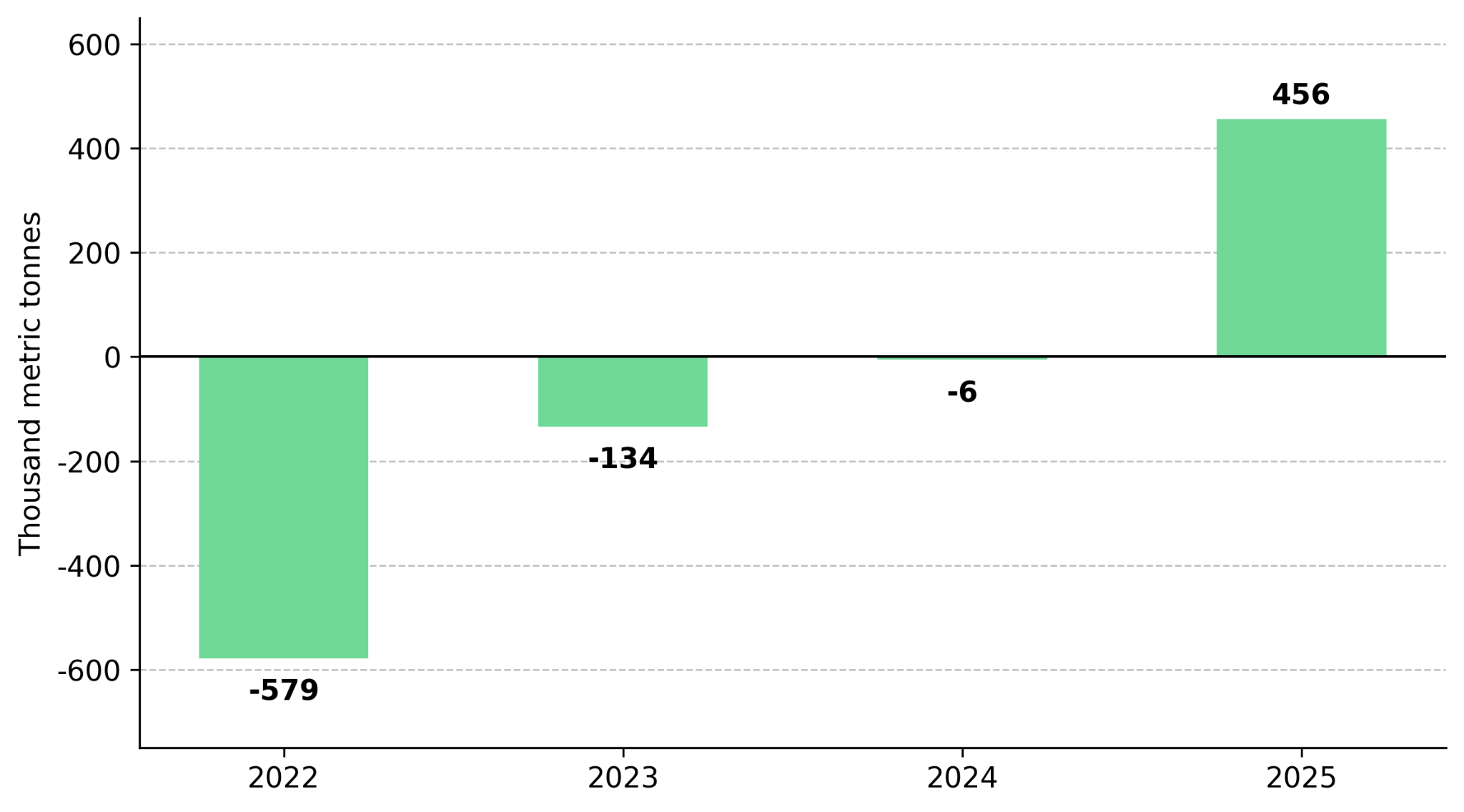
Refined copper output outside China and the DRC fell 1.9% in the first half of 2026, showing that cathode production growth is becoming more concentrated geographically but not directly measuring third-party smelting capacity available to concentrate producers. Concentrate projects should therefore be assessed using contracted smelter capacity, TC/RCs, and transport routes, while leach projects should be assessed using sulfuric acid sourcing, inventory, and delivery costs. The DRC carries both jurisdictional risks: Goldman Sachs identifies it as one of the two countries most exposed to disrupted sulfur flows, while a DRC order banned concentrate exports to direct more material to domestic processors.
A sustained resumption of Gulf sulfur shipments would increase supply to import-dependent regions and narrow regional sulfuric acid price gaps. A further decline in refined output outside China and the DRC during the second half of 2026 would reduce processing options for concentrate producers and increase reliance on fewer smelters. Monthly ICSG refined production data and Chilean Copper Commission output and export statistics provide recurring checks on whether sulfur availability and refining concentration are raising or reducing these supply risks.
The Investment Thesis for Copper
- SX-EW accounts for 17% of global copper supply and was the only production route to expand in the first half of 2026, rising 4.3% while concentrate output fell 2.6%, so higher sulfuric acid costs affect the only route contributing supply growth during the period.
- Sulfur represents 20% of cash production costs for DRC SX-EW producers, with each US$100-per-metric-ton increase in the sulfur price raising cash operating costs by 4%, making sulfur pricing a direct driver of project margins.
- Projects that recover copper through acid leaching remain exposed to sulfuric acid pricing, inventory, and delivery risk, while concentrate projects avoid direct acid purchases but remain exposed to TC/RC changes and smelter access.
- Among leach projects, proximity to acid suppliers or on-site production reduces procurement and transport risk, while concentrate projects that reuse existing processing plants require less new infrastructure before production can begin.
- Reagent exposure remains unquantified until an exploration-stage project defines its processing method, so the proportion of oxide and sulfide copper identified in early drilling provides an initial indication of whether future operating costs will include sulfuric acid.
The Gulf sulfur disruption adds reagent availability to copper supply analysis because projects that dissolve oxide ore in sulfuric acid cannot produce cathode without it. Projects with similar grades, capital requirements, and mine lives can therefore carry different cost risks depending on whether they purchase acid, produce it on site, or avoid direct acid use by producing concentrate. Project assessment should identify the processing route before comparing economics, with sulfuric acid sourcing and smelter access reviewed alongside capital requirements, projected operating costs, and permitting. Position sizing should reflect each asset’s exposure to acid procurement and third-party smelting rather than rely solely on a directional copper price view, while Gulf sulfur shipments, regional acid prices, and monthly refined-output data provide measurable checkpoints.
TL;DR
About half of seaborne sulfur trade moves through Hormuz, where stalled shipments pushed sulfur prices to five-year highs. Solvent extraction-electrowinning produces 17% of global copper and was the only route to expand in the first half of 2026, making higher acid costs a supply-growth risk. In the DRC, sulfur represents 20% of cash production costs, and each US$100-per-metric-ton increase raises operating costs by 4%. Projects near acid suppliers or with on-site production carry lower procurement risk, while concentrate projects avoid direct acid purchases but face smelter access and treatment-charge exposure. China and the DRC produce 59% of refined copper, adding geographic concentration to the processing risk.
FAQs (AI-Generated)
Analyst's Notes





Subscribe to Our Channel














Stay Informed


