Integra Resources Near-Mine Oxide Drilling: 7 Things You Need to Know


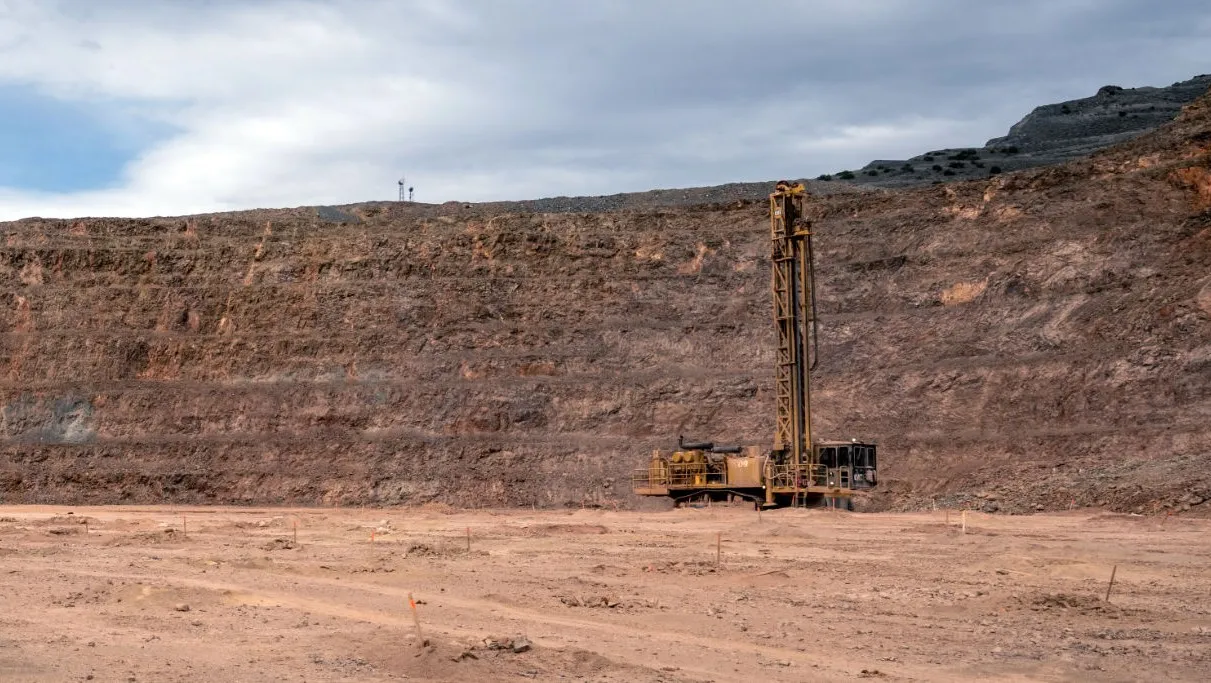
Integra’s Florida Canyon drilling highlights near-mine oxide growth via dump reprocessing and inter-pit zones, with a Q3 2026 study as key catalyst.
Project Overview
Integra Resources Corp. (TSXV: ITR; NYSE American: ITRG) has released near-mine oxide gold drilling results from its Florida Canyon Mine in Nevada that define two resource expansion pathways: the conversion of historical dump material into mineable inventory and the delineation of in-situ mineralisation in sparsely drilled inter-pit zones. The drill results will feed directly into a revised feasibility study and updated technical report targeted for the Third Quarter of 2026. These drill results are not exploratory curiosities; they are direct inputs into the resource model that will underpin the next mine plan.
1. Two Distinct Resource Growth Vectors
The program is structured around two separate opportunities, each with a different geological character and a different path to economic conversion.
The first opportunity targets historical South Mine Dump material, which is above-surface gold-mineralised waste mined under a significantly lower gold price regime and at cut-off grades that are higher than those applied today. The second opportunity targets in-situ inter-pit zones, specifically the saddle and ridge areas between the C7 / Central Pit, North Pit, and Radio Tower areas, which have been sparsely drilled and sit adjacent to active mining infrastructure.
2. Dump Material Economics Are Driven by Gold Price Re-Rating, Not New Discovery
The South Dump opportunity is a re-evaluation of material that was previously uneconomic, not a new geological discovery. The economic case depends on the current gold price environment.
The dump material was originally mined at cut-off grades applicable to a significantly lower gold price. With a current mine cut-off grade of 0.11 grams per tonne (g/t) gold at Florida Canyon (calculated at a gold price of US$2,000 per ounce), approximately 67% of all South Dump drill intercepts exceed that threshold. Top intercepts include 0.30 g/t gold over 102.1 metres, 0.55 g/t gold over 54.9 metres, and 0.22 g/t gold over 103.6 metres. The South Dump sits approximately 1 km from processing infrastructure, and the North Dump approximately 3 km, reducing haulage costs and capital requirements relative to more distal mineralisation. If gold prices remain at current levels, the economic case for converting this material to mineable inventory strengthens further, though cut-off grade calculations incorporate several factors beyond price alone.
3. Inter-Pit In-Situ Zones Carry the Strongest Grade & Thickness Combination
The C7 / Central Pit and Radio Tower in-situ intercepts stand out for their combination of grade and thickness, with the company noting that several intercepts return grades above the current average resource grade at Florida Canyon.
The Radio Tower Pit returned 0.32 g/t gold over 138.1 metres and 0.42 g/t gold over 58.5 metres, with approximately 26% of all Radio Tower intercepts exceeding the current cut-off grade of 0.14 g/t gold. The C7 / Central Pit returned 0.36 g/t gold over 128.0 metres, 0.82 g/t gold over 50.0 metres, and 0.48 g/t gold over 97.5 metres, with approximately 38% of intercepts exceeding the 0.11 g/t gold cut-off. Vertical continuity is a recurring theme: multiple intercepts exceed 100 metres in true width, and many zones remain open laterally. The company notes that several intercepts exhibit grades above the current average resource grade, suggesting these areas could improve the blended grade profile of the operation, which carries direct implications for recoveries, production per tonne processed, and ultimately all-in sustaining cost (AISC) per ounce.
4. Infrastructure Proximity Is the Key Economic Differentiator
The South Dump material sits within the permitted mine boundary, and the inter-pit zones sit within and adjacent to the existing mine footprint. In a heap leach operation, haulage distance directly affects operating costs. Mineralisation that can be directed to the leach pad without new haul roads, new crushers, or extended infrastructure represents a lower incremental capital intensity per ounce added than a standalone discovery. The company explicitly characterises these opportunities as low-strip scenarios with minimal stripping and infrastructure requirements, which is the operating cost structure that matters most for heap leach economics.
5. Metallurgical Confirmation Is Still Required for Dump Material
Heap leach amenability for the South Dump material is expected but not yet confirmed. Ongoing metallurgical testing is required before this material can be formally included in reserve estimates.
The company’s recent results indicate that the dump material is expected to be amenable to heap leach processing, subject to ongoing metallurgical testing. The company has also noted that samples returning above 0.156 g/t gold underwent cyanide-soluble analysis and preg-robbing tests as part of the sampling program, providing preliminary metallurgical characterisation data. However, until formal metallurgical test work confirms recovery characteristics across the full volume of dump material, the dump opportunity remains a resource conversion candidate rather than a confirmed reserve addition. This is a standard step in project development that must be completed before the material translates into a mine plan contribution. The updated technical report, expected in the Third Quarter of 2026, is the likely vehicle for formalising these results.
6. The 2026 Drill Program Scale Signals Conviction in the Resource Growth Thesis
The 2026 drill program, at 42,500 metres, is substantially larger than the 16,009 metres completed in 2025.
Of the 42,500 metres planned for 2026, 33,500 metres are focused on resource development at Florida Canyon and 9,000 metres are directed at testing new gold targets identified around the Florida Canyon and Standard Mine areas. This is not a maintenance or infill program; it is a growth-oriented program designed to support the updated feasibility study and life-of-mine plan. The company is simultaneously conducting resource development drilling, metallurgical test work, and technical report preparation in parallel, which suggests a compressed timeline toward the Third Quarter 2026 milestone. The combination of a large drill program and a firm technical report target creates a defined catalyst calendar with multiple intermediate news flow opportunities as further assay batches are released throughout the year.
7. The Technical Report in Third Quarter 2026 Is the Value Inflexion Point
The updated Florida Canyon feasibility study and technical report, expected in the Third Quarter of 2026, is the event that converts drill results into investment-grade economics.
President and Chief Executive Officer of Integra Resources, George Salamis, stated:
"We are seeing a clear trend of growing near-surface mineralisation that has the potential to translate into a larger resource base and an extended mine life in our upcoming technical report expected to be completed in the third quarter of 2026."
The technical report will incorporate the updated resource model from the 2025 and 2026 drilling, revised mine planning scenarios reflecting the inter-pit zones and dump material, updated recovery assumptions from ongoing metallurgical testing, and revised life-of-mine economics, including the updated mineral resource estimate, particularly total contained ounces and grade profile, any expansion in mine life relative to the current plan, and capital intensity metrics reflecting the low-strip, infrastructure-proximal nature of the new ounces being added. The inter-pit zones remain open laterally, which means the resource model may continue to grow even after the Third Quarter 2026 report is published.
Key Takeaways for Investors
- Florida Canyon operates in Nevada, one of the most established and mining-friendly jurisdictions in the United States, providing regulatory stability and permitting transparency that reduces execution risk on the resource growth program.
- The near-mine focus of the drilling program reflects a capital-efficient growth strategy, with new ounces being identified within the permitted mine boundary and within economic haulage distance of existing heap leach infrastructure, keeping incremental capital intensity low.
- The dual-vector resource growth approach, targeting both historical dump material and sparsely drilled inter-pit zones, creates multiple pathways to mine life extension without dependence on a single deposit type or mining scenario.
- With approximately 67% of South Dump intercepts exceeding the current cut-off grade and inter-pit holes returning widths exceeding 100 metres at grades above the current resource average, the program is generating material with direct relevance to near-term mine planning rather than long-dated exploration upside.
- The Third Quarter 2026 feasibility study update represents a defined, near-term catalyst that will translate current drill results into revised mine plan economics, providing a concrete timeline for resource and reserve growth to be reflected in the company's technical documentation.
Bottom Line
This drill release materially strengthens the resource growth narrative at Florida Canyon by confirming two independent and geologically distinct deposit types, both within the permitted mine boundary and within economic haulage distance of existing heap leach infrastructure. The combination of 67% of South Dump intercepts exceeding cut-off grade and multiple inter-pit holes exceeding 100 metres in thickness at grades above the current resource average represents a credible case for both mine life extension and grade profile improvement. The Third Quarter 2026 technical report is the event that translates these drill results into updated mineral resource estimates, revised mine life projections, and mine plan economics.
FAQs (AI-Generated)
Integra is targeting historical dump material that can be reprocessed under higher gold prices, and in-situ inter-pit zones with strong grade and thickness near existing pits.
It was mined under lower gold prices and higher cut-off grades. With today’s US$2,000/oz environment and a 0.11 g/t cut-off, approximately 67% of intercepts now exceed economic thresholds.
They combine strong grades and significant thickness (often >100m), with some intercepts exceeding the current resource grade, offering potential to improve overall project economics.
All targets are near existing heap leach infrastructure, minimising haulage, stripping, and capital costs, making these ounces lower-cost to develop than new standalone discoveries.
The updated feasibility study and technical report in the Third Quarter of 2026 will convert drilling results into formal resource estimates, mine life projections, and economic metrics.
Analyst's Notes





Subscribe to Our Channel








Stay Informed