




Integra Resources Reports 138 Metres at 0.32 g/t Gold at Florida Canyon, Targeting Resource Growth & Mine Life Extension



Integra Resources drills wide, low-grade gold intercepts at Florida Canyon, advancing near-mine resource growth and low-capex pathways to extend mine life.
- Integra Resources Corp. has released reverse circulation (RC) drilling results from Florida Canyon Mine in Nevada, with headline intersections of 138.1 metres at 0.32 grams per tonne (g/t) gold and 128.0 metres at 0.36 g/t gold from inter-pit in-situ targets.
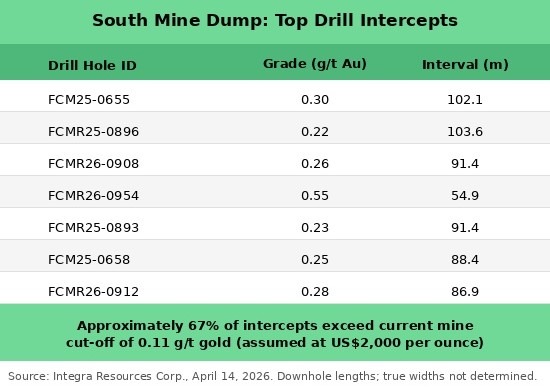
- Approximately 67% of drill intercepts in the South Mine Dump (South Dump) exceed the current mine cut-off grade of 0.11 g/t gold, assumed at a gold price of US$2,000 per ounce, with top intercepts spanning 54.9 metres to 103.6 metres and grades of 0.22 g/t gold to 0.55 g/t gold.
- Inter-pit drilling at the Radio Tower Pit and C7/Central Pit returned intercepts exceeding 100 metres in thickness, with several grades above the current average resource grade at Florida Canyon Mine, indicating potential to increase total ounces and improve the overall grade profile of the operation.
- Both target categories sit within or immediately adjacent to existing mining infrastructure, reducing haulage distances and capital requirements relative to more distal gold mineralisation.
- The updated Florida Canyon feasibility study and technical report, incorporating resource and reserve updates from both the historical dump and inter-pit drilling campaigns, is targeting completion in the Third Quarter of 2026.
Drilling Results: Key Highlights
Integra Resources Corp. (TSXV: ITR | NYSE American: ITRG) has released reverse circulation (RC) drilling results from Florida Canyon Mine in Nevada, with headline intersections of 138.1 metres (m) at 0.32 grams per tonne (g/t) gold and 128.0 m at 0.36 g/t gold from inter-pit in-situ targets. The programme is targeting two distinct resource growth opportunities: historical low-grade dump material that was mined below the economic cut-off grade during a lower gold price environment, and sparsely drilled saddle-and-ridge zones located between existing open pits.
Approximately 67% of drill intercepts in the South Mine Dump (South Dump) exceed the current mine cut-off grade of 0.11 g/t gold, assumed at a gold price of US$2,000 per ounce. In the inter-pit zones, approximately 38% of drill intercepts in the C7/Central Pit area and approximately 26% in the Radio Tower Pit exceed their respective current cut-off grades, with several intercepts exceeding 100 metres in thickness and grades above the current average resource grade at Florida Canyon Mine.
Results are expected to contribute to a resource and reserve update and mine life extension assessment in the updated Florida Canyon feasibility study, targeting completion in the Third Quarter of 2026. The 2026 drill programme totals 42,500 metres, of which 33,500 metres are focused on resource development at Florida Canyon Mine.
Opportunity 1: Historical Dump Material at the South Mine Dump
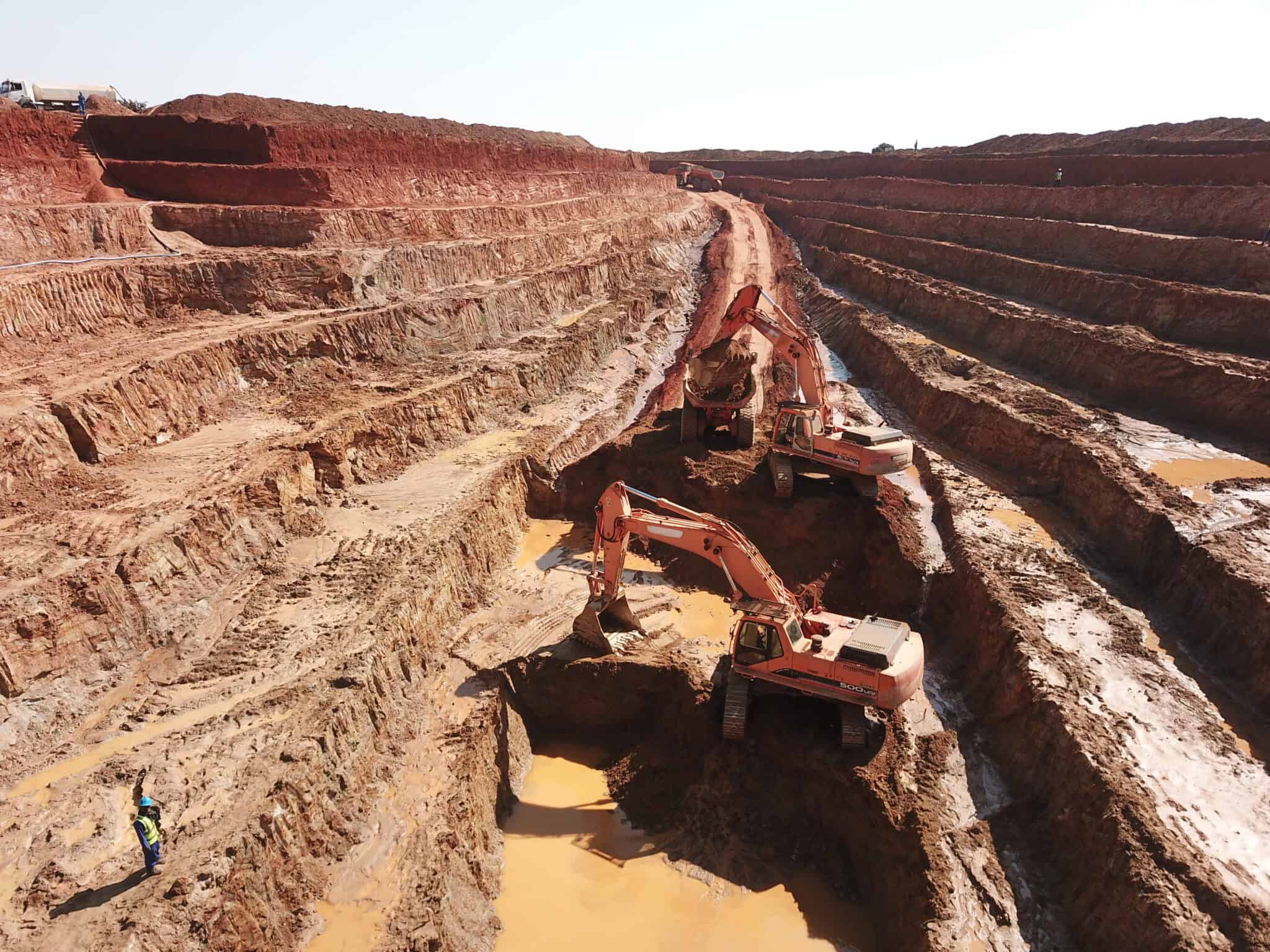
Within the permitted Florida Canyon Mine boundary, several volumes of historically mined, low-grade, gold-mineralised dump material remain in surface dumps. These materials were originally mined during periods of significantly lower gold prices at cut-off grades higher than those currently applied at Florida Canyon Mine.
Drilling results from the South Dump confirm broad, continuous intervals of oxide gold mineralisation. Multiple intercepts exceed 80 metres in thickness, with additional intervals in the 50 metre to 70 metre range grading above 0.20 g/t gold. Seven selected top intercepts are presented in the table below, spanning a grade range of 0.22 g/t gold to 0.55 g/t gold and intervals of 54.9 metres to 103.6 metres.
The South Dump sits approximately 1 km from the nearest processing infrastructure, and the North Dump sits approximately 3 kilometres away, materially limiting the incremental capital required to process this material if it is converted to mineable inventory. Integra notes the material is expected to be amenable to heap leach processing, subject to ongoing metallurgical testing. The company has characterised these dump zones as a low-strip, capital-efficient opportunity to increase mineral resources and provide supplemental ore feed, with formal evaluation targeting inclusion in future mineral resource estimates and life-of-mine plans.
Opportunity 2: Inter-Pit In-Situ Zones at the C7/Central, Radio Tower & North Pits
The second focus area targets in-situ mineralisation in saddle and ridge zones located between existing open pits, collectively referred to as inter-pit areas. Many of these zones have been sparsely drilled historically, and Integra's programme is returning wide, grade-consistent intervals that indicate meaningful resource growth potential directly adjacent to current and future mining phases.
The Radio Tower Pit and C7/Central Pit areas produced the most significant intercepts in this release:
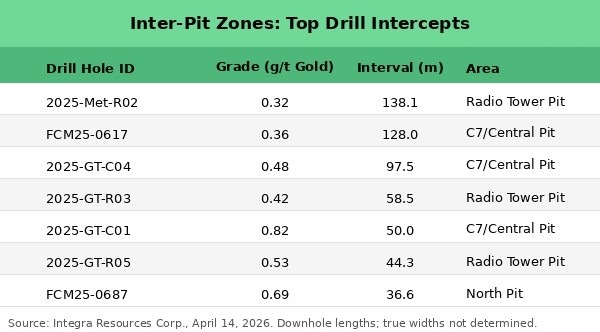
Several intercepts exhibit grades above the current average resource grade at Florida Canyon Mine, which the company notes indicates the potential to increase total ounces while also improving the overall grade profile of the operation.
Vertical continuity is a defining characteristic of the inter-pit results. Multiple intercepts exceeding 100 m in thickness occur across several areas, and mineralisation in these zones remains open laterally, indicating further expansion potential.
Near-Mine Focus & Capital Rationale
Both target categories sit within or immediately adjacent to existing mining infrastructure, which reduces haulage distances and capital requirements relative to more distal gold mineralisation. President, Chief Executive Officer, and Director of Integra, George Salamis, framed the capital rationale directly:
"Not all gold ounces are created equal, and gold ounces identified within and adjacent to our existing operations carry significantly higher value given their proximity to infrastructure and ability to be incorporated into the mine plan with minimal capital."
Salamis also identified the combination of thickness and consistency across multiple areas as the most significant operational observation from the current results:
"What stands out most in these latest results is the consistency and thickness of gold mineralisation across multiple areas of the mine, both within historical dumps and in near-mine in-situ zones. This combination provides Integra with an opportunity to expand mineral resources in a capital-efficient manner while enhancing operational flexibility."
2026 Drill Programme Scale & Technical Parameters
The 2025 growth drilling programme at Florida Canyon completed 16,009 metres of RC, sonic, and core drilling. The 2026 programme expands this to 42,500 metres in total, of which 33,500 metres targets resource development at Florida Canyon Mine, and 9,000 metres focuses on testing new gold targets identified around the Florida Canyon and Standard Mine areas.
RC samples were collected at 5-foot intervals and submitted to American Assay Laboratories (AAL) in Reno, Nevada, an International Organisation for Standardisation (ISO)/International Electrotechnical Commission (IEC) 17025 accredited and independent laboratory. Gold analysis was performed on a 30-gram pulp using fire assay with inductively coupled plasma atomic emission spectrometry (ICP-AES) finish. Samples returning greater than 10 ppm gold were re-assayed using a gravimetric finish. Quality control protocols included blank samples, certified reference materials, and field and pulp duplicates.
What to Watch Next
As part of the 2026 Florida Canyon Mine drill programme, Integra is targeting approximately 33,500 metres of additional drilling to further define the extent and continuity of mineralisation across its near-mine growth targets. Ongoing metallurgical testing will also be conducted to confirm heap leach recovery characteristics for material drilled to date.
Portions of the programme will support the updated Florida Canyon feasibility study and technical report, which Integra is targeting for completion in the Third Quarter of 2026. That technical report is expected to incorporate resource and reserve updates reflecting results from both the historical dump and inter-pit drilling campaigns.
FAQs (AI-Generated)
The results confirm broad, continuous zones of gold mineralisation in both historical dumps and inter-pit areas, supporting near-term resource growth with relatively low capital intensity.
The South Dump contains previously uneconomic material that now exceeds current cut-off grades due to higher gold prices, offering a low-strip, heap-leach-ready opportunity close to infrastructure.
Inter-pit zones show thick, laterally open mineralisation with some grades exceeding the current resource average, indicating potential to both increase ounces and improve overall grade.
Mineralisation near existing pits and processing facilities reduces haulage and capital costs, making these ounces more economically attractive and easier to integrate into mine plans.
Investors should watch for the 2026 feasibility study, updated resource and reserve estimates, and metallurgical results confirming heap leach recoveries, all critical to validating mine life extension.
Analyst's Notes





Subscribe to Our Channel





Stay Informed






















