IsoEnergy Drills 30,050 cps Over 1.0 Metre in Newly Identified Fault Zone, Extending Hurricane South Trend Mineralisation 540 Metres Along Strike



IsoEnergy finds strong uranium radioactivity in a newly identified fault zone, with mineralisation now confirmed across a 540 m corridor at Hurricane's South Trend.
- Drill hole LE26-248 returned 30,050 cps over 1.0 m (with local off-scale readings exceeding 65,500 cps) within a broader interval of 11,275 cps over 3.5 m, within the newly reinterpreted L Fault Zone on the Hurricane South Trend
- Elevated radioactivity has now been confirmed in multiple 2026 holes along the South Trend over a 540 m strike length east of the Hurricane deposit footprint
- The winter programme was expanded from 13 holes (5,200 m) to 17 holes (6,804 m) on the strength of in-programme results, reflecting management confidence in the emerging trend
- A new fault zone, the L Fault, has been reinterpreted as a distinct and previously underexplored mineralised structure separate from the J and K faults that control the known high-grade Hurricane resource
- The Hurricane deposit hosts a current Mineral Resource of 48.6 Mlb U₃O₈ at 34.5% U₃O₈ Indicated, representing the world's highest-grade indicated uranium mineral resource
- Assay results from all winter drill holes are pending at the Saskatchewan Research Council Geoanalytical Laboratory
Company Overview
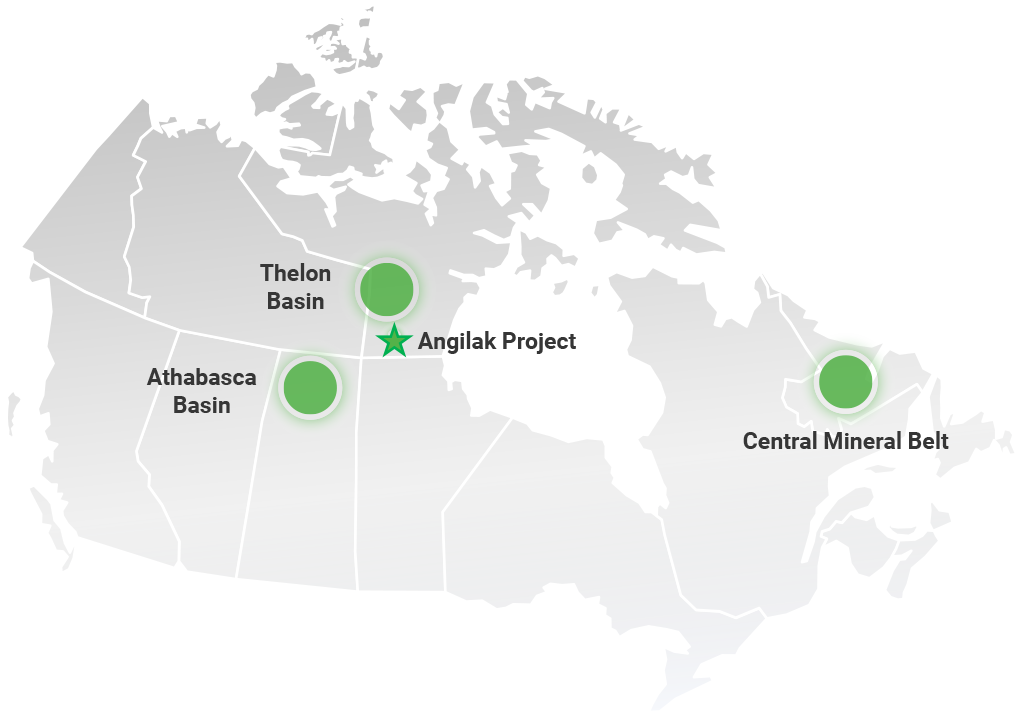
IsoEnergy Ltd. (NYSE American: ISOU; TSX: ISO) is a uranium exploration and development company with projects in Canada, the US, and Australia. Its flagship asset is the Larocque East project in Saskatchewan's Athabasca Basin, home to the Hurricane deposit, the world's highest-grade indicated uranium mineral resource. The company also holds a portfolio of permitted, past-producing uranium and vanadium mines in Utah, operated under a toll milling arrangement with Energy Fuels and ready for restart when market conditions support it.
Background: What Is the Hurricane Deposit & Why Does It Matter?
Hurricane is an underground uranium deposit located in Saskatchewan, Canada, one of the world's premier uranium mining regions. It currently holds 48.6 Mlb of uranium oxide at an average grade of 34.5% uranium oxide in the Indicated category, which is extraordinarily high by global standards. Most uranium mines operate at grades well below 1%, which makes Hurricane one of the most concentrated uranium deposits ever found.
The deposit sits at a relatively shallow depth of approximately 325 m underground and lies about 40 km from an existing uranium processing mill at McClean Lake, which is a significant logistical advantage. Uranium mineralisation at Hurricane formed where hot, uranium-bearing fluids moving through sandstone encountered a chemical boundary at a geological feature called the unconformity, where the sandstone meets older basement rocks below. Understanding the faults that channelled those fluids is the key to finding more uranium.
The South Trend is a corridor of geological structures running east of the known Hurricane deposit. Previous drilling had already found uranium mineralisation along this trend, but the 2026 winter programme has now revealed that a fault zone further south, called the L Fault Zone, also carried uranium-bearing fluids and was largely overlooked until now.
What the 2026 Winter Drilling Found
IsoEnergy drilled 17 holes totalling 6,804 m during the winter programme, expanded from an original plan of 13 holes after early results proved encouraging. The standout result came from drill hole LE26-248, which was sited within the existing low-grade portion of the Hurricane deposit. It returned radioactivity readings of 30,050 cps over 1.0 m at a depth of 330.2 m, right at the unconformity contact, with peak readings going off the scale of the measuring instrument at more than 65,500 cps. For context, the threshold the company uses to flag a sample as mineralised is just 350 cps.
The result sits within a broader zone of 11,275 cps over 3.5 m, and the surrounding rock shows all the hallmarks of a well-developed uranium-bearing hydrothermal system, including extensive clay alteration and a reduction in the chemistry of the rock at the unconformity, which is exactly the environment where uranium tends to precipitate and concentrate. Critically, this high-grade hit sits within a fault zone, called the L Fault Zone, that was not previously identified as a priority exploration target.
Four additional holes drilled along the South Trend, stepping out progressively further east from LE26-248, also returned elevated radioactivity. LE26-241, drilled 100 m east, returned 3,712 cps over 0.5 m. LE26-243, drilled 180 m east, returned 10,000 cps over 0.5 m. LE26-234, drilled approximately 560 m east, returned 6,450 cps over 0.5 m in altered sandstone above the unconformity, and a second interval of 1,270 cps directly at the contact. Together, these results confirm mineralised material across a continuous 540 m corridor.
North Trend & Other Targets
Away from the South Trend, drill hole LE26-239 on the North Trend, a parallel corridor of geological structures running north of Hurricane, intersected 2,747 cps over 1.0 m just below the unconformity, including a 0.5 m interval averaging 3,203 cps. This adds to a growing body of evidence for uranium mobility along the North Trend, which has previously returned strongly anomalous uranium geochemistry in nearby holes.
Several holes drilled on greenfield targets further east and south of Hurricane, including LE26-238, LE26-235, LE26-237, LE26-240, and LE26-242, did not return significant radioactivity. However, most of these holes intersected the same types of clay alteration and structural disruption seen in holes closer to Hurricane, suggesting that the broader hydrothermal system extends across a larger area than currently understood.
What Management Said
Chief Executive Officer (CEO) Philip Williams stated:
"I'd like to congratulate the entire Larocque East technical team on a highly successful winter drill programme driven by a rigorous geological approach. The team delivered an expanded programme, safely and efficiently, producing some of the most encouraging results we've seen along the South Trend and demonstrating the scale of the opportunity in this underexplored corridor. Upon receipt of assay results, the team will design an aggressive follow-up programme to further test the South Trend as part of our 2026 summer exploration drilling."
Vice President of Exploration Dan Brisbin added:
"The 30,050-cps result in LE26-248, combined with elevated radioactivity confirmed in step-out holes up to 560 metres along strike to the east, continues to highlight the prospectivity of the Hurricane South Trend. Results to date are being used by our Project team to reinterpret the faults that control uranium mineralization along the South Trend and suggest potential for additional mineralization in areas that remain underexplored. We look forward to following up on these results with further drilling."
Next Steps & Catalysts
The most important near-term event for investors is the release of uranium oxide assay results from the winter drill programme. Radioactivity readings measured on drill core in the field are a strong indicator of uranium content, but laboratory assay results from the Saskatchewan Research Council Geoanalytical Laboratory will confirm exact grades and are needed before any resource update can be considered. Geochemical results from the programme are also pending.
Once assay data is in hand, IsoEnergy's technical team will use the new geological understanding of the L Fault Zone, alongside results from the full 17-hole programme, to design a follow-up summer 2026 drilling campaign. The focus will be on testing the strike length and geometry of the L Fault Zone more precisely, filling gaps between mineralised intercepts along the 540 m South Trend corridor, and drilling holes positioned to better intersect the optimal structural target in areas where 2026 holes may have clipped the footwall.
Analyst's Notes





Subscribe to Our Channel






Stay Informed