




Lower Oil Prices Support Gold & 89% Rate-Hike Odds Define the Path to $5,200/oz


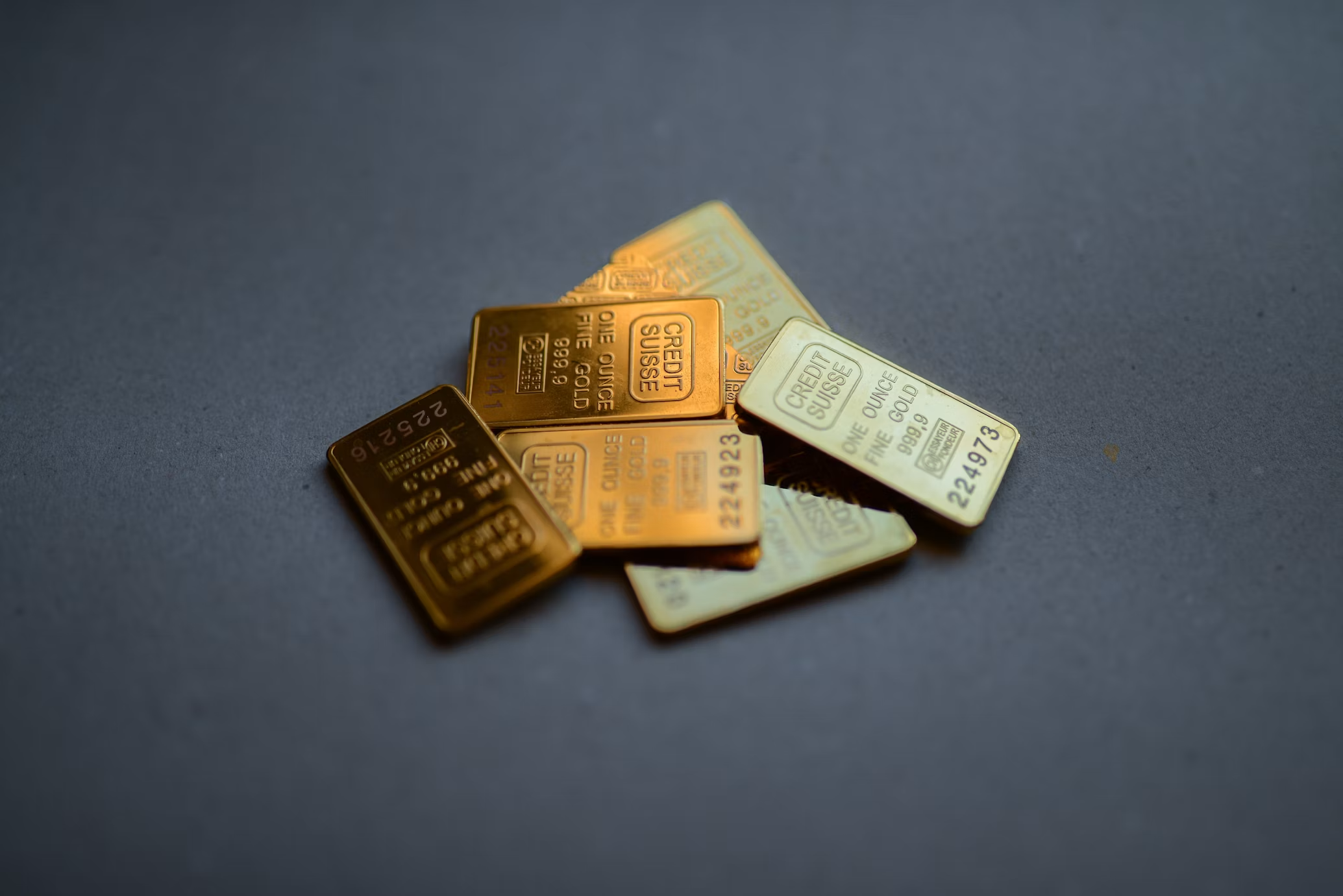
Lower oil prices lifted gold to $4,210/oz, but 89% December rate-hike odds keep Fed policy in focus as investors weigh a path to $5,200/oz.
- Spot gold rose 1.2% to about $4,210 per ounce, recovering from its lowest level since June 11.
- A 60-day US-Iran peace roadmap reduced energy supply concerns, sending Brent crude down nearly 2% to $79.10 a barrel and prompting capital to rotate from oil into gold.
- Fed Chair Kevin Warsh's hawkish stance has pushed December rate-hike odds to 89% from 61%, increasing the opportunity cost of holding gold.
- Morgan Stanley's $5,200/oz gold target for the second half of 2026 depends on lower oil prices reducing inflation pressure and renewed ETF inflows increasing investment demand.
- Central-bank demand is the structural floor; the named bullish trigger is hard evidence the oil drop is shifting the Fed's outlook, paired with renewed ETF inflows.
Lower Oil Prices Redirect Capital Into Gold
Spot gold rose 1.2% to about $4,210 per ounce, rebounding from its lowest level since June 11. August gold futures fell 0.4% to 0.7% to about $4,220 per ounce, indicating weaker near-term sentiment than the spot market.
The rebound reflects capital moving between commodities rather than increased safe-haven demand. Lower oil prices prompted capital to move from energy markets into gold rather than into traditional safe-haven trades.
US-Iran Peace Roadmap Lowers Oil Prices While Fed Policy Supports the Dollar
US and Iranian officials agreed to a 60-day roadmap toward a peace deal and extended the April ceasefire, reducing concerns about Middle East energy supplies. Reduced supply-risk concerns pushed Brent crude down nearly 2% to $79.10 a barrel.
Lower oil prices reduce inflation pressure, but tighter Fed policy continues to limit gold's upside. Fed Chair Kevin Warsh maintained a hawkish stance, reinforcing expectations that interest rates will remain elevated. The US dollar index rose 0.1% to 100.93, increasing the opportunity cost of holding gold and offsetting support from lower oil prices.
Fed Rate Expectations Continue to Drive Gold Prices
For institutional investors, gold prices remain more sensitive to Fed policy expectations than to short-term geopolitical developments. Ross Norman said gold is unlikely to sustain a rally while the Fed maintains a hawkish stance, as lower geopolitical risk has not changed expectations for future interest rates.
Gold's outlook depends on whether Fed rate expectations or lower oil prices become the dominant market driver. If the Fed maintains a hawkish stance and ETF inflows do not return, gold could remain near $4,200/oz through the second half of 2026, with central-bank buying limiting downside. If lower oil prices reduce inflation pressure enough to support a more dovish Fed outlook and ETF inflows resume, gold could rise toward Morgan Stanley's $5,200/oz target in the second half of 2026.
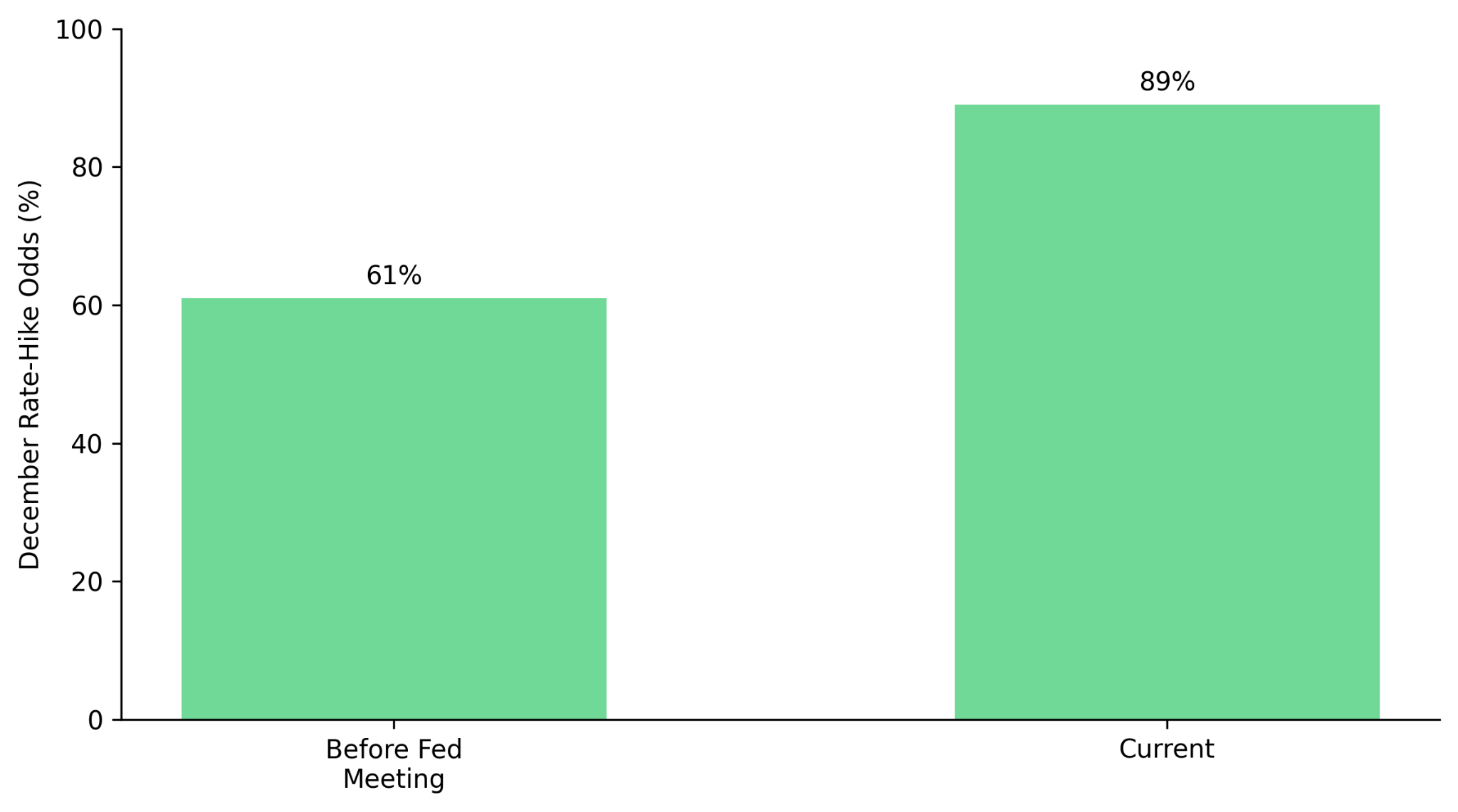
December rate-hike odds rose from 61% to 89%, making Fed expectations the key indicator for gold's next move. A decline toward 61% would indicate a more dovish Fed outlook and support the case for higher gold prices.
Dollar Strength Pressures Gold While Central-Bank Buying Limits Downside
A US dollar near a one-year high makes gold more expensive for overseas buyers, reducing demand and limiting price gains despite lower geopolitical risk.
Inki Cho said central-bank buying could support gold prices and limit downside risk over the medium and long term. Gold positions based on a near-term Fed pivot depend on falling rate expectations, while positions based on continued central-bank buying rely on a longer-term source of demand.
Gold pays no yield, making it less attractive when interest rates and the US dollar remain elevated. Because the near-term balance between lower geopolitical risk and elevated US interest rates remains uncertain, investors should base position sizes on continued central-bank demand and recognize that a hawkish Fed could pressure gold prices.
Fed Rate Expectations & Dollar Positioning Will Determine Gold's Next Move
A US dollar index near 101 and nearly $30 billion of bullish dollar positions, the largest in 16 months, continue to limit gold's upside. As long as investors favor the dollar, gold is likely to face pressure from higher rates and a stronger currency.
A lower expected Fed rate path driven by falling oil prices, combined with renewed ETF inflows, would provide a clear catalyst for higher gold prices. That combination could support a move toward Morgan Stanley's $5,200/oz target while reducing support for crowded long-dollar positions.
US inflation data, Fed communications, and December rate-hike odds, which currently stand at 89% should be monitored. A decline toward 61% would signal a more dovish Fed outlook, while Brent crude near $79.10 remains a key indicator because energy prices are influencing commodity-market flows.
Analyst's Notes





Subscribe to Our Channel

Stay Informed






















