




Americas Gold & Silver's Next Growth Phase: 7 Operational Catalysts Driving Higher Silver Production


Discover how Americas Gold & Silver's operational upgrades, mechanised mining and Galena expansion are driving higher silver production and growth.
Project Overview
Americas Gold & Silver's (TSX: USA | NYSE American: USAS) second-quarter 2026 results mark a transition in the company's investment case from financial restructuring to operational execution. While production remained in line with full-year guidance, management completed infrastructure upgrades, eliminated more than US$85 million in legacy precious-metal delivery obligations, and advanced projects to increase mining capacity at the Galena Complex.
Rather than highlighting a single quarter of operating performance, the update demonstrates how recent capital investments are beginning to remove production constraints. Higher hoisting capacity, mechanised mining, the integration of the Crescent Mine, and a record exploration programme collectively aim to increase silver output while maintaining approximately 75% to 80% revenue exposure to silver.
The focus is increasingly shifting from restructuring milestones to execution. The pace at which management converts these operational improvements into higher production and cash flow is likely to become the primary driver of valuation over the coming quarters.
1. Second Quarter Production Maintains Guidance While Galena's Expansion Continues
Americas Gold & Silver produced 664,971 ounces of silver during the second quarter of 2026, comprising 327,701 ounces from the Galena Complex in Idaho and 337,270 ounces from the Cosalá Operations in Mexico. The company also produced 2.3 million pounds of lead, 850,000 pounds of copper and 97,000 pounds of antimony, resulting in 800,735 silver-equivalent ounces.
The production results enabled management to reaffirm 2026 guidance of 3.2 to 3.6 million ounces of silver at an all-in sustaining cost (AISC) of US$30 to US$35 per ounce, with production targeting a stronger second half as underground mining rates increase at Galena.
Maintaining guidance while implementing multiple operational initiatives reduces execution risk. It demonstrates that infrastructure upgrades and changes to mining methods are being introduced without disrupting production, allowing management to pursue higher mining rates while remaining on track to meet annual guidance.
2. Removing More Than US$85 Million of Legacy Obligations Increases Financial Flexibility
With production remaining on track, management also completed a major balance sheet simplification designed to increase the company's direct exposure to future silver prices. During the quarter, Americas Gold & Silver eliminated more than US$85 million of legacy precious metal delivery obligations by terminating its remaining silver delivery agreement with Sprott Mining Inc. and settling its remaining gold delivery obligation with an affiliate of Royal Gold. The transactions removed more than US$28 million in annual debt servicing obligations while requiring approximately 3.3% equity dilution.
Removing the delivery agreements reduces mark-to-market earnings volatility and allows a greater proportion of future production to benefit directly from changes in silver and gold prices. The simplified capital structure also provides a clearer framework for assessing operating performance as production capacity expands.
Executive Vice President Oliver Turner of America’s Gold and Silver discussed how management intends to close the company's valuation gap:
"It's all about execution. We've set out our guidance for the first time this year. It's 30% growth over last year. We want to make sure that we execute quarter after quarter on that growth strategy, and that all comes down to project execution."
3. Shaft Upgrades Remove Galena's Largest Production Bottleneck
With the balance sheet simplified, management's operational priorities are increasingly focused on expanding mining capacity at the Galena Complex. During 2026, Americas Gold & Silver completed Phase 2 upgrades to the No. 3 Shaft, replacing the main hoist motor with a 2,250-horsepower unit, installing a redundant spare motor and upgrading braking and communication systems. The work increased skipping capacity from approximately 40 tonnes per hour to 105 tonnes per hour, with the operation achieving a record 125 skips over a 12-hour hoisting period during July.
The upgraded hoisting system increases the amount of ore, waste and equipment that can move through the shaft each day, removing a long-standing constraint on underground mining rates while providing additional operational redundancy.
Turner explained why the project became a priority:
"Last year was about designing the strategy and the programs we needed to put in place. And that started with the two primary bottlenecks. The primary bottleneck was that we couldn't hoist enough ore out of that No. 3 shaft, the primary hoisting shaft. We fixed that."
The upgraded shaft provides the physical capacity needed to support higher mining rates. Without removing this bottleneck, subsequent investments in mechanised mining and expanded processing capacity would have delivered more limited production gains.
4. Mechanised Mining Converts Infrastructure Investment Into Higher Throughput
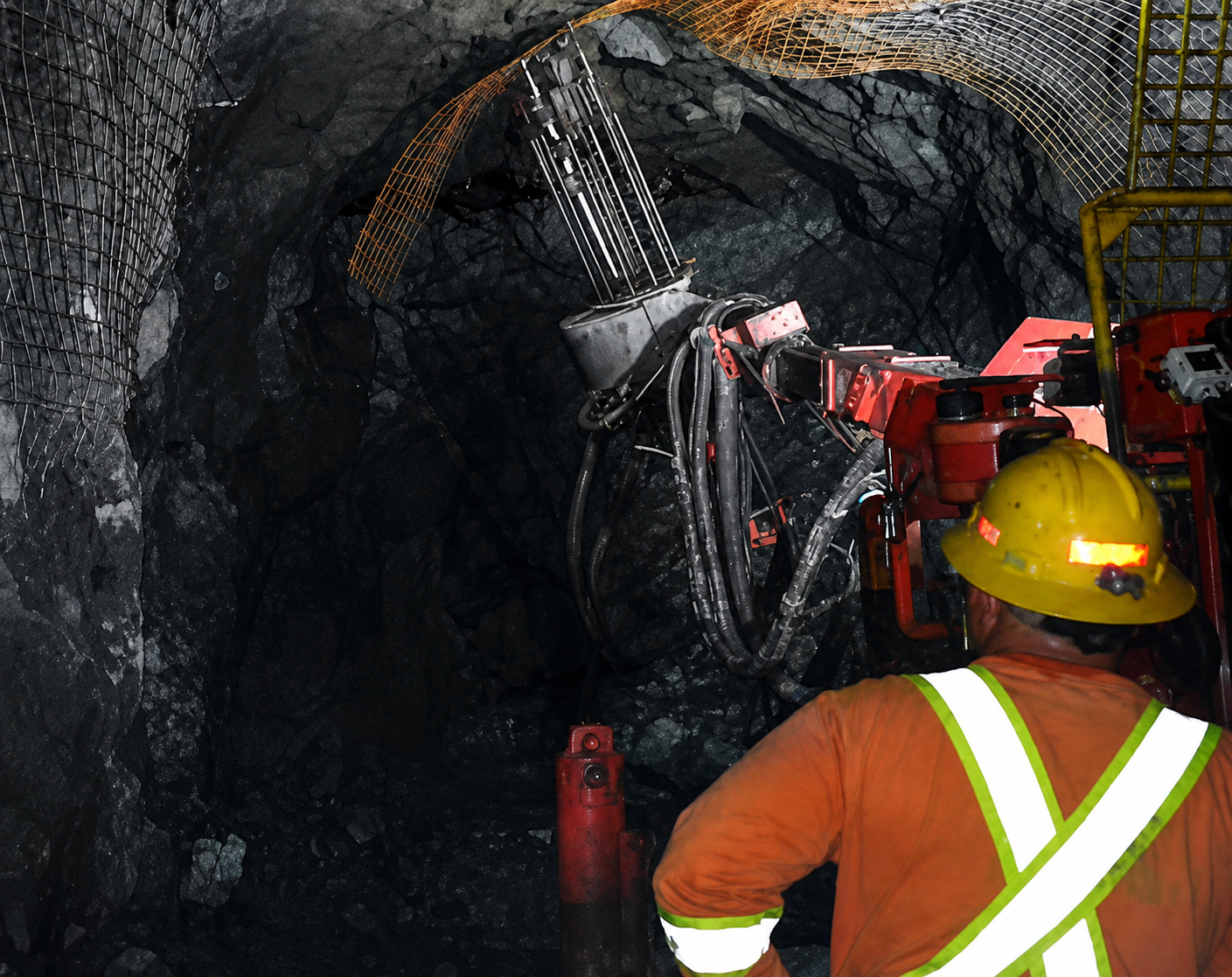
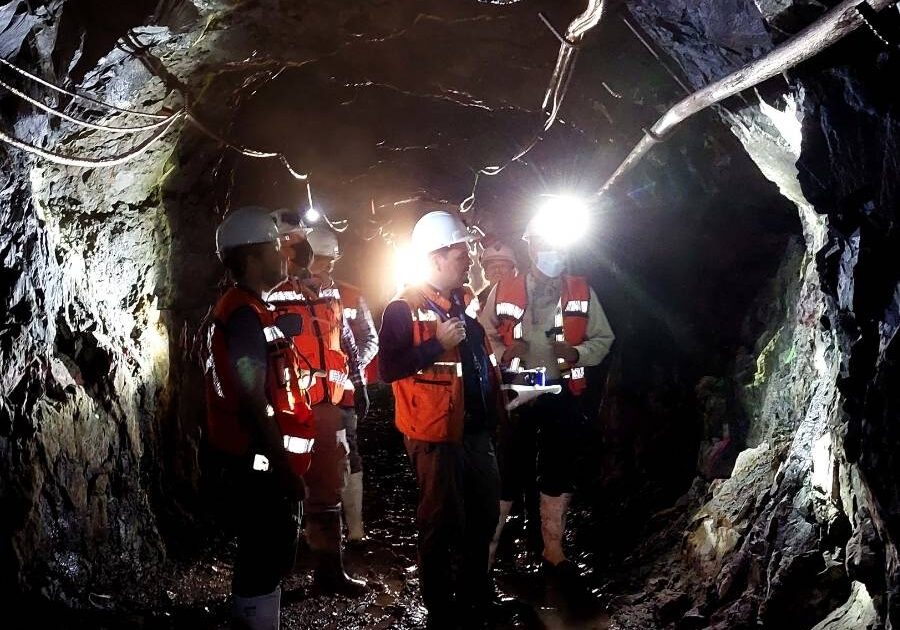
After removing the principal hoisting constraint, management is increasing productivity by replacing conventional underhand cut-and-fill mining with mechanised long-hole stoping. The new mining method has increased productivity by more than 300% across completed mining panels while reducing mining cycle times by a factor of 12.
Supporting the transition are fibre-optic communications, remotely operated underground equipment, new flotation cells, and a paste backfill plant designed to accelerate mining sequences. Management is targeting a mining mix of approximately 70% long-hole stoping by the second half of 2027.
Turner quantified the impact of these changes:
"When we walk through the doors, about 270 tonnes per day. We're doing 410 tonnes per day right now. We're going to exit this year at 650 tonnes per day. And over the course of the next two years, we'll ramp up north of 1,000 tonnes per day."
Mechanised mining is the operational mechanism that converts recent infrastructure investment into increased silver production. Achieving the targeted increase in throughput should improve utilisation of existing processing infrastructure, strengthen operating leverage and support higher cash flow as production volumes increase.
5. Crescent Mine Integration Targets Production Growth Through Existing Infrastructure
After increasing underground mining capacity at Galena, management is focused on expanding the available mill feed by integrating the nearby Crescent Mine. Located approximately 9 miles from the Galena Complex, Crescent was acquired in December 2025 for approximately US$65 million, comprising US$20 million in cash and approximately 11.1 million common shares. Rather than constructing a standalone processing facility, the strategy is designed to increase silver production by supplying additional high-grade ore to the existing Galena mill.
Management has also completed infrastructure upgrades, including new power, communications, compressed air systems and underground equipment, while planning to introduce the same mechanised long-hole stoping methods now being implemented at Galena.
6. The US Antimony Joint Venture Targets Higher Value From Existing Production
Beyond increasing silver production, management is also targeting higher value from by-product metals already produced at the Galena Complex. Americas Gold & Silver is advancing a 51% by 49% joint venture (JV) with US Antimony Corporation to process antimony concentrate into higher-value flake metal. Galena was the largest active antimony producer in the US during 2025, producing approximately 561,000 pounds of antimony.
Under the JV, Americas Gold & Silver will provide the site and concentrate, while US Antimony will operate the processing facility. Advanced engineering and site preparation are underway, with commercial commissioning targeting the second quarter of 2027. The project is also designed to process third-party material, creating an additional potential revenue stream alongside the company's own production.
The JV increases the value recovered from ore already being mined while preserving the company's primary leverage to silver prices. Higher by-product revenue can also reduce AISC over time.
7. Record Exploration Investment Targets Longer Mine Life and Future Production
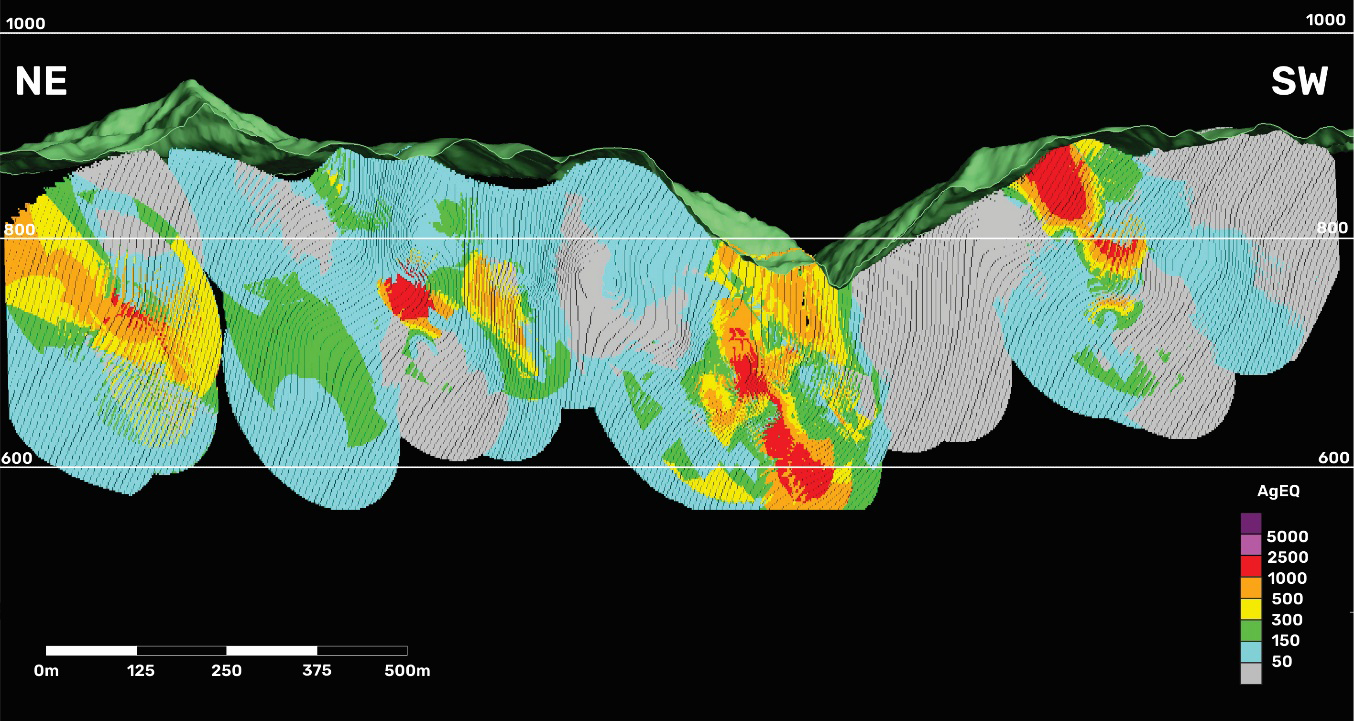
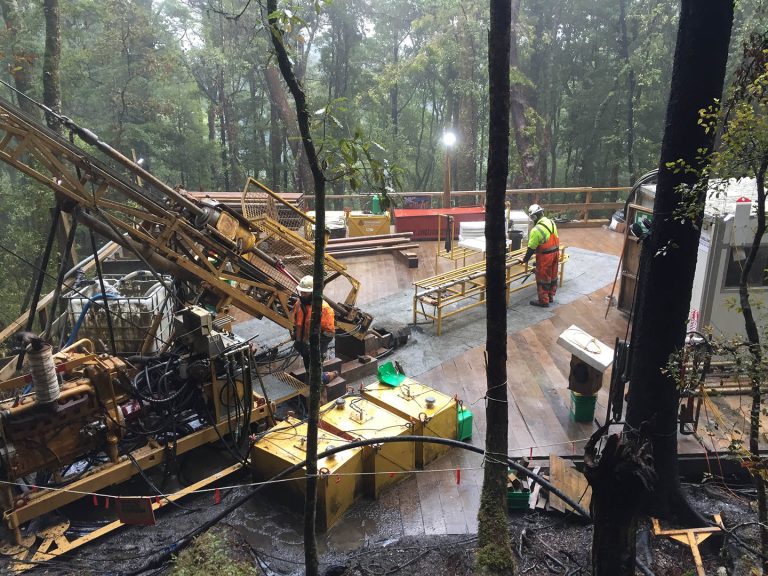
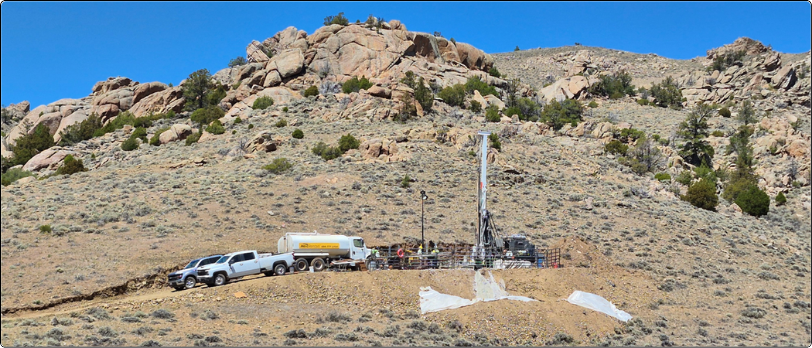
With mining capacity expanding, management is also investing in resource growth to support higher long-term production rates. Americas Gold & Silver is executing a 64,000-metre exploration programme across its Idaho and Mexico operations during 2026, representing the largest drilling campaign in the company's history. Much of the programme targets extensions to mineralisation located near existing underground infrastructure, where successful discoveries could be incorporated into future mine plans with lower development capital requirements.
At the Galena Complex, drilling has identified multiple high-grade silver, copper and antimony veins within the Vein Complex, located approximately 250 metres southwest of the 149 Vein and only 25 metres from existing underground development. At the Cosalá Operations, exploration is targeting seven major induced polarisation and magnetic anomaly trends, while recent drilling at El Alacrán intersected 27.6 metres grading 69.0 grams per tonne silver, demonstrating additional resource growth potential.
Exploration is intended to extend mine life while improving returns on existing infrastructure. Additional resources located close to current operations could support higher long-term production without requiring new standalone processing facilities.
Key Takeaway for Investors
Americas Gold & Silver's second-quarter 2026 results indicate that the company's investment case has entered a new phase in which operational execution is becoming the principal driver of shareholder value. Management maintained production guidance while removing more than US$85 million of legacy precious metal delivery obligations, completing critical infrastructure upgrades and accelerating the transition to mechanised mining at the Galena Complex. Together, these initiatives are targeting higher mining rates, improved capital efficiency and greater direct leverage to silver prices.
Execution is now the key variable investors should monitor. Management is targeting an exit rate of 650 tonnes per day at Galena by the end of 2026 before increasing throughput to more than 1,000 tonnes per day over the following two years. Achieving those operational milestones, alongside successful Crescent integration, continued exploration success and commissioning of the US Antimony processing facility, should determine whether recent capital investments translate into higher silver production, stronger operating leverage and improved cash flow generation.
Analyst's Notes





Subscribe to Our Channel


Stay Informed






















