




Mideast Exports Hit Wartime High, Shifting Oil Value to Diesel Margins


Hormuz bottlenecks, tight distillate stocks, and diesel export risk keep Brent supported despite recovering Middle East supply.
- Crude exports from major Middle Eastern producers rose to 12.8 million barrels a day in September 2026, the highest since the war began in February, yet Brent November futures rose 1.6% to $106.99 a barrel on September 29.
- Strait of Hormuz clearance stood at 10.591 million barrels a day, 38% below the 17.133 million pre-war baseline, making transit capacity rather than loadings the main constraint.
- US distillate inventories stood 12% below the five-year average on September 18, while refinery utilization reached 94.0%.
- Brent December futures traded at $99.51 on September 29, $7.48 below the November contract, signaling near-term scarcity rather than a multi-year shortage.
- The US is considering a diesel export ban that could keep roughly 1.2 million barrels a day at home, which would increase domestic supply and pressure Gulf Coast storage if implemented.
12.8 Million Barrels a Day Mideast Exports Leave Near-Term Oil Scarcity Intact
Brent November futures rose 1.6% to $106.99 a barrel for a second consecutive gain, while December Brent reached $99.51 and West Texas Intermediate (WTI) traded at $94.
Oil prices rose despite crude exports from major Middle Eastern producers reaching 12.8 million barrels a day, the highest since the war began, as Saudi Arabian and Emirati shipments increased. Regional exports recovered to nearly 80% of pre-war levels, while US distillate inventories remained 12% below the five-year average at 107.4 million barrels.
Hormuz Constraints Keep Transit 38% Below Pre-War Levels
Recovered export volumes are not moving through the Strait of Hormuz at pre-war rates, with clearance at 10.591 million barrels a day, 38.2% below the 17.133 million baseline. US refinery utilization fell to 94.0% from 96.8%, while crude inputs dropped 519,000 barrels a day, limiting how quickly additional crude can be converted into diesel.
Hormuz remains closed because Iran has tied reopening to US concessions. Iran's seven-day proposal gives the US four to five days to release frozen funds, lift oil sanctions, and end the naval blockade of Iranian ports before Hormuz would reopen on day six. President Donald Trump rejected the proposal as unacceptable, leaving the reopening timeline unresolved.
Ship-to-Ship Reliance Keeps Middle East Export Costs Elevated
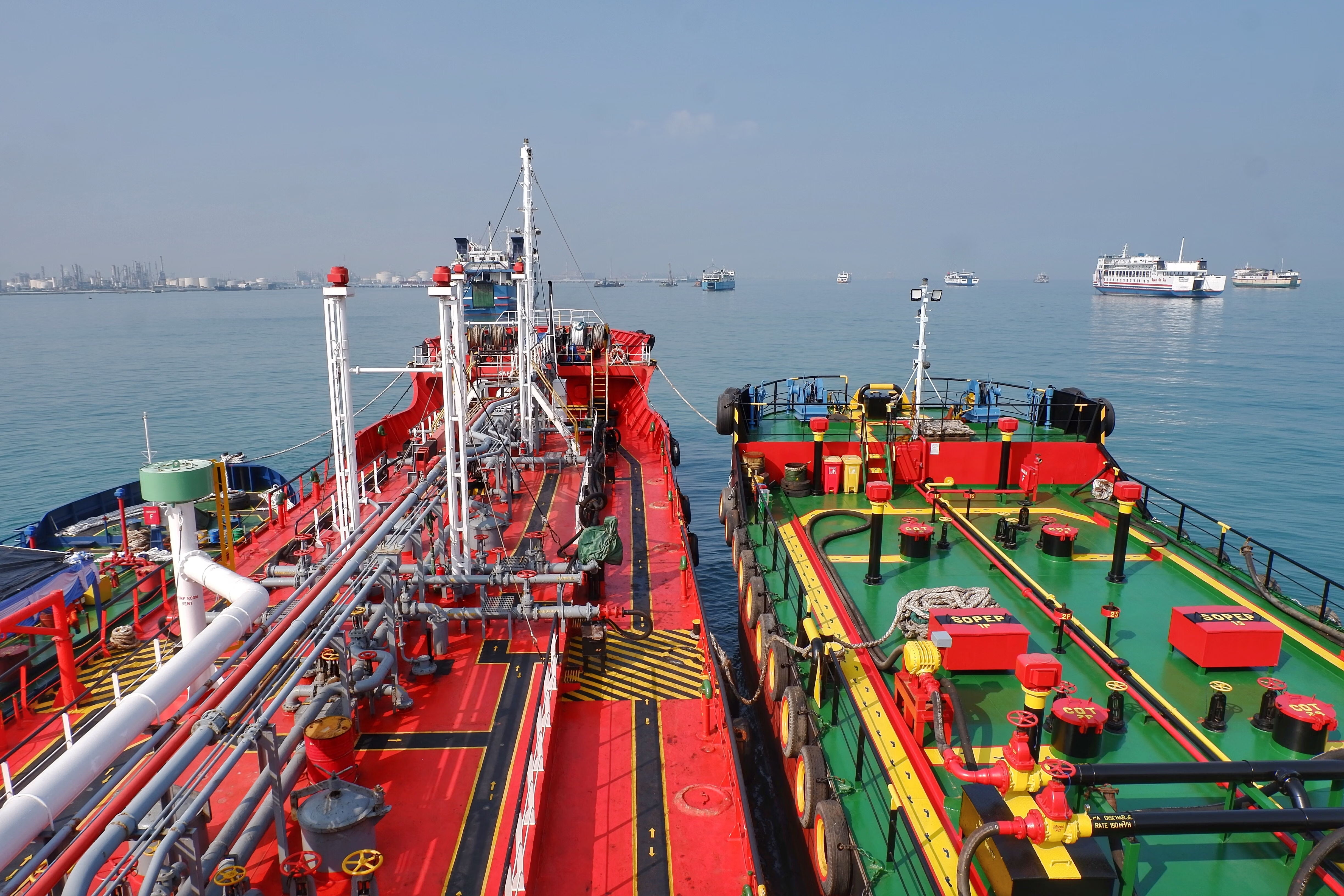
Higher export volumes overstate the recovery in normal trade flows because much of the increase still relies on ship-to-ship transfers. Tim Waterer, Chief Market Analyst at KCM Trade, says ship-to-ship transfers are less efficient and more costly than normal operations.
Diesel Export Ban Risk Makes Domestic Rack Access More Valuable
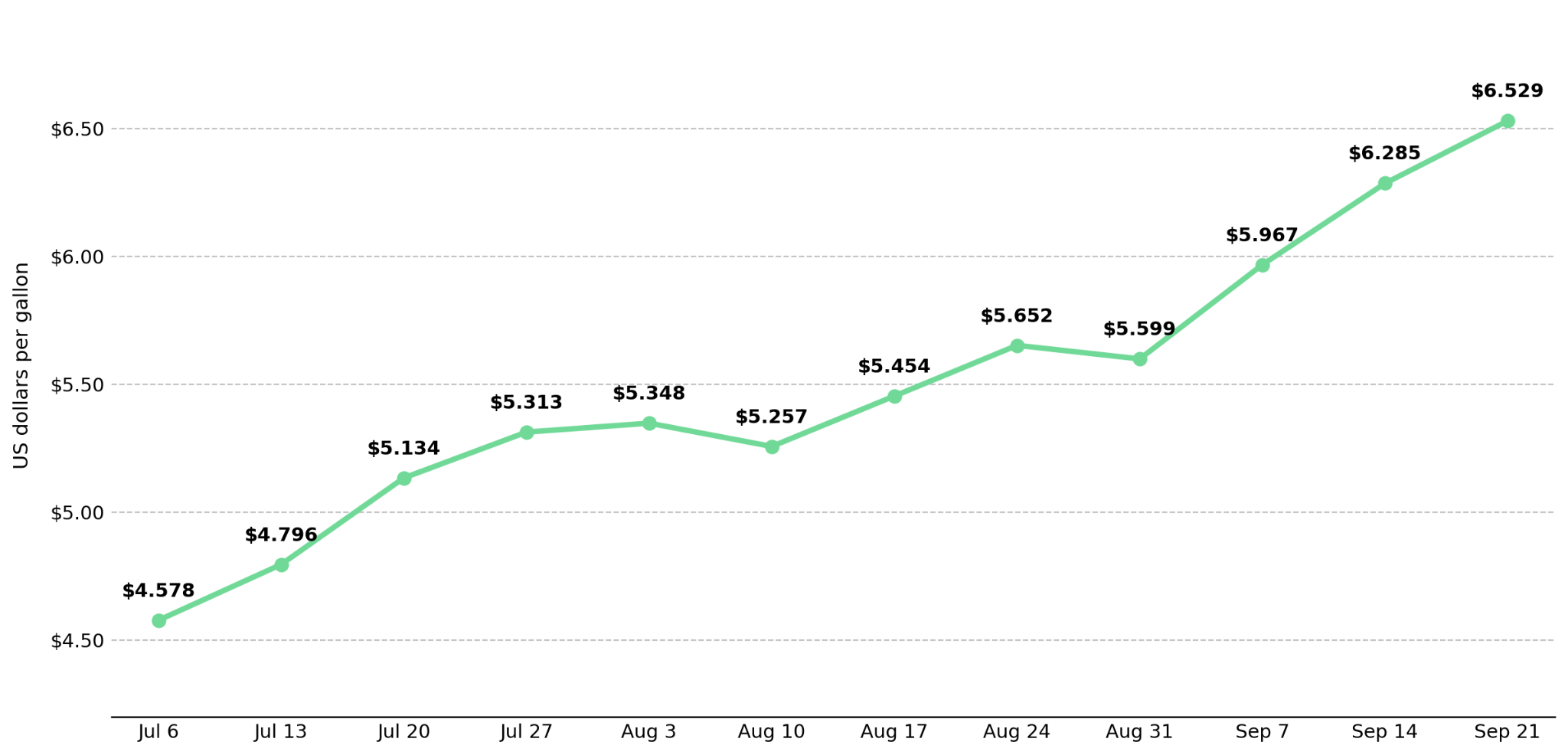
US Gulf Coast ULSD traded at $215.96 a barrel versus WTI at $101.44, producing a $114.52 distillate crack spread, four times January's $28.62. Refinery utilization at 94.0% leaves limited room to raise throughput and narrow that spread.
Domestic rack-market access gives refiners another outlet for distillate if seaborne routes close. A US diesel export ban could keep roughly 1.2 million barrels a day at home and overwhelm Gulf Coast storage. The US is also considering broader red-dyed diesel sales as an alternative to an export ban.
Neither policy option has a published decision date, making policy timing a key valuation risk for Gulf Coast refiners. If announced between sessions, a diesel export ban could reprice export barrels to domestic rack values before markets reopen, leaving no opportunity to adjust positions beforehand.
What Keeps Brent Above $106
Middle Eastern crude exports reached a wartime high of 12.8 million barrels a day, yet Brent November futures remained at $106.99 a barrel. September's export recovery did not relieve transport or refining constraints, shifting scarcity from crude supply to downstream capacity.
Refining constraints shifted more value toward distillate margins. For US Gulf Coast refiners with distillate-heavy yields, elevated crack spreads make distillate margins a larger valuation driver even as crude supply recovers.
US operable refining capacity fell 133,000 barrels a day year over year to 18.027 million barrels a day, and a ceasefire would not restore capacity lost through years of refinery closures.
Analyst's Notes





Subscribe to Our Channel







Stay Informed


