Gold’s $4,186 Hold Despite 30-Tonne Futures Cut Supports Mine Returns



Gold's resilience amid reduced futures positions highlights how mine costs, resource quality, and financing shape future gold supply.
- Gold closed at US$4,186 per ounce on October 9, 2026, down 0.1% for the week despite a 29.9-tonne reduction in COMEX managed-money net long positions in the latest reporting period.
- COMEX managed-money net longs fell 84 tonnes in September despite 67 tonnes of gold exchange-traded fund (ETF) inflows, which did not prevent an 8.5% decline in gold prices.
- Higher assumed gold prices can improve projected mine returns, with a 2026 feasibility study showing after-tax net present value (NPV) rising from US$632 million to US$946 million across defined gold-price scenarios.
- Global gold mine production rose only 2% year over year to 966 tonnes in the second quarter of 2026, highlighting the importance of projects capable of adding future supply.
- Rising industry costs make ore grade, metallurgical recovery, financing requirements, and mine design critical to determining whether elevated gold prices translate into viable mine economics.
30-Tonne Futures Cut Leaves Gold Near $4,186
World Gold Council (WGC) reported that the London Bullion Market Association (LBMA) Gold Price PM closed at US$4,186 per ounce on October 9, 2026, down 0.1% for the week. COMEX managed-money net long positions fell 29.9 tonnes, from 387.0 tonnes on September 29 to 357.1 tonnes on October 6.
COMEX managed-money net longs fell 84 tonnes in September, equivalent to approximately US$12 billion, even as global gold ETFs attracted 67 tonnes in inflows worth US$10 billion. Gold nevertheless declined 8.5% that month to US$4,176 per ounce. The price decline despite ETF inflows highlights why gold's short-term performance cannot be explained by ETF demand alone, while future mine valuations depend on longer-term gold-price assumptions rather than weekly futures activity.
Higher Gold Price Assumptions Strengthen Projected Mine Returns
September's gold decline coincided with a 53-basis-point increase in the US 10-year Treasury yield to 5.3% and a 2% rise in the US Dollar Index. Despite these pressures, gold held near US$4,186 per ounce on October 9, while its second-quarter average of US$4,506.29 per ounce remained 37% higher year over year. Elevated gold prices can strengthen projected mine revenues and cash flows, making it important to assess how different gold-price assumptions affect potential returns for permitted projects advancing toward construction.
U.S. Gold Corp's fully permitted CK Gold Project in Wyoming recorded an after-tax net present value at a 5% discount rate (NPV5%) of US$632 million at US$3,250 per ounce gold in its March 2026 feasibility study, rising nearly 50% to US$946 million at US$4,000 per ounce. With an estimated 11-year mine life and US$394 million in initial capital requirements, the company is pursuing construction financing to advance the project toward production.
George Bee, President and Chief Executive Officer of U.S. Gold Corp., explains how gold prices affect projected project returns:
"We've got a very robust feasibility study published. This project makes a lot of money at a 3,250 gold price level, but at consensus pricing it pays back in about a year and a half."
Rising Mining Costs Increase the Need for Efficient Processing
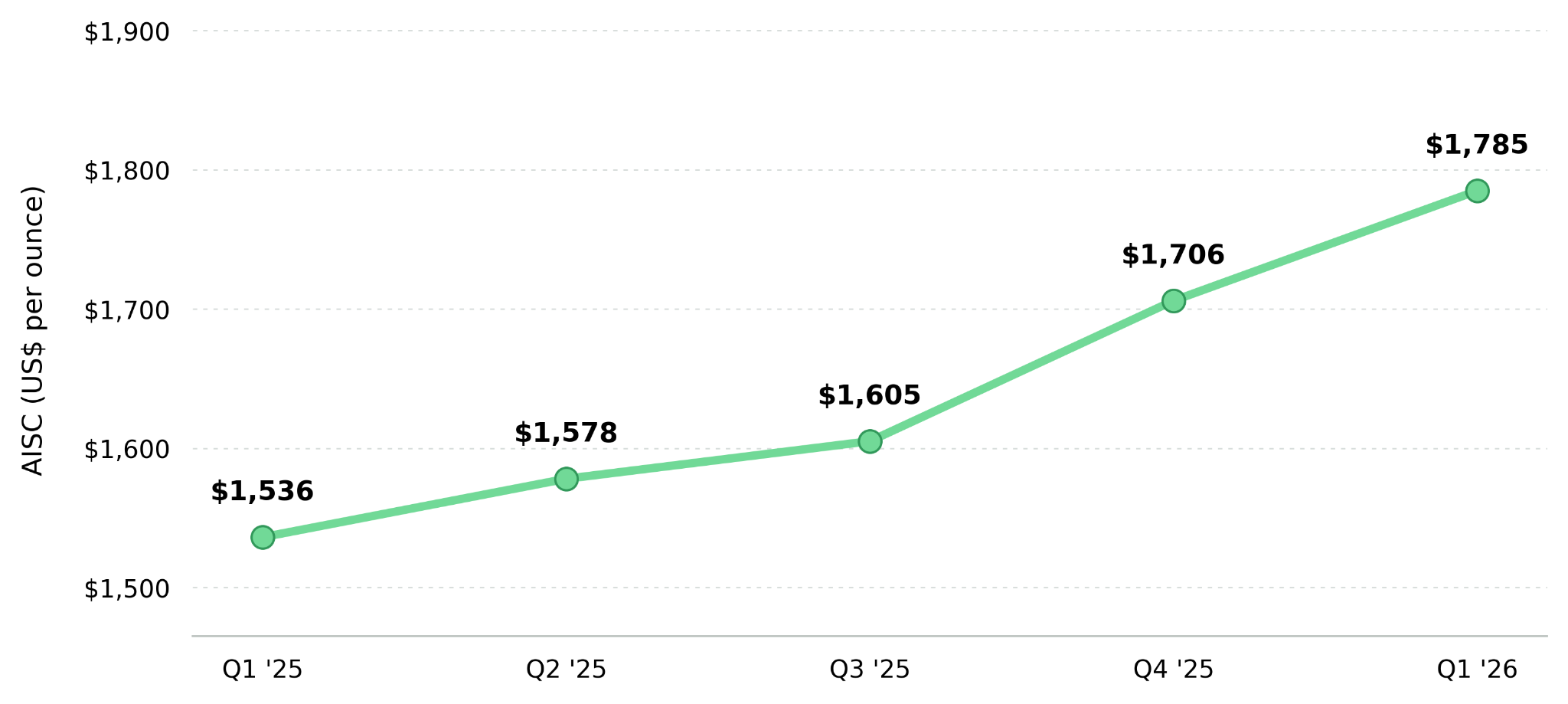
Higher gold prices have strengthened industry margins despite rising production costs. Global average all-in sustaining costs (AISC) reached US$1,785 per ounce in the first quarter of 2026, up 16% year over year, while AISC margins rose 134% to a record US$3,076 per ounce. Royalty payments also increased 85% year over year, accounting for 12% of average AISC, compared with 6% five years earlier. These rising costs highlight the potential cost advantages of heap-leach operations, which use simpler processing methods that can reduce operating expenses.
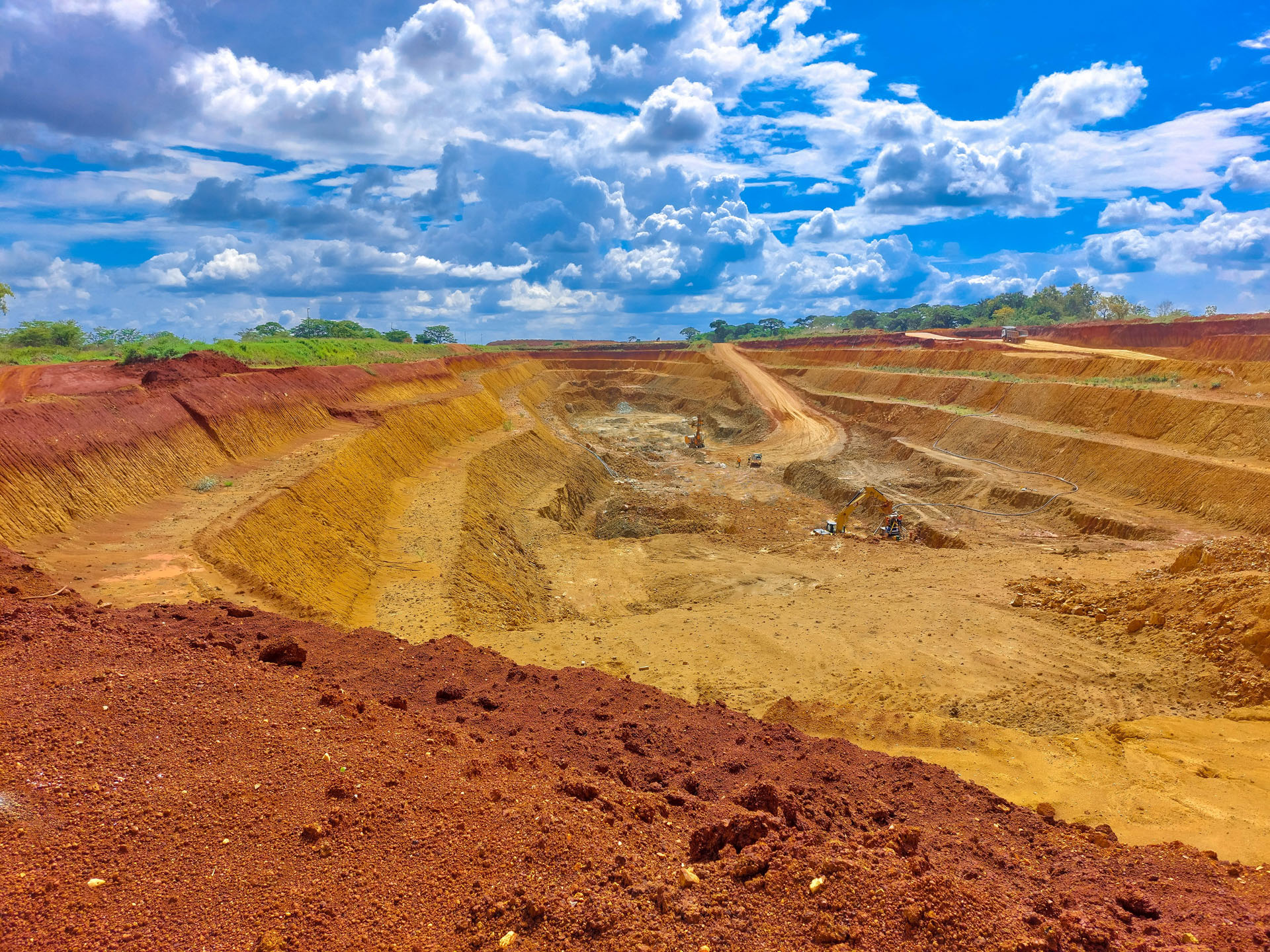
Cabral Gold has commenced gold production at its Cuiú Cuiú Mine in Brazil, completing sales of more than 2,400 ounces at an average net realized price exceeding US$4,200 per ounce. Both processing circuits now operate 24 hours a day as the company increases output toward its targeted commercial production milestone in the fourth quarter of 2026. These initial gold sales establish a revenue base while the company advances its production ramp-up and future expansion plans.
Alan Carter, President and Chief Executive Officer of Cabral Gold, explains how heap leaching supports lower production costs:
"This mine that we've built is a heap leach mine, so the all-in sustaining cost is expected to be around $1,200 an ounce, which is pretty low. We don't have to crush and grind this material to liberate the gold."
Slow Mine Supply Growth Highlights Higher-Grade Resource Potential
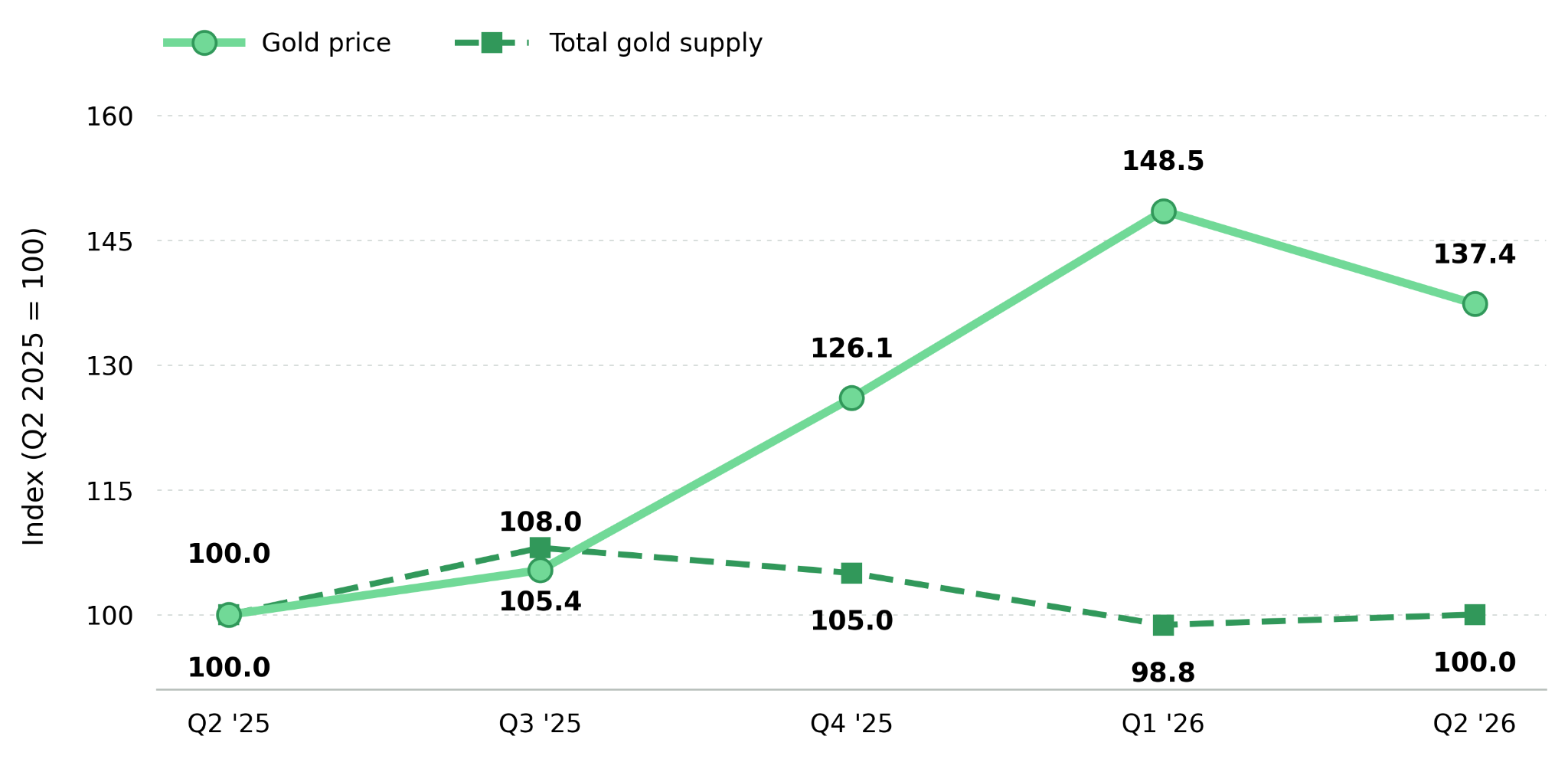
WGC reported that global gold mine production rose just 2% year over year to 965.6 tonnes in the second quarter of 2026, despite average gold prices increasing 37%. This modest supply response highlights the importance of developers with substantial gold resources, particularly those evaluating higher-grade mineralization to support economically viable future production.
Tudor Gold's latest drilling at its Treaty Creek Project in British Columbia extended gold mineralization approximately 480 meters downdip at the Perfectstorm Zone, expanding the project's potential resource base. Its Goldstorm Deposit contains 24.9 million ounces of indicated gold resources, with 5.8 million ounces identified under a higher US$125-per-tonne cut-off sensitivity. The ongoing preliminary economic assessment (PEA) is evaluating a higher-grade underground mining operation at Goldstorm, advancing the project's development plans toward a clearer assessment of future mine economics.
Joseph Ovsenek, President and Chief Executive Officer of Tudor Gold, explains how economic studies support future gold production:
“We currently have a preliminary economic assessment underway looking at an underground mine. The way we would approach it is to start with a higher-grade cut-off, recover our capital costs, and then lower the cut-off to bring more mineralized zones into the mine plan.”
Additional Mineralization Can Improve Future Mine Plans
Additional gold mineralization identified in areas previously classified as waste creates opportunities to reduce mining costs and improve future mine economics. Incorporating these discoveries into updated resource estimates and mine plans could support more efficient operations and stronger projected returns.
P2 Gold's latest drilling at its Gabbs Gold-Copper Project in Nevada extended the Sullivan Zone's gold mineralization, with all six drill holes confirming mineralization at depth. Two holes also identified gold-copper mineralization in an area previously classified as waste, potentially reducing mining costs and improving future mine economics. The results will help inform an updated mineral resource estimate targeted for the fourth quarter of 2026, followed by a feasibility study expected in the first quarter of 2027.
Flat Gold Supply Despite Elevated Prices Highlights Mine Economics
Total gold supply remained broadly flat year over year at approximately 1,269 tonnes in the second quarter of 2026, despite gold averaging US$4,506 per ounce and mine production rising 2% to 966 tonnes. Recycling declined 6% to 326 tonnes, while producer hedge books contracted by approximately 23 tonnes, offsetting additional mine output and limiting the overall supply response to higher gold prices.
Gold's October 9 price of US$4,186 per ounce supports higher projected mine revenues, but industry AISC of US$1,785 per ounce in the first quarter of 2026 highlights the importance of cost control. Resource quality, operating costs, and construction capital influence whether higher gold prices translate into economically viable future mines.
The Investment Thesis for Gold
- Long-term gold-price assumptions and project costs provide a stronger basis for valuing future mines than short-term futures movements.
- Higher assumed gold prices can increase projected net present value and internal rate of return, strengthening the economic case for mine development.
- Industry AISC rose 16% year over year to US$1,785 per ounce in the first quarter of 2026, increasing the importance of cost control in protecting potential mine margins.
- Higher-grade gold resources and reduced waste removal can improve projected mine economics, increasing the importance of resource quality and mine design.
- Permitting progress, construction financing, and production milestones help assess whether gold projects can translate favorable prices into commercially viable production.
- Global gold mine production rose only 2% year over year in the second quarter of 2026, highlighting the importance of economically viable new mines to future supply growth.
Gold's long-term investment potential extends beyond short-term price movements to the development of economically viable new supply. Higher gold prices can strengthen projected mine returns, while resource quality, cost efficiency, mine design, and access to capital influence the value projects can deliver. With global mine supply responding slowly to higher prices, projects advancing through technical studies, financing, and production milestones offer opportunities to convert favorable gold prices into future cash flows.
TL;DR
Gold held near US$4,186 per ounce despite a 29.9-tonne reduction in COMEX managed-money net long positions, highlighting the distinction between short-term futures activity and long-term mine economics. Higher assumed gold prices can strengthen projected mine valuations, although industry all-in sustaining costs rose 16% year over year to US$1,785 per ounce in the first quarter of 2026. Meanwhile, global mine production increased only 2% in the second quarter despite substantially higher gold prices. The outlook favors projects advancing economically recoverable resources through efficient mine designs, technical studies, financing, and production milestones, with the potential to contribute commercially viable future supply.
FAQs (AI-Generated)
Analyst's Notes





Subscribe to Our Channel












Stay Informed